


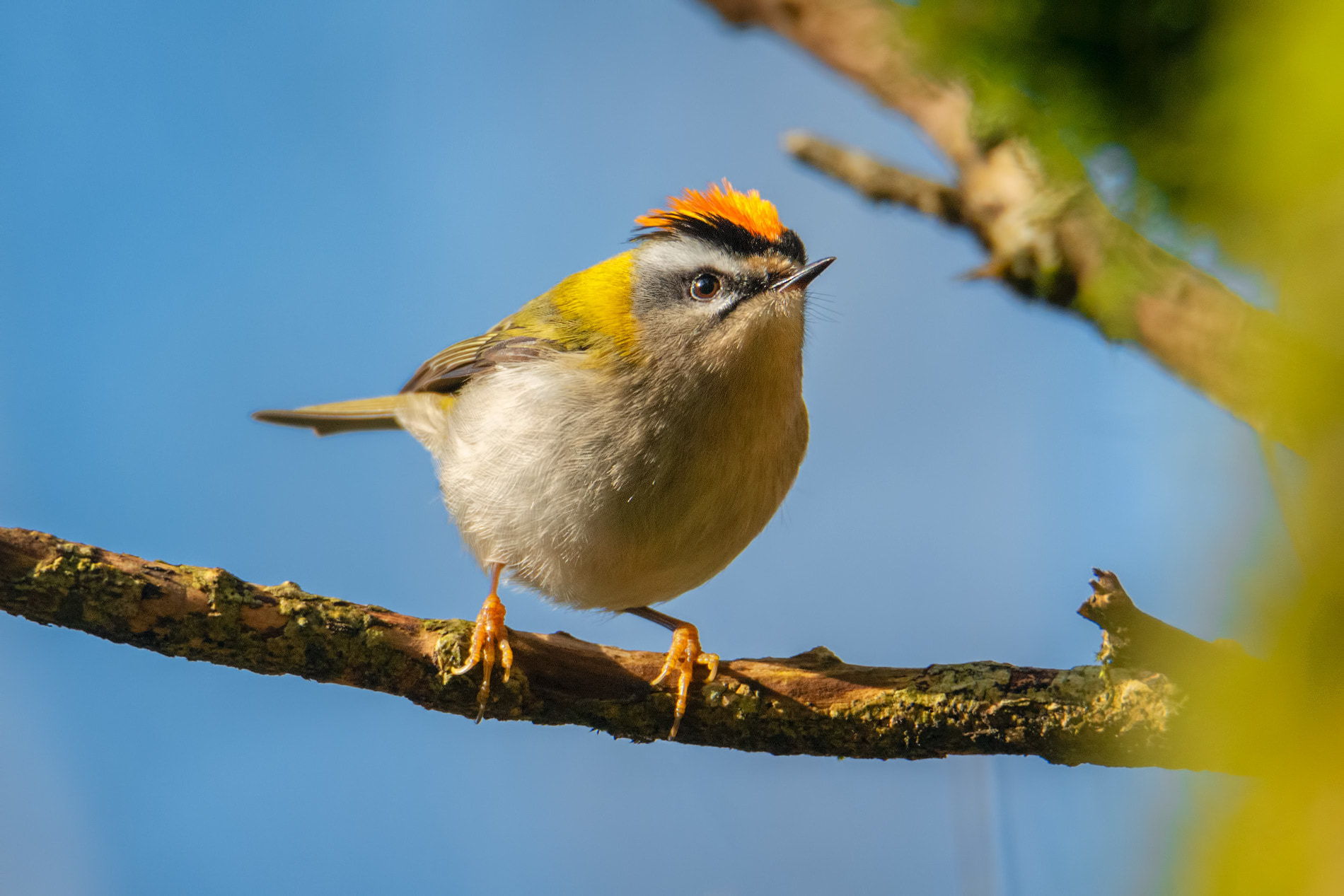

Common firecrest
Regulus ignicapilla
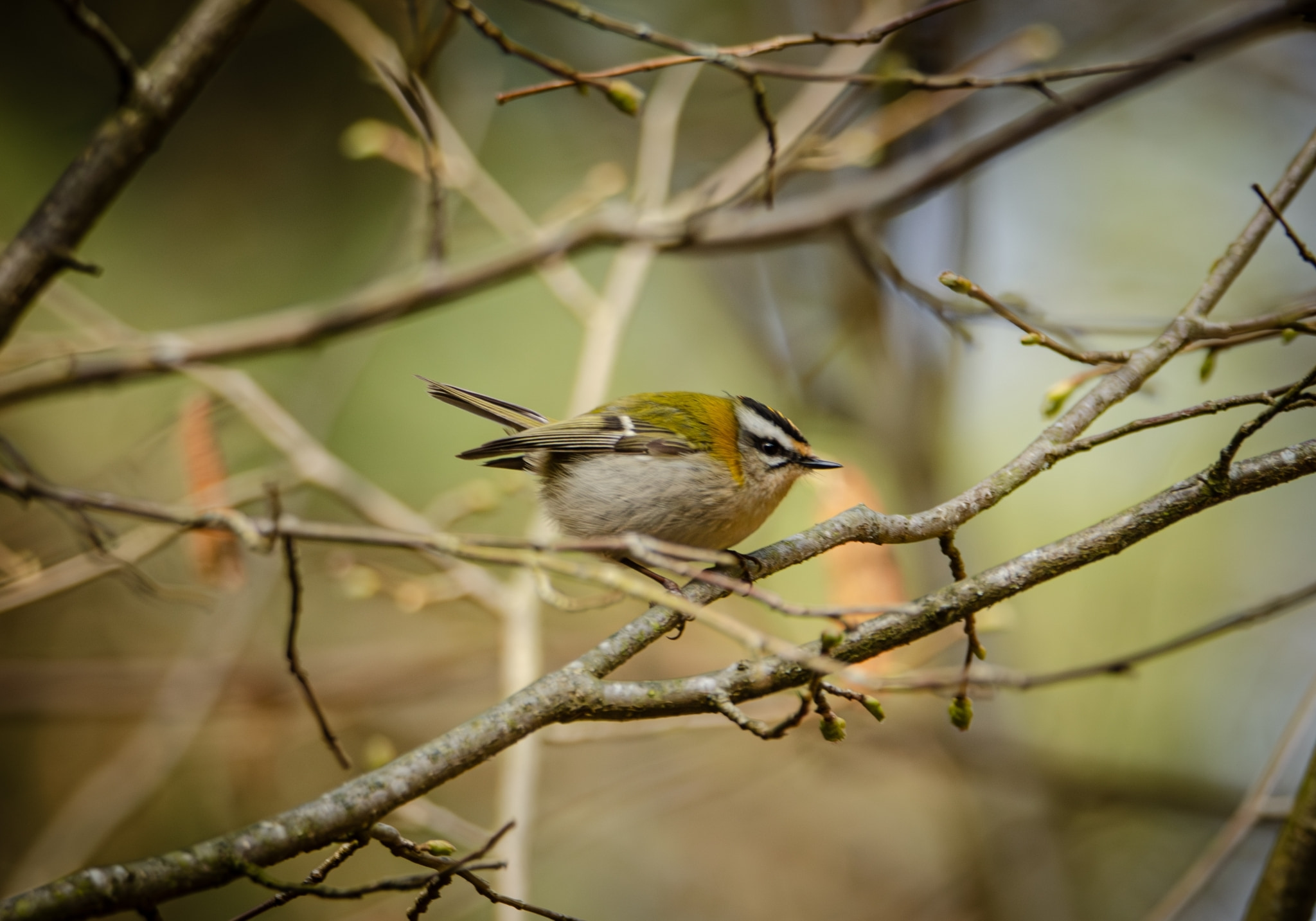
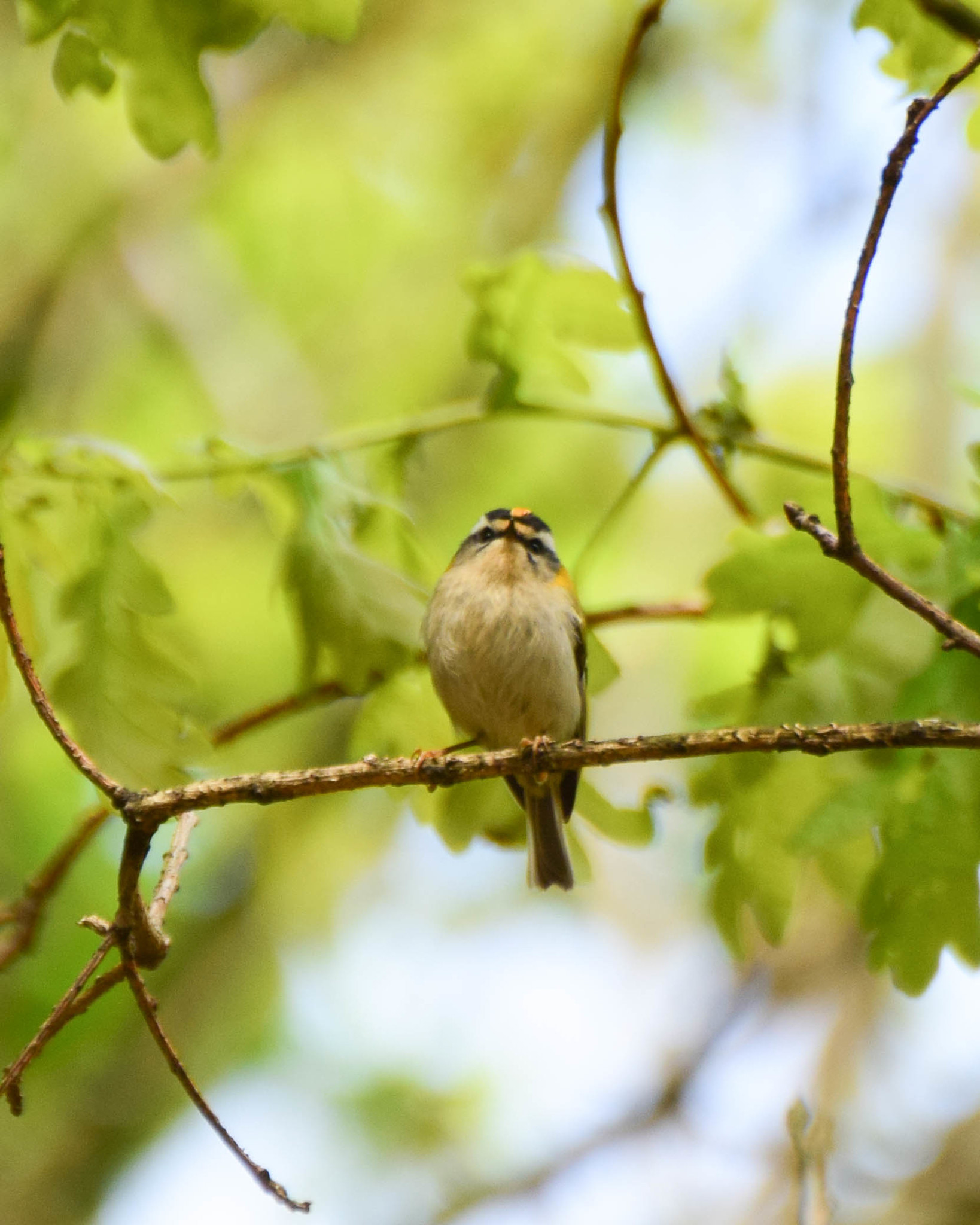
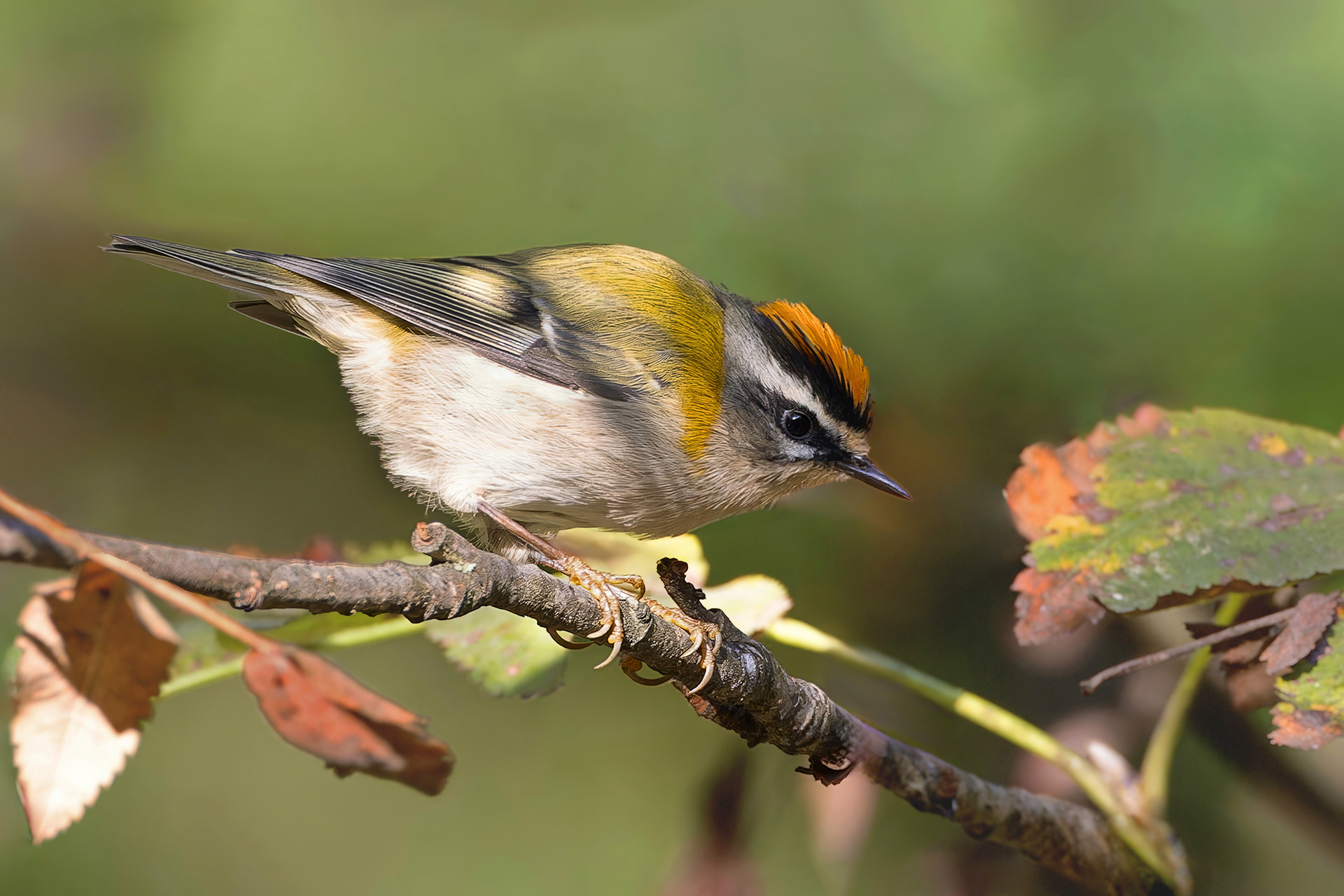
Vyacheslav Luzanov · Mount Akhun
Key facts in one look
- Diet
- Small invertebrates: springtails, aphids, spiders
- Status in Georgia
- Year-round resident, breeds
- Size
- 9 cm
- Habitat
- Broadleaf, mixed and conifer forest, parks
- Family
- Regulidae
- Protection
- Globally LC, 2016; in Georgia LC, 2021
The common firecrest is one of Europe's smallest birds: 9 cm long and 4–7 g. A long white eyebrow and a black stripe through the eye mark its face, and a bronze patch shows on the shoulders. The male has an orange crown stripe, the female a yellow one. In Georgia it lives and breeds all year round, in broadleaf, mixed and conifer forest. It looks very like the goldcrest, so look at the face first: only the firecrest has a white eyebrow.
Identification
Common firecrest: how to identify it
A small, round bird, 9 cm long and 4–7 g. The back is olive green, the underparts whitish, with two white wing bars. It has a coloured crown stripe, orange in the male and yellow in the female. The key mark is the long white eyebrow with a black stripe through the eye.
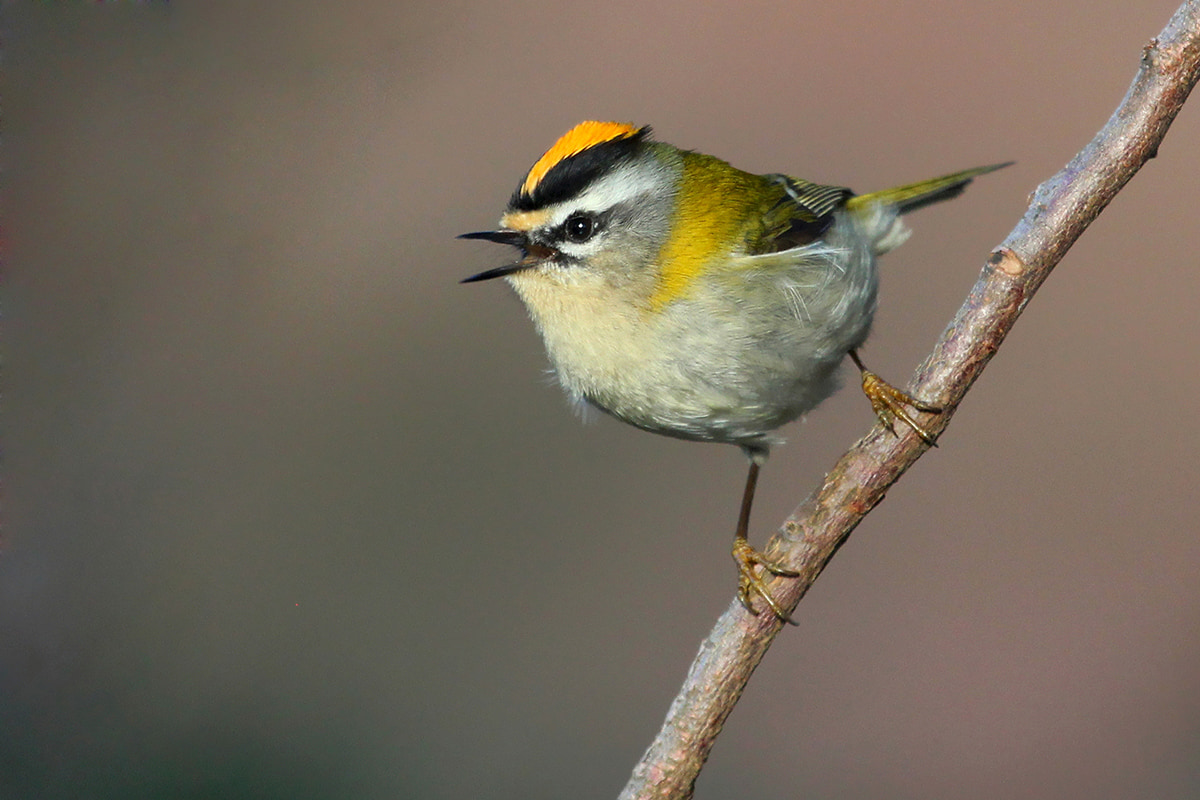
Length about 9 cm, wingspan 13–16 cm, weight 4–7 g. The body is round and compact, the bill tiny, black and pointed. The legs are brownish black.
The upperparts are bright olive green, with a bronze patch on each shoulder. The underparts are whitish, washed brownish grey on the breast and flanks. It has two white wing bars. The crown stripe is mainly orange in the male and yellow in the female, and the female is a little duller overall.
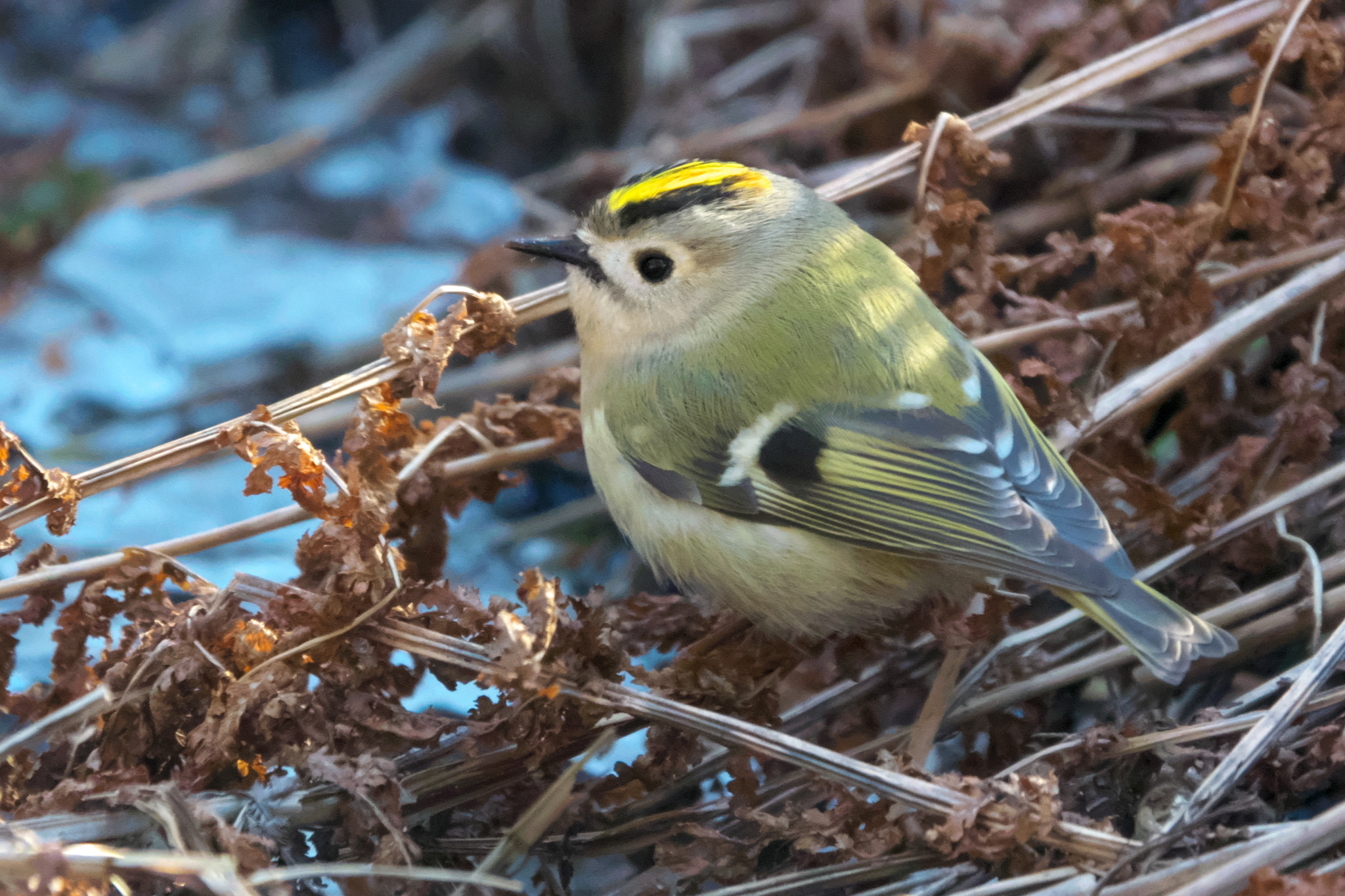
Young birds lack the coloured crown, but show a faint white eyebrow and black eye stripe. The goldcrest has a plain face with no eyebrow or eye stripe, and no bronze on the shoulders. If a tiny bird has a white eyebrow and a black eye stripe, it is a firecrest.
Colour
Swatches are illustrative. Do not identify a species by colour alone.
Often confused with
It is a forest bird. It picks broadleaf woods with alder, beech or holly, as well as mixed woods and stands of spruce, fir and pine, often with an undergrowth of juniper and ivy. In winter it depends less on conifers than the goldcrest and moves out to forest edges and scrub. It also lives in towns, where parks and large gardens have suitable trees. East of its main range there are isolated populations in Abkhazia, Crimea and Turkey.
The common firecrest lives and breeds in Georgia all year round. It has been seen in every month of the year, and most records fall in October. Most records come from western Georgia: Adjara and Abkhazia. It has also been found in Mtskheta-Mtianeti, Imereti, Samtskhe-Javakheti, Kakheti, Samegrelo-Zemo Svaneti, Shida Kartli, Guria and Kvemo Kartli. The oldest record dates from May 1986, in Abkhazia.
Data: Reptiles.ge + iNaturalist · Methodology
- Field observation
- Several records in one spot
- Region with records
It eats almost nothing but small invertebrates: springtails, aphids, spiders, and their eggs and cocoons. It takes larger prey than the goldcrest, including big orb-web spiders, and beats large insects against a branch until they die. It searches mostly the upper surface of branches and leaves, and catches flying insects while hovering. At first the chicks are fed almost only on springtails. From the fifth day aphids and snail shells are added; the shells are needed for growing bones.
It never stops moving: it hops along branches with its body held level, and its flight is weak and whirring, with sudden turns. In winter it joins loose flocks of tits and warblers. The call is three or four thin, high "zit-zit-zit" notes, slightly lower than the goldcrest's. The song has 11–14 notes, growing louder and faster, and lasts 0.5–2.5 seconds. In May and June it sings most often just after dawn. The nest is a closed cup with a small entrance near the top, hung from a drooping branch. It is built in three layers: moss, small twigs, cobwebs and lichen outside, moss in the middle, and up to 3,000 feathers and hair inside. Only the female builds it. She lays 7–12 pinkish eggs and incubates them for 14.5–16.5 days. Both parents feed the chicks, and second broods are common.
Globally the common firecrest's risk of extinction is rated low (LC, 2016). Its population is estimated at 10–15 million birds, most of them in Europe, and is considered stable. In the 19th and 20th centuries its range spread north. Locally its numbers may fall through the loss of conifers and through heavy metal pollution. In Georgia's national assessment (2021) its risk is also rated low (LC), and its numbers are stable. The list of the birds of Georgia gives it as a year-round resident and breeder.
Related guides
Continue with related pages
Yes. It lives and breeds in Georgia all year round. Its main range is in Europe and north-western Africa, and further east there are isolated populations in Abkhazia, Crimea and Turkey. It spends much of its time in the tree canopy, so it is not easy to see from the ground.
By the face. The firecrest has a long white eyebrow and a black stripe through the eye, and a bronze patch on the shoulders. The goldcrest has a plain face in which the black eye stands out. Young firecrests show the face pattern too, though more faintly. If you see a white eyebrow, it is a firecrest.
Almost nothing but small invertebrates: springtails, aphids, spiders, and their eggs and cocoons. It takes larger prey than the goldcrest. It searches the upper surface of branches and leaves. The chicks are fed on springtails at first.
On a drooping tree branch, usually not very high. The nest is a closed cup with a small entrance near the top, lined with up to 3,000 feathers. Only the female builds it. She lays 7–12 eggs, and second broods are common.
Not from Georgia: it lives here all year round. Southern birds are mostly resident. Northern and eastern populations winter around the Mediterranean and in the far west of Europe. In winter it also comes down to forest edges and scrub.
No, it is harmless to people. Globally its risk of extinction is low (LC, 2016). In Georgia's national assessment (2021) its risk is also low (LC), and its numbers are stable. Do not catch wild birds.
References
What this profile is based on
Species profiles are compiled from peer-reviewed literature and established biodiversity databases, and are reviewed as new taxonomic and conservation data become available.
Prepared by the Reptiles.ge editorial team from the sources listed here.


