


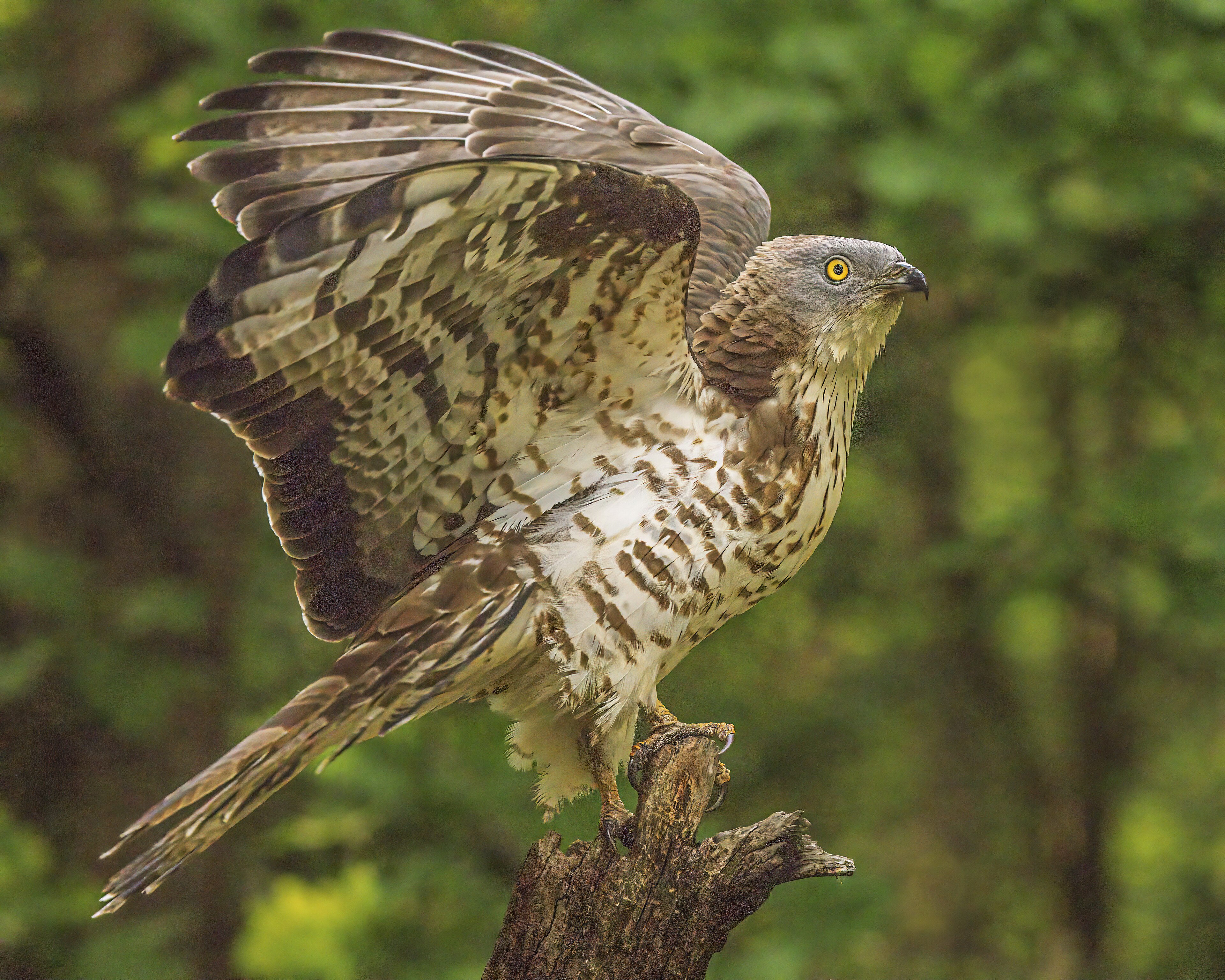


There is no separate Georgian diet study on this page. The English name and the Latin apivorus (“bee-eating”) mislead: it does not eat honey. At species level it specialises on social wasps and hornets — mainly larvae and pupae in the comb. It digs nests from the ground or from tree cavities; scale-like feathers around the face protect against stings. It also takes frogs, reptiles, small mammals and nestling birds, especially early in the season before wasp nests grow. It is not food for people.

European honey buzzard
Pernis apivorus
Charles J. Sharp · Babadag, Turkey
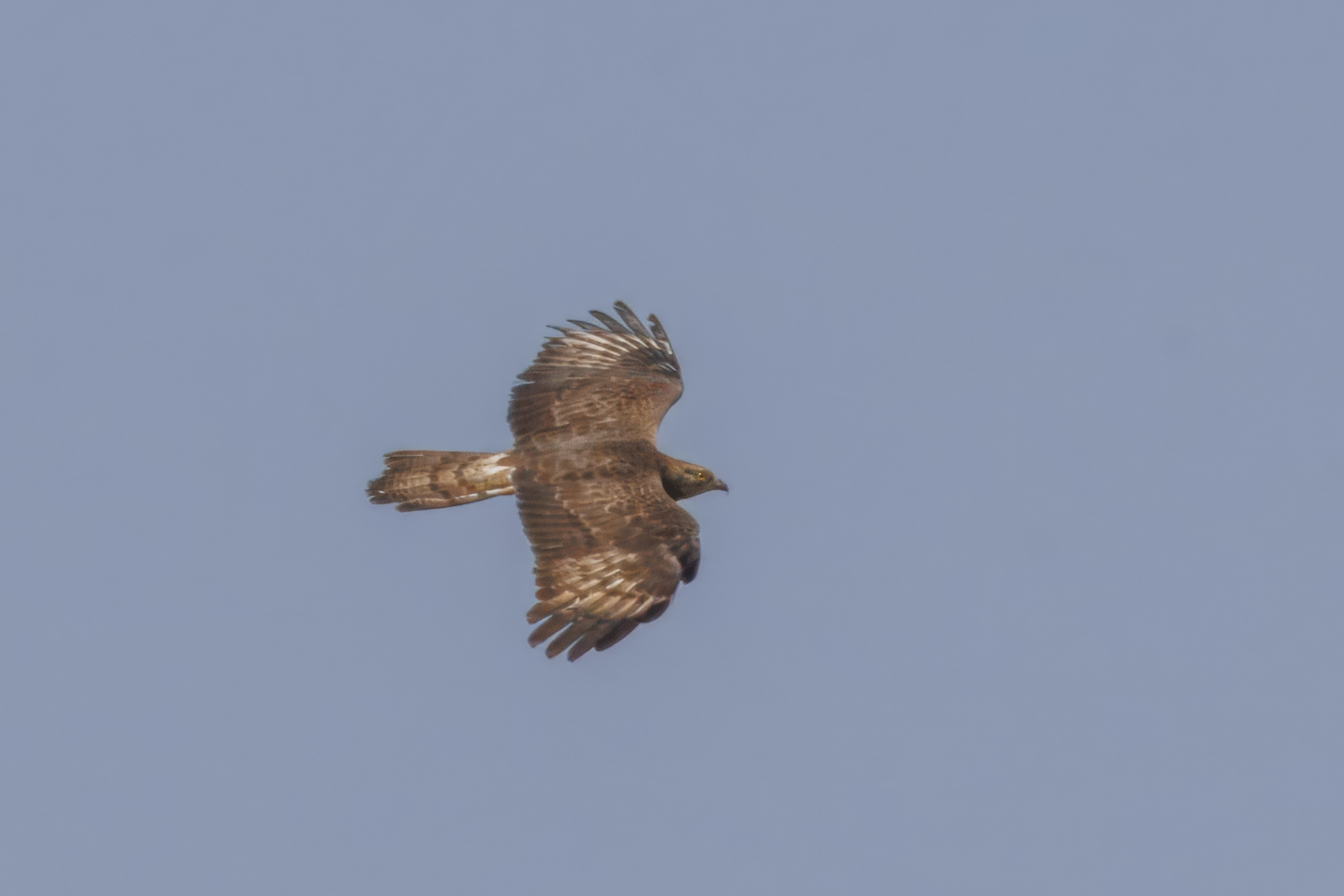
A medium-sized woodland raptor with a small, pigeon-like head and a long tail. It is not a true buzzard and does not eat honey. Confirmed in Georgia on the 2024 national bird checklist as a passage migrant. In autumn it is the most numerous raptor in the Batumi bottleneck.
Key facts in one look
- Size
- 52–60 cm
- Diet
- Wasp and hornet larvae
- Status in Georgia
- Passage migrant
- Habitat
- Woodland and flyway
- Family
- Accipitridae
- Conservation
- Least Concern
The European honey buzzard (Pernis apivorus) is a medium-sized raptor in the family Accipitridae, genus Pernis. It is not a Buteo buzzard; the resemblance is superficial. The full Georgian species name is ჩვეულებრივი ბოლოკარკაზი; the genus is ბოლოკარკაზი. Search and ornithological lists also use კვერნაჭამია, კრაზანაჭამია and ირაო. The 2024 annotated checklist of the birds of Georgia codes it M: a bird of passage. Seasonality is classed as high-quality (code A). Occurrence quality is high (H), with photographs. Adults are often about 52–60 cm long at species level, with a wingspan of 135–150 cm. It is not a threat to people. IUCN lists the species as Least Concern. The 2024 checklist assigns the same category nationally.
Identification
European honey buzzard: how to identify it
A medium-sized raptor with a small, pigeon-like head, a long tail and flat soaring wings. Confirmed in Georgia as a passage migrant on the 2024 checklist. It does not eat honey. The usual confusion is common buzzard and, rarely, crested honey buzzard.
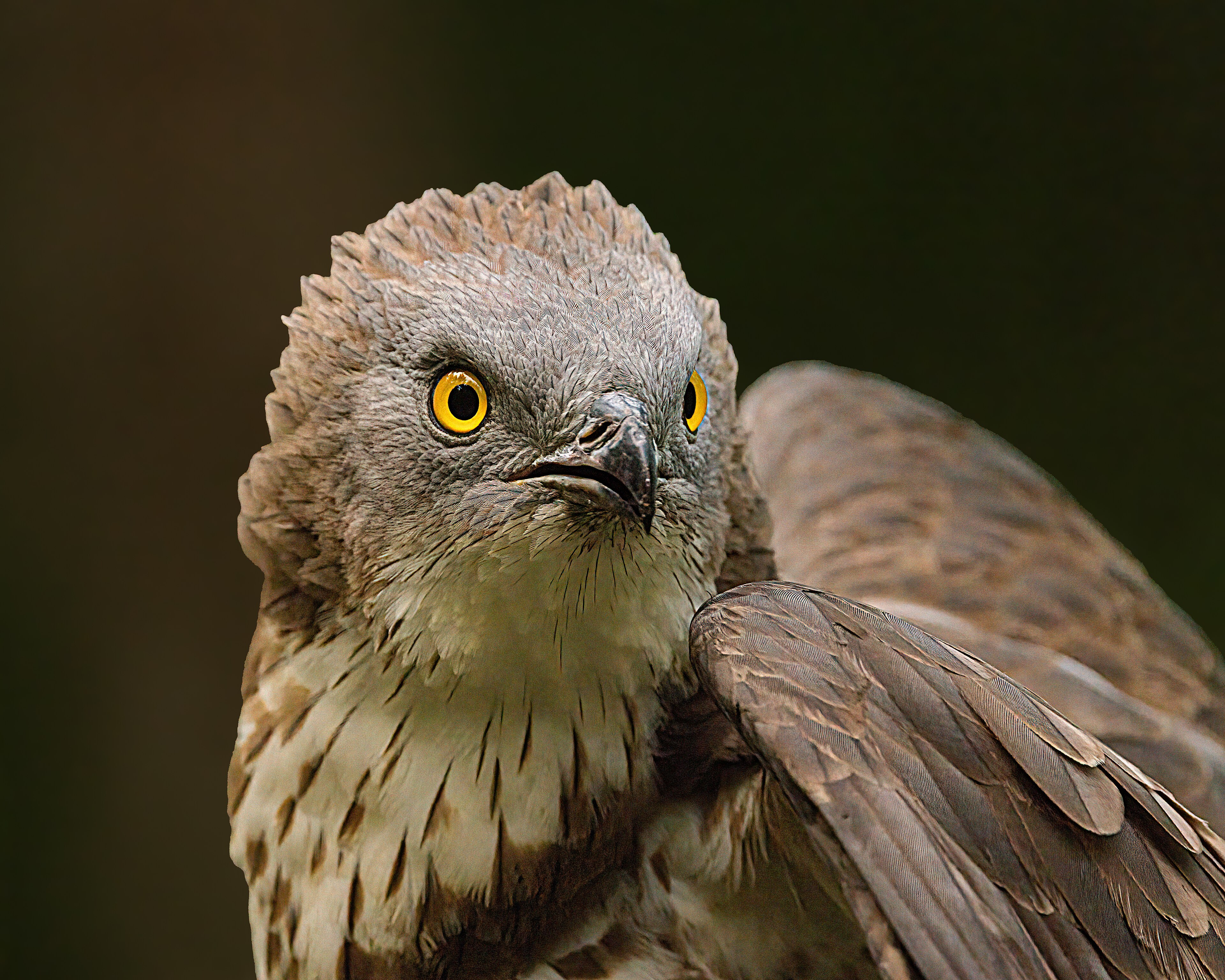
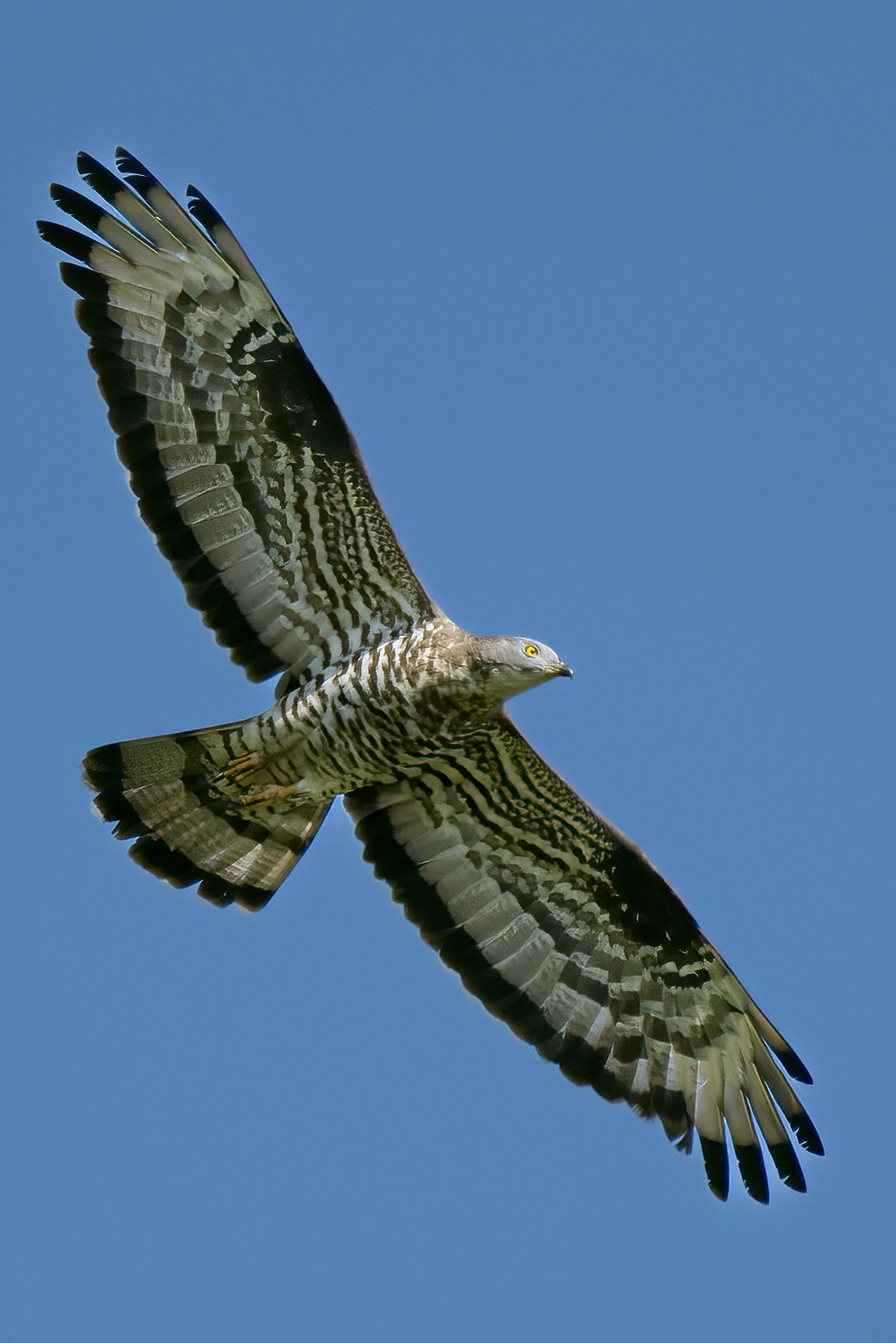
Length at species level is often 52–60 cm, wingspan 135–150 cm . Published measurements give wing 375–475 mm, tail 250–270 mm and mass 700–800 g; the female is slightly larger than the male. There is no separately measured Georgian series on this page. The head is small and elongated, the bill relatively slim, the tail longer than a buzzard’s. Wings are held flat when soaring. The tail often shows two narrow dark bars and a broad dark terminal band. The carpal patch on the underwing is weaker than in common buzzard.
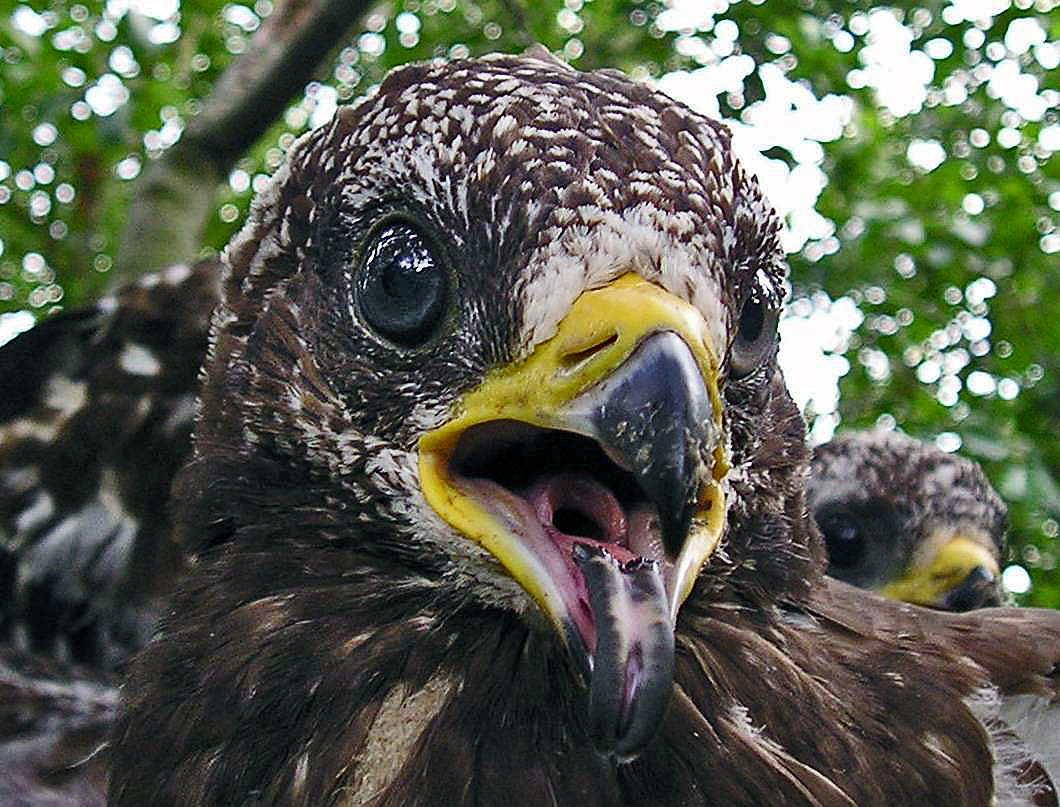
Plumage is highly variable, from pale sandy to dark brown. The male often has a blue-grey head, the female a brown one — unusual among large raptors. Juveniles are more barred, and the nostrils are slit-like — a diagnostic feature in a head-on view. Scale-like facial feathers protect against wasp stings.
Common buzzard (Buteo buteo) has its own page in this atlas: shorter tail, rounder head, often a shallow V when soaring, and a darker carpal patch on the underwing. Crested honey buzzard (Pernis ptilorhynchus) is also M on the 2024 checklist; Batumi counts average 18 per season, with a record of 38 — it is scarce. Adults often show a crest and a different underwing pattern; this atlas does not yet have a page for it. Black kite (Milvus migrans) is also abundant at Batumi: forked tail. Eurasian sparrowhawk (Accipiter nisus) and northern goshawk (Accipiter gentilis) have pages here — short broad wings, a different silhouette. Peregrine is a pointed-wing falcon. Golden eagle is much larger.
It is not a threat to people. Leave it alone. A medium raptor with a small head and long tail streaming over Batumi in autumn is more likely this species than a common buzzard.
This page does not colour a municipality-by-municipality map. The 2024 checklist confirms country-level migrant status but does not publish a regional gazetteer. Do not assume it occurs evenly across Georgia, including treeless high plateaus or only closed forest. Named records: the Batumi raptor count has monitored autumn passage since 2008 from watchpoints at Sakhalvasho and Shuamta, north of Batumi in Adjara, between the Black Sea and the Lesser Caucasus. In the 2008–2009 counts, about 51% of autumn raptors were this species (55% after correcting unidentified birds). A 2023 analysis gives a 13-year mean of about 528,467 birds per autumn. A 2020 analysis gives a mean of 528,059 and a record season of 666,364. The count’s own species summary gives a mean of 500,066, a highest season of 656,171 (2014), and a record day of 178,796 (3 September 2012). Those figures cover different year windows; they describe passage, not a breeding-range map. Breeding habitat at species level is woodland. A separate national elevation belt for Georgia is not published here. Photographs on this page were not taken in Georgia.
It is active by day. When soaring it holds the wings flat, not the shallow V often seen in common buzzard; in a glide the wingtips often droop slightly. The head is small and protruding, the tail longer than a buzzard’s. Calls are scarce on passage; at species level the territorial call is a clear peee-lu. This page has no Georgian recording. The nest is a stick platform in a tree. Clutches at species level are often two eggs; those figures are from the wider range, not a sample of Georgian nests. The 2024 checklist treats the species in Georgia only as a migrant. Literature from 2013 treated it as a summer breeder and bird of passage and gave 200–450 pairs in 2001–2012; a protected-areas checklist codes it BB, M. That disagrees with the 2024 checklist, which does not assign BB. Named nests are not listed here. At Batumi, 90% of autumn adults pass in the last week of August and the first week of September; juveniles about ten days later, and they make up about 5.9% of the count. Spring totals at Batumi are lower: about 89,000 in 2019 and 44,000 in 2020. A second-calendar-year female was documented at Batumi on 17 September 2017 — an age rarely seen on autumn passage in the Western Palearctic.
On the IUCN Red List, Pernis apivorus is Least Concern (2021). The 2024 Georgian checklist assigns global and national category LC. The species is not on Georgia’s 2014 Red List (Government Decree No. 190). The global assessment indicates decline, while adult passage at Batumi has been stable in the years counted; those two signals do not match, and the Batumi figure is a passage index for source populations, not a national breeding census. Accipitridae are on CITES Appendix II. Raptor shooting in the Batumi bottleneck is documented; that is recorded pressure, not a measured loss of this species on this page. Do not catch or keep wild birds.
Andy Morffew
Charles J. Sharp · Babadag, Turkey
Andy Morffew
François laheyne · Somme Bay, France
Related guides
Continue with related pages
Questions
Frequently asked questions
Short answers to the most important questions about European honey buzzard.
Yes. The 2024 annotated checklist of the birds of Georgia accepts it as a passage migrant (M), with photographs.
The most concentrated autumn passage is named at the Batumi bottleneck, from the Sakhalvasho and Shuamta watchpoints. Spring passage in the same corridor is smaller. This page does not map every region.
Small pigeon-like head, longer tail with two narrow bars and a broad terminal band, flat soaring wings, weaker carpal patch. Common buzzard has a shorter tail and often holds the wings in a shallow V.
At species level, length is often 52–60 cm, wingspan 135–150 cm. Mass is 700–800 g. There is no separately measured Georgian series on this page.
It does not eat honey. It mainly takes wasp and hornet larvae and pupae. Diet in Georgia is not separately studied on this page.
As a passage migrant, according to the 2024 checklist. At Batumi the adult mass is documented in late August and early September. The checklist does not accept it as a winter visitor.
The 2024 checklist codes it only as a migrant. Literature from 2013 treated it as a summer breeder; a protected-areas checklist codes it BB, M. Named nests are not listed here. That is a disagreement, not a confirmed national breeding map.
Harmless if left alone. Globally Least Concern, and LC nationally on the 2024 checklist. It is not on the 2014 Red List. Do not catch wild birds.
References
What this profile is based on
Species profiles are compiled from peer-reviewed literature and established biodiversity databases, and are reviewed as new taxonomic and conservation data become available.
Prepared by the Reptiles.ge editorial team from the sources listed here.


News
Related news
Birds
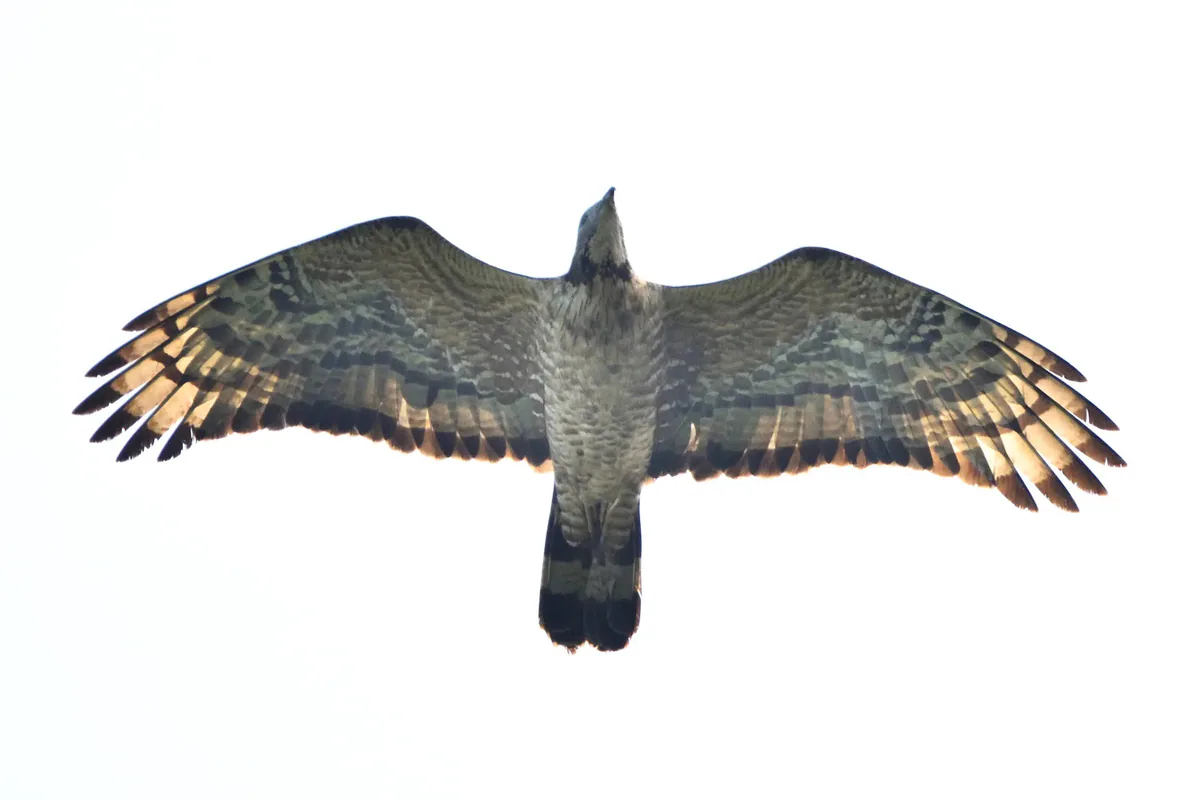
54 Crested Honey Buzzards at Batumi: almost twice the average
Batumi Raptor Count has counted 54 Crested Honey Buzzards this autumn — almost twice its average of 28. Batumi is the only place in the Western Palearctic where this Asian raptor is reliably seen on migration.
Read the article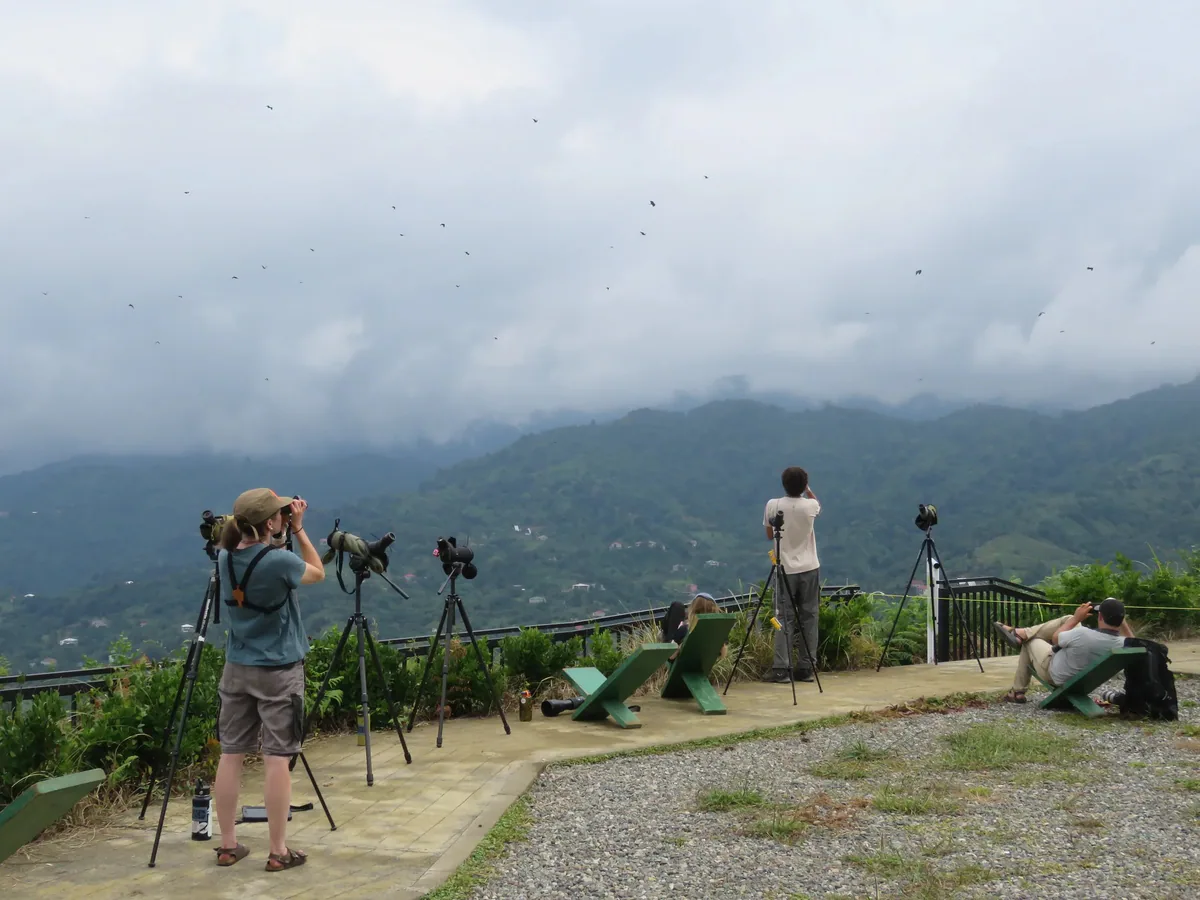
Birds
Nearly 19,300 raptors counted in one day at Batumi
After rain and fog, the Batumi bottleneck recorded the season’s first 10,000-plus day. Nearly 19,300 birds were counted in total.
Read the article

