Reptiles
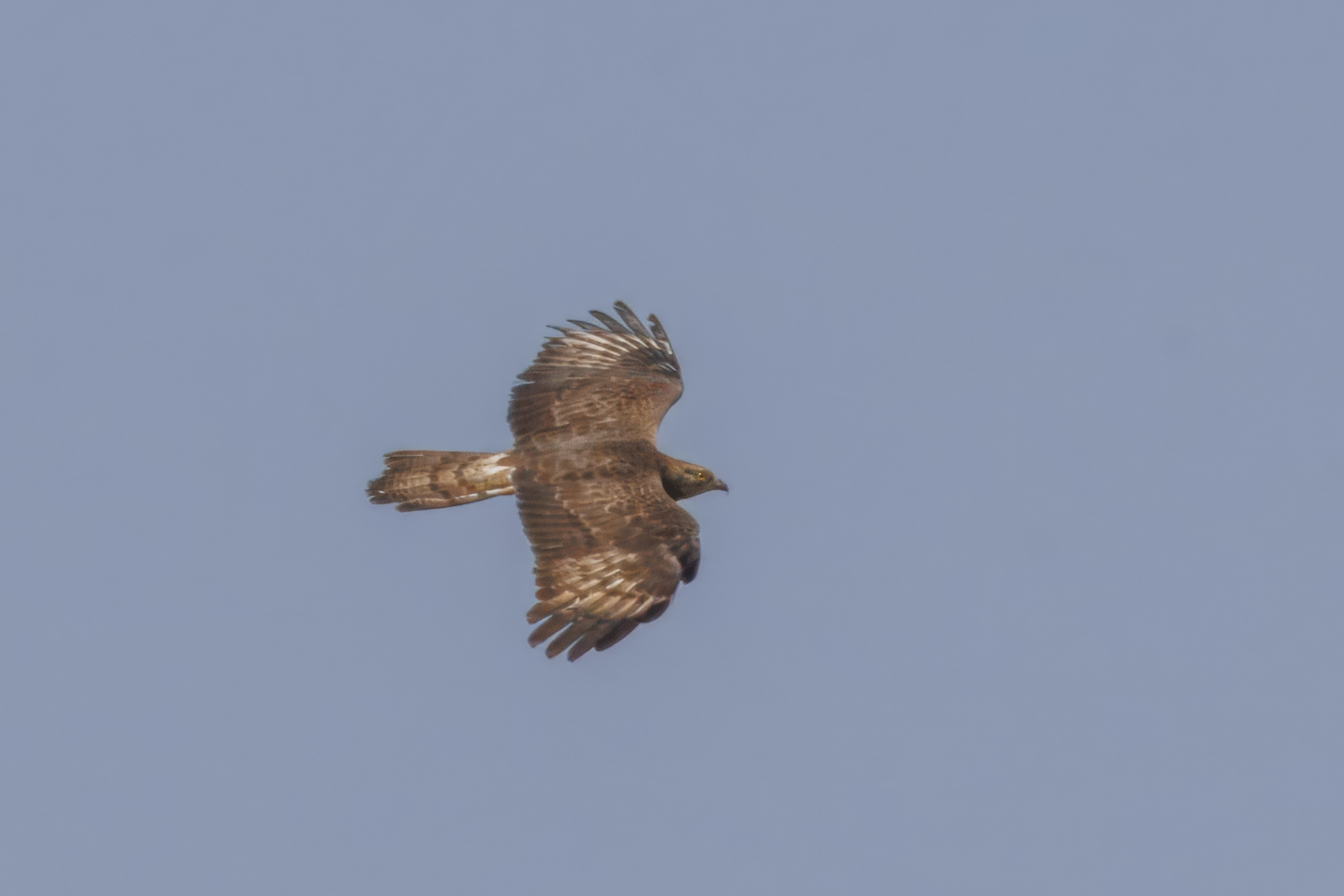
Common buzzard (Buteo buteo) — Etosha, Namibia — Charles J. Sharp

Common buzzard

Buteo buteo

A medium-sized, broad-winged bird of prey, not an eagle. Confirmed in Georgia on the 2024 national bird checklist as a year-round resident, a passage migrant, and a winter visitor. The steppe form dominates the autumn passage at Batumi.

Year-round resident, migrant and winter visitor in Georgia
Listen to the voice

At a glance

Key facts in one look

Diet

Small mammals

Status in Georgia

Resident, migrant, winter visitor

Size

40–58 cm

Habitat

Woodland edge and open country

Family

Accipitridae

Conservation

LC

Human interaction: It is not a threat to people if left alone. The talons are strong; wild birds must not be captured.

Overview

What is Common buzzard

The common buzzard (Buteo buteo) is a medium-sized raptor in the family Accipitridae. Georgian ornithological lists use ჩვეულებრივი კაკაჩა. The folk name ჩვეულებრივი არწივი (“common eagle”) is a mix-up: eagles belong to Aquila and related genera. The 2024 annotated checklist of the birds of Georgia codes it YR-R; M; WV: a breeding resident, a bird of passage, and a winter visitor. Seasonality is classed as high-quality (code A). Occurrence quality is high (H), with photographs. Adults are about 40–58 cm long at species level, with a wingspan of about 109–140 cm. It is not a threat to people. IUCN lists the species as Least Concern. The 2024 checklist assigns the same category nationally.

Last updated

Gallery

Photo: Wowan1978

Lake Sevan, Armenia ·

Photo: Charles J. Sharp

Etosha, Namibia ·

Photo: VezeIvan

Besni Fok, Belgrade ·

Photo: Yerpo

Log, Slovenia ·

Photo: Lukasz Lukasik

Photo: Marek Szczepanek

Identification

How to identify Common buzzard

A medium-sized, broad-winged raptor with a fairly short tail and highly variable brown plumage. In Georgia it is a resident, migrant, and winter visitor on the 2024 checklist. It is not an eagle. Usual confusion is with European honey-buzzard, long-legged buzzard, and rough-legged buzzard.

  1. 01

    Length about 40–58 cm at species level, wingspan about 109–140 cm. NPLG gives wing 340–435 mm, tail 175–245 mm, and mass 800–1200 g; females are generally larger than males. The head is rounded, the bill relatively short, the wings broad, the tail medium-short. The underwing often shows a dark carpal “comma”. Plumage ranges from almost dark chocolate to pale sandy. Sexes are alike in the field.

  2. 02

    The steppe form (B. b. vulpinus) is treated in handbooks as smaller and more agile, often more rufous; the Batumi autumn mass is assigned to this form. Caucasian B. b. menetriesi is traditionally larger and duller sandy below, with less rufous on the tail, and is often listed as resident. Field identification on this page is to species. Juveniles are more barred and scaly below.

  3. 03

    European honey-buzzard (Pernis apivorus) is a separate species and also passes Batumi in large numbers: longer tail, pigeon-like head, flatter wings when soaring, weaker carpal patch. Long-legged buzzard (Buteo rufinus) is also YR-R; M; WV on the 2024 checklist: often paler and more rufous, longer legs, paler tail with a dark terminal band. Rough-legged buzzard (Buteo lagopus) is M; WV: white tail with a dark band and feathered tarsi; it often hovers. Golden eagle (Aquila chrysaetos) is larger, with a more protruding head; this atlas has a page for that species. Eurasian sparrowhawk (Accipiter nisus) is much smaller, with short broad wings and a long tail; this atlas has a page for that species too. This atlas does not yet have separate pages for honey-buzzard, long-legged buzzard, or rough-legged buzzard.

  4. 04

    It is not a threat to people. Leave it alone. A medium brown raptor soaring over a Georgian slope or perched by a road is more likely this species than an eagle.

Biology

Habitat, diet, behavior, and conservation

Habitat and range

This page does not colour a municipality-by-municipality map. The 2024 checklist confirms country-level resident, migrant, and winter-visitor status but does not publish a regional gazetteer. Do not assume it occurs evenly across Georgia, including treeless high plateaus or only closed forest. Named records: the Batumi Raptor Count has monitored autumn passage since 2008 from watchpoints at Sakhalvasho and Shuamta, north of Batumi in Adjara, between the Black Sea and the Lesser Caucasus. Most birds in that bottleneck are the subspecies B. b. vulpinus (steppe buzzard). Verhelst et al. (2011) attributed about 26% of autumn raptors in the 2008–2009 counts to that form. Zaitseva et al. (2023) give a 13-year average of about 304,819 steppe buzzards per autumn. Hoekstra et al. (2020) place the peak in late September to early October; the record day of 2 October 2014 was mainly this form. Those figures describe passage, not a breeding-distribution map. Species-level habitat is semi-open country: woodland edge, slopes with trees, farmland, grassland, and foothills with hunting ground for small mammals. A separate national elevation band for Georgia is not published here. Photographs on this page were not taken in Georgia.

Diet

There is no separate Georgian diet study on this page. Across the range it is an opportunist: mainly small mammals (voles and mice), also birds, reptiles, amphibians, large insects, and earthworms; carrion is taken. In winter it is often seen on the ground or on a post, waiting. In the field, a broad-winged raptor soaring over a slope or perched by a road is behaving typically.

Behavior

It is active by day. It is often heard before it is seen: the territorial call is a sharp, cat-like “pee-ow”. In soaring flight the wings are often held in a shallow V; in a glide they are flatter. It hunts by sitting, soaring, and sometimes hovering. The nest is a stick structure in a tree or on a cliff. Species-level clutches are often two to four eggs; those figures are from the wider range, not a Georgian nest sample on this page. The 2024 checklist treats the species as a breeding resident in Georgia. The mass autumn movement at Batumi is vulpinus. Winter presence is coded WV on the checklist; a separate winter count for Georgia is not given here.

Conservation

BirdLife International assesses Buteo buteo as Least Concern on the IUCN Red List. EUNIS reports Least Concern in Europe. The 2024 Georgian bird checklist assigns global and national Red List category LC. The species is not on Georgia’s 2014 Red List (Government Resolution No. 190); long-legged buzzard (Buteo rufinus rufinus) is listed there as VU. A Georgia-specific population trend is not quantified on this page. The Batumi autumn counts measure passage and are not a national breeding-monitoring series. Sándor et al. and the BRC literature document raptor shooting in the Batumi bottleneck; that is a recorded pressure, not a measured buzzard loss on this page. Do not catch or keep wild birds. EUNIS notes the EU Birds Directive; that instrument does not apply in Georgia.

Questions

Frequently asked questions

Short answers to the most important questions about Common buzzard.

Yes. The 2024 annotated checklist of the birds of Georgia lists it as a year-round resident, migrant, and winter visitor (YR-R; M; WV), with photographs.

At woodland edges, slopes, and farmland year-round where it is resident. The most concentrated autumn passage is documented in the Batumi bottleneck from the Sakhalvasho and Shuamta watchpoints. This page does not map every region.

No. It is a buzzard (Buteo), not an eagle (Aquila and related genera). The folk name means “common eagle” and comes from the soaring silhouette. The official Georgian name is ჩვეულებრივი კაკაჩა.

Medium size, broad wings, fairly short tail, often a dark carpal patch on the underwing, variable brown plumage, and a cat-like call. Honey-buzzard has a longer tail and a small head. Eagles are larger.

About 40–58 cm long at species level, wingspan about 109–140 cm. NPLG gives mass as 800–1200 g. The steppe form is smaller. A separate measured series from Georgia is not given on this page.

Mainly small mammals, plus other vertebrates and invertebrates. Diet has not been studied separately in Georgia on this page.

All year, according to the 2024 checklist. Mass autumn passage near Batumi is documented in late September to early October. Exact arrival and departure dates for the whole country are not tabulated on this page.

It is harmless if left alone. It is globally Least Concern and is coded LC nationally on the 2024 checklist. It is not on Georgia’s 2014 Red List. Do not catch wild birds.

References

Sources

Species profiles are compiled from peer-reviewed literature and established biodiversity databases, and are reviewed as new taxonomic and conservation data become available.