


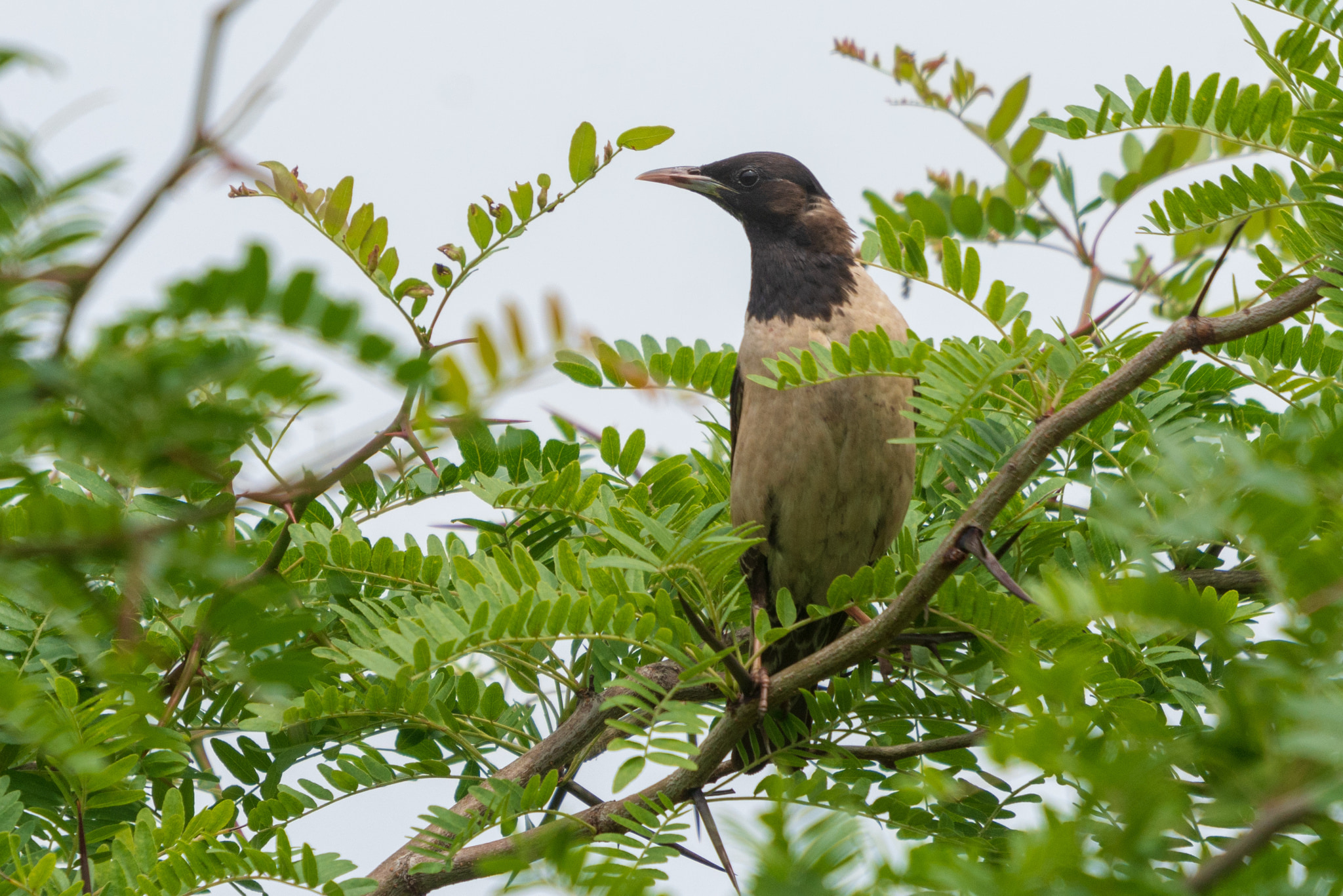

Rosy starling
Pastor roseus
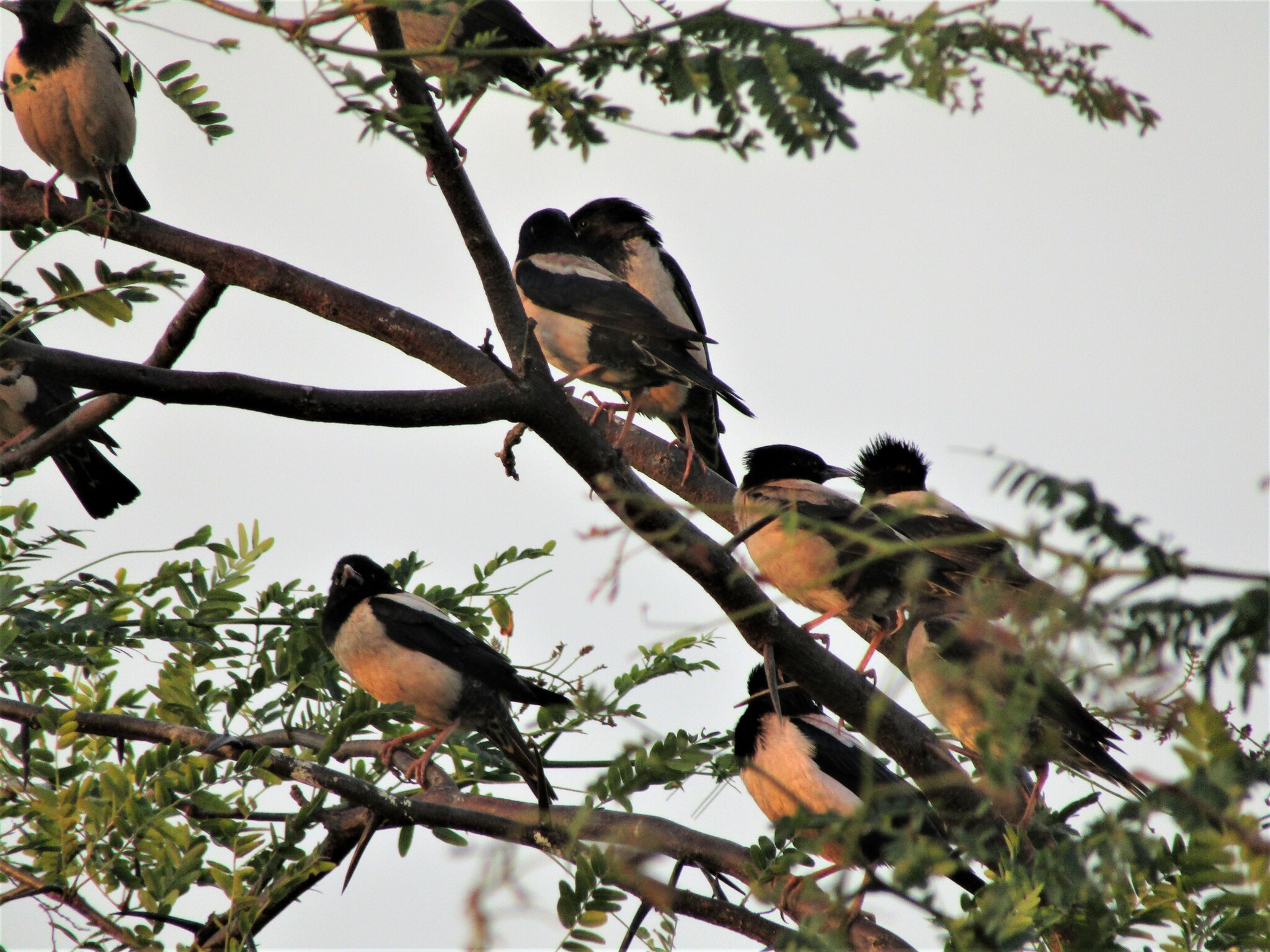
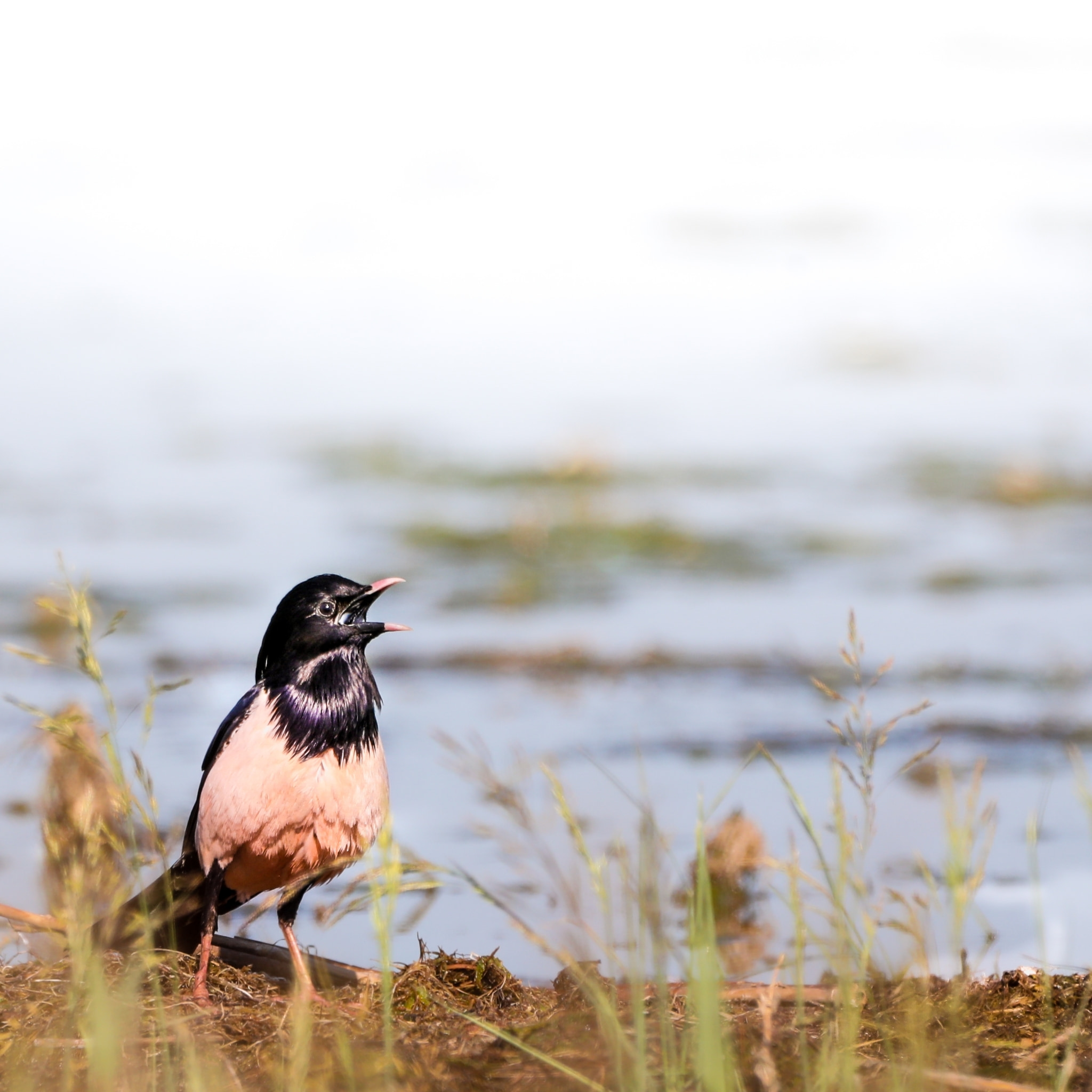
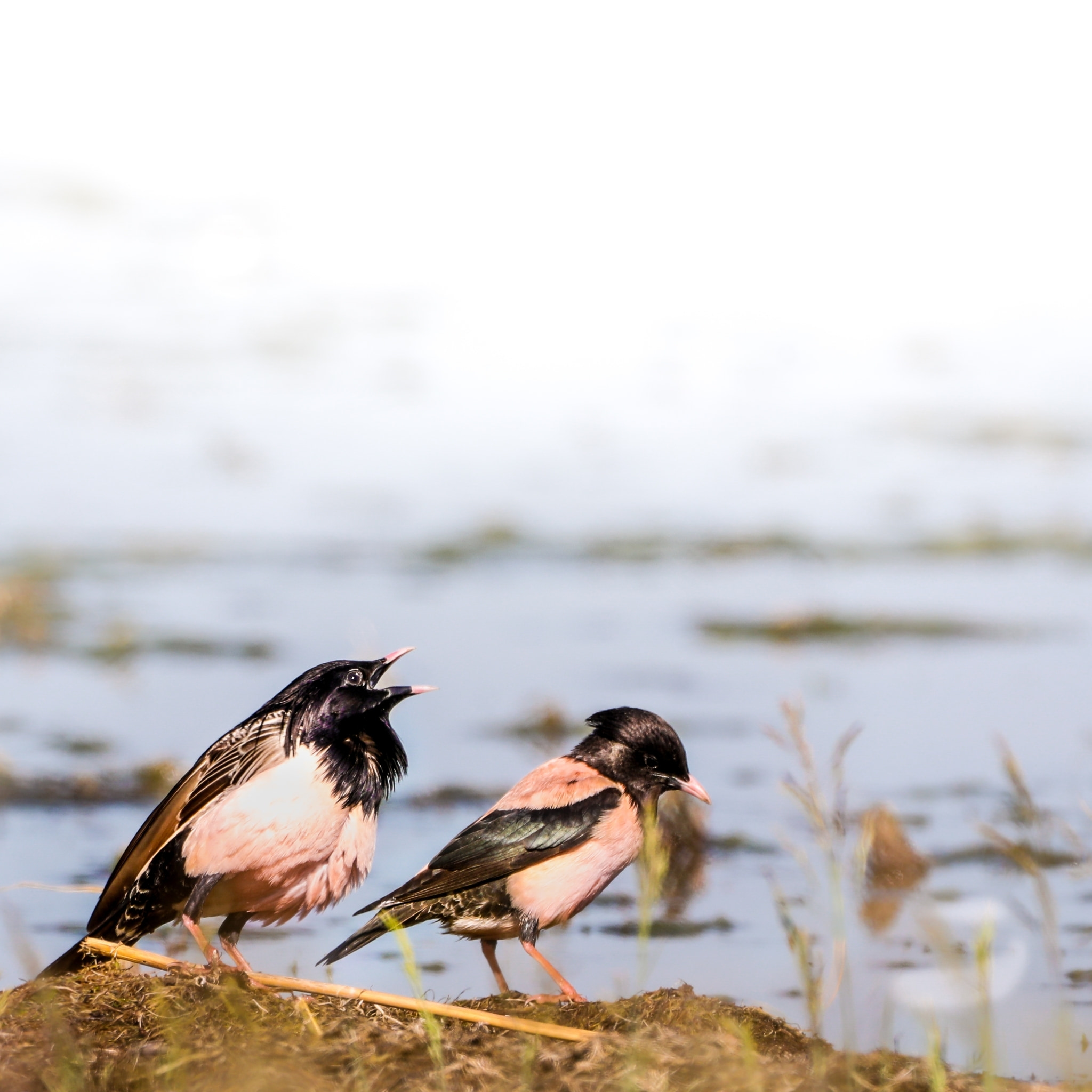
Liudmyla Alymova · Bichvinta, Abkhazia Georgia field photo
Key facts in one look
- Size
- 19–22 cm
- Diet
- Locusts and other insects; fruit
- Status in Georgia
- Summer breeder, migrant
- Habitat
- Steppe, open farmland, cliffs and piles of stones
- Family
- Sturnidae
- Protection
- Globally LC, 2016; in Georgia LC, 2021
The rosy starling is a locust hunter: while breeding it lives mainly on locusts, and its short breeding season is timed to their peak. The adult male has a pink body and a glossy black head, wings and tail, with a crest of long feathers on the head. It is the size of a common starling. In Georgia it breeds in summer and passes through on migration in spring and autumn. It travels in large, noisy flocks and nests in colonies. A brownish starling with no crest seen in late summer may be a young bird of this species.
Identification
Rosy starling: how to identify it
A starling 19–22 cm long, weighing 60–88 g. The adult has a pink body and a black head, throat, wings and tail, with a crest on the head. The young bird is pale buffy brown and looks like a young common starling.
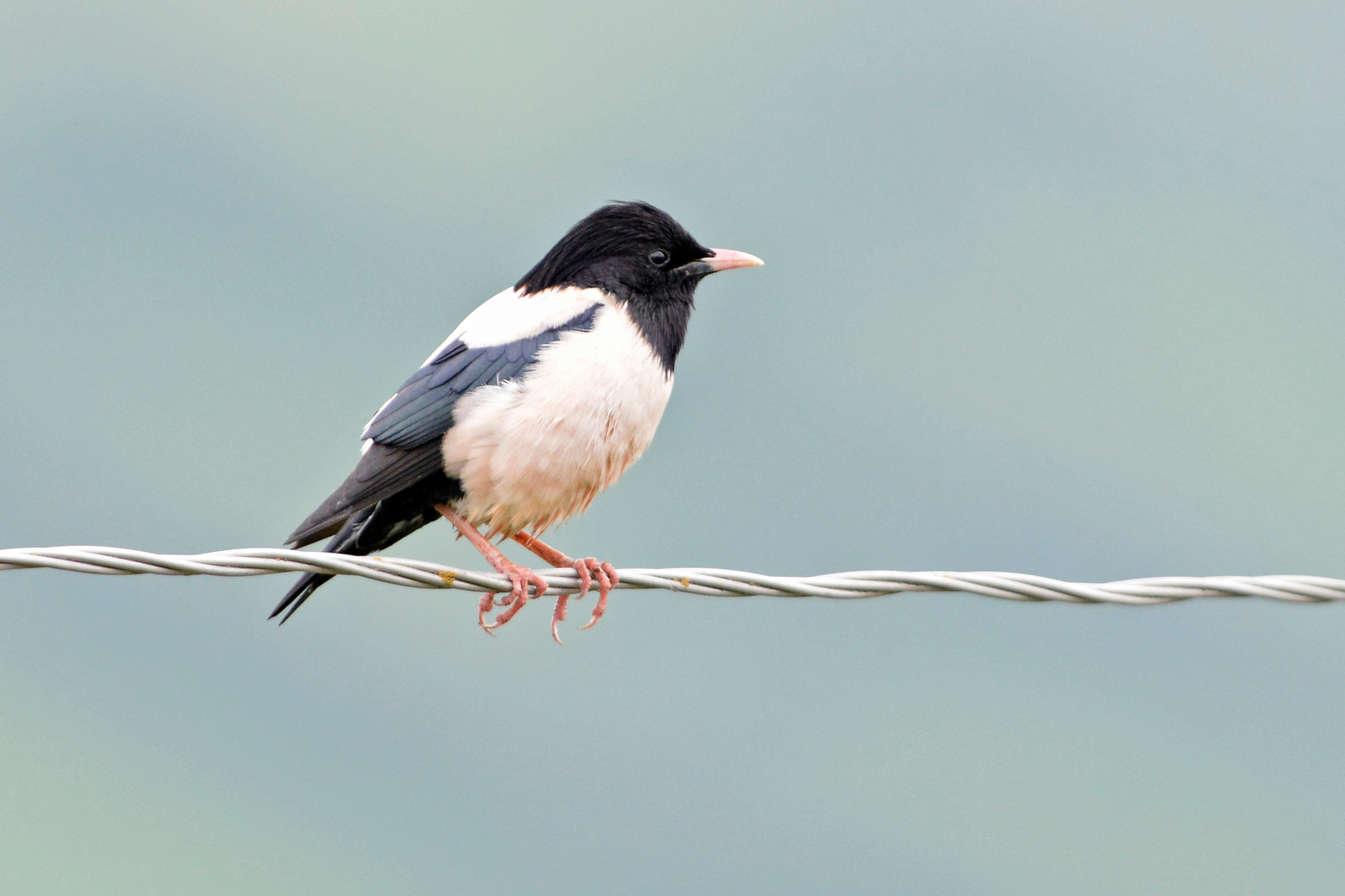
Length 19–22 cm, weight 60–88 g, the size of a common starling. In the breeding season the adult male has a pink body and a glossy black head, wings and tail. The head feathers are long and form a crest, which is fluffed up when the bird is excited. The bill is black at the base and bright pink at the tip, the legs pink to pale orange.
The female has a shorter crest, and the line between pink and black is less sharp. In winter adults also have a shorter crest, the black feathers have pale edges, the body is a duller greyish pink and the bill is grey. Females take nearly a year to reach full adult plumage, males nearly two.
The young bird is pale buffy brown, with a short yellow bill and no crest. It moults into a dull, adult-like plumage in late autumn, 2–3 months later than young common starlings. If you see a flock of brownish starlings in late summer, look closely at the bill and colour: it may hold both species.
Colour
Swatches are illustrative. Do not identify a species by colour alone.
Often confused with
It is a bird of steppe, semi-desert and open farmland. For a colony it picks cliffs, piles of stones and crevices, where there are plenty of nest sites between the rocks. It breeds from Central Asia and southern Russia to Azerbaijan and Armenia, the Caucasus included. In Georgia it has been seen at David Gareja in June 2016 and at Lake Kumisi in 2005.
The rosy starling breeds in Georgia in summer and passes through on migration in spring and autumn. Its records run from April to October, with the most in May, then June and August. Most records come from Kakheti, Kvemo Kartli and Adjara. It has also been found in Samtskhe-Javakheti, Mtskheta-Mtianeti, Shida Kartli, Tbilisi, Abkhazia, Samegrelo, Imereti and Guria. The oldest records are museum specimens collected near Tbilisi and Mtskheta in May 1910.
Data: Reptiles.ge + iNaturalist · Methodology
- Field observation
- Several records in one spot
- Photo record
- Region with records
In the breeding season, May–July, 70–100% of its food is animal. Grasshoppers and locusts, above all locusts, make up to 62% of it. It also eats beetles, cicadas, mantises, ants, snails and sometimes large caterpillars. After breeding it turns to fruit: mulberries, figs, cherries, grapes, apricots and raspberries. It also eats wheat and sorghum grain and flower nectar.
It is a migrant and winters mainly in India, less in Sri Lanka and Oman. It is very sociable: it travels in large, noisy flocks and forms big flocks in winter too. In years when locusts and other insects are plentiful, large numbers reach far to the west, as far as France, Britain and Ireland. The song is a typical starling mix of squeaks and rattles, delivered with much wing trembling. It nests in tight colonies in a short season, from mid-May to early July. It builds its nest in rock crevices, cracks in walls, under roofs and often in a pile of stones, between two rocks. The clutch is 3–6 pale blue, unspotted eggs. Both parents incubate for about 15 days and feed the chicks together. The chicks stay in the nest for about 24 days, and once most of them can fly the colony breaks up.
Globally the rosy starling's risk of extinction is rated low (LC, 2016). It is a widespread bird that breeds from Central Asia to south-eastern Europe and winters in India. In Georgia's national assessment (2021) its risk is also rated low (LC), and its numbers are stable. The list of the birds of Georgia gives it as a breeder and a migrant.
Related guides
Continue with related pages
Yes. It breeds in Georgia in summer and passes through on migration in spring and autumn. It has been seen at David Gareja in June 2016 and at Lake Kumisi in 2005. It does not spend the winter here: it flies to India.
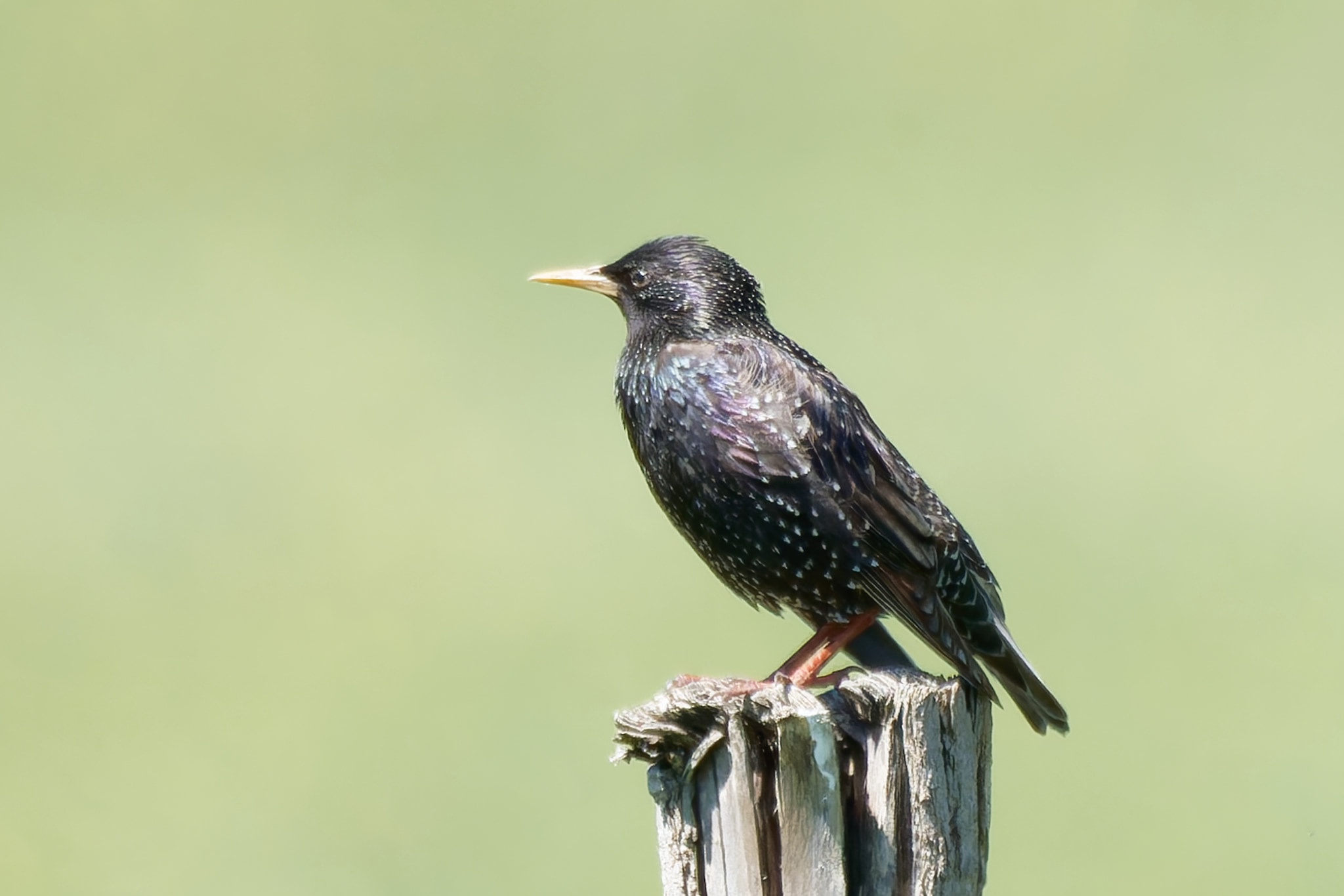
Adults are hard to mistake: the common starling has no pink body, black head or crest. Young birds are the difficult part. A young rosy starling is pale buffy brown, with a short yellow bill. It moults into adult-like plumage 2–3 months later than young common starlings, so in autumn it may still be brownish.
While breeding, almost only animal food, above all locusts. It also eats beetles, cicadas, ants and snails. After breeding it turns to mulberries and figs, cherries, grapes and apricots. It also eats grain and flower nectar.
In rock crevices, cracks in walls, under roofs and often in a pile of stones, between two rocks. It nests in tight colonies from mid-May to early July. The clutch is 3–6 pale blue eggs. Both parents incubate for about 15 days.
Mainly in India, less in Sri Lanka and Oman. In India in winter it often outnumbers the local starlings and mynas. In years rich in locusts it reaches western Europe in summer. It passes through Georgia on migration in spring and autumn.
No, it is harmless to people. Large flocks damage orchards and cereal crops, but in return they keep down locusts. Globally its risk of extinction is low (LC, 2016). In Georgia's national assessment (2021) its risk is also low (LC), and its numbers are stable. Do not catch wild birds.
References
What this profile is based on
Species profiles are compiled from peer-reviewed literature and established biodiversity databases, and are reviewed as new taxonomic and conservation data become available.
Prepared by the Reptiles.ge editorial team from the sources listed here.


