



Common starling
Sturnus vulgaris
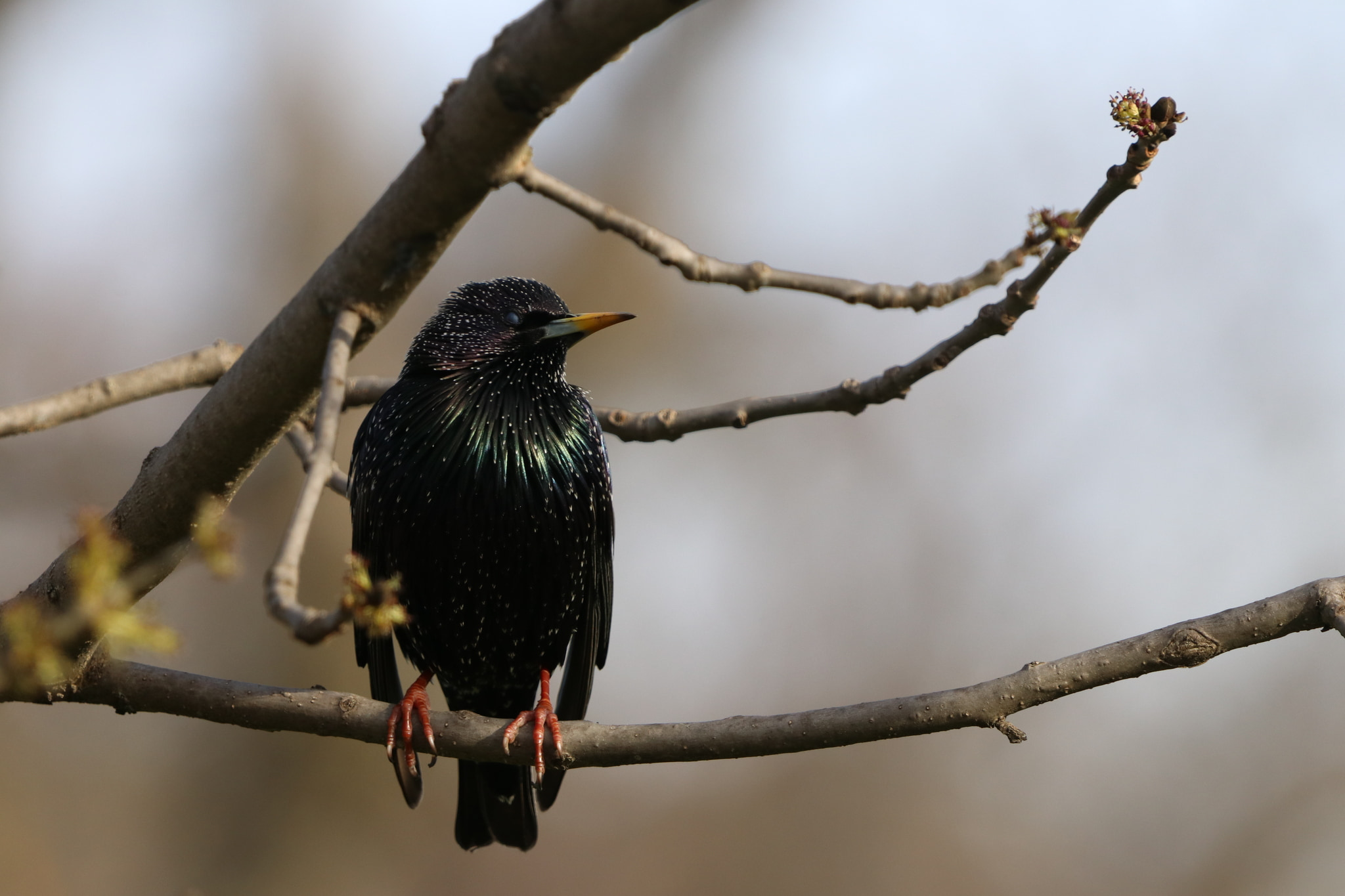
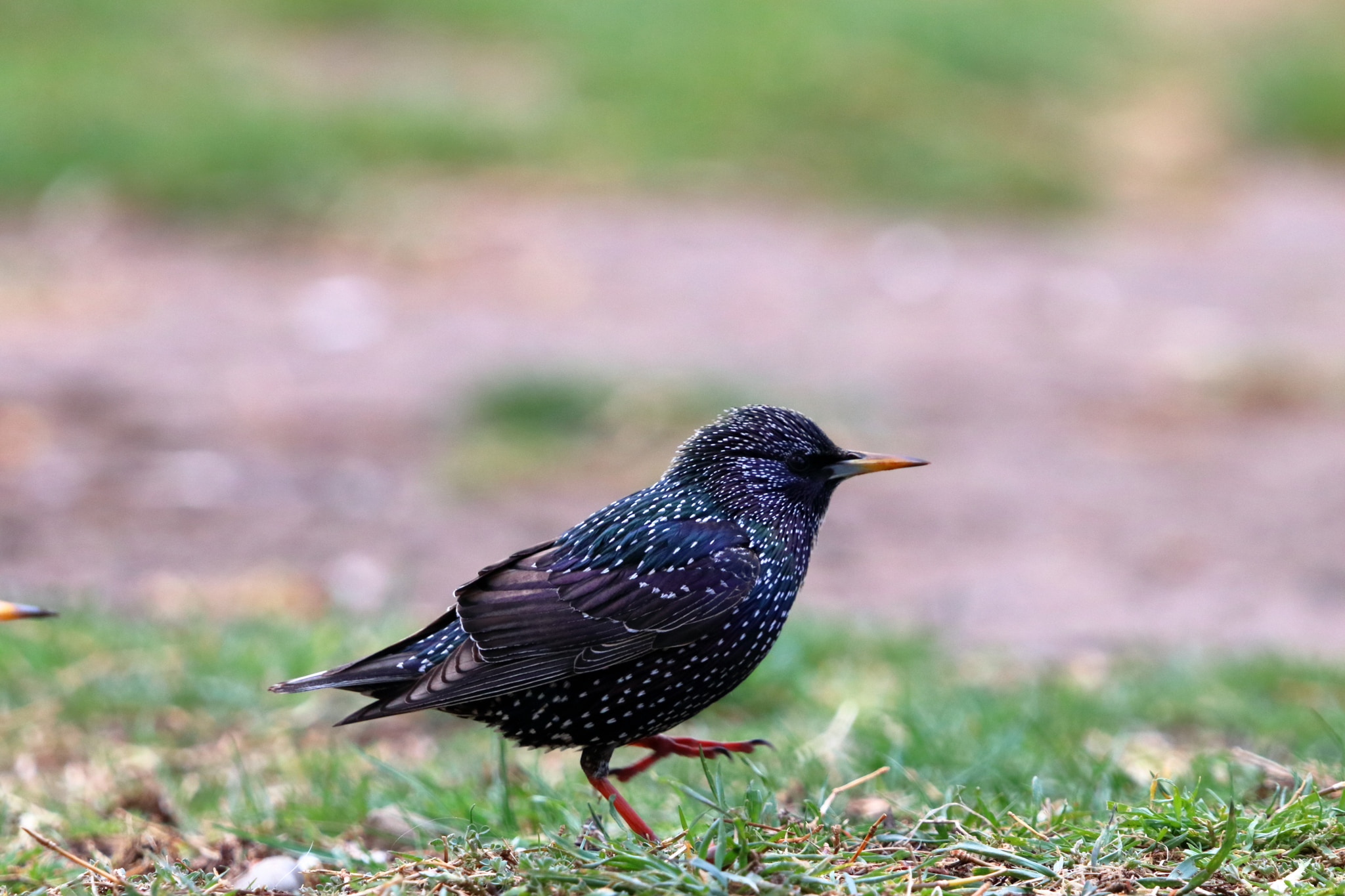
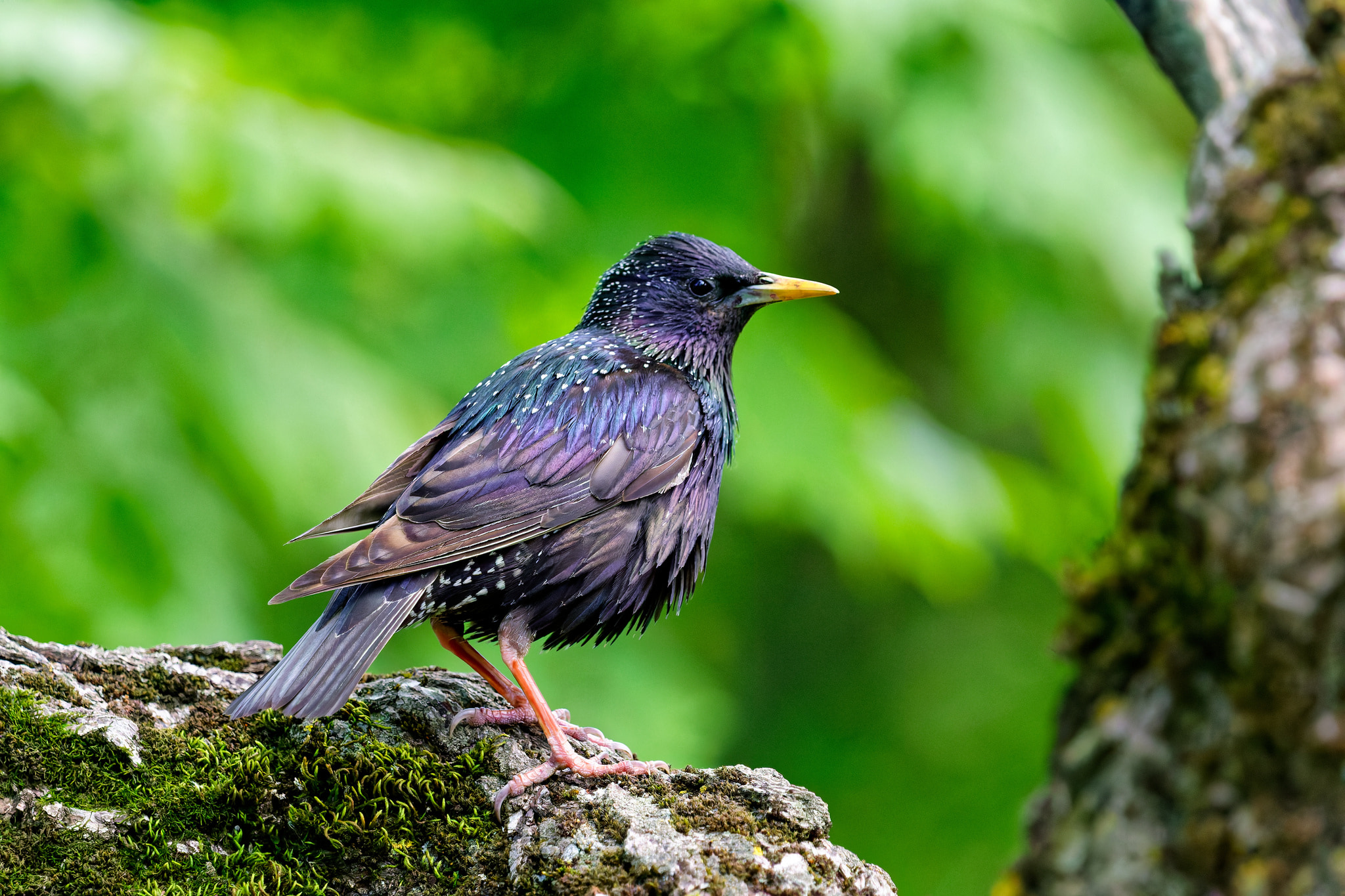
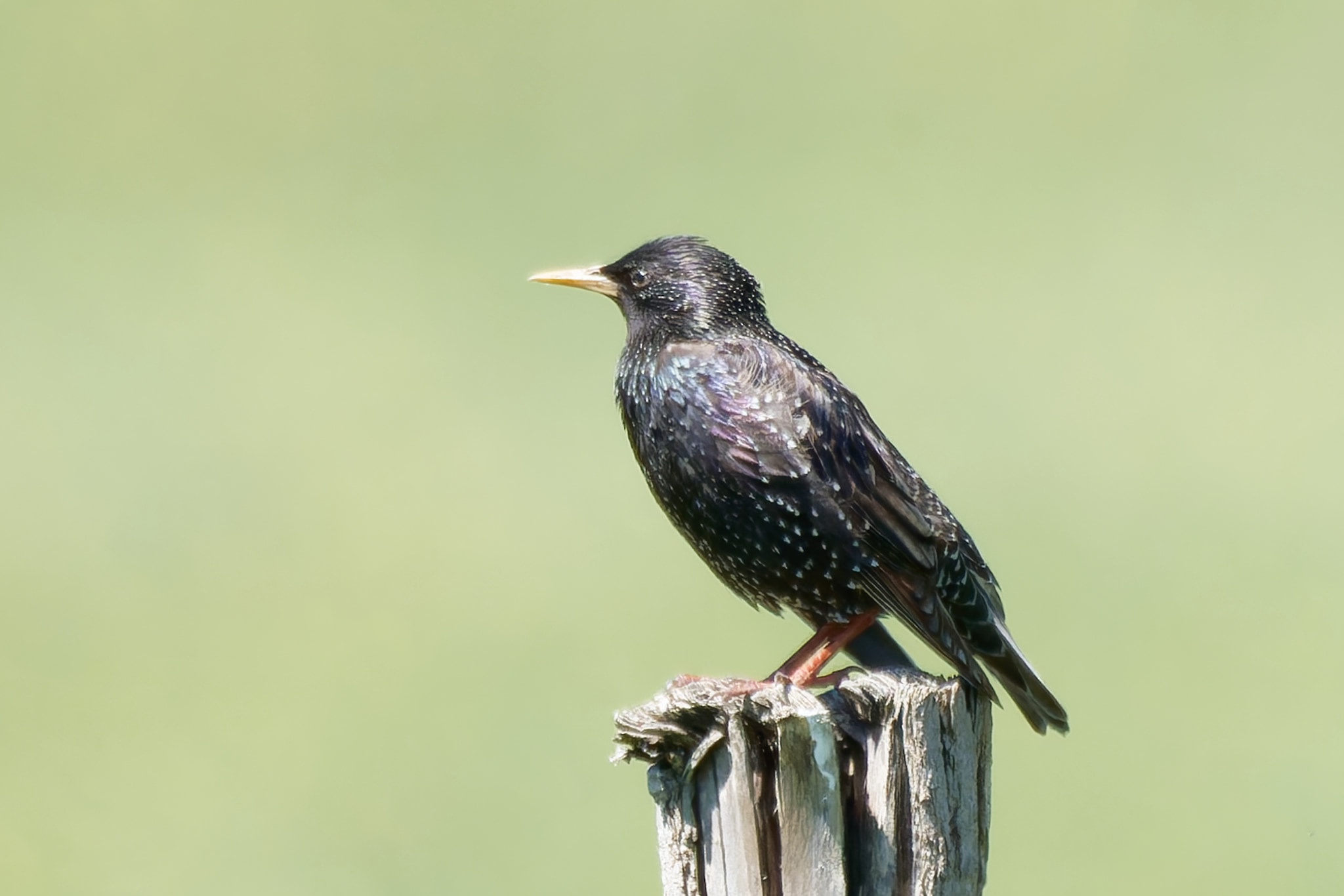
hoiman01 · Sagarejo, Kakheti Georgia field photo
Key facts in one look
- Size
- 19–23 cm
- Diet
- Insects and other invertebrates; fruit, seeds
- Status in Georgia
- Breeder, migrant, winter visitor
- Habitat
- Settlements, farmland, pastures
- Family
- Sturnidae
- Protection
- Globally LC, 2019; in Georgia LC, 2021
The common starling is a master mimic: into its song it weaves the voices of other birds, the croak of frogs, the bark of dogs and even the crack of a whip. Its black plumage has a purple or green gloss, and in autumn and winter it is covered in white spots. In Georgia it breeds, passes through on migration in spring and autumn, and winters. It nests in tree holes, gaps in buildings and nest boxes. In the evening, near a roost, thousands of starlings wheel through the sky together as if they were one body.
Identification
Common starling: how to identify it
A bird 19–23 cm long, weighing 58–101 g. The plumage is black with a purple or green gloss. In winter it is spotted white, and in summer the bill is yellow.
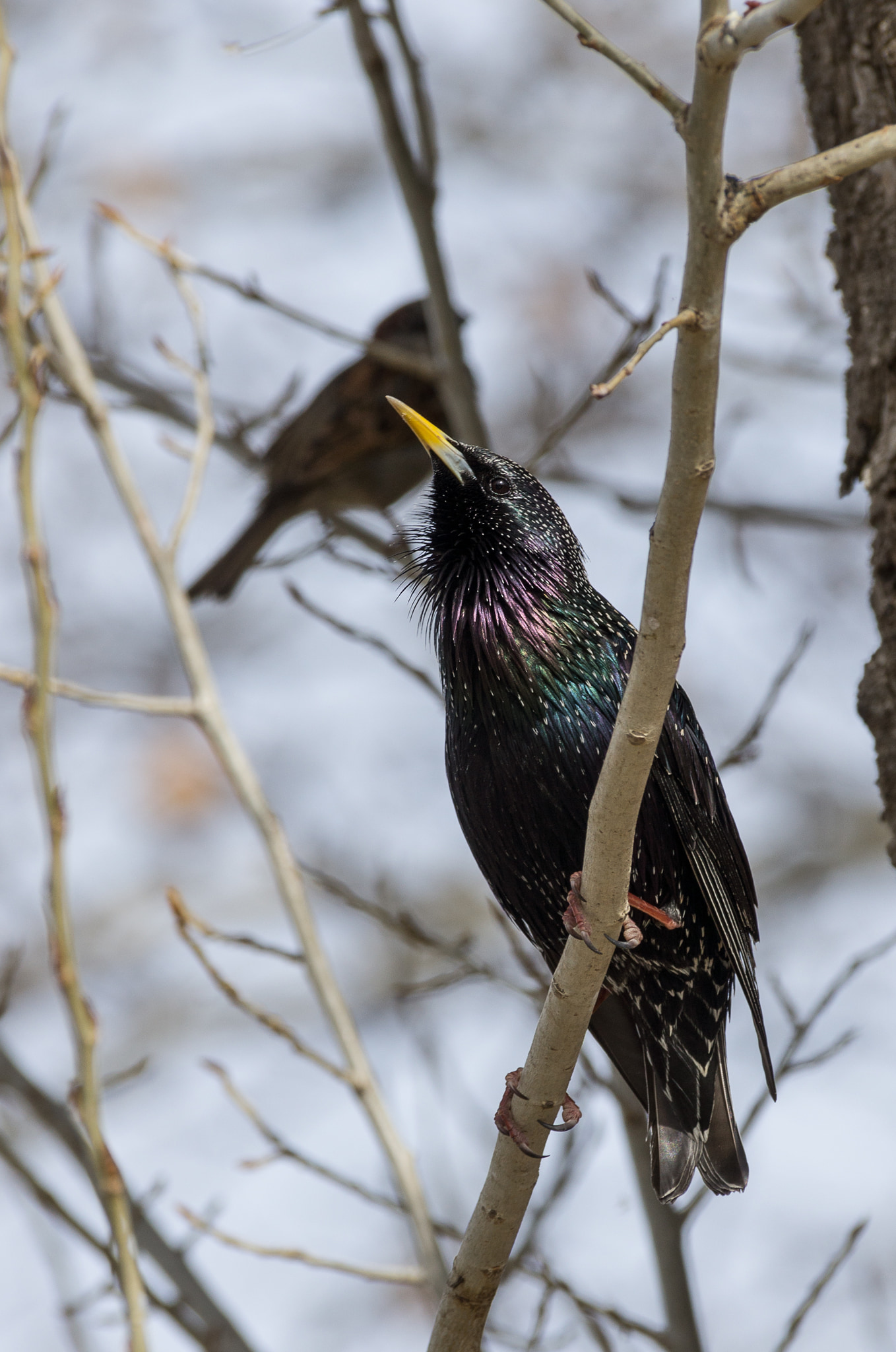
Length 19–23 cm, wingspan 31–44 cm, weight 58–101 g. The black plumage has a purple or green metallic gloss. Fresh autumn feathers have white tips on the breast and buff tips on the back and wings, so in winter the bird is spotted. By spring these tips wear off, and in the breeding season the spots are almost gone.
In winter the bill is blackish brown, in summer yellow. In summer the male has a blue-grey base to the bill, the female a pink one. The male is less spotted below than the female and has long, loose throat feathers that he uses in display. In the breeding season the legs are pinkish red or greyish red.
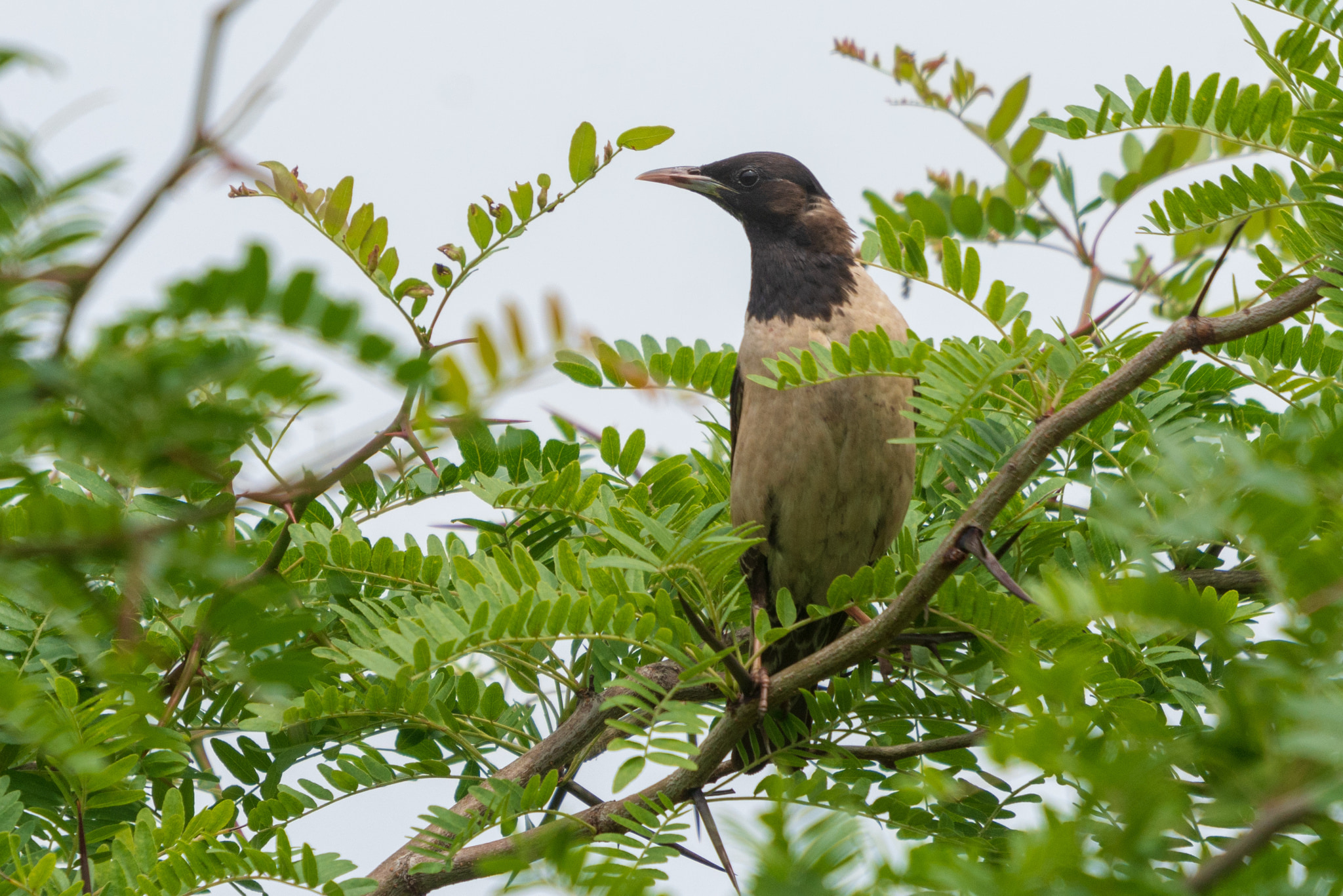
The young bird is plain grey-brown and looks like an adult by its first winter, though it often keeps brown feathers on the head. A young rosy starling is brownish too, but pale buff, with a short yellow bill. If you see a flock of brown starlings in late summer, look at the bill.
Colour
Swatches are illustrative. Do not identify a species by colour alone.
Often confused with

It is a bird of open places with short grass: villages, towns and suburbs, farmland and pastures. It feeds in the grass and nests in tree holes and buildings nearby. It often roosts in reedbeds. It occurs from coastal wetlands to mountain forests up to 1,900 m. In Georgia it has been seen in Tbilisi at Lisi Lake in April 2025, near Kartsakhi in July 2009 and in Vashlovani–Chachuna in 2009.
The common starling breeds in Georgia, passes through on migration and winters. It has records in every month of the year, the most in spring, above all in May, and the fewest from December to February. Most records come from eastern Georgia: Kakheti, Kvemo Kartli, Tbilisi and Samtskhe-Javakheti. It has also been found in Adjara, Mtskheta-Mtianeti, Imereti, Shida Kartli, Abkhazia, Samegrelo and Guria. The oldest record is a museum specimen collected near Mtskheta in 1910.
Data: Reptiles.ge + iNaturalist · Methodology
- Field observation
- Several records in one spot
- Photo record
- Region with records
It is mainly an insect eater: it takes spiders, beetles, moths, crane flies, grasshoppers, ants, earthworms and snails, and sometimes small amphibians and lizards. It pushes its bill into the soil and opens it there, which its unusually strong jaw muscles allow. It also catches flying insects. When it can, it also eats grain, seeds, fruit, nectar and food waste.
It is a very sociable bird. Huge flocks gather near the roost and wheel through the air together: each bird follows its nearest neighbours, and there is no leader. This is probably a defence against sparrowhawks and peregrine falcons. Up to 1.5 million starlings can gather at one roost. The male sings almost all year, except during the moult: in his song, whistles, imitations of other birds and clicks follow one another. It nests in tree holes, buildings, stumps and nest boxes. The male often decorates the nest with fresh green plants and aromatic herbs such as yarrow. The clutch is 4–6 glossy pale blue eggs. Incubation, mostly by the female, lasts 11–15 days. The chicks stay in the nest for about three weeks. In the south it usually raises two broods a year.
Globally the common starling's risk of extinction is rated low (LC, 2019). In 2004 its population was estimated at about 310 million. In northern Europe it has declined sharply since 1980, and in Britain by more than 80% between 1966 and 2004. The main cause is intensive farming, which leaves fewer grassland invertebrates for the chicks. In Georgia's national assessment (2021) its risk is rated low (LC), and its numbers are stable. The list of the birds of Georgia gives it as a breeder, a migrant and a winter visitor.
hoiman01 · Nikita Tiunov · Nikoloz Donadze
Related guides
Continue with related pages
Yes. It breeds in Georgia, passes through on migration in spring and autumn, and winters. It has been seen in Tbilisi at Lisi Lake, near Kartsakhi and in Vashlovani–Chachuna. The subspecies S. v. purpurascens lives from eastern Turkey to Tbilisi.
Yes, it is a master mimic. Into its song it weaves the voices of other birds, the croak of frogs, the bark of dogs and the crack of a whip. It can even repeat human speech. An experienced male has up to 35 different variable song types.
Mostly insects and other invertebrates: beetles, grasshoppers, ants, earthworms and snails. It searches for food in short grass, pushing its bill into the soil and opening it. When it can, it also eats fruit, seeds and grain. At times it damages orchards and crops.
In tree holes, gaps in buildings, stumps and nest boxes. The clutch is 4–6 pale blue eggs, incubated mostly by the female for 11–15 days. The chicks stay in the nest for about three weeks. If you want to attract starlings to your garden, put up a nest box with a narrow entrance.
Big flocks gather near the roost, probably as a defence against birds of prey. Each starling follows its nearest neighbours, and the whole flock turns together, without a leader. In Denmark, flocks of over a million have been seen in spring. Up to 1.5 million birds can gather at one roost.
No, it is harmless to people. Globally its risk of extinction is low (LC, 2019), although it has declined steeply in some European countries. In Georgia's national assessment (2021) its risk is low (LC), and its numbers are stable. Do not catch wild birds.
References
What this profile is based on
Species profiles are compiled from peer-reviewed literature and established biodiversity databases, and are reviewed as new taxonomic and conservation data become available.
Prepared by the Reptiles.ge editorial team from the sources listed here.


