


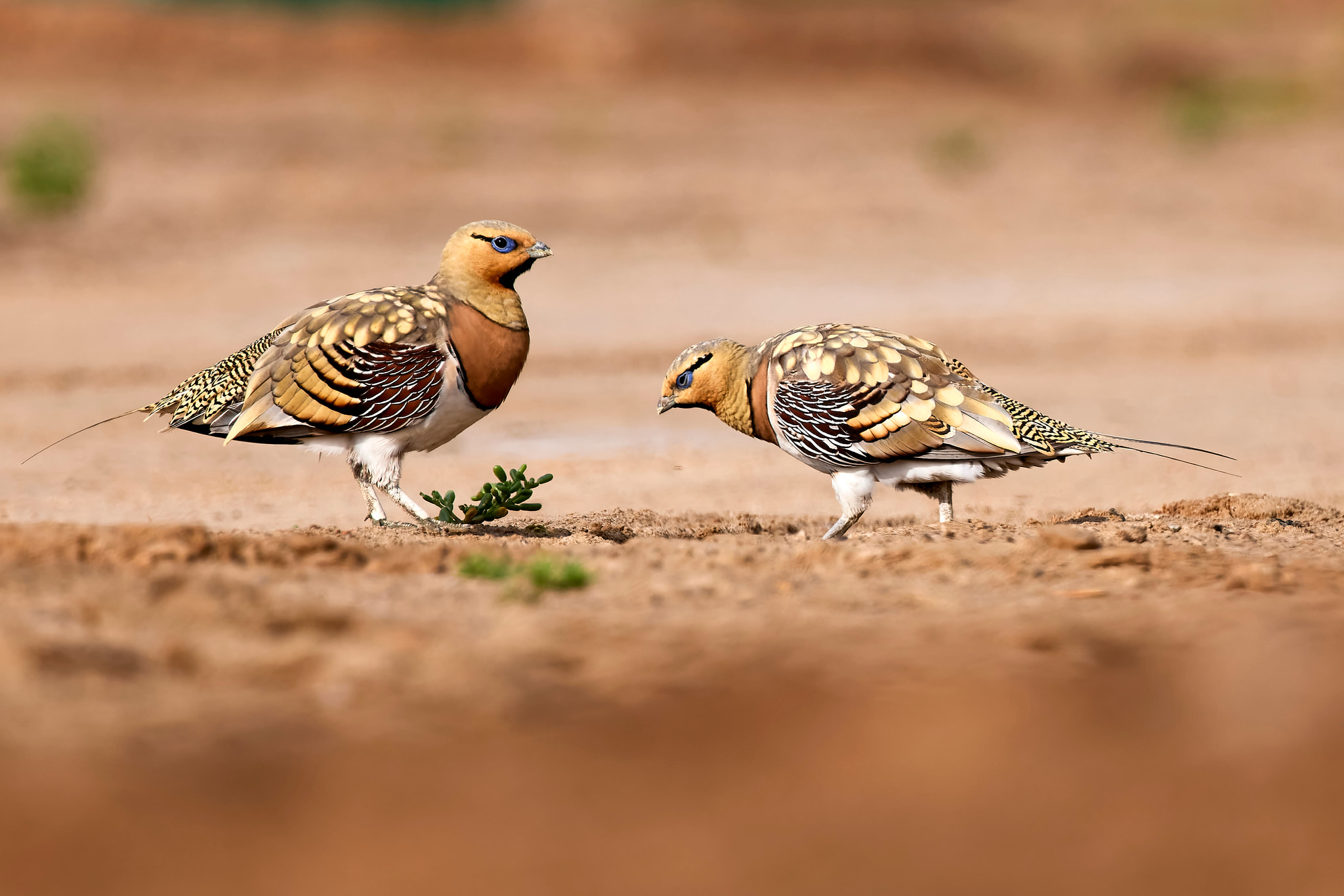

Pin-tailed sandgrouse
Pterocles alchata
Rivi Wick · Dubai - United Arab Emirates
Key facts in one look
- Size
- 31–39 cm
- Diet
- Seeds, buds, green shoots
- Status in Georgia
- Undetermined; historical records only
- Habitat
- Dry treeless plains, stony ground, semi-desert
- Family
- Pteroclidae
- Protection
- Globally LC, 2019; in Georgia NE, 2021
The pin-tailed sandgrouse is a stocky bird 31–39 cm long, with a small, pigeon-like head and long, pointed wings. In flight its white belly and white underwings flash. At dawn flocks fly to water, and by day they search for seeds. It breeds in Iberia and southern France, north-west Africa, and from south-eastern Turkey east to Kazakhstan. From Georgia there are only old records, and none in recent decades.
Identification
Pin-tailed sandgrouse: how to identify it
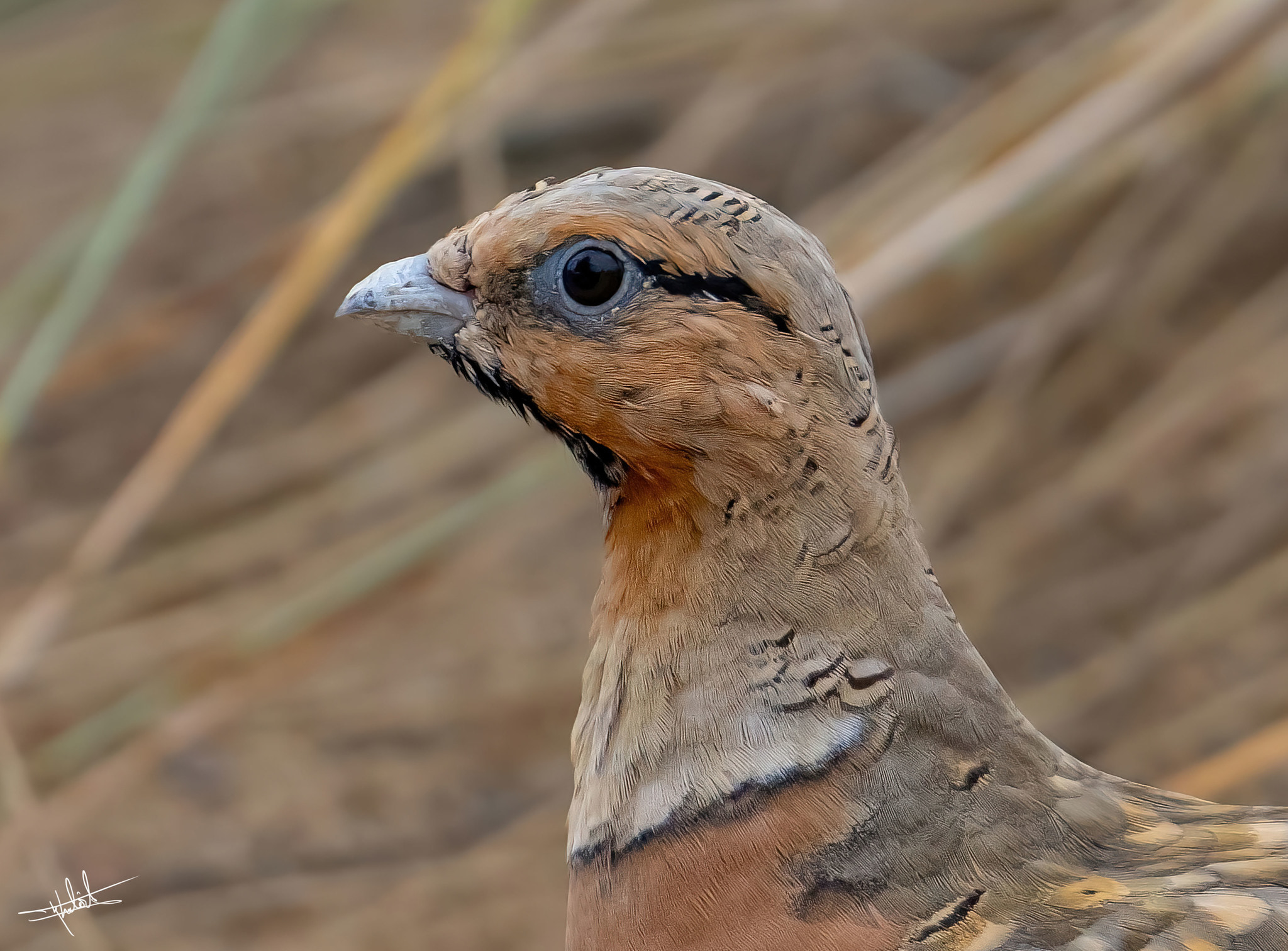
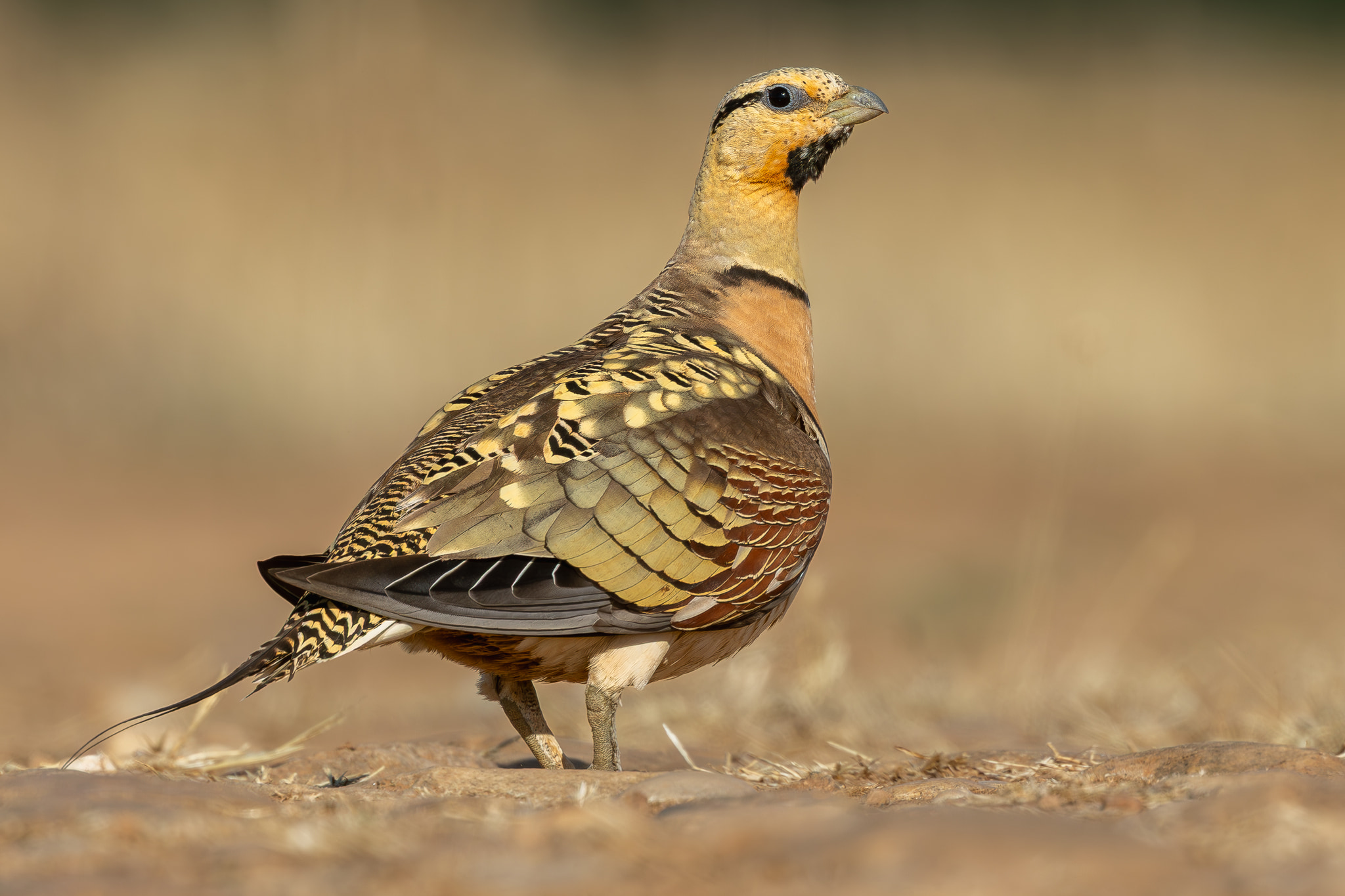
A stocky bird 31–39 cm long, with a small, pigeon-like head, long pointed wings and a long tail. The belly and underwings are white, and a reddish-brown band crosses the breast.
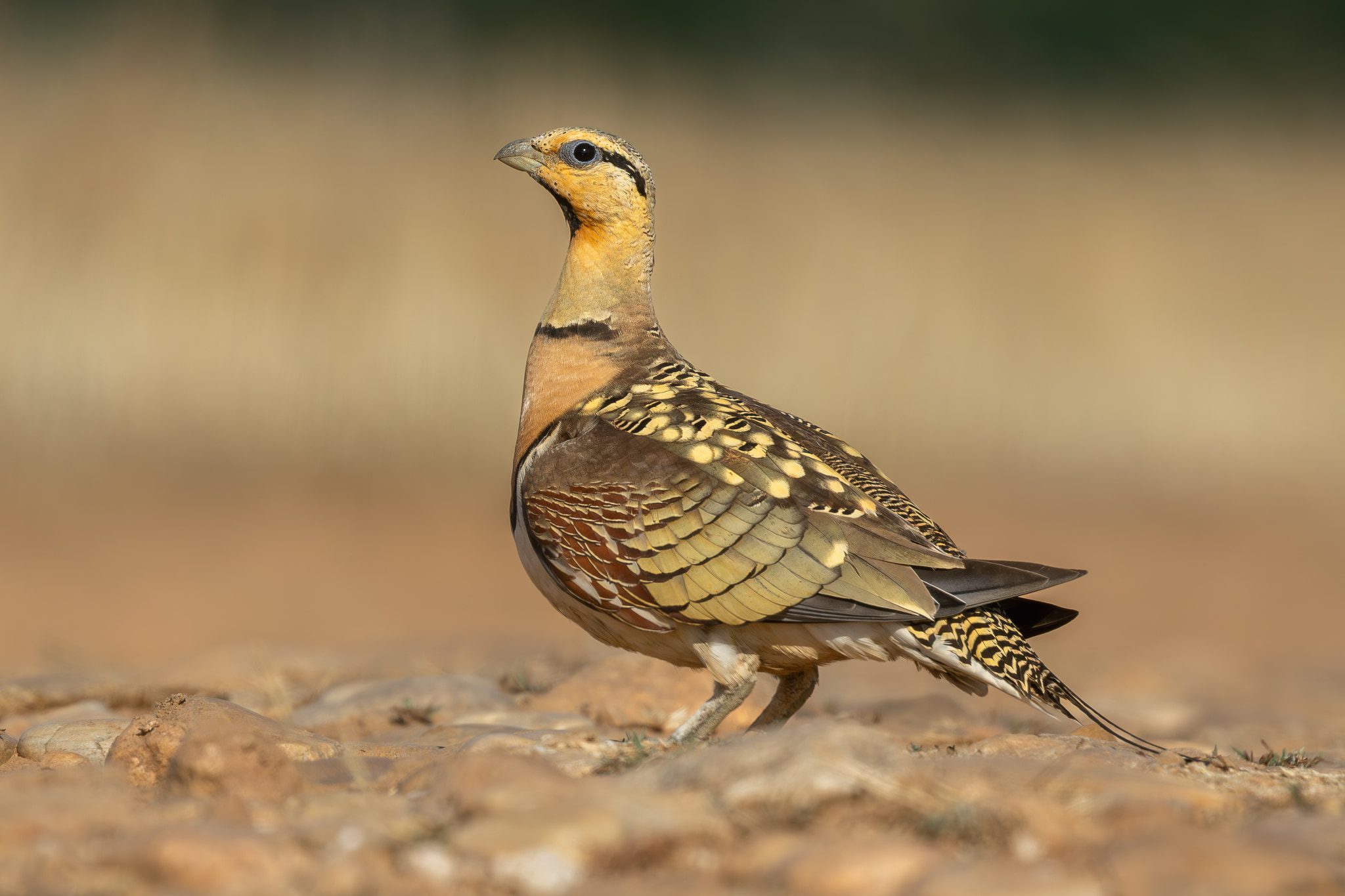
Length 31–39 cm. The head and neck are small and pigeon-like, the body stocky and compact. The wings are long and pointed, and the central tail feathers are drawn out into long, thin pins. The flight is fast and direct.
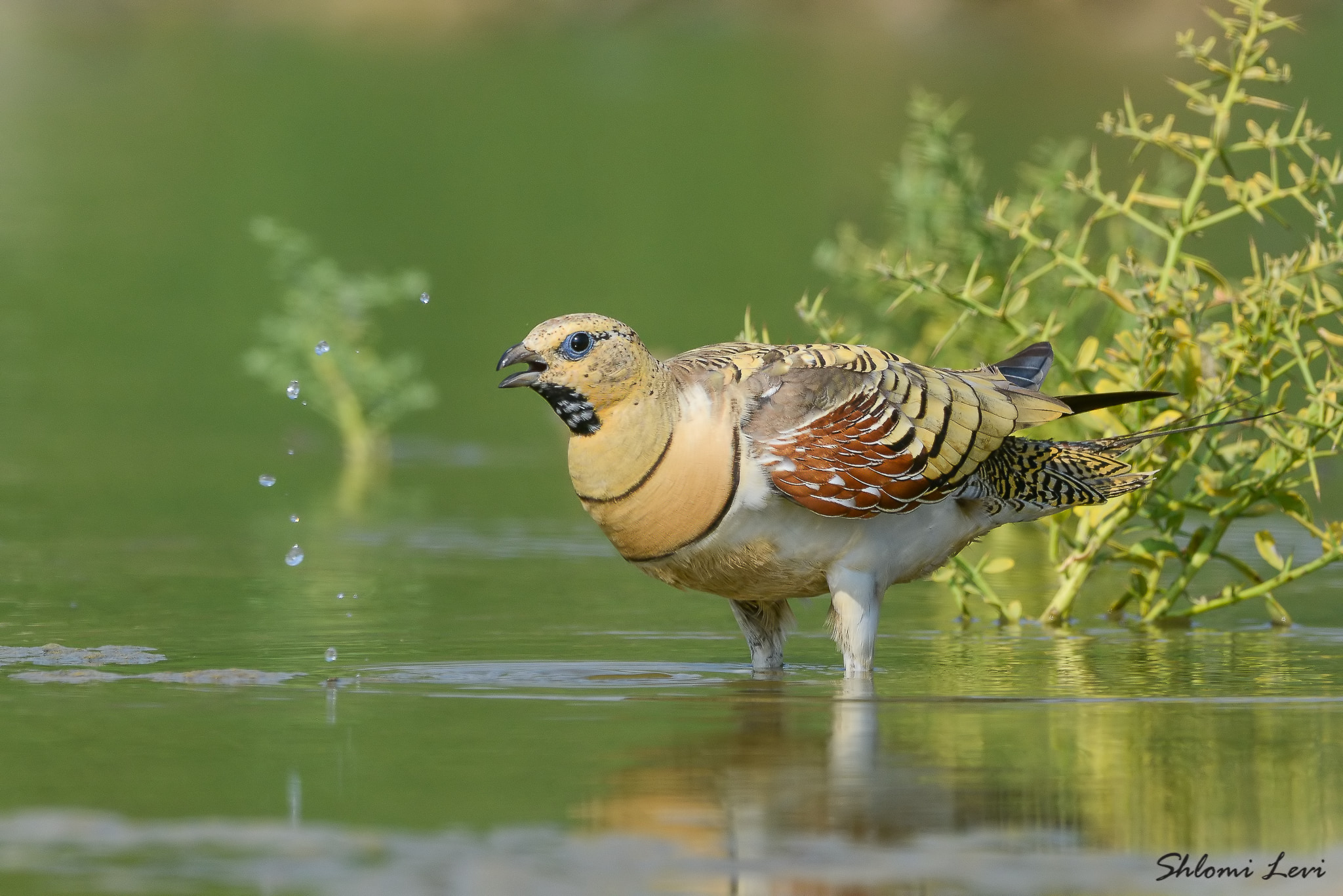
In the breeding season the male has a yellowish-green crown, neck and back, yellow cheeks and a black line through the eye. There is a black patch on the throat and a broad reddish-brown breast band edged with black above and below. The female is duller, with golden-buff cheeks, several bands across the breast and a shorter tail than the male.
In flight the best marks are the bright white belly and white underwings, and the long central tail feathers. The black-bellied sandgrouse also has white underwings, but a black belly: if the belly is white, it is a pin-tailed sandgrouse.
Colour
Swatches are illustrative. Do not identify a species by colour alone.
Often confused with
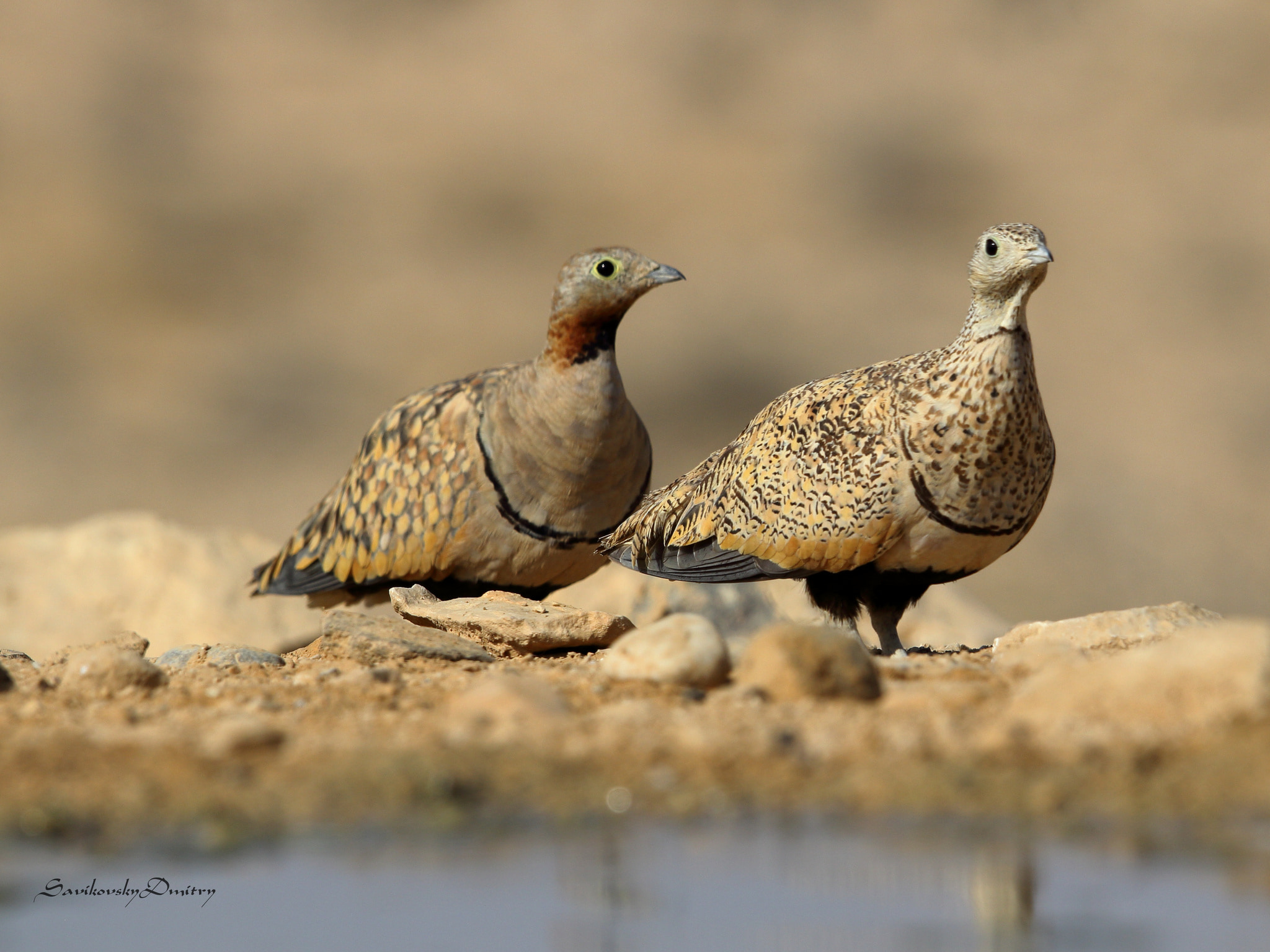
It is a bird of open, stony ground, the semi-arid fringes of deserts and treeless plains, and sometimes turns up on dried-out mud flats. It prefers sandy soils and depends less on plant cover than the black-bellied sandgrouse. In winter it also visits ploughed or fallow land. It does not occur above about 1,000 m. It is a partial migrant: birds from Kazakhstan spend the winter in Pakistan and northern India.
No records yet
The atlas has no confirmed observation of this species yet, so we do not know which regions of Georgia it lives in.
Share an observationSeen this species? A photo and the place are enough.
It eats mainly seeds, above all of legumes. It also takes the seeds of knotweed, buckwheat and wormwood, as well as buds, green shoots and leaves. Near fields it eats grain and the seeds of legume crops. Sometimes it eats beetles and other small invertebrates, and it swallows grit to grind its food. Its dry diet means it needs plenty of water, and it may fly up to 50 km from the nest to drink.
It is a gregarious bird. Soon after dawn it gathers in large flocks at water, and by day the birds disperse to feed. On the ground it is usually silent, but in the air flock members keep in touch with a loud "kattar-kattar". The nest is a shallow scrape on open ground. The female lays two or three creamy-brown, spotted eggs, one every two days. Both parents incubate for 19–25 days: the male takes over about an hour before sunset, and the female relieves him in the morning after her trip to water. The chicks leave the nest soon after hatching. From a week old they feed themselves, and at four weeks they can fly. Only the male brings them water, soaked into his breast feathers.
Globally the pin-tailed sandgrouse's risk of extinction is rated low (LC, 2019). It has a large range, its population is estimated at 130,000 to 1,500,000 birds and is thought to be stable. In parts of Europe, though, it is declining because of changes in farming: at La Crau in southern France only about 170 pairs were left in 2002, and Portugal had fewer than 100. In Georgia's national assessment (2021) it was not assessed (NE). In the list of the birds of Georgia its status is undetermined: it is known only from birds mentioned in the literature and seen without documentary evidence, and there have been no new records in recent decades.
Related guides
Continue with related pages
Only in historical records. In the list of the birds of Georgia its status is undetermined: it is known from birds mentioned in the literature and seen without documentary evidence. There have been no new records in recent decades. If you see one on dry steppe, a photo would be very valuable.
By the belly. The pin-tailed sandgrouse has a white belly, the black-bellied a black one. Both have white underwings, so look at the belly in flight. The pin-tailed also has its central tail feathers drawn out into long pins.
Mainly seeds, above all of legumes. It also eats buds, green shoots and leaves, and grain near fields. Sometimes it catches beetles and other small invertebrates. It swallows grit to grind its food.
At dawn it flies in flocks to water, sometimes 50 km from the nest. Only the male brings water to the chicks: he soaks his breast feathers and flies back. The chicks draw the wet feathers through their bills. So the nest can lie far from water.
On open ground, in a shallow scrape. It lays two or three spotted eggs, one every two days. Both parents incubate for 19–25 days. The chicks soon leave the nest and can fly at four weeks.
No, it is harmless to people. Globally its risk of extinction is low (LC, 2019), although numbers are falling in parts of Europe. In Georgia's national assessment (2021) it was not assessed (NE). Do not catch wild birds.
References
What this profile is based on
Species profiles are compiled from peer-reviewed literature and established biodiversity databases, and are reviewed as new taxonomic and conservation data become available.
Prepared by the Reptiles.ge editorial team from the sources listed here.


