
Lesser spotted woodpecker
Dryobates minor
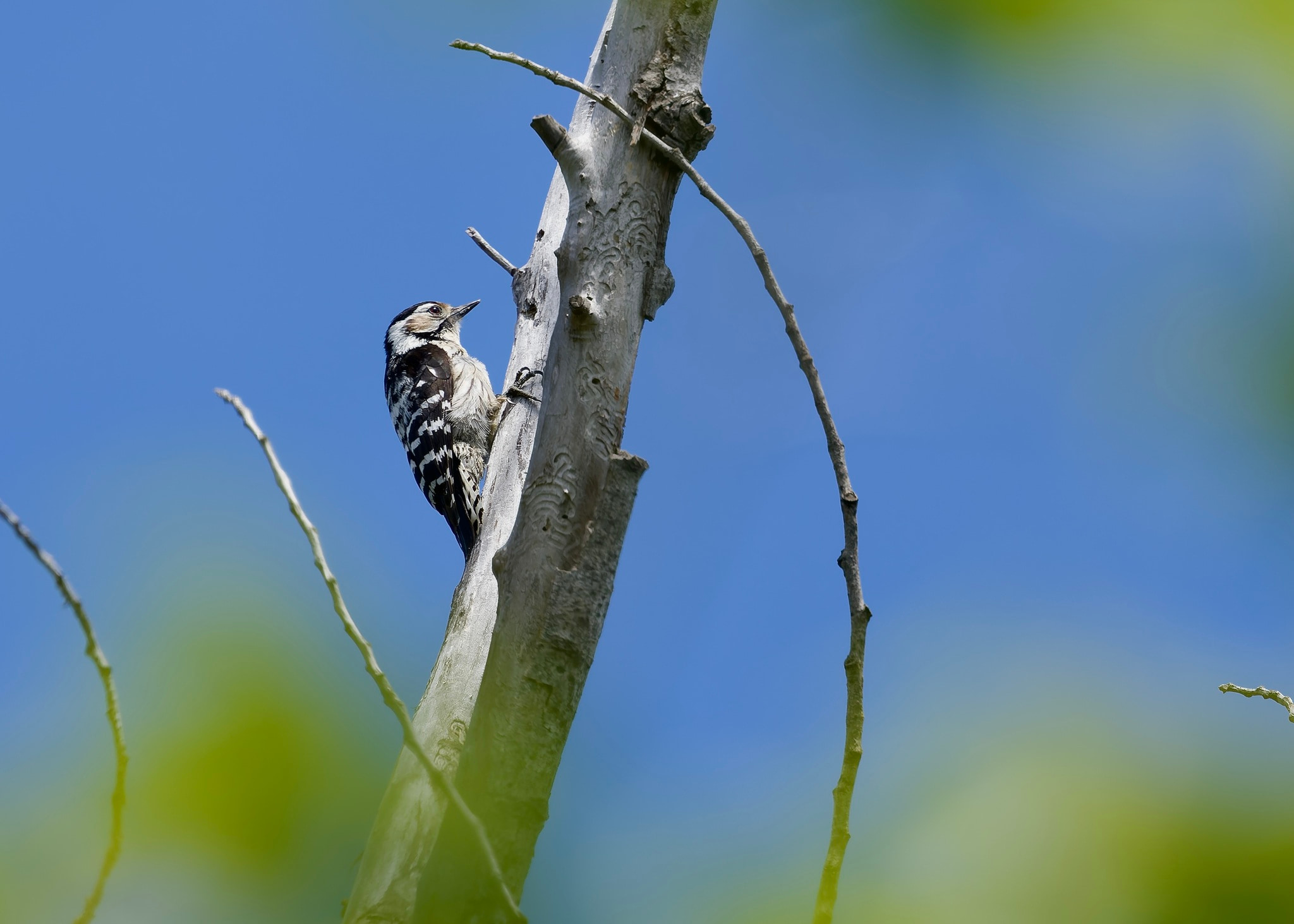
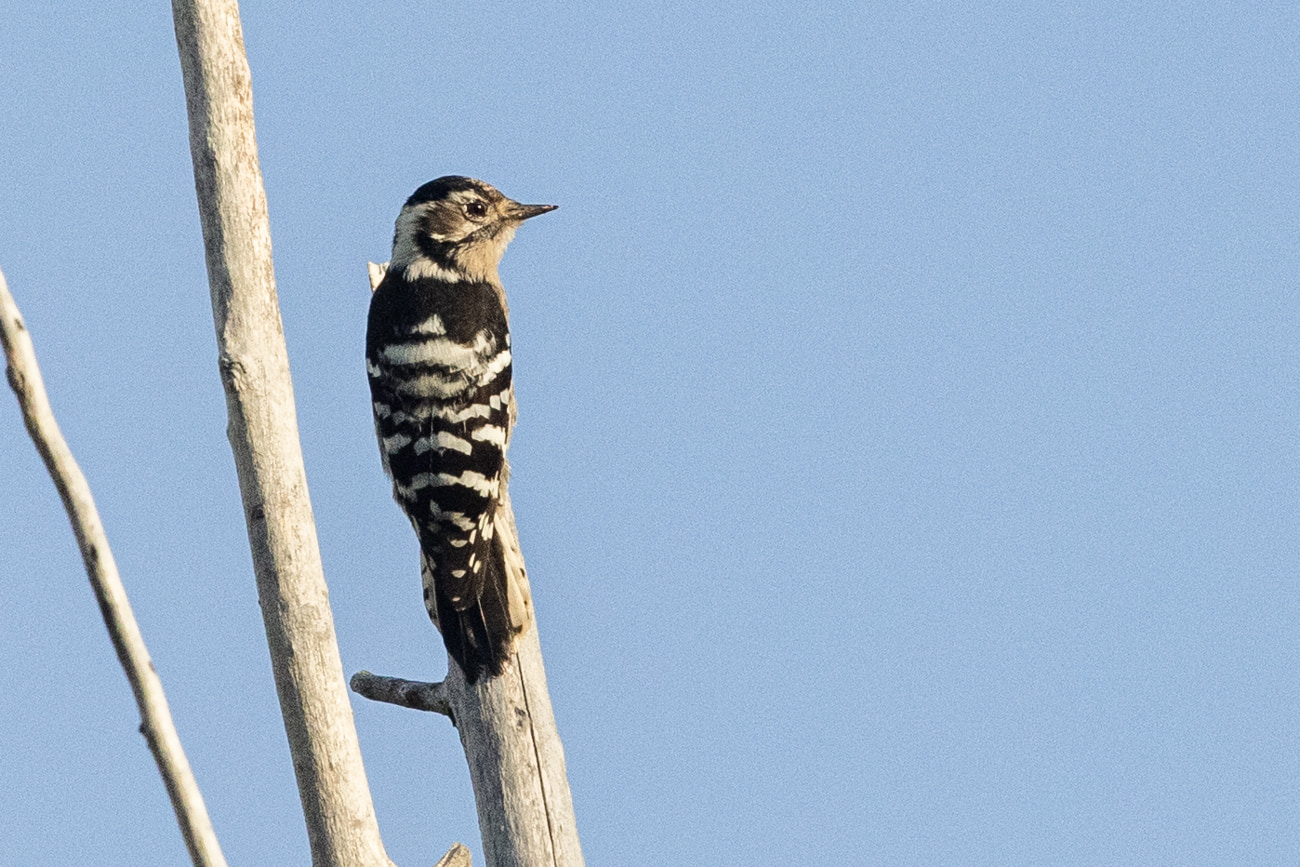
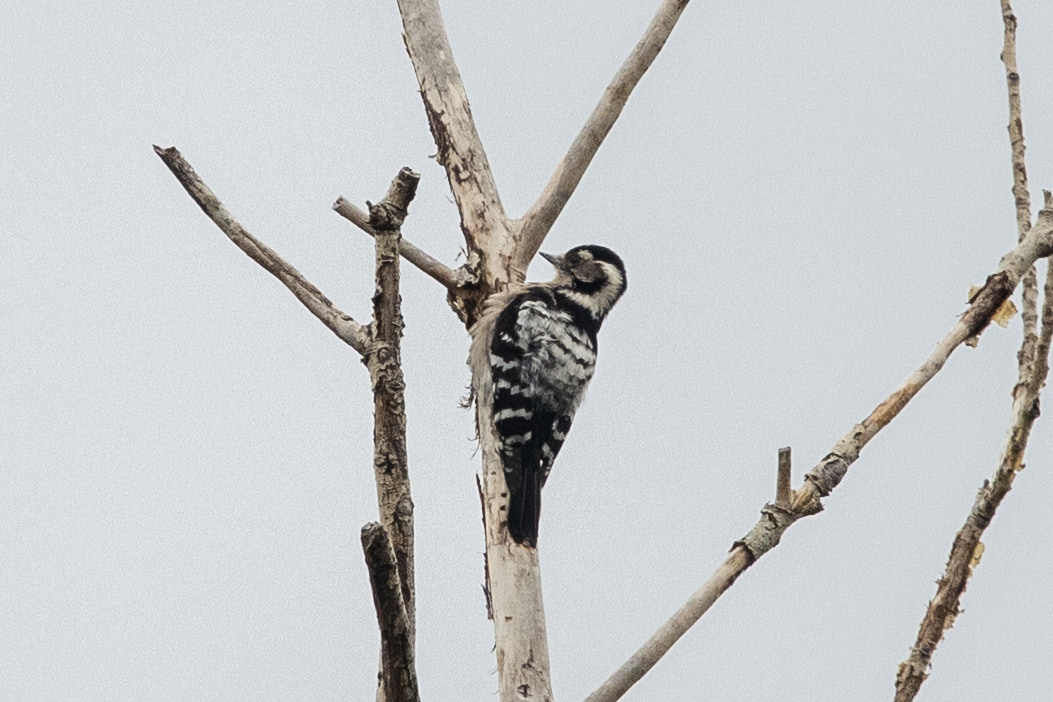
Nikita Tiunov · Lagodekhi, Kakheti Georgia field photo
Key facts in one look
- Diet
- Small insects, larvae of wood-boring insects
- Status in Georgia
- Year-round resident, breeds
- Size
- 14–16.5 cm
- Habitat
- Deciduous and mixed forest, river valleys, parks
- Family
- Picidae
- Protection
- Globally LC, 2018; in Georgia LC, 2021
The lesser spotted woodpecker is the smallest woodpecker in Europe: it is 14–16.5 cm long, only a little bigger than a house sparrow. It spends most of its time in the tops of tall trees, so it is often overlooked. In Georgia it lives and breeds all year round, in deciduous and mixed forest, river valleys and parks with old trees. Its back and wings are barred black and white, and it has no big white shoulder patch. If a sparrow-sized woodpecker is calling a loud, repeated "keek" from the treetops, look up.
Identification
Lesser spotted woodpecker: how to identify it
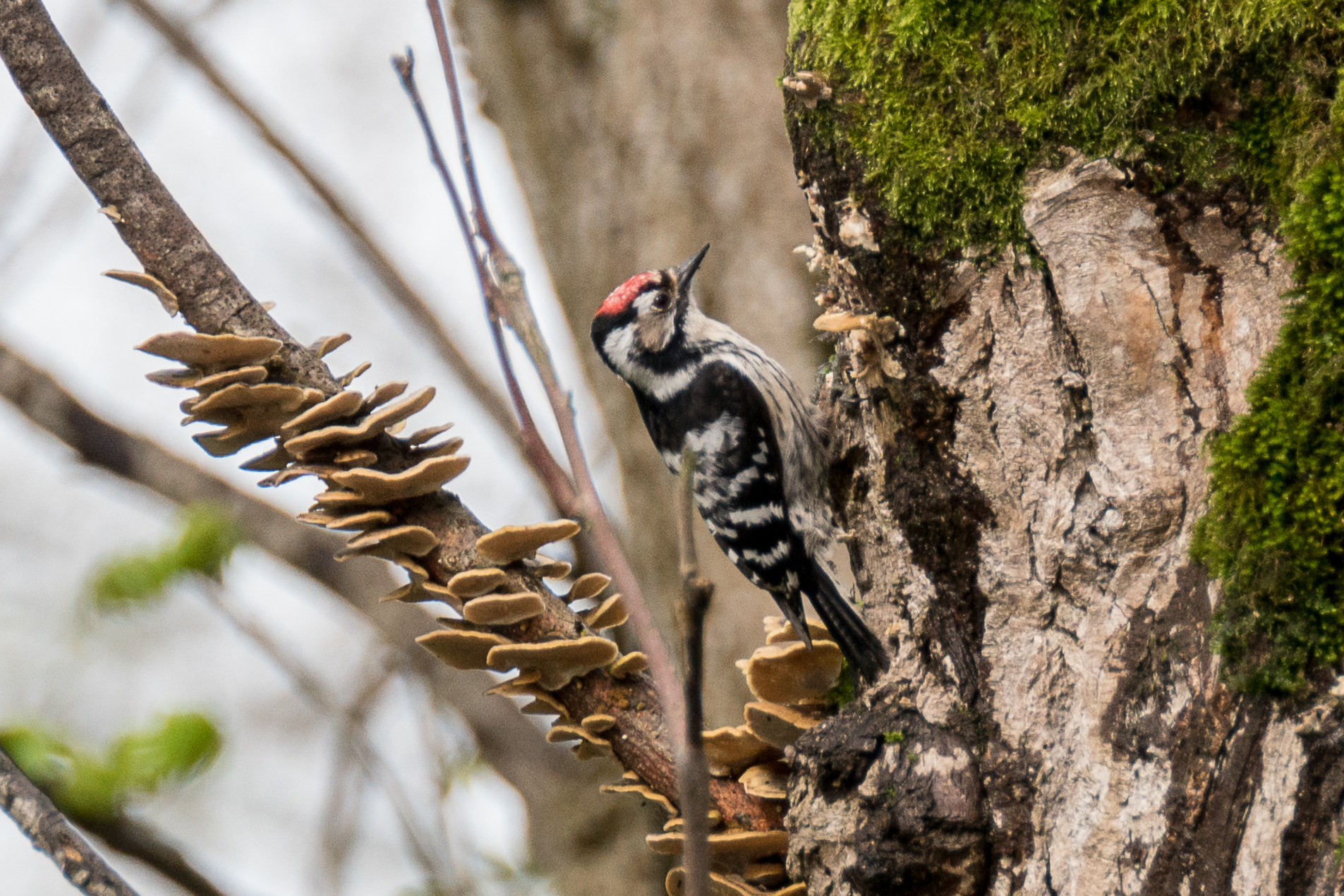
A small black-and-white woodpecker, 14–16.5 cm long and 17–25 g, only a little bigger than a house sparrow. It has broad black-and-white bars on the wings and narrower ones on the lower back. The male has a crimson crown.
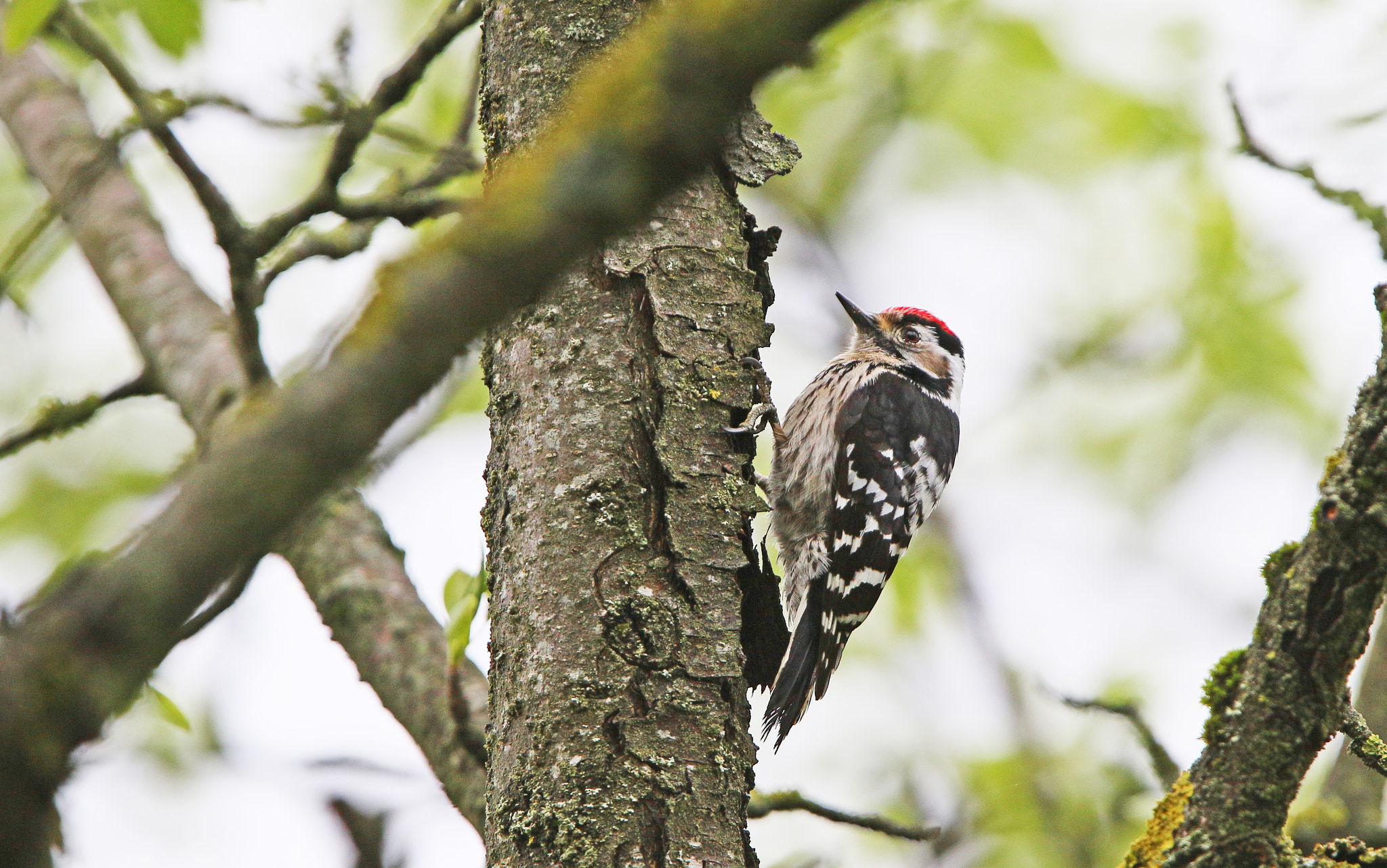
Length 14–16.5 cm, wingspan 24–29 cm, weight 17–25 g. It is the smallest woodpecker in Europe, only a little bigger than a house sparrow. The bill is fairly short; bill and legs are slate grey.
The male has a crimson crown and a brownish forehead. A black stripe runs above the eye and another from the base of the bill to the neck. The nape and upper back are black, the lower back barred black and white, with broader white bars on the wings. The underparts are white with dark streaks on the flanks. The female has no red on the crown, and young birds have more or less crimson on the head.
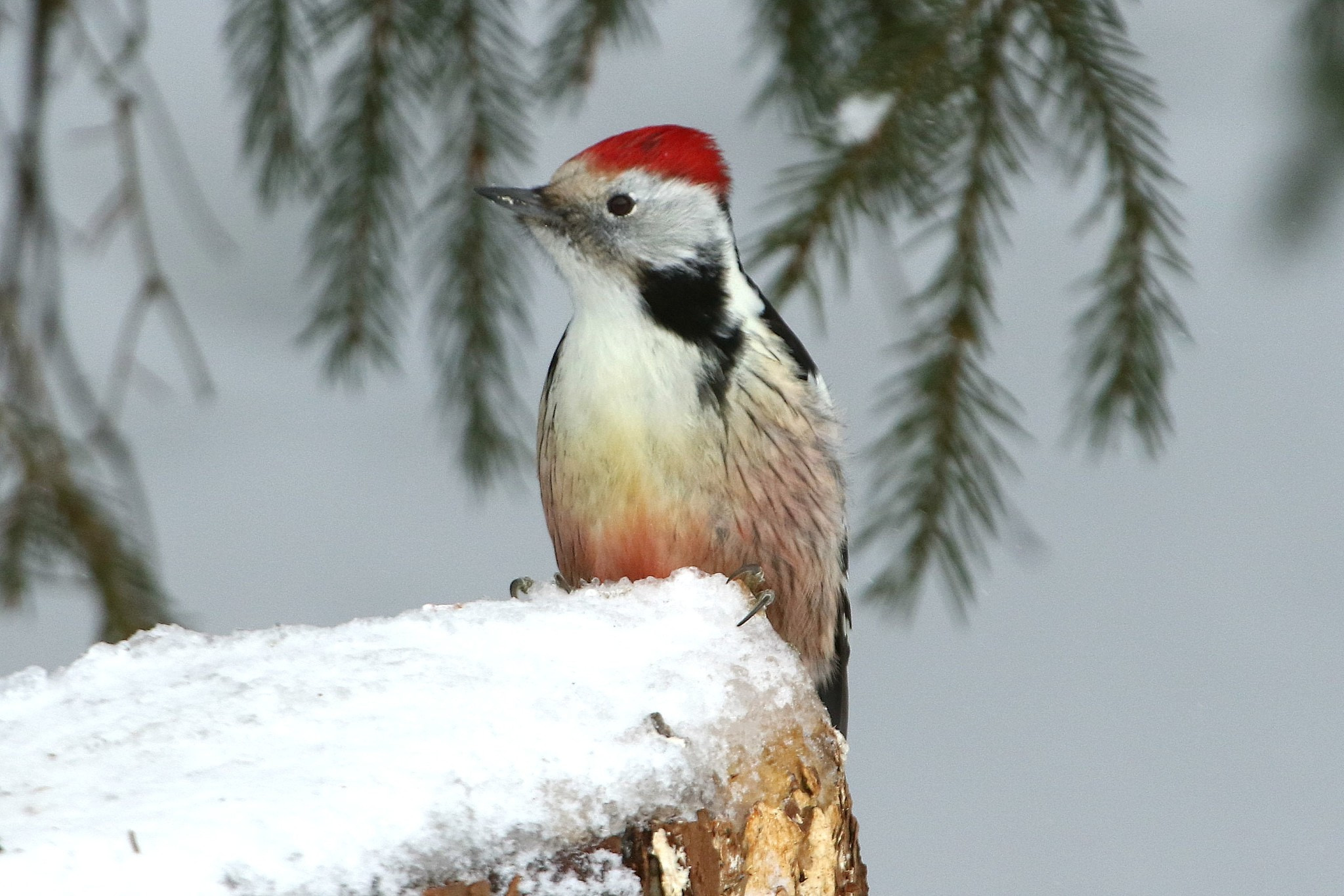
The Syrian woodpecker has a large white shoulder patch and a reddish belly; the lesser spotted has neither. Size says a lot too: this is a bird only a little bigger than a sparrow. If a small woodpecker has a barred black-and-white back and no white shoulder patch, you are looking at a lesser spotted woodpecker.
Colour
Swatches are illustrative. Do not identify a species by colour alone.

It is a bird of deciduous and mixed forest, often damp and swampy. It lives in river valleys and in parks with plenty of mature trees. It avoids dry forest and dark conifer forest. In the Caucasus it climbs to 1400–2000 m. The Greater Caucasus and Transcaucasia, except Talysh, have the subspecies D. m. colchicus.
The lesser spotted woodpecker lives in Georgia all year round and breeds here. Records cover every month, with the most in September and May. Most come from Adjara, Kvemo Kartli, Kakheti and Tbilisi. It has also been found in Mtskheta-Mtianeti, Samtskhe-Javakheti, Imereti, Samegrelo-Zemo Svaneti, Abkhazia, Shida Kartli, Racha-Lechkhumi and Kvemo Svaneti, and Guria. The oldest record is a museum specimen collected at Shovi, near Oni, in November 1975.
Data: Reptiles.ge + iNaturalist · Methodology
- Field observation
- Several records in one spot
- Photo record
- Region with records
It mainly eats small insects. In the breeding season it picks invertebrates from leaves and bark: caterpillars, aphids, ants and beetles, and it feeds its chicks mostly on such insects. From autumn to spring it searches thin dead branches of living trees and the space under bark for the larvae of wood-boring insects. It chips away at rotting wood, and a litter of chips at the foot of a tree is often the first sign of it. In the second half of summer it also eats the fruit of some plants, but only a little.
It is mostly resident, though it may be somewhat nomadic. The call is a repeated "keek", loud for so small a bird. The drumming is quiet and rattling and lasts 1.2–1.8 seconds: longer than the great spotted woodpecker's, but less resonant. It starts drumming in early spring and is heard most in April and the first half of May. At night it roosts in old holes. The nest hole is usually high up, sometimes 10–20 m above the ground. The entrance is 2.5–5 cm across, and the nest chamber is often more than 30 cm below it. It lays 3–8 glossy white eggs on wood chips, more often 5–6. Both parents incubate for 10–12 days, and the chicks leave the nest after 18–21 days. It raises one brood a year.
Globally the lesser spotted woodpecker's risk of extinction is rated low (LC, 2018). Locally, though, it is declining: in Great Britain its numbers almost halved between 2009 and 2017, to about 2,000 birds. The removal of dead trees from parks and woodland, which takes away the decaying wood it needs for nesting, is blamed. Its numbers often swing from year to year, and winter cold and spring weather may play a part. In Georgia's national assessment (2021) its risk is rated low (LC), and its numbers are stable. The list of the birds of Georgia gives it as a year-round resident and breeder.
Nikita Tiunov · Christoph Moning · Martin Kennewell · leekelai · Axel Gosseries
Related guides
Continue with related pages
Yes. It lives and breeds in Georgia all year round. The Greater Caucasus and Transcaucasia have the subspecies D. m. colchicus. It picks deciduous and mixed forest, river valleys and parks with old trees, up to 1400–2000 m in the Caucasus. It is small and lives in the treetops, so it is easily overlooked.
First of all by size: it is only a little bigger than a sparrow, the smallest woodpecker in Europe. Its lower back and wings are barred black and white. Unlike the Syrian woodpecker, it has no big white shoulder patch and no reddish belly. Its drumming is also quieter and more rattling.
Mainly small insects. In summer it picks caterpillars, aphids, ants and beetles from leaves and bark. In winter it searches thin dead branches and the space under bark for the larvae of wood-boring insects. It eats only a little fruit.
In a hole it digs itself in a tree, often high up, sometimes 10–20 m above the ground. The entrance is 2.5–5 cm across. It lays 3–8 white eggs, more often 5–6. Both parents incubate, and it raises one brood a year.
Mostly not; it is a resident bird, though it may be somewhat nomadic. In winter it switches to larvae hidden under bark and in thin dead branches. At night it roosts in old holes. Winter cold may affect how many survive.
No, it is harmless to people. Globally its risk of extinction is low (LC, 2018). In Georgia's national assessment (2021) its risk is also low (LC), and its numbers are stable. Do not catch wild birds.
References
What this profile is based on
Species profiles are compiled from peer-reviewed literature and established biodiversity databases, and are reviewed as new taxonomic and conservation data become available.
Prepared by the Reptiles.ge editorial team from the sources listed here.