
Grey-faced woodpecker
Picus canus
zveroboy57 · Krasnokamsky District
Key facts in one look
- Size
- 25–26 cm
- Diet
- Ants and their pupae; fruit and seeds in winter
- Status in Georgia
- Year-round resident, breeds
- Habitat
- Broadleaf and mixed forest, forest edges, floodplain woods
- Family
- Picidae
- Protection
- Globally LC, 2016; in Georgia NE, 2021
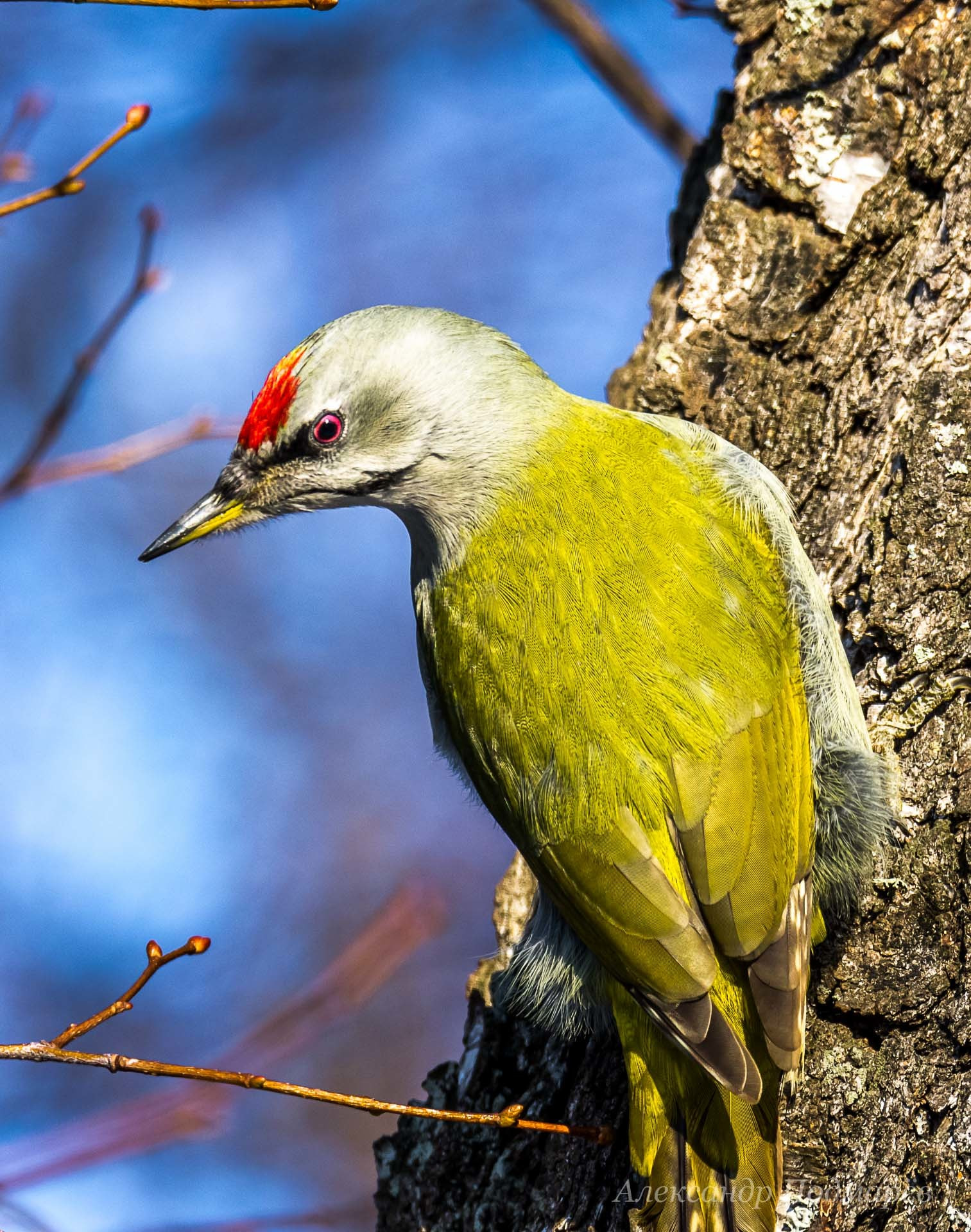
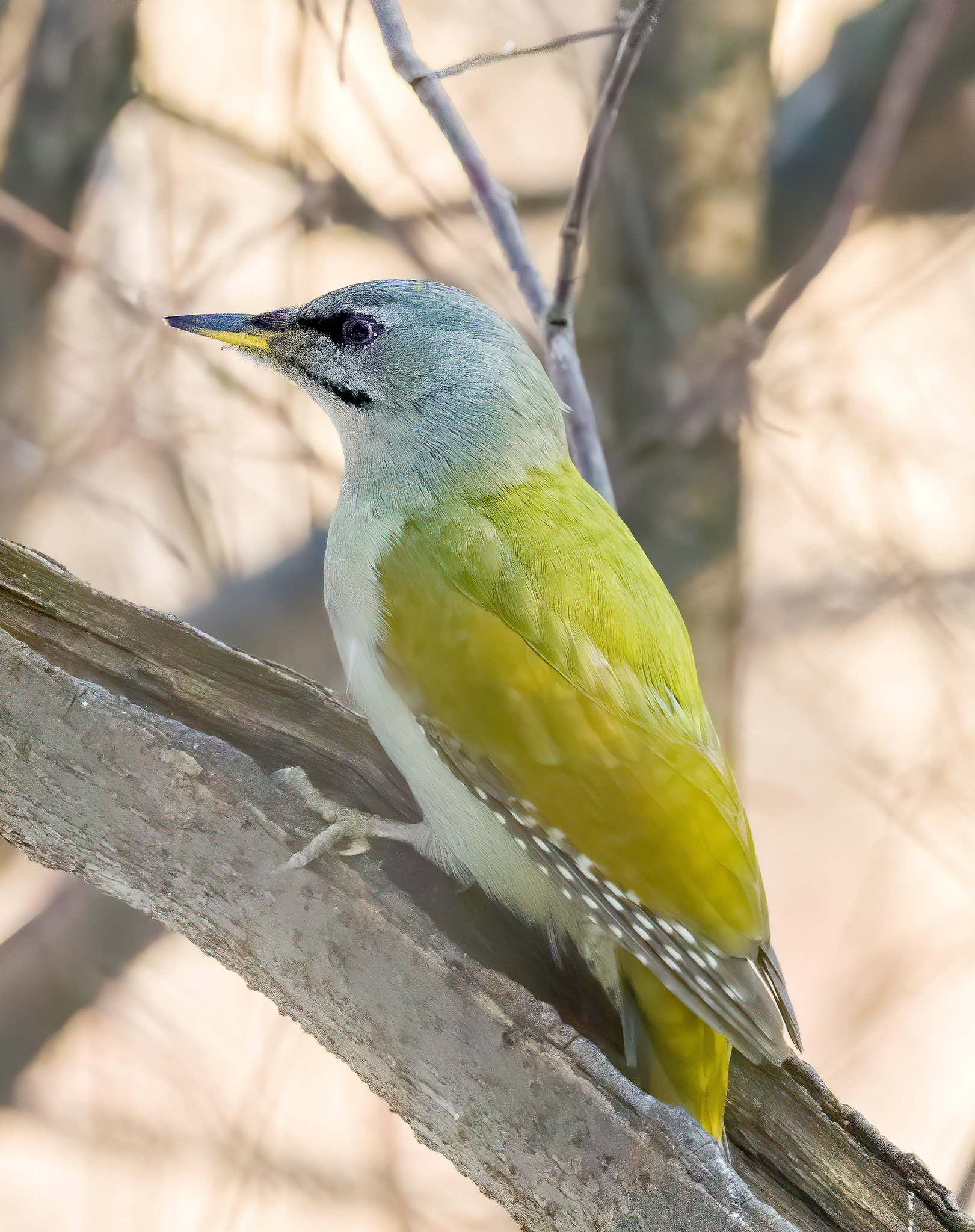
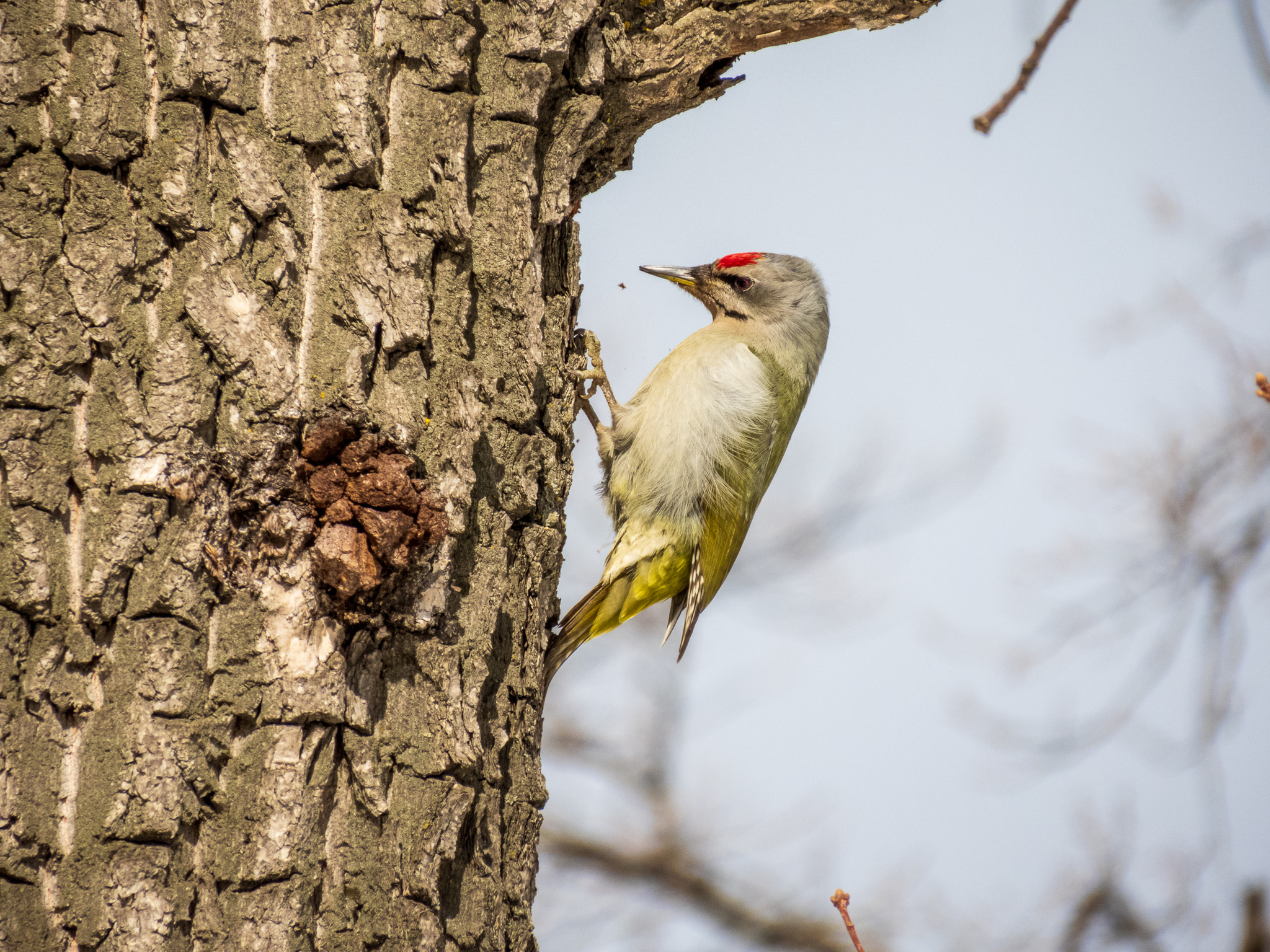
The grey-faced woodpecker is a close relative of the green woodpecker and looks like it at first glance: the back is olive green, but the head is plain grey. The male has red only on the forehead, the female none at all. It picks broadleaf and mixed forest with plenty of dead trees and feeds mainly on ants, often on the ground. In Georgia it lives and breeds all year round. Single pairs rarely call much, so it is easily overlooked.
Identification
Grey-faced woodpecker: how to identify it
A woodpecker 25–26 cm long, weighing about 125 g. The back is olive green, the head and underparts grey, with a thin black moustache. The male has a small red patch on the forehead.
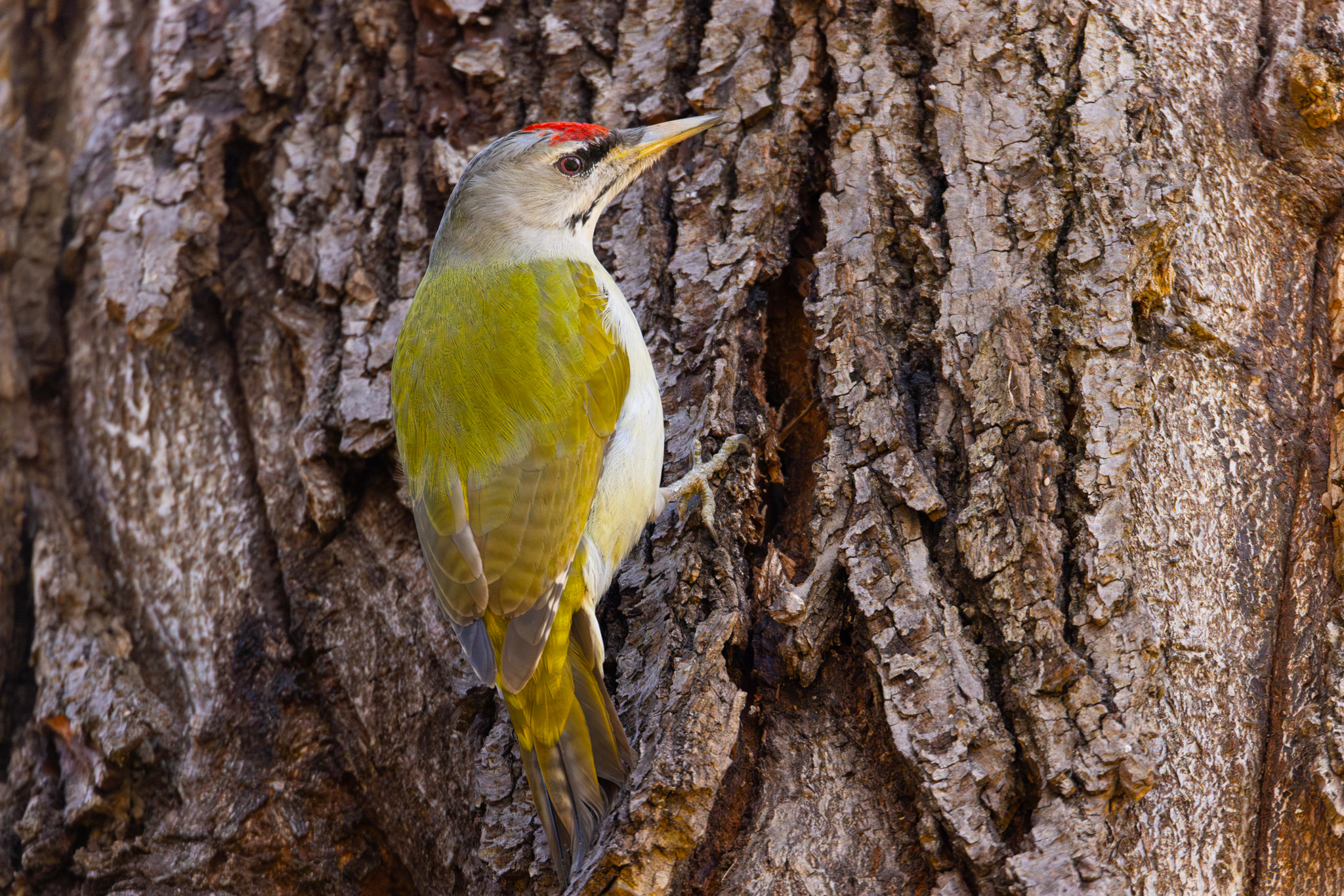
Length 25–26 cm, wingspan 38–40 cm, weight about 125 g. It is slightly smaller than the green woodpecker, though the difference is hard to see in the field. The head is smaller and rounder, the bill slimmer and shorter.
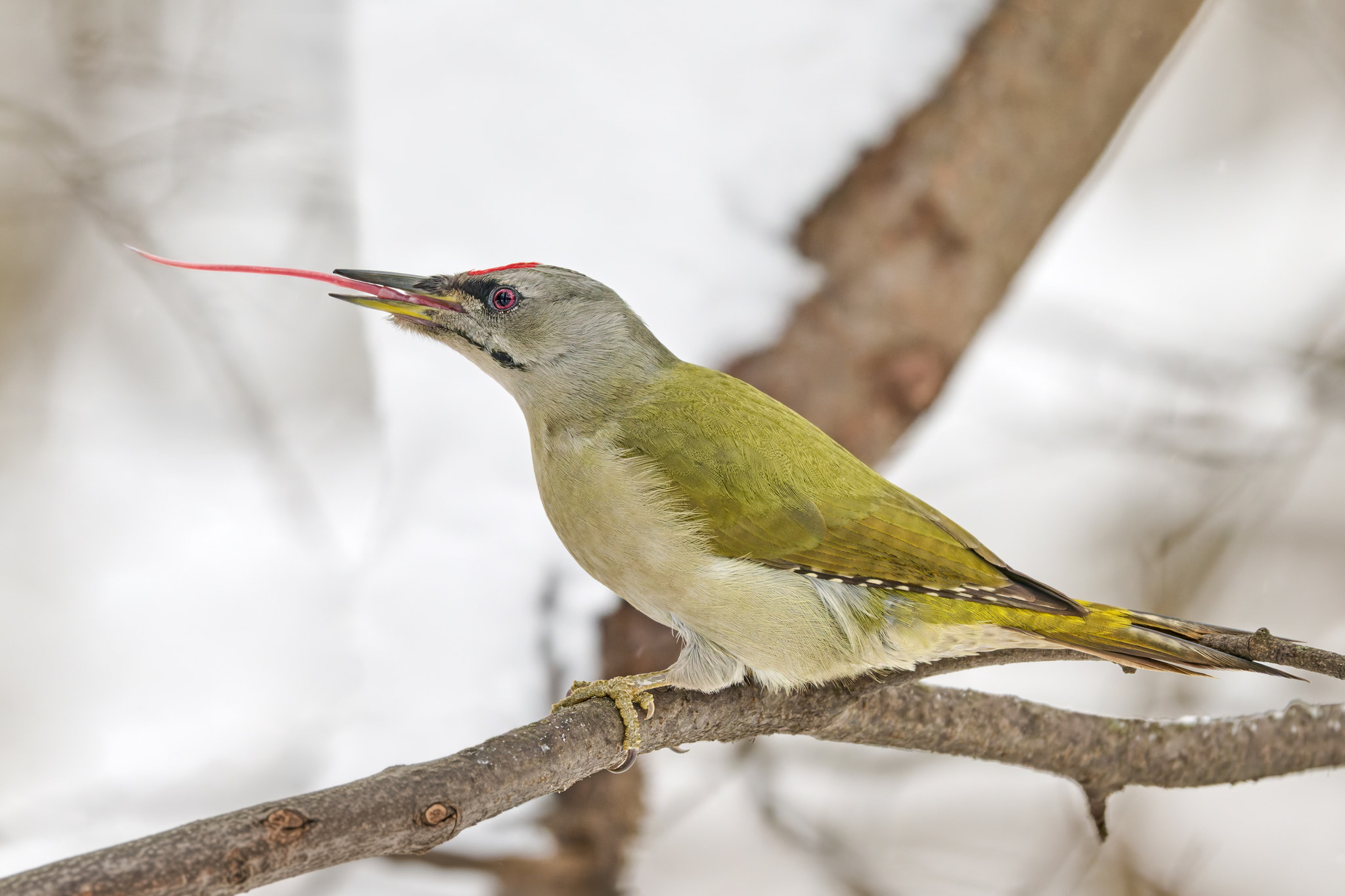
The back, scapulars and wing coverts are olive green, the rump yellowish green. The head and neck are grey, the breast and belly pale grey. A black line runs between the eye and the bill, with a thin black moustache below. The male has a small red patch on the forehead. The female has no red and fine black streaks on the crown. The eye is amber.
In the green woodpecker both sexes have a red cap from forehead to nape and a large black patch around the eye. The grey-faced woodpecker's head is plain, black only between the eye and the bill. If you see a green-backed woodpecker with a grey head and almost no red, it is a grey-faced woodpecker.
Colour
Swatches are illustrative. Do not identify a species by colour alone.
Often confused with

It is a bird of broadleaf and mixed forest with a high share of dead trees. It is more demanding than the green woodpecker: it picks undisturbed, old forest and riverside woods. It likes forest that is not too dense, with open ground: forest edges, clearings, floodplain woods, orchards and parks. In Europe it is linked more to upland and mountain areas and breeds up to 1,700 m. When breeding it avoids dense, dark conifer taiga.
The grey-faced woodpecker lives in Georgia all year round and breeds here. Records are few, and almost all come from Adjara: around Batumi, Kobuleti and Mtirala National Park. Outside Adjara it has been seen twice in Imereti. Most records date from October, the rest from March, May and July to September. The oldest record dates from May 2012, in Mtirala National Park.
Data: Reptiles.ge + iNaturalist · Methodology
- Field observation
- Several records in one spot
- Region with records
It mainly eats ants and their pupae, especially in spring and summer, though it depends on them less than the green woodpecker does. It often feeds on the ground: it probes the soil and the underground ant tunnels with its bill and catches prey with its sticky tongue. It also eats termites, caterpillars, crickets, beetle larvae and spiders. In autumn and winter it also eats plant food: apples, pears, cherries, berries, nuts and acorns. In the cold season it also visits feeders.
It calls like the green woodpecker, but its song is more melodious and cleaner. It is a series of 5–20, most often 6–9, melancholy whistles that slow down and fall in pitch. The female's song is shorter and hoarser. It drums more often than the green woodpecker, and both sexes do: a roll lasts up to 40 beats, about two seconds. It uses a well-resonating drumming spot for years, sometimes the metal covers of masts and roofs. Both parents cut the nest hole, in a soft-wooded broadleaf tree, often dead or damaged, usually 1.5–8 m above the ground. In Europe it breeds in May and lays 5–10 eggs. Both parents incubate, the male at night and for most of the day. The young hatch after 15–17 days and leave the nest after 24–25 days.
Globally the grey-faced woodpecker's risk of extinction is rated low (LC, 2016). The rating rests mainly on its large range: in most areas with population data, it is declining. The European population is estimated at 180,000–320,000 breeding pairs. The greatest threat is the destruction of old and riverside forest. In Georgia's national assessment (2021) the grey-faced woodpecker was not assessed (NE), and its population trend is unknown. The list of the birds of Georgia gives it as a year-round resident and breeder.
Related guides
Continue with related pages
Yes. It lives and breeds in Georgia all year round. Single pairs rarely call much, so it is easily overlooked. It was not assessed in the national assessment (2021), and its population trend is unknown.
In the green woodpecker both sexes have a red cap from forehead to nape and a large black patch around the eye. The grey-faced woodpecker has a plain grey head, black only between the eye and the bill, and a thinner moustache. The male has red only on the forehead, the female none. If you see a green-backed woodpecker with a grey head and almost no red, it is a grey-faced woodpecker.
Mainly ants and their pupae, which it often looks for on the ground, in the soil. It also eats termites, caterpillars, beetle larvae and spiders. In autumn and winter it eats fruit, berries, nuts and acorns. In the cold season it also visits feeders.
In a hole in a soft-wooded broadleaf tree, often a dead or damaged one. The hole is usually 1.5–8 m above the ground. Both parents cut it. The female lays 5–10 eggs.
The song is 6–9 melancholy, melodious whistles that slow down and fall in pitch. It resembles the green woodpecker's loud "laugh" but is cleaner and more melodious. It also drums more often than the green woodpecker. Ornithologists sometimes call the bird in by imitating its whistle.
No, it is harmless to people. Globally its risk of extinction is low (LC, 2016), though it is declining in most areas with data. In Georgia's national assessment (2021) it was not assessed (NE). Do not fell dead trees and trees with holes.
References
What this profile is based on
Species profiles are compiled from peer-reviewed literature and established biodiversity databases, and are reviewed as new taxonomic and conservation data become available.
Prepared by the Reptiles.ge editorial team from the sources listed here.