
Spangled button beetle
Omophron limbatum
Pierre Chevillard · Arthon-en-Retz
Key facts in one look
- Group
- Insect
- Family
- Carabidae
- Size
- 5–6.5 mm
- Status in Georgia
- Red List: EN
- Activity
- Night; overwinters as an adult
- Conservation
- NE
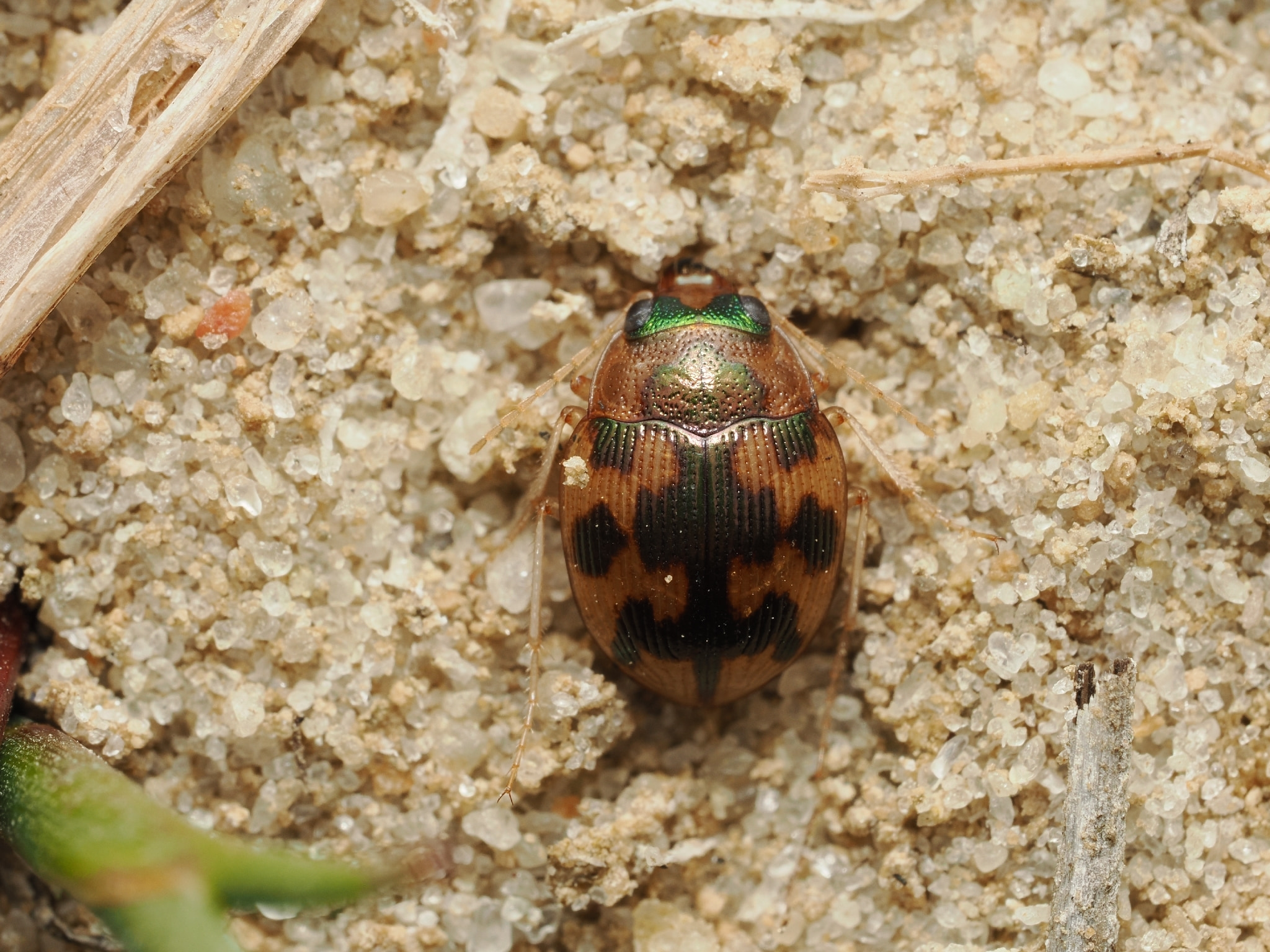
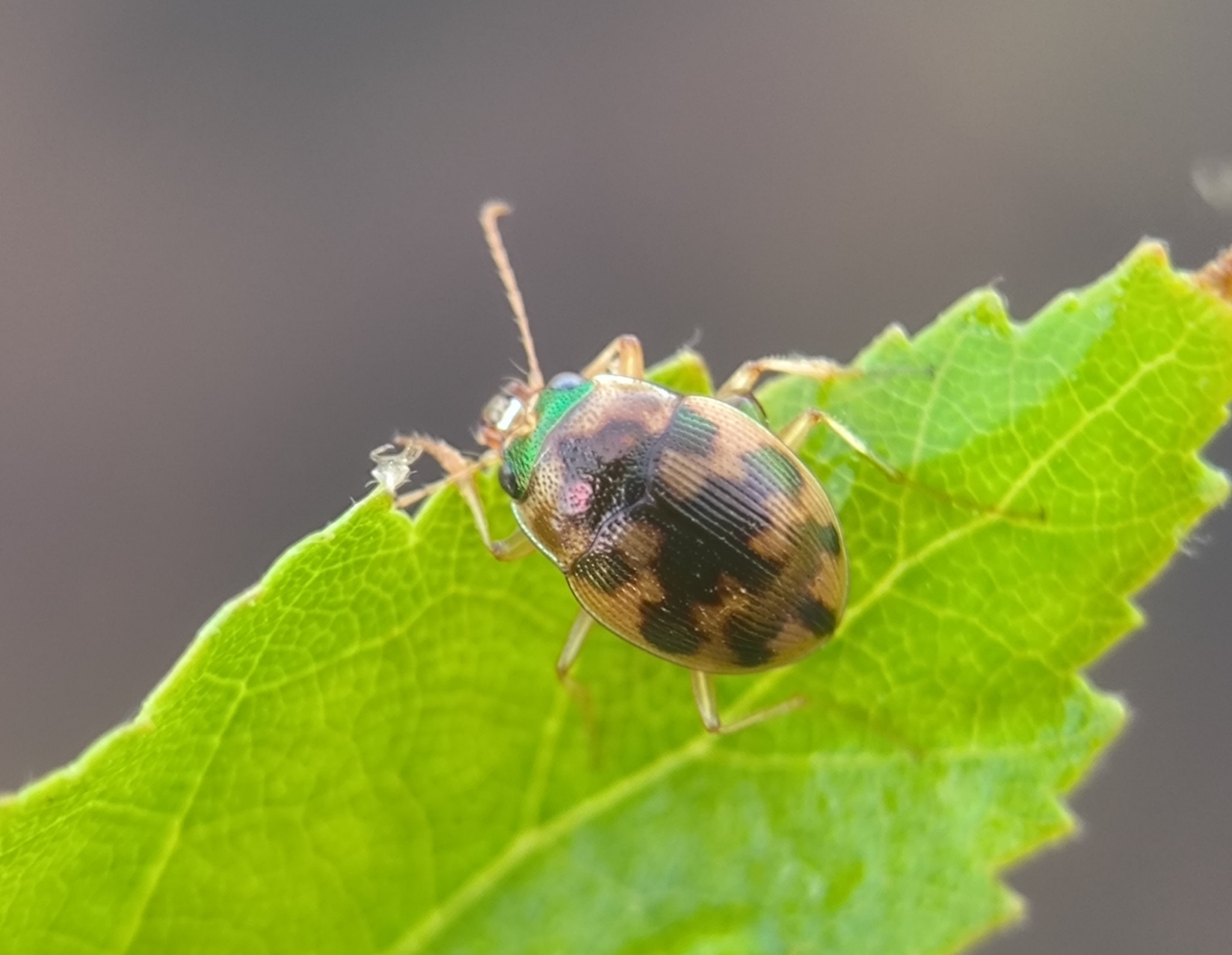
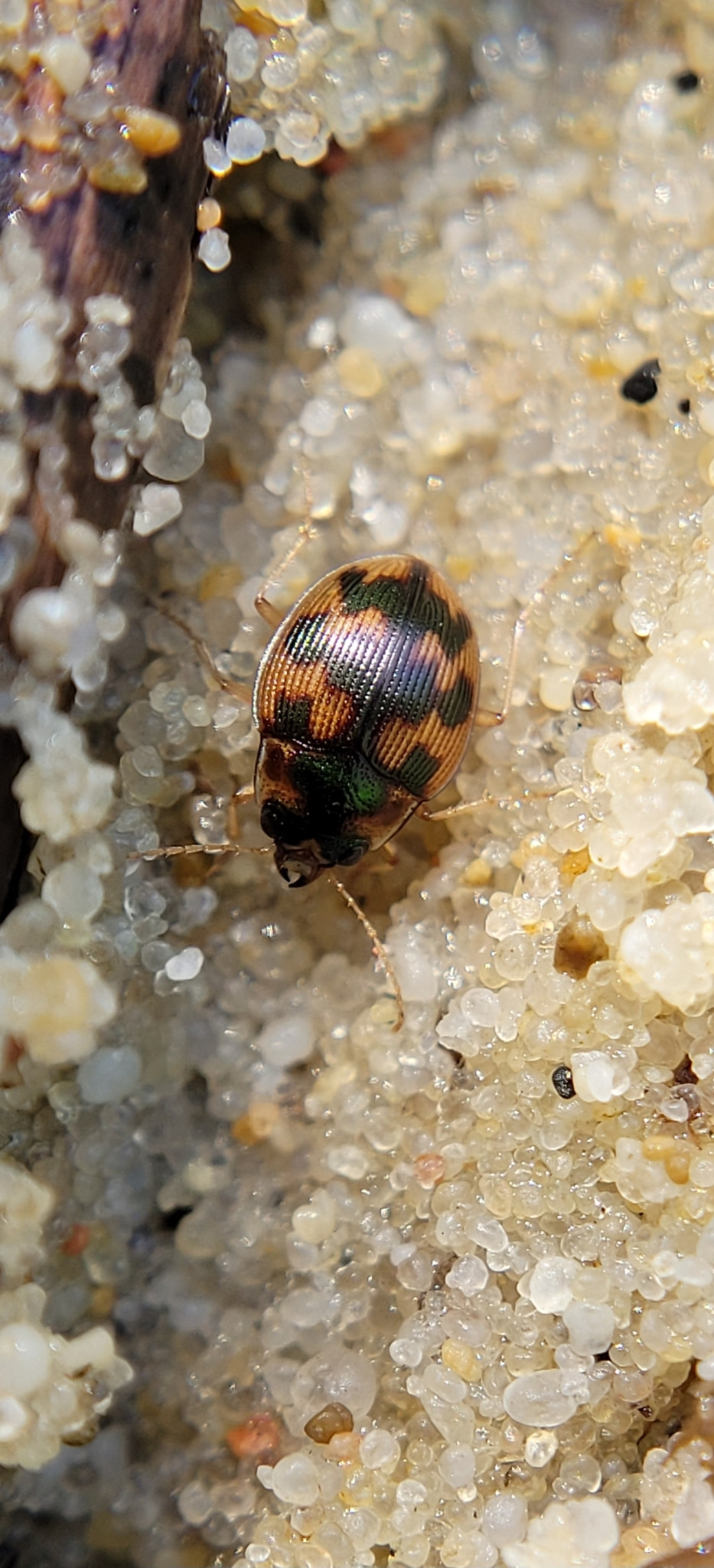
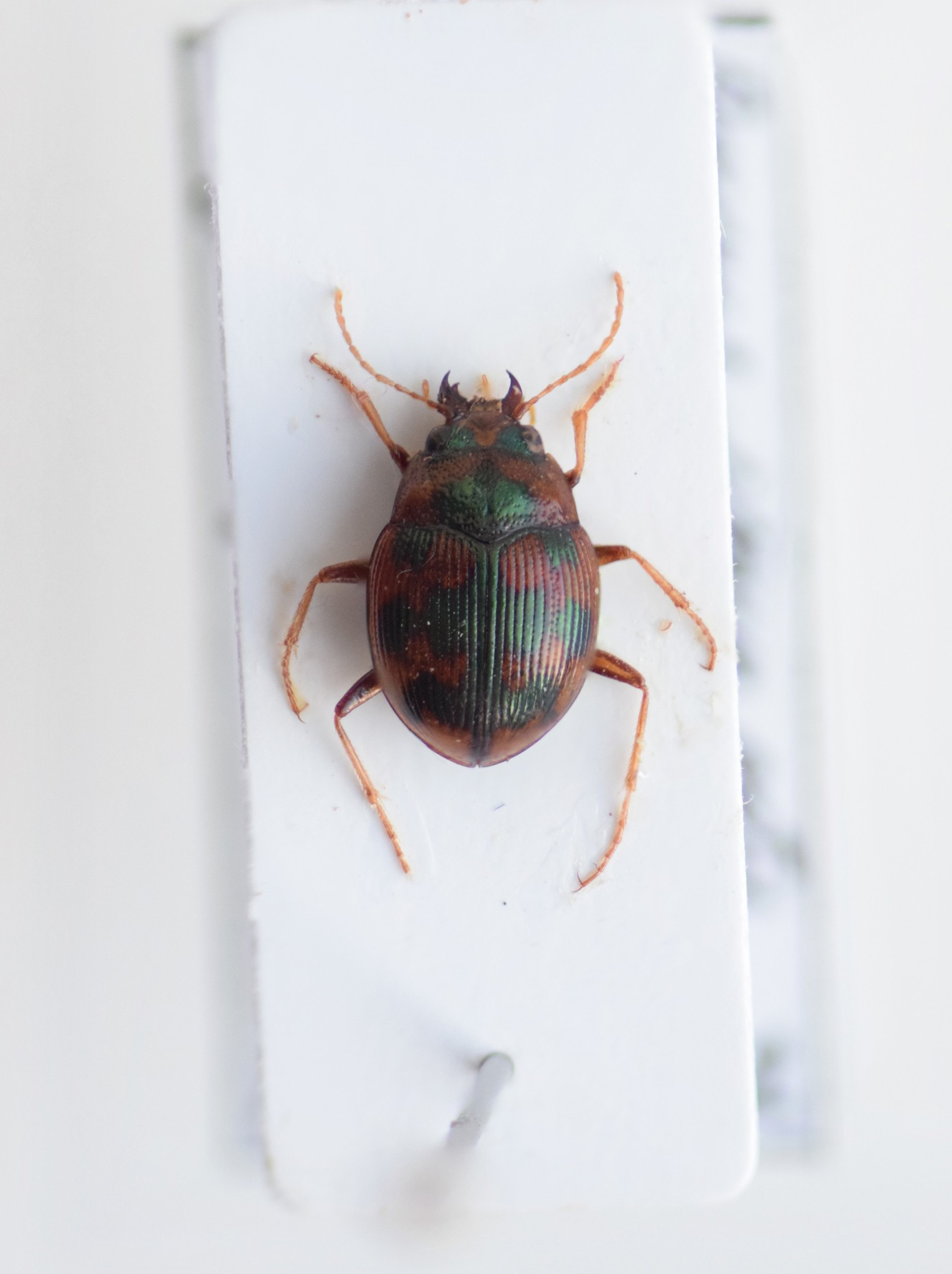
The spangled button beetle (Omophron limbatum) is Endangered (EN) on Georgia's Red List: its population is very small and unstable. Its body is almost round and high-backed, unusual for a ground beetle, and it looks like a ladybird. Metallic green spots sit on a pale yellow or brownish ground. It lives on the sandy shores of fresh water: by day it hides in the sand, and at night it hunts. If you find one on a shore, take a photo and leave it where it is.
Identification
Spangled button beetle: how to identify it
A small ground beetle, 5–6.5 mm long. The body is almost circular and high-backed, so at first sight it looks like a ladybird. The pale yellow or brown back carries a metallic green pattern. Its shape and colour make it easy to spot on a sandy shore.
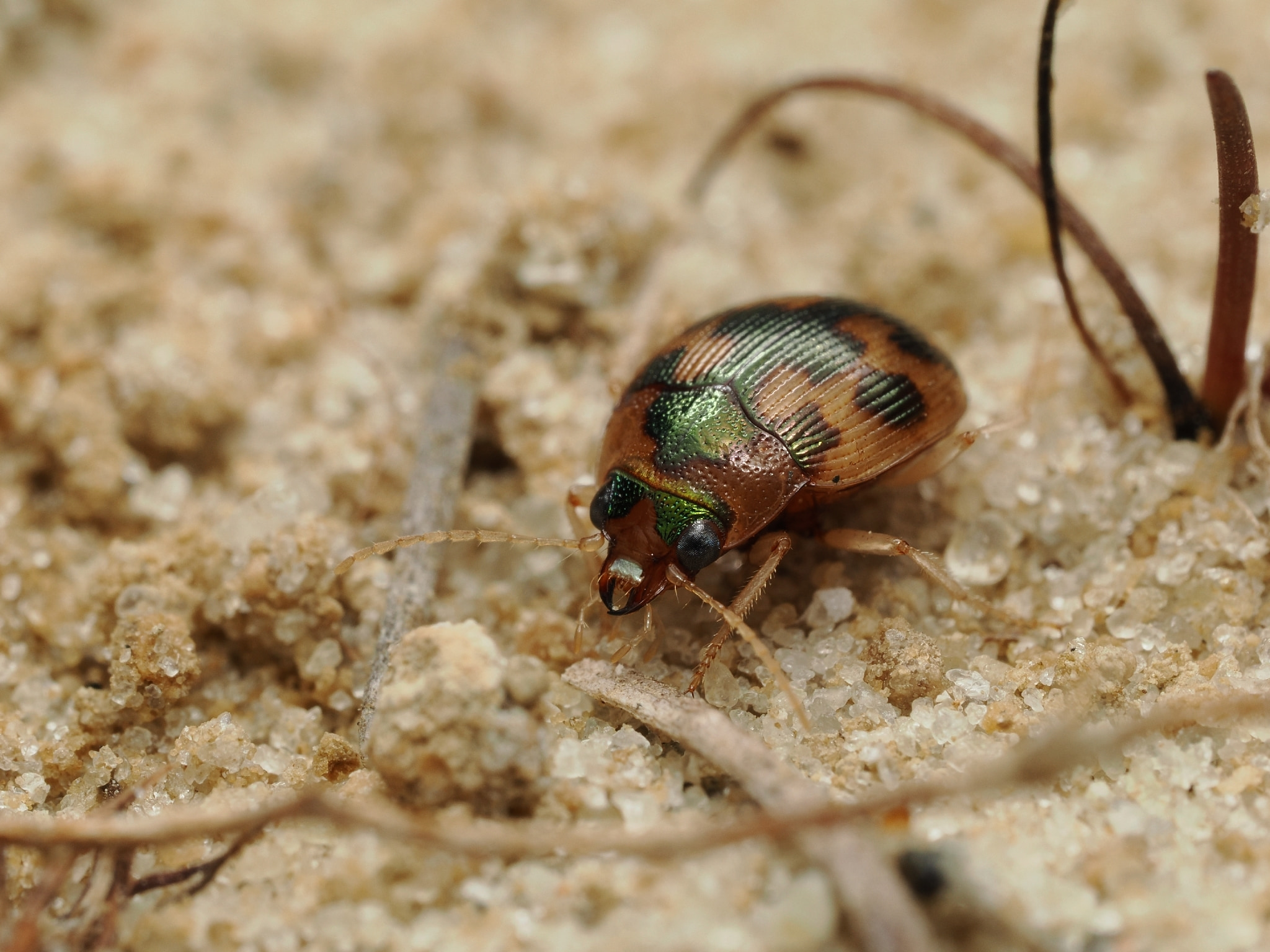
The green spots sit on the head, pronotum and elytra and are irregular in shape. The elytra have 15 longitudinal striae. The legs are pale cream and stand out against the yellow ground.
The pronotum is immovable and covers the scutellum, so the scutellum is not visible. It has developed wings and can fly. These features show in a close-up photo.
Males have the first and second segments of the front tarsi widened, and sometimes the first segment of the middle legs too. You will only see it with a hand lens or in a very close photo.
Colour
The ground colour ranges from pale yellow to brown, with metallic green spots and stripes. The green spots are irregular and sit on the head, pronotum and elytra. The legs are pale cream.
Swatches are illustrative. Do not identify a species by colour alone.
The spangled button beetle is a beetle of sandy freshwater shores. It lives on the sandy and stony banks of rivers and on the sandy margins of standing water. It chooses open sandy banks free of vegetation. It responds very sensitively to change: dam building and the overgrowth of banks by plants harm it. It is known from Georgia and is listed in the country's checklist of ground beetles.
No records yet
The atlas has no confirmed observation of this species yet, so we do not know which regions of Georgia it lives in.
Share an observationSeen this species? A photo and the place are enough.
The spangled button beetle is a predator. The adult beetles hunt insects at night. They spend the day in the sand, so they look for food in the dark.
By day it hides in tubes in the sand, sometimes in groups. It is active at night, and the adult beetles can fly. Young beetles appear in autumn and spend the winter as adults.
It has not been assessed on the global IUCN Red List (NE). On Georgia's 2014 Red List it is Endangered (EN, B2cii) because its population is very small and unstable. On Germany's Red List it is on the near-threatened warning list (V, 1998), and in Great Britain it is regarded as Endangered. It is very sensitive to dam building and to the overgrowth of banks by plants, so it is considered a good indicator of the state of river banks.
Related guides
Continue with related pages
Yes. It is known from Georgia and is listed in the country's checklist of ground beetles. It chooses sandy freshwater shores. On Georgia's Red List it is Endangered because its population is very small.
Because its population is very small and unstable. The 2014 list includes it as Endangered (EN). It depends on sandy shores, and such shores disappear behind dams and under plant overgrowth. So do not catch the beetle.
No. It belongs to the ground beetle family (Carabidae) and is not related to ladybirds. Its almost round, high-backed body makes it look like a ladybird. This shape is unusual among ground beetles. Its metallic green markings on a yellow back and its life on sandy shores are its main features.
No, it is harmless to people. It is only 5–6.5 mm long and does not attack people. It hunts small insects at night and hides in the sand by day. If you find one, take a photo and leave it where it is.
References
What this profile is based on
Species profiles are compiled from peer-reviewed literature and established biodiversity databases, and are reviewed as new taxonomic and conservation data become available.
Prepared by the Reptiles.ge editorial team from the sources listed here.