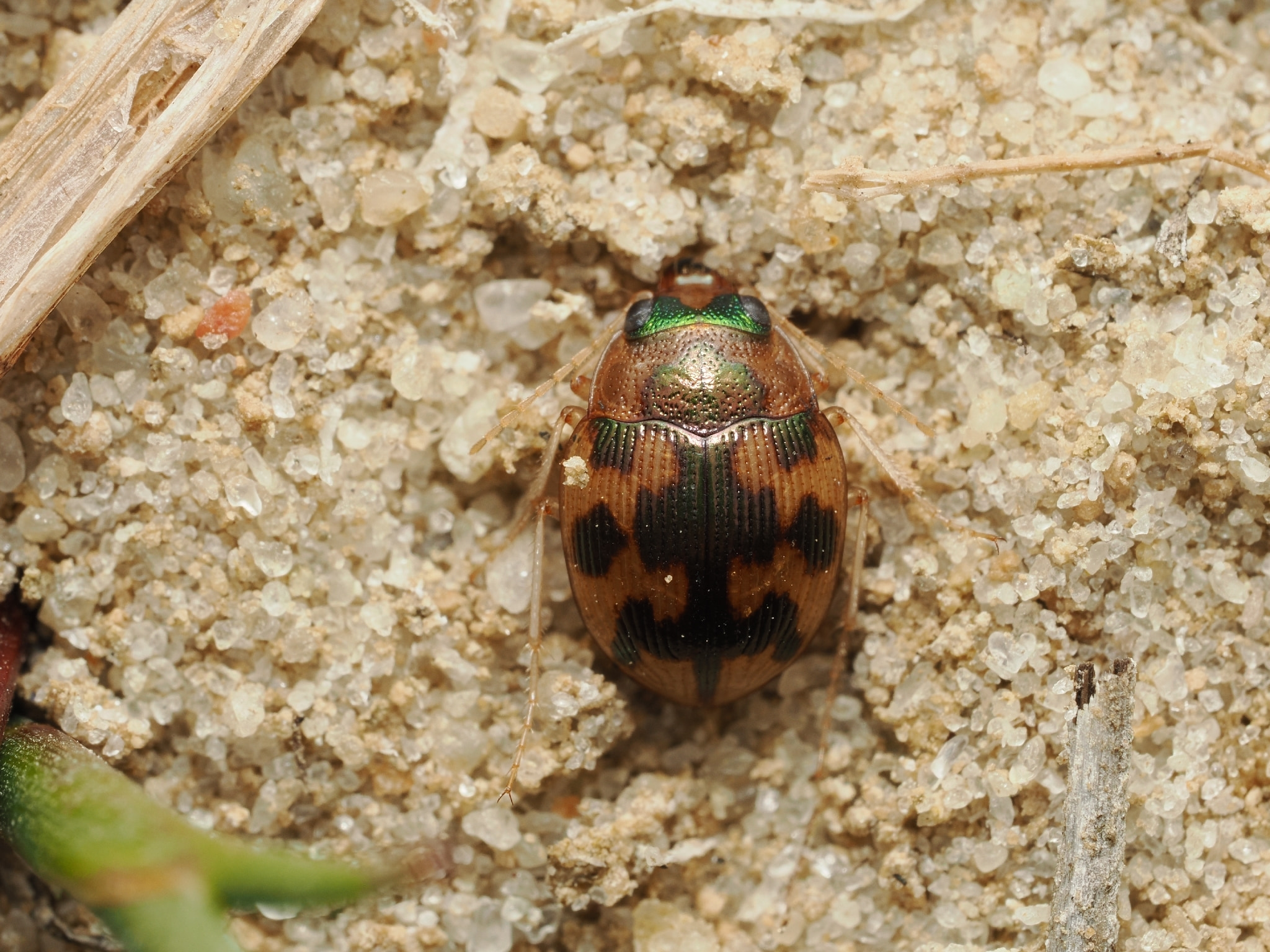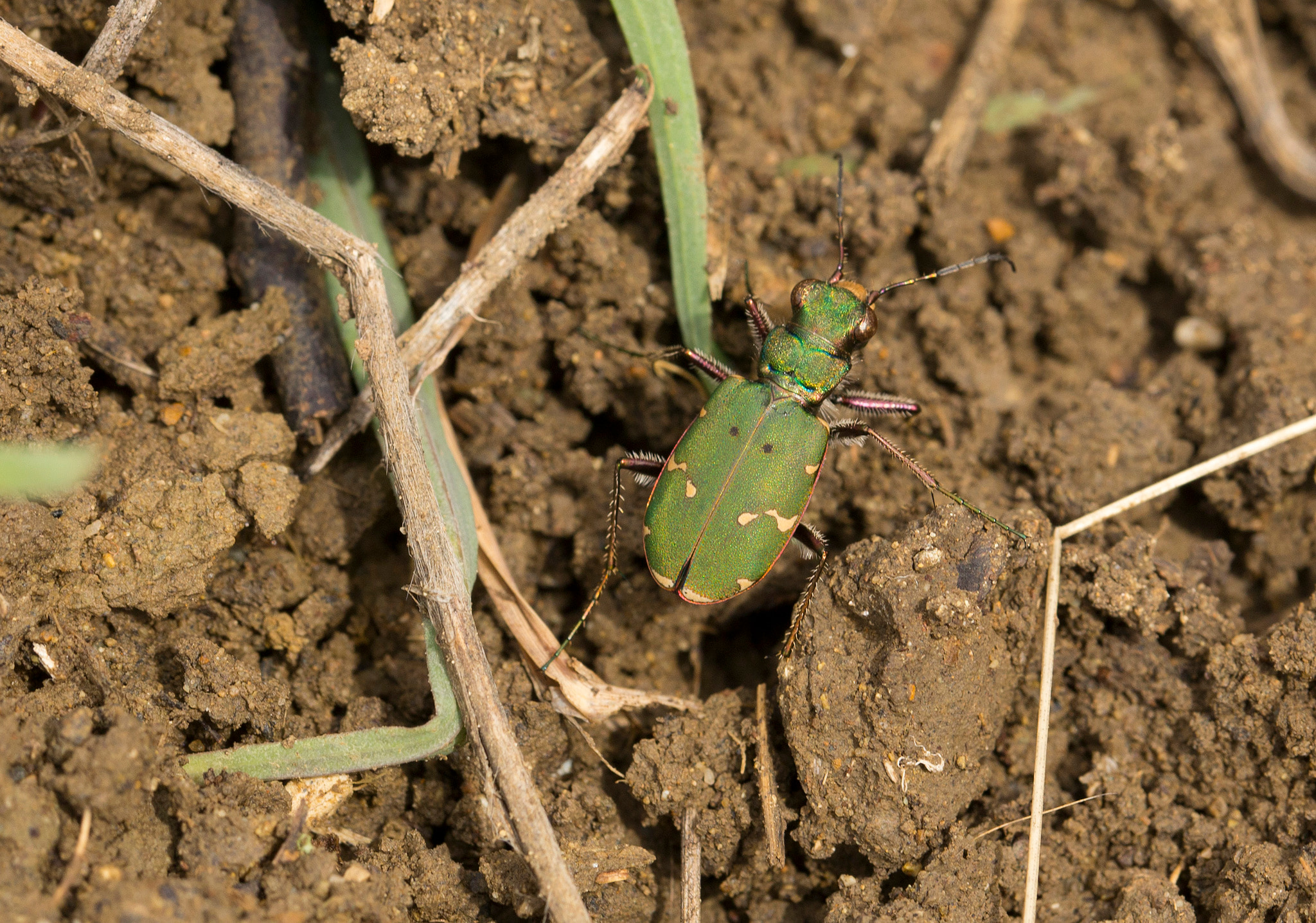

Green tiger beetle
Cicindela campestris
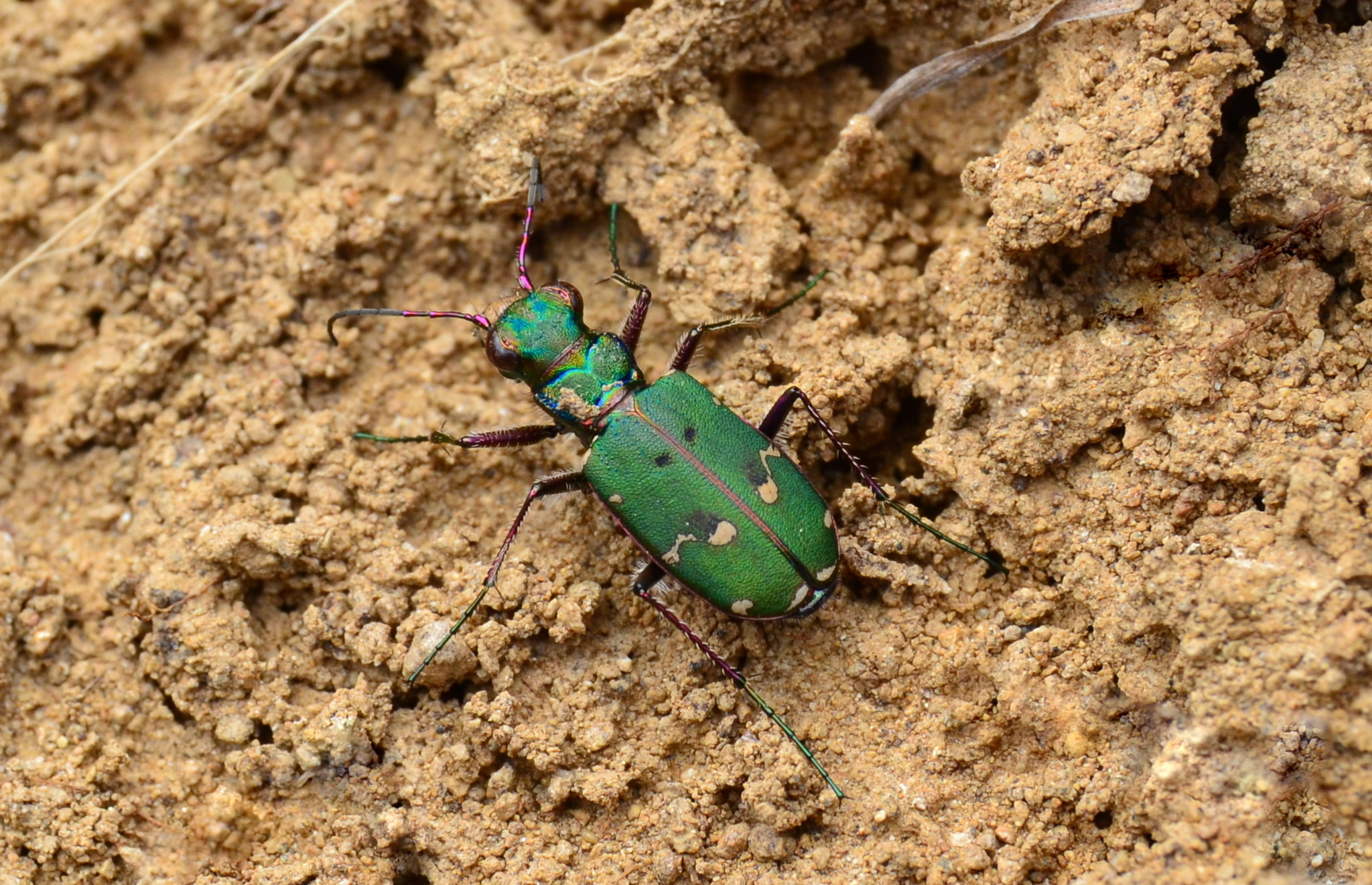
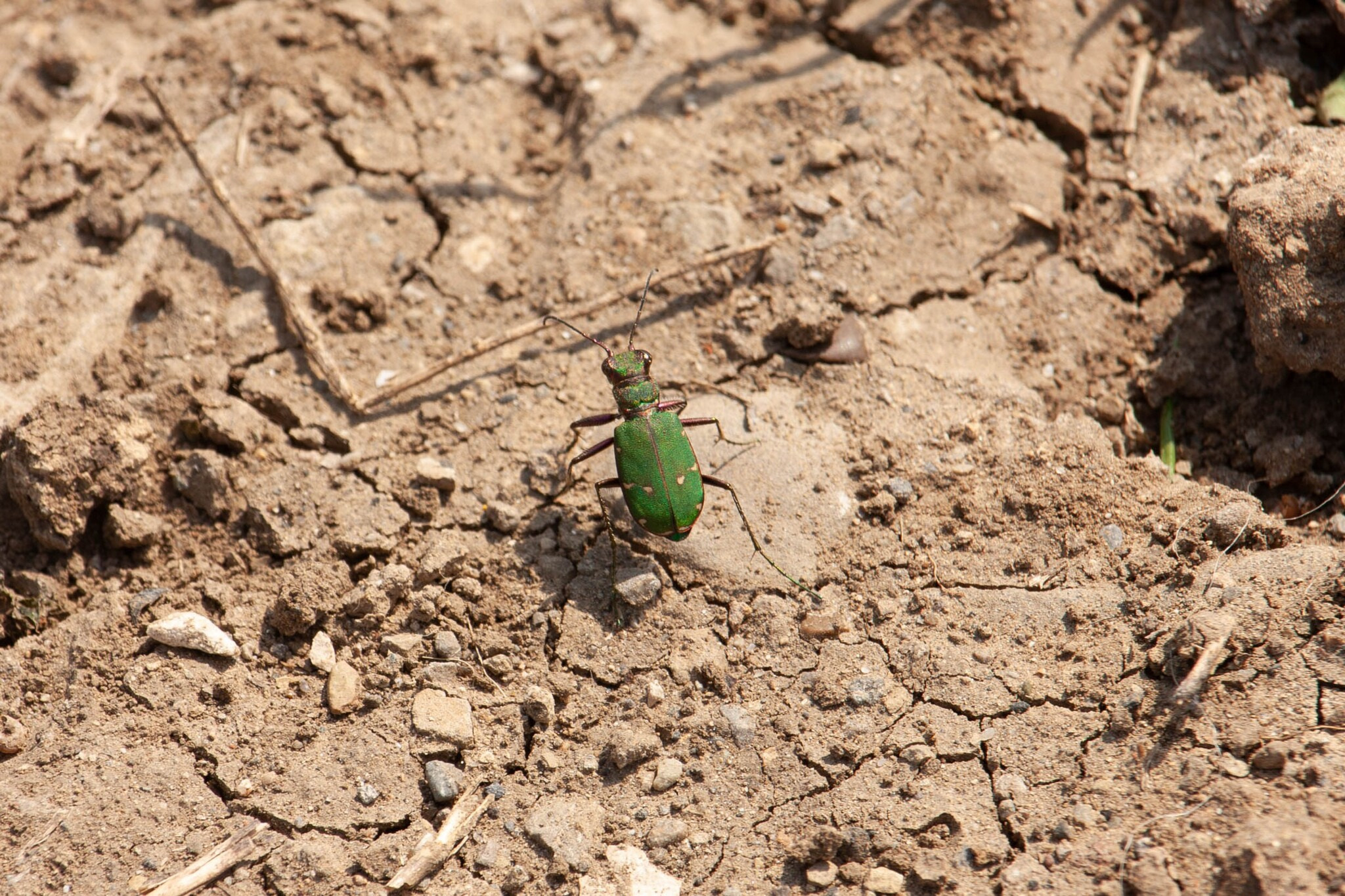
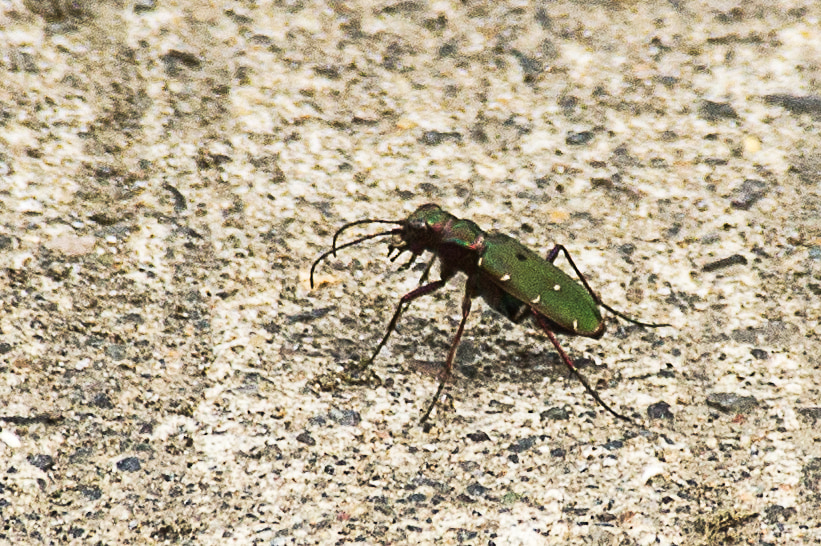
Leonid A. Neymark · Mtskheta-Mtianeti Georgia field photo
Key facts in one look
- Size
- 12–15 mm
- Group
- Insect
- Family
- Carabidae
- Status in Georgia
- Listed for the country's fauna
- Activity
- In Europe, late March to September
- Conservation
- NE
The green tiger beetle (Cicindela campestris) is a fast runner: on its long legs it covers 60 cm a second. It is 12–15 mm long, green above with cream spots, and slightly iridescent in the sun. It chooses dry, sunny places where the ground is bare or plants grow sparsely. Both the adult beetle and its larva are predators. When approached it flies a few metres and lands again, so move slowly and patiently if you want a photo.
Identification
Green tiger beetle: how to identify it
A flat, long-legged beetle 12–15 mm long. It is green above, with cream spots on each wing case. The head is large, with bulging eyes, and wider than the pronotum. You will notice it by its fast running and short flights over bare ground.
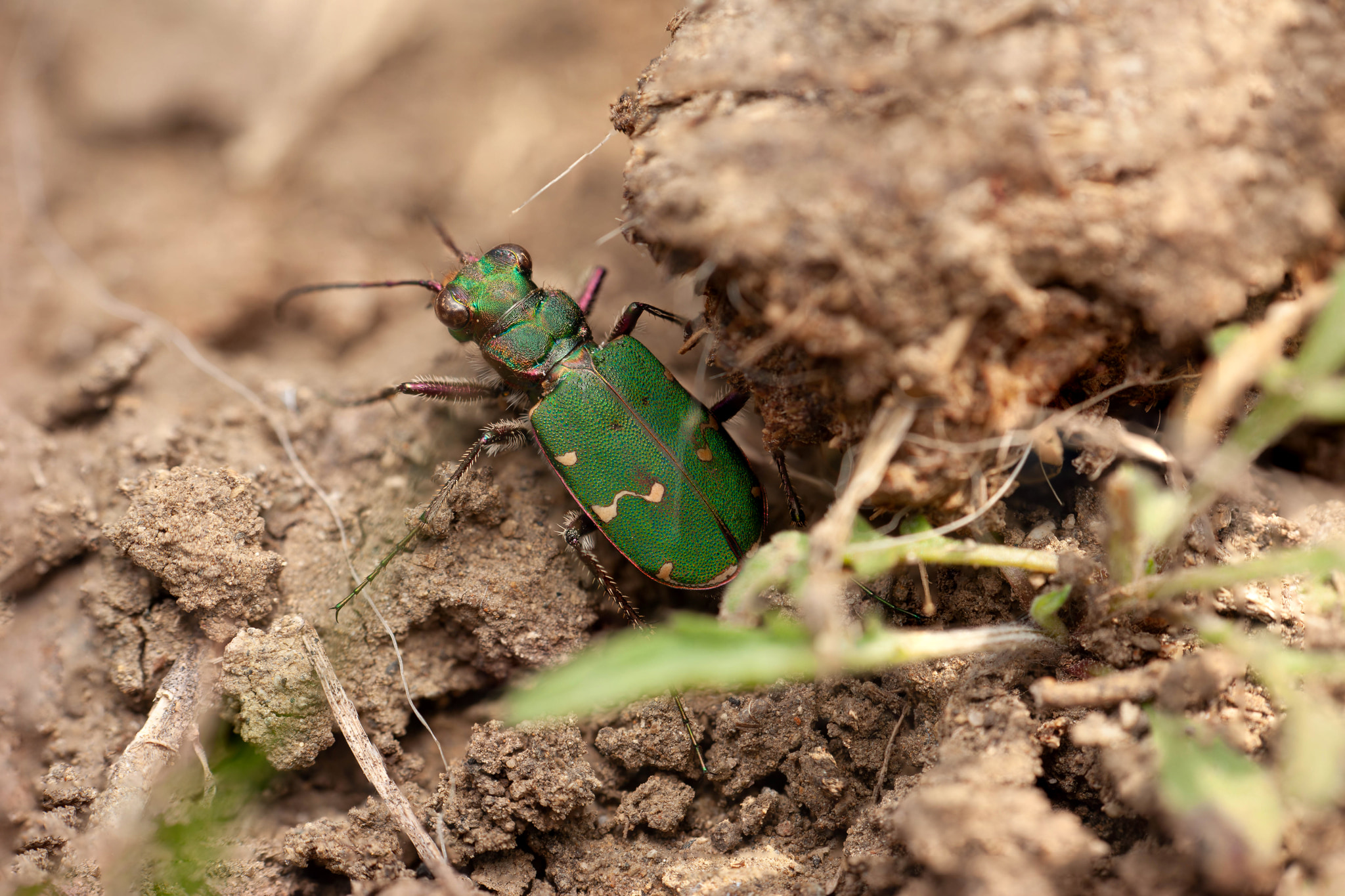
Each wing case has one yellowish-white spot behind the middle and three to five spots of the same colour along the edge. The pattern varies between subspecies, so do not rely on it alone.
The head is wider than the pronotum and has large, bulging eyes. The upper lip is large, white to light brown, and below it are jaws with needle-sharp teeth.
The antennae are long and straight, without a club. The legs are long and slender, with white hairs. On these legs it runs very fast over bare ground.
Colour
The upper side is usually bright green, from light to dark, and slightly iridescent in the sun. Blue and brown forms also occur. The antennae and belly are coppery red. Colour and pattern vary between subspecies.
Swatches are illustrative. Do not identify a species by colour alone.
It is a beetle of sunny, dry places, especially on sandy and loamy soils. It occurs from the lowlands to the mountains. It prefers open ground that is bare or sparsely vegetated: sandy and clay paths and broken, sun-exposed banks. It lives on sandy grassland, in sand and gravel pits, on coastal dunes and on heathland. On such patches many are often seen together, and they lay their eggs there too.
The green tiger beetle is on the list of Georgia's ground beetles. Most records come from Tbilisi, Kakheti and Mtskheta-Mtianeti. It has also been found in Adjara, Kvemo Kartli, Samegrelo-Zemo Svaneti, Guria, Samtskhe-Javakheti and Imereti. Adults have been recorded from March to July, most of them in March and April, and once in September.
Data: Reptiles.ge + iNaturalist · Methodology
- Field observation
- Several records in one spot
- Photo record
- Region with records
The adult tiger beetle feeds on spiders and small insects, including ants and caterpillars. It finds prey by sight, since it sees very well at close range. With its pointed jaws it easily pierces the prey's hard outer skeleton and then sucks it out. The larva is a predator too: it sits at the mouth of its burrow and seizes insects that come within about 4 cm.
In Europe adults are seen from late March to September. They are active by day, in warm and sunny weather. When approached they take off, fly a few metres and land facing their pursuer. They fly fast with a loud buzz. The female lays her eggs one by one in holes 1–1.5 mm deep at the end of April. The eggs hatch in 18–19 days. The larva digs its own narrow burrow, up to 40 cm deep. It overwinters once or several times and pupates at the bottom of the burrow. New beetles emerge in autumn.
Leonid A. Neymark · Sandro Kiladze · Giorgi Iankoshvili · Nikita Tiunov · Wayne Sayers · cbranston · Romas Ferenca
Related guides
Continue with related pages
Yes, it is on the list of Georgia's ground beetles. Most records come from Tbilisi, Kakheti and Mtskheta-Mtianeti. It has also been found in Adjara, Kvemo Kartli, Samegrelo-Zemo Svaneti, Guria, Samtskhe-Javakheti and Imereti. It chooses dry, sunny places with bare ground: sandy and clay paths, banks and pits. Look for it in such places on a sunny day.
It covers about 60 cm a second. It has long, slender legs and runs very fast over short stretches of bare ground, then stops. When chased it takes off, flies a few metres and lands again. After several flights it clearly tires.
By ambush. The larva digs a narrow burrow up to 40 cm deep in the ground and sits at its mouth. It closes the burrow with its head and pronotum, leaving only its large pointed jaws outside. It snatches insects that come within about 4 cm. When in danger it retreats into the burrow.
No, it has no venom and is harmless to people. It hunts spiders and small insects. If you find one, take a photo and leave it where it is.
References
What this profile is based on
Species profiles are compiled from peer-reviewed literature and established biodiversity databases, and are reviewed as new taxonomic and conservation data become available.
Prepared by the Reptiles.ge editorial team from the sources listed here.