



Black-bellied sandgrouse
Pterocles orientalis
Dmitry Savikovsky · Эзуз
Key facts in one look
- Size
- 33–39 cm
- Diet
- Mainly seeds
- Status in Georgia
- Former breeder; non-breeding year-round visitor
- Habitat
- Dry open plains, near farmland
- Family
- Pteroclidae
- Protection
- Globally LC, 2018; in Georgia NE, 2021
The black-bellied sandgrouse is 33–39 cm long and weighs 300–615 g, with a small, pigeon-like head and a stocky body. In flight the black belly and white underwings give it away at a glance. It lives on dry, open plains, and in the morning flocks fly long distances to water. It ranges from Iberia and North Africa through Turkey and Iran to Kazakhstan and north-western China. It used to breed in Georgia and is now counted as a non-breeding year-round visitor.
Identification
Black-bellied sandgrouse: how to identify it
A stocky bird 33–39 cm long and 300–615 g, with a small, pigeon-like head. The belly is black, the underwings white, the back golden brown with dark markings.
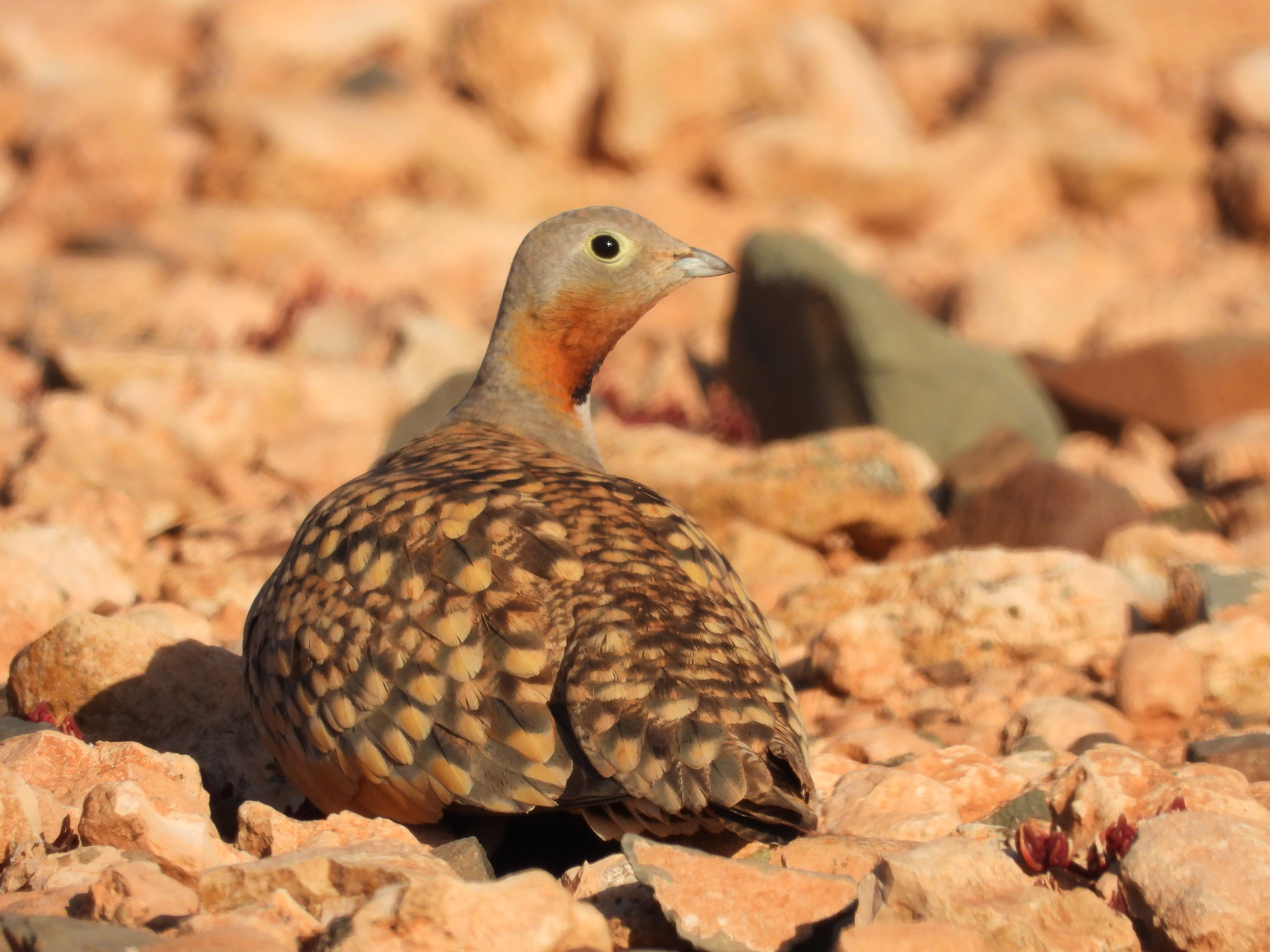
Length 33–39 cm, weight 300–615 g. It is probably the largest of the sandgrouse. The head and neck are small and pigeon-like, the body stocky, the wings long and pointed.
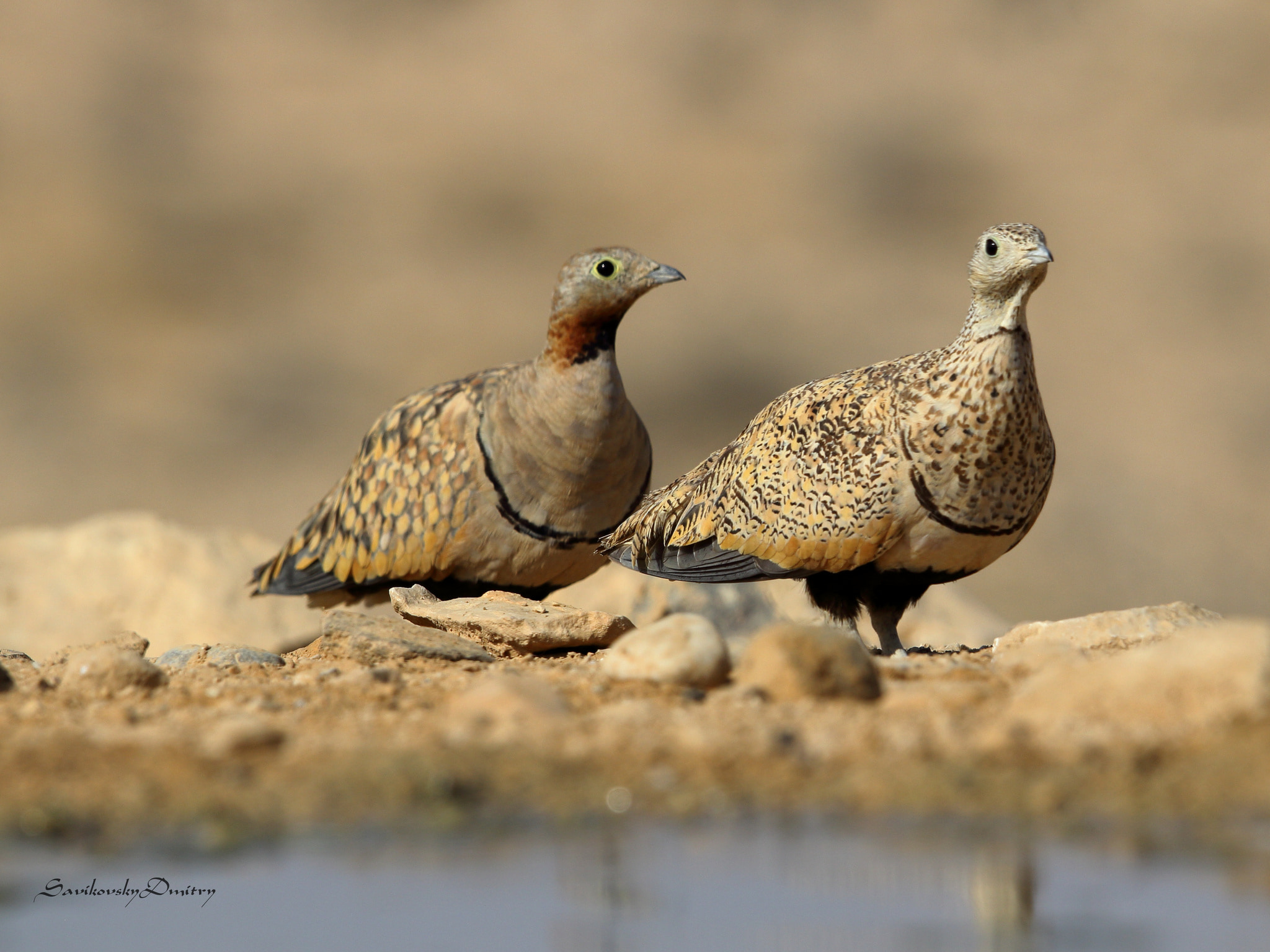
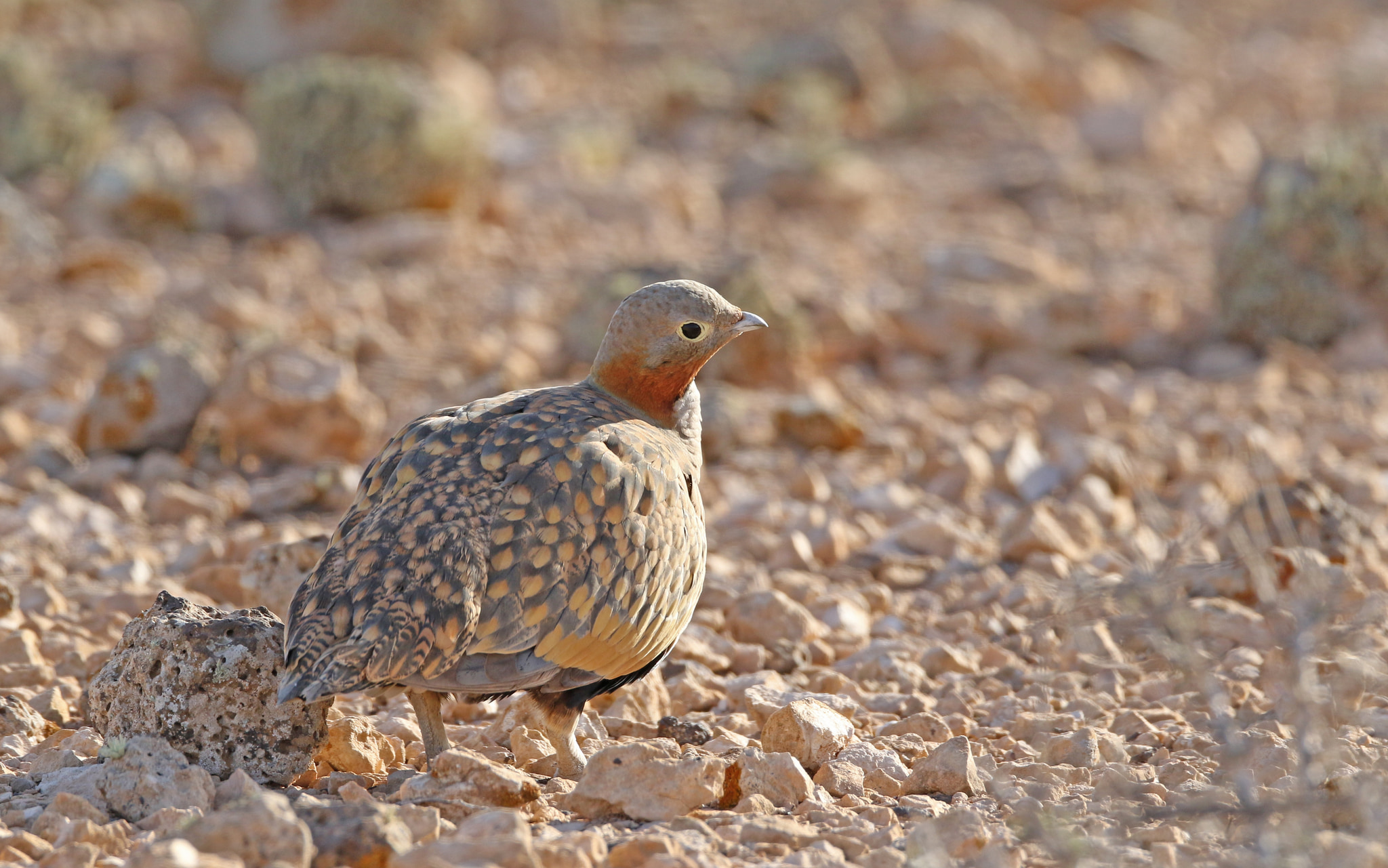
The male has a grey head, neck and breast, a chestnut throat patch and a thin black band around the lower breast. The upperparts are golden brown with dark markings, the belly black. The female is browner and more finely marked above, on the head and on the breast, but her belly and breast band are the same as the male's.
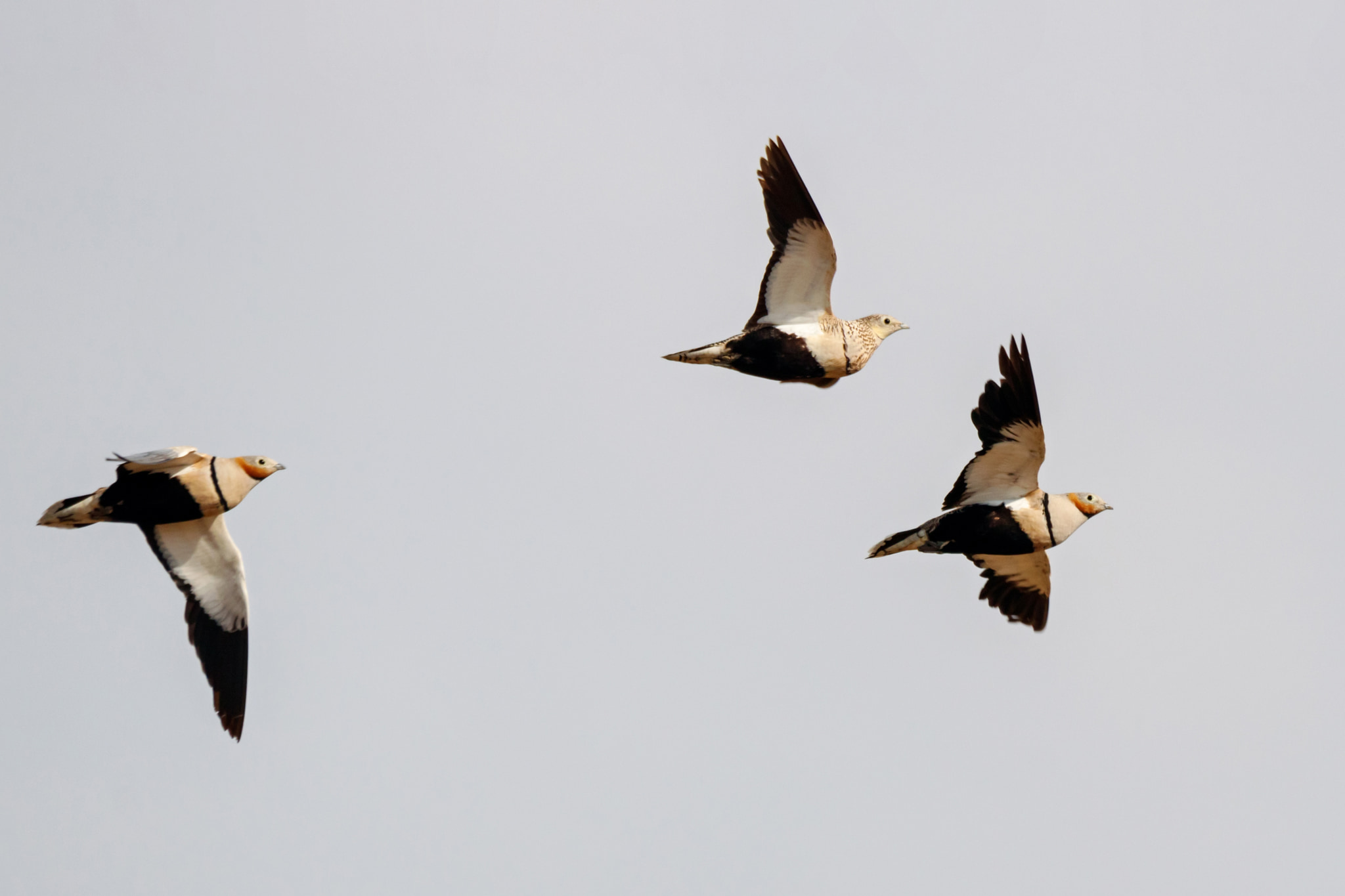
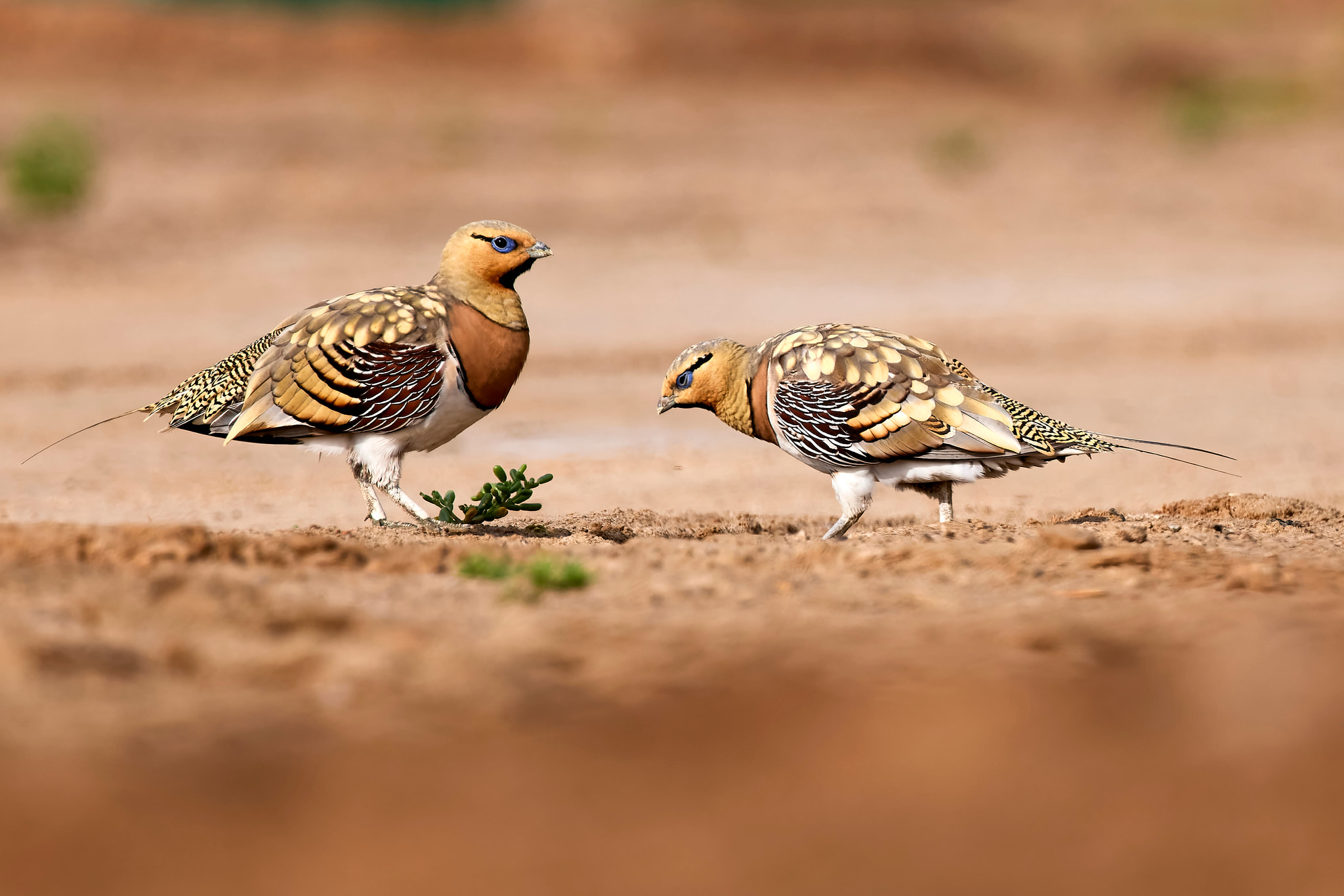
In flight the white underwings and black belly together make it easy to identify. The pin-tailed sandgrouse also has white underwings, but a white belly and long, pin-like central tail feathers. If the belly is black, it is a black-bellied sandgrouse.
Colour
Swatches are illustrative. Do not identify a species by colour alone.
Often confused with
It is a bird of dry, open plains. Unlike the pin-tailed sandgrouse, it avoids places with no vegetation at all. It often lives on wide, open ground near farmland. It is a partial migrant: birds from Central Asia winter in Pakistan and northern India, and those from Asia Minor in the deserts of Arabia.
The black-bellied sandgrouse used to breed in Georgia and is now a rare non-breeding visitor. Records are few, and all come from Kakheti: most from the south-east, around Dedoplistskaro, and two from near Sagarejo. They fall in February, March, April and June, with the most in April. The oldest record dates from April 2014.
Data: Reptiles.ge + iNaturalist · Methodology
- Field observation
- Several records in one spot
- Region with records
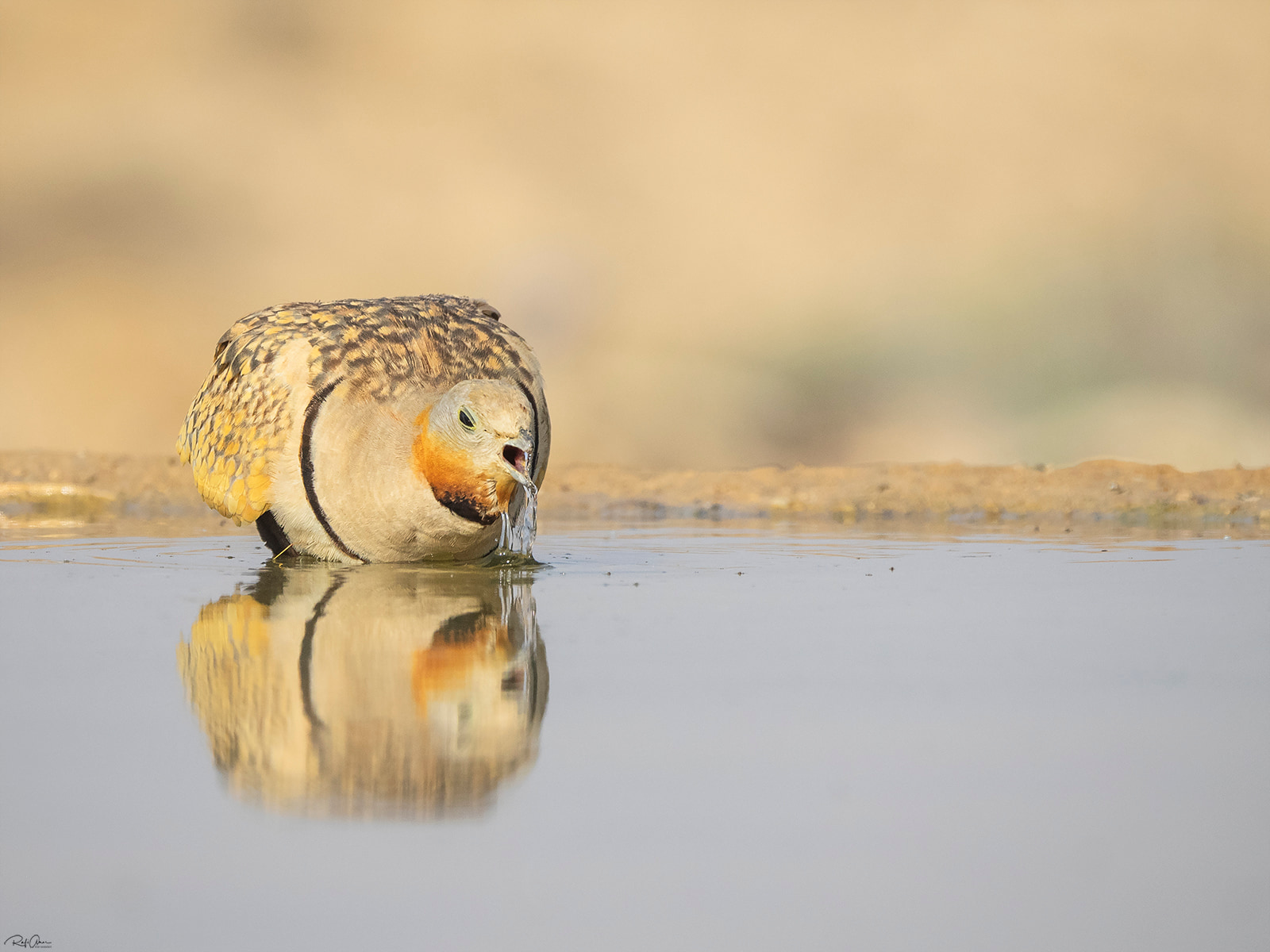
It eats mainly seeds, which it picks up from the ground. Its dry food means it needs water every day. In the morning flocks fly long distances to ponds, pools and rivers. The parents often feed the chicks from the crop.
It is a wary, shy and gregarious bird. It flies fast and direct on long, pointed wings. In flight it gives a soft, rolling "chowrrr rrrr-rrrr". The nest is a flat, open scrape on the ground. The female usually lays three greenish, spotted eggs. Both parents incubate for about four weeks and care for the chicks together. The chicks find their own food from hatching. Only the male brings them water, soaked into his belly feathers.
Globally the black-bellied sandgrouse's risk of extinction is rated low (LC, 2018). It has a wide range, from the Canary Islands and Iberia to north-western China. In Georgia's national assessment (2021) it was not assessed (NE). The list of the birds of Georgia gives it as a former breeder and a non-breeding year-round visitor, although this pattern is not yet fully confirmed. Its presence in Georgia rests on photographs, birds taken by hunters and historical records.
Related guides
Continue with related pages
Yes, but rarely. It used to breed in Georgia, and the list of the birds of Georgia now gives it as a non-breeding year-round visitor. This pattern is not yet fully confirmed. Its presence rests on photographs, birds taken by hunters and historical records.
By the belly. The black-bellied sandgrouse has a black belly, the pin-tailed a white one. Both have white underwings, so look at the belly in flight. The pin-tailed also has long, pin-like central tail feathers, and the black-bellied does not.
Mainly seeds, which it picks up from the ground. Its dry food means it needs water every day. In the morning flocks fly long distances to ponds, pools and rivers. The parents often feed the chicks from the crop.
With its belly feathers. Only the male brings water to the chicks, soaked into his feathers. So the nest can lie far from water. The chicks find their own food from hatching.
On the ground, in a flat, open scrape. The female usually lays three greenish, spotted eggs. Both parents incubate for about four weeks and look after the chicks together. Keep away from nests.
No, it is harmless to people. Globally its risk of extinction is low (LC, 2018). In Georgia's national assessment (2021) it was not assessed (NE). Do not catch wild birds.
References
What this profile is based on
Species profiles are compiled from peer-reviewed literature and established biodiversity databases, and are reviewed as new taxonomic and conservation data become available.
Prepared by the Reptiles.ge editorial team from the sources listed here.


