


Leopard with three cubs in Zangezur: in Nakhchivan, cubs now appear every year
A camera trap in Zangezur National Park filmed a Caucasian leopard with three cubs. According to Nakhchivan’s ecology ministry, more than 15 cubs have been born there in 13 years.
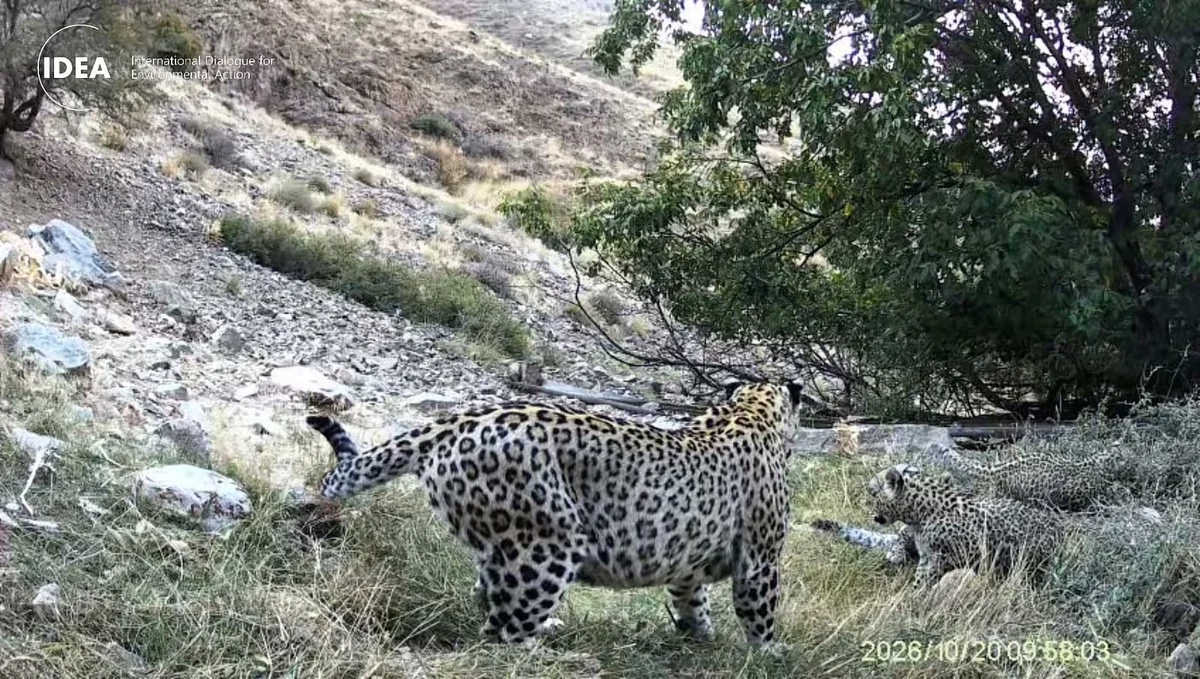
In Zangezur National Park in Nakhchivan, a camera trap recorded an adult Caucasian leopard with its three cubs. The environmental organisation IDEA published the video, and Report carried it on 23 October. Three weeks earlier, on 2 October, Nakhchivan’s ecology ministry said that cubs used to be seen here about once every two years and are now seen every year.
What was recorded
The video shows an adult leopard moving across a grassy slope with its three cubs. IDEA (International Dialogue for Environmental Action) posted the footage on its social media accounts. Report carried the story on 23 October and named IDEA as the source of the video.
The camera timestamp on the frame reads 20 October 2026, 09:58 in the morning. The report does not say exactly where in the park the camera stands. Nor does it say whether the adult is a known individual or a new one.
Cubs every year
Camera-trap monitoring has been running in Zangezur National Park for 13 years. According to the Ministry of Ecology and Natural Resources of the Nakhchivan Autonomous Republic, more than 15 cubs have been born and raised in the Zangezur Mountains in that time. Report published the figures on 2 October.
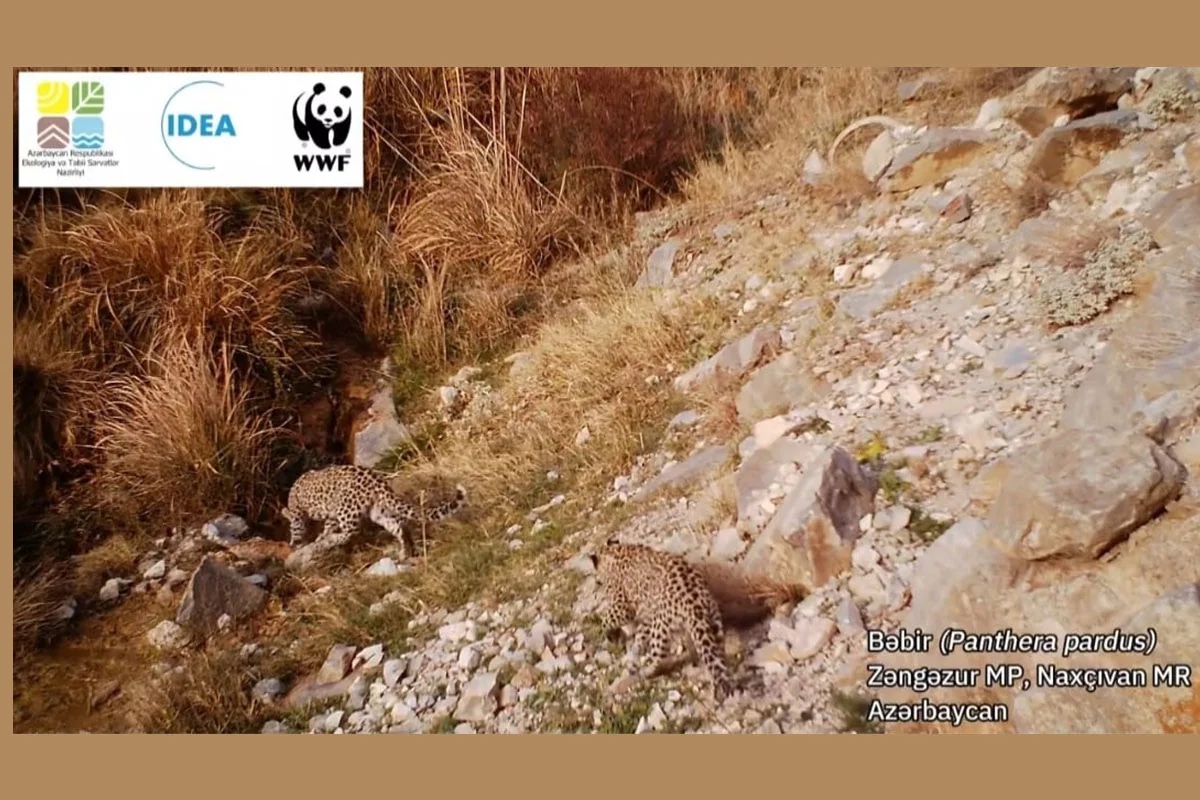
The change shows in frequency, too. The ministry says newborn cubs used to be seen about once every two years and are now seen every year. Against that background, a family with three cubs is no surprise: it fits the picture the ministry describes.
Where the adults go
According to the ministry, leopards born in the Zangezur Mountains move into neighbouring countries once they reach adulthood. One of them reached Türkiye’s Black Sea region. The statement does not say which animal it was, when this happened, or how its origin was established.
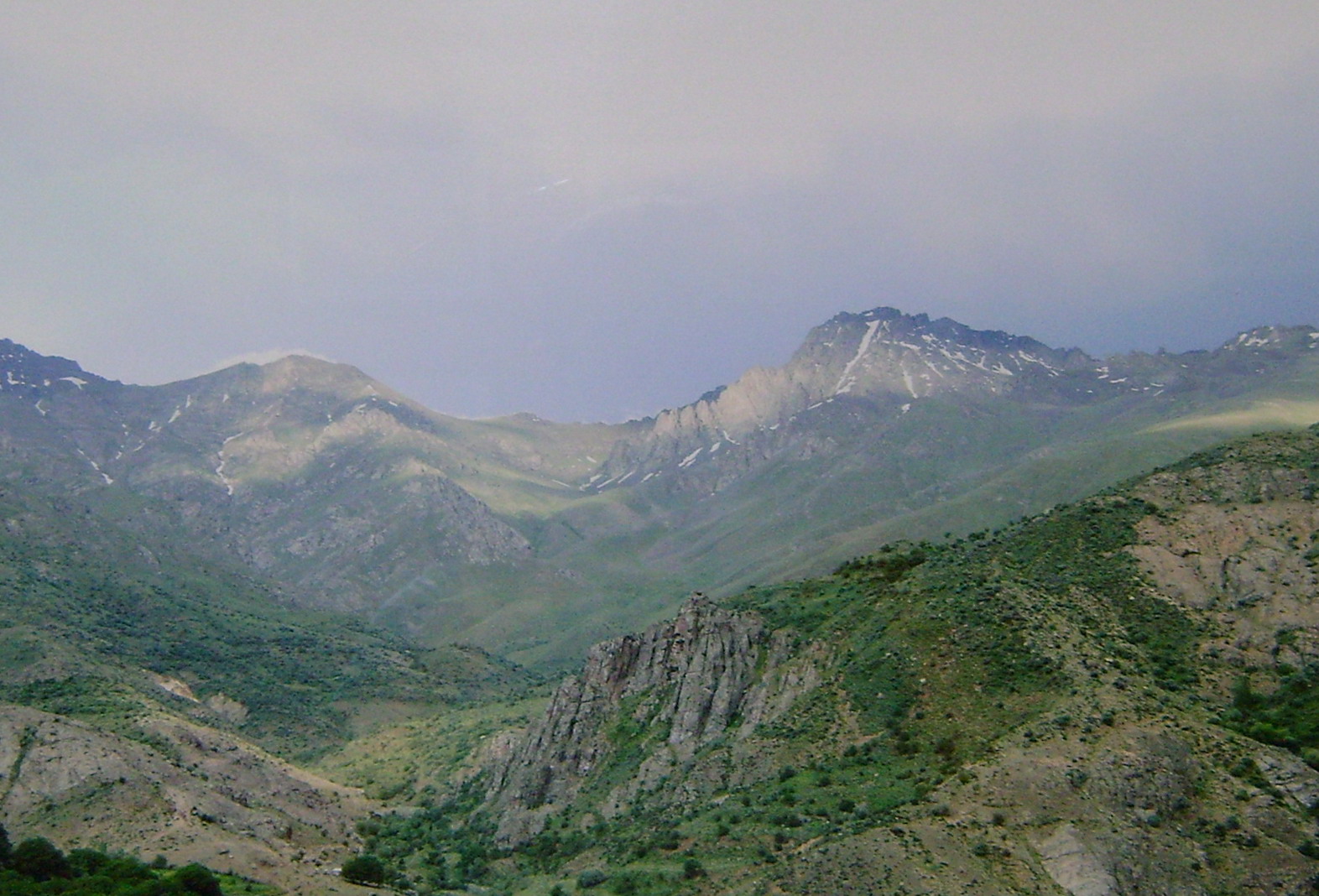
Zangezur National Park is named after Academician Hasan Aliyev and lies in the mountains of Nakhchivan. The ministry’s 2 October frame carries three logos: those of Azerbaijan’s Ministry of Ecology and Natural Resources, IDEA and WWF. The sources do not say how many cameras are in the park or how many adult leopards live there.
The link to Georgia
Georgia, Armenia and Nakhchivan share the same subspecies, the Persian leopard (Panthera pardus tulliana). The IUCN assessed it as Endangered in 2023. In Georgia the leopard is a rare wanderer; the species profile has more: Caucasian leopard.
How far an adult leopard can travel shows in the three-legged leopard Aren. Known in southern Armenia since 2019, he was recorded in Algeti National Park in September 2025. The sources link neither Aren nor any other leopard seen in Georgia to Zangezur. Georgia’s other mammals are gathered on a separate atlas page.
What we know and what we don’t
Confirmed: IDEA’s video shows an adult leopard with three cubs in Zangezur National Park. According to the ministry, more than 15 cubs have been born and raised there over 13 years of monitoring, and cubs are now seen every year.
Not established: the exact camera site; whether the adult is a known individual; the sex of the cubs; how many adult leopards live in the park. The only primary source for the video is IDEA’s social media, and the ministry’s figures reach us through Report.

