


Caspian gecko in Kutaisi: an established population in the old town
129 geckos were photographed in the old districts of Kutaisi, more than half of them young. The author concludes that the geckos reached the city at least several years ago and are breeding there.
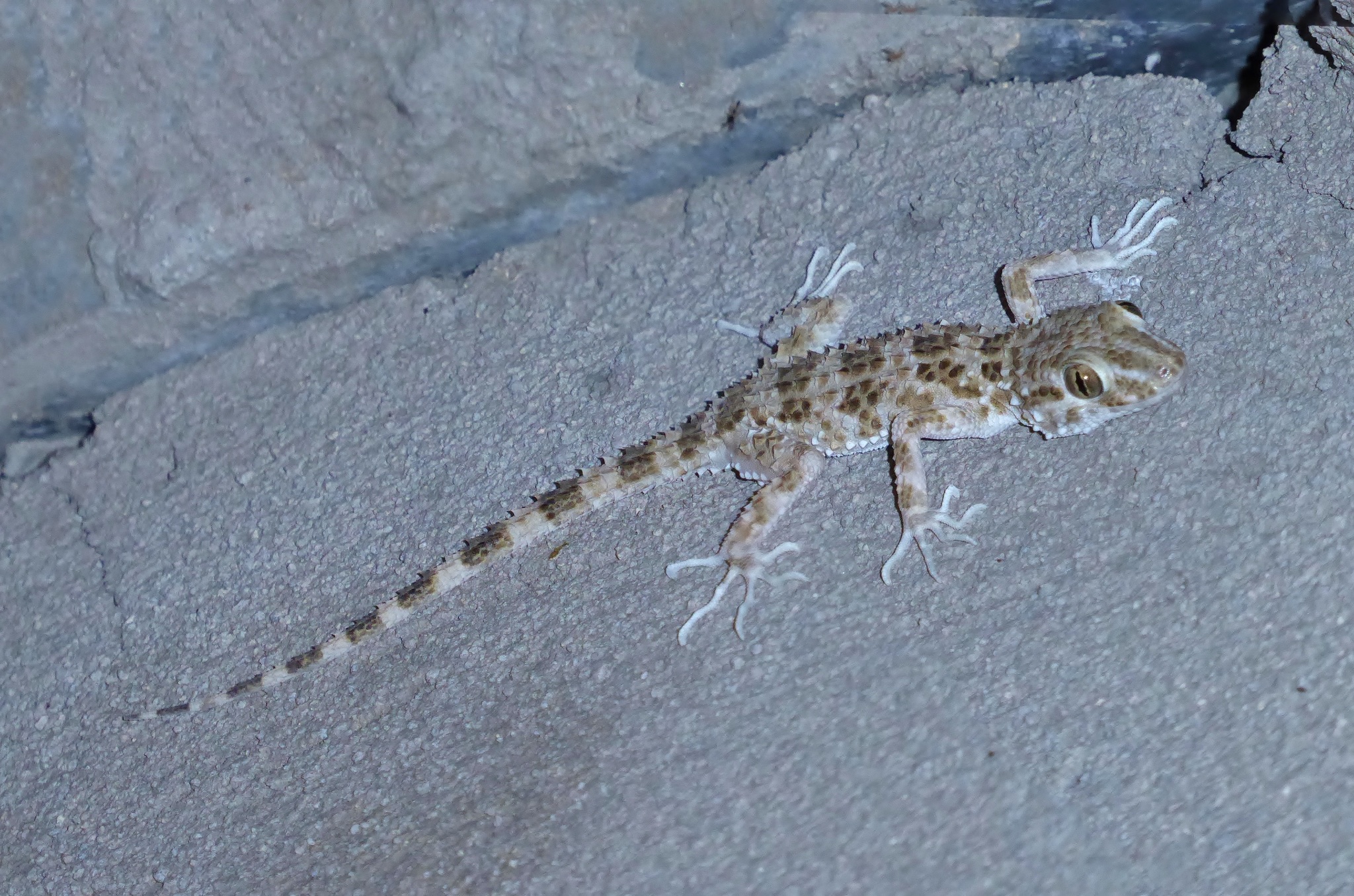
A paper in Herpetology Notes, published in summer 2025, describes the first known record of the Caspian thick-toed gecko in Kutaisi. In 2022–2023 the author photographed 129 geckos in the old districts on the left bank of the Rioni. She concludes that this is an introduced but already established population that may spread through the city.
What was found in Kutaisi?
On 14 September 2022, at 2:37 at night and in the rain, a Caspian thick-toed gecko (Tenuidactylus caspius, also called the Caspian bent-toed gecko) was spotted by chance on the façade of an old residential building on Tamar Mepe Street. It is the first known record of the species in Kutaisi.
After that, Kseniia Prondzynska of V. N. Karazin Kharkiv National University carried out twelve evening surveys in the old town of Kutaisi, in Imereti, between 15 September 2022 and 22 May 2023. She started searching about half an hour after sunset and finished before 10 pm. The results were published in the journal Herpetology Notes on 30 June 2025.
Where does the gecko live in the city?
All the geckos were found in the historic districts on the left bank of the Rioni. Their range is bounded by the Rioni to the north and west, the Kutaisi I railway station to the south and 26 Maisi Street to the east. The most geckos were in a courtyard between Tsereteli, Shanidze and Lomonosovi streets.
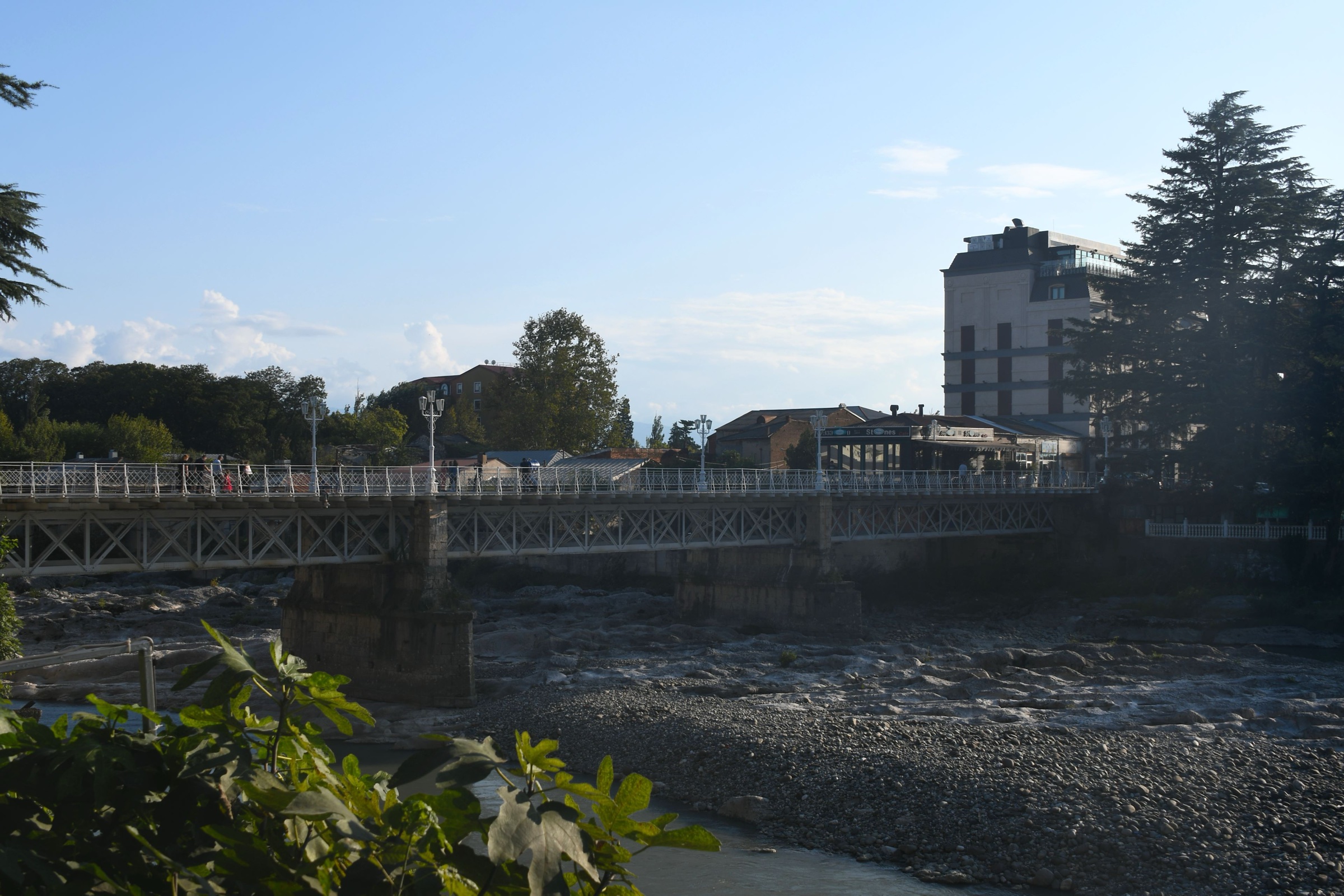
Geckos were searched for several times on the right bank, including the old residential quarters around Bagrati Cathedral, but none were found. So for now the population is confined to one part of the city.
The geckos live in old stone and brick houses and abandoned buildings and hide in cracks and crevices. But they were also seen on recently renovated, plastered buildings. Many hid behind gutters and the utility meter boxes fixed to house walls. Adults tended to sit higher up, juveniles lower down. Some were close to lamps, but most were found in unlit places.

The same walls are home to the day-active mixed rock lizard (Darevskia mixta), but no interaction between the two species was recorded. There are many stray cats in the area too, though no predation on geckos was seen. Unlike the rock lizard, the gecko is inactive from mid-December to late February. Young geckos were seen at least twice on warm January days.
How many were seen, and what does it mean?
Over the survey period, 129 records with photographs were collected. The author tried to make each record a separate individual, but writes that some geckos may have been photographed twice on different dates. 72 records were of young geckos, more than half. 72% of the geckos still had their original tails. 38 geckos were measured: their body length, without the tail, ranged from 25 to 68 millimetres.
The author concludes that the geckos must have reached Kutaisi at least several years ago. Many young animals and little predator pressure suggest that the population breeds well and may spread more widely in the city. The paper says the Caspian thick-toed gecko has a high potential to become invasive, so its numbers and its interactions with native fauna should be monitored, and it should be looked for elsewhere in western Georgia.
How did the gecko get into Georgian cities?
The Caspian thick-toed gecko is the only gecko species in Georgia. In the checklist by Tarkhnishvili et al. 2026 it is a confirmed species of Georgia, and according to the atlas profile it occurs naturally only in the far southeast of the country, in the Samukhi valley and the Dedoplistskaro area. Groups living in cities are separate from this natural range.
The Kutaisi paper also recalls this urban history. The gecko was described from central Tbilisi in 1956. At the time it was thought to have been brought by accident from eastern Azerbaijan. For decades it was recorded only in Tbilisi; since the early 21st century there have also been reports from Rustavi, Telavi, Gori and the village of Shakhvetila in Akhmeta Municipality. In 2001 the gecko was found in Sukhumi too, where it has adapted to a far more humid climate than in its natural range.
Why does the gecko survive in cities? The author writes that cities are generally warmer than the surrounding countryside, and houses are heated in winter. So lizards can survive in cities in places where they could not live under natural conditions.
If you see a gecko on a wall
The Caspian thick-toed gecko is harmless to people, and there is no need to kill it. You can tell it from other lizards by its vertical pupil and widened toes. It is mostly seen at night, on the walls of buildings.
The Kutaisi paper also calls for searching for the gecko in western Georgia. If you see one outside the old town of Kutaisi or in another town in western Georgia, a photo with the place and date will help us understand its distribution. More stories are in the news.

