
A bat flew into the house — what should you do?
If a bat is indoors: stay calm, keep people and pets away, and avoid bare hands. If there was a bite, a scratch, or possible direct contact and you are not sure it can be ruled out, get medical advice first and do not release the bat on your own. If safe, isolate it to one room and open an exterior window or door so it can leave. Do not chase or strike it. After a bite, scratch, or uncertain direct contact, wash and seek medical advice; in Georgia call 112 for emergencies.
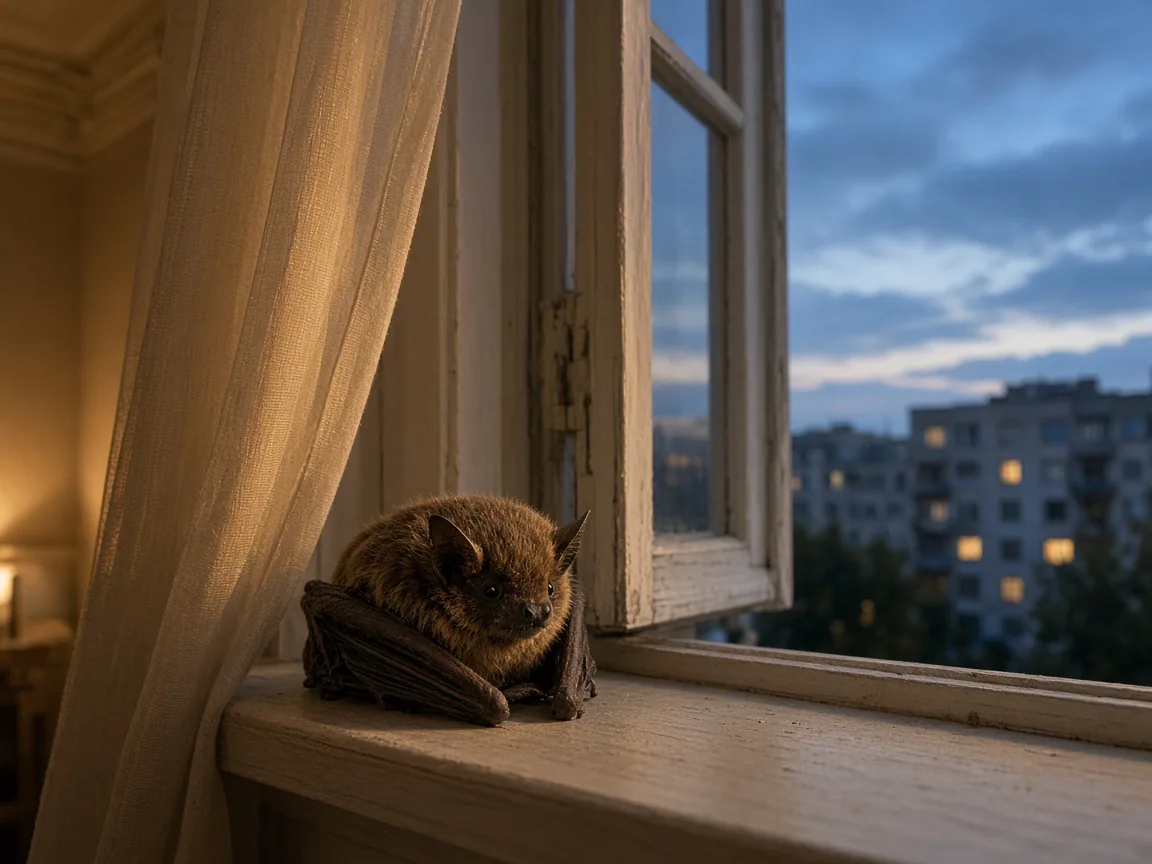
What to do if a bat flies into your home
A bat indoors is usually trying to escape, not to attack. Close doors to other rooms so it cannot move deeper into the building. Keep children and pets out. Open one or more exterior windows or an exterior door as wide as practical, clear curtains, blinds, and furniture that block the opening, and turn off unnecessary indoor lights so the outdoor exit is easier to find.
Then step back. Bat Conservation Trust guidance for a bat flying indoors in the evening is to give it time to orient and leave rather than chasing it around the room. Check later — including curtain folds and behind furniture — to confirm it has gone.
What not to do
Do not catch it with bare hands. Do not hit, throw, or kill it. Do not chase it aggressively around the room, and do not let pets interact with it. Avoid improvised traps, sprays, or poisons. Those actions raise the chance of injury to people and to the bat, and they make a calm exit harder.
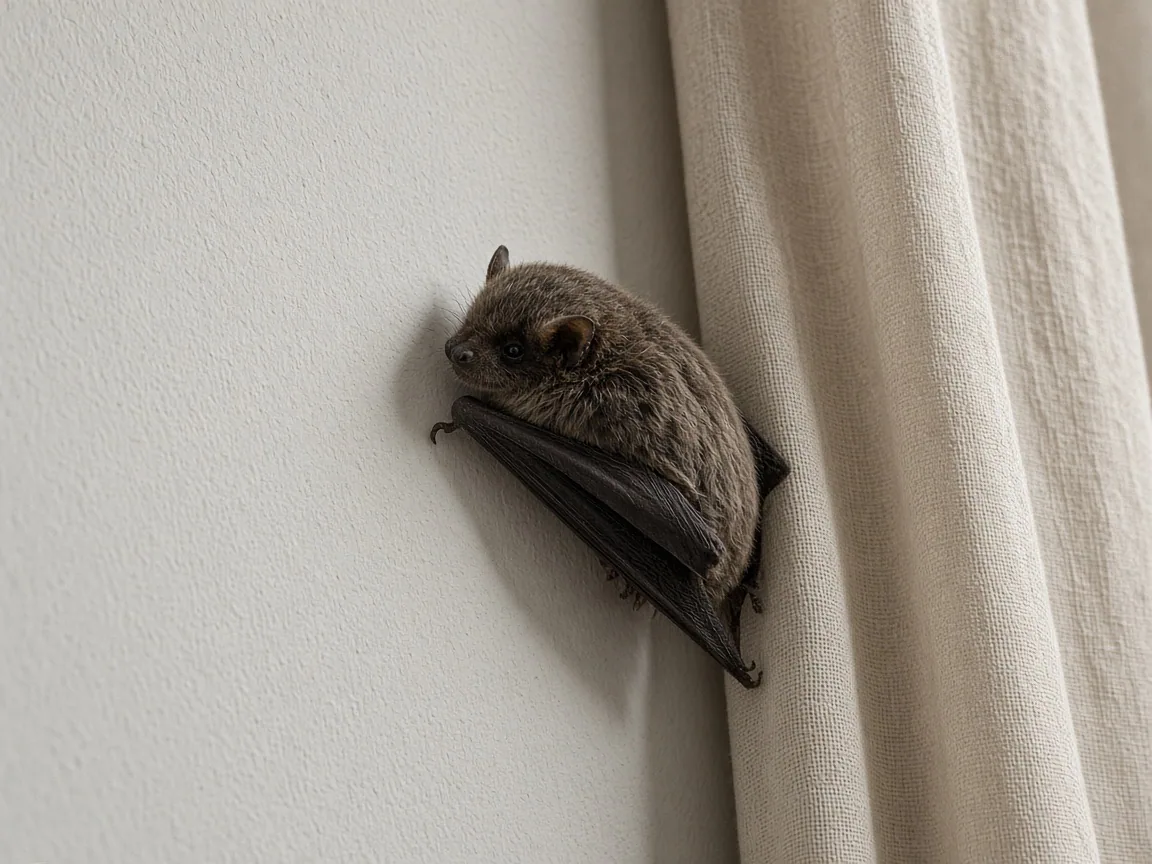
Why did the bat come inside?
Common explanations include an open window or door, accidental navigation while hunting insects near lights, and young or inexperienced animals entering by mistake. Buildings can also offer roosting gaps. A single indoor sighting does not by itself prove that a colony lives in the house.
How to help a bat leave safely
Wildlife guidance prefers passive exit for a bat flying indoors in the evening: one room, open exterior openings, quieter indoor lights, and time. If it is cold or very windy outside, or the bat is flying during the day, do not try to send it outside immediately — wait for it to settle and get professional advice before acting. Do not try to grab a flying bat.
If the bat has landed and will not leave, some wildlife organisations describe covering it with a box and sliding card underneath while wearing thick gloves, then releasing outdoors at an appropriate time. That is a last resort for a calm, grounded bat — not for chasing a flying one — and it is inappropriate if you cannot do it safely. Prefer advice from a wildlife professional when unsure.
Should you touch a bat?
No — not with bare hands. Even a brief touch can create a bite or scratch risk that is easy to miss. If handling cannot be avoided, wildlife advice emphasises thick gloves and methods that minimise direct contact. After any possible bare-skin contact, treat the situation as medically relevant and seek advice.
What if the bat will not fly away?
An injured bat, a bat on the floor, one that repeatedly fails to fly, a bat found active by day, or one that remains indoors for a long time may need professional help. Keep people and pets away, reduce disturbance, and contact wildlife rescue, a veterinarian, or another qualified service available where you are. Do not invent feeding or treatment at home.
This page does not list Georgia-specific rescue hotlines, because reliable public contacts change and are not always published in one place. Use local wildlife, veterinary, or municipal channels you trust.
If a bat bites or scratches you
Bat bites can be small and easy to overlook. CDC guidance is to wash a known bite or scratch with soap and water and get medical help right away. WHO also recommends thorough washing with soap and water for at least 15 minutes after exposure, then clinical assessment for rabies post-exposure care when indicated.
Seek prompt medical or public-health advice after a bite, a scratch, saliva on mucous membranes or broken skin, or situations — including some sleep or unsupervised child contacts — where direct contact cannot be ruled out with confidence. Do not release or discard the animal casually if public-health staff ask that it be assessed. This page cannot diagnose exposure or prescribe a vaccine schedule.
Bats and rabies
Bats can carry rabies lyssaviruses in some regions, and WHO classifies exposures due to direct contact with bats as a severe exposure category requiring assessment for post-exposure prophylaxis. That does not mean most bats people see are infected, and it does not mean that seeing a bat indoors is automatically a medical emergency.
Infection cannot be ruled out by appearance. Keep risk proportional: avoid contact; after possible direct exposure, get advice. Publicly available, up-to-date figures for bat rabies in Georgia are limited, so do not import another country’s statistics as if they describe Georgia.
Why bats matter
Insectivorous bats eat large numbers of night-flying insects and can help suppress agricultural pests. Globally, some bat species also pollinate plants or disperse seeds; those roles are not equally shared by every species. Killing a bat that wandered indoors solves a short fear and removes an animal that is usually trying to leave.
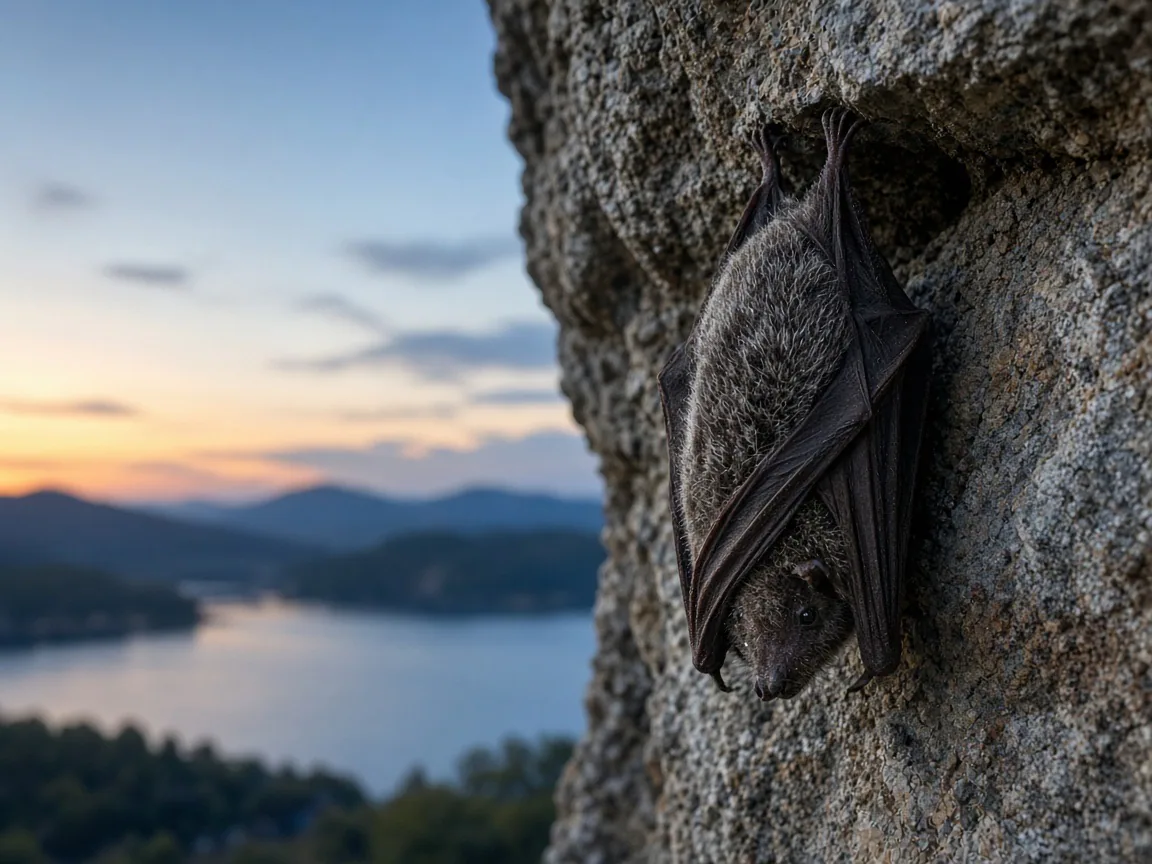
Bats in Georgia
An expert-curated occurrence dataset published in 2023 records 30 bat species for Georgia across four families. That is a national fauna overview, not a household checklist, and this guide does not attempt species-level identification from an indoor sighting.
If bats repeatedly appear in living rooms, there may be gaps from a roost space into the interior. Sealing internal gaps is a building issue that should not trap animals inside wall cavities; when in doubt, seek advice before permanent works. Reptiles.ge does not yet publish individual bat species profiles.
Frequently asked questions
Often through an open window or door, or while following insects. Young or inexperienced bats may also enter by mistake. Seeing a bat indoors does not mean it is attacking people.
Sources and supported claims
- Bat Conservation Trust — Instructions for release
Close internal doors, open windows, clear obstacles, switch off lights, and give a flying bat time to leave; gloves for handling.
- Bat Conservation Trust — Containing a bat
Box-and-card containment without bare hands; gloves because of rabies transmission risk; seek medical advice after a bite or scratch.
- RSPCA — Bats
Keep the room calm, open windows, dim lights, avoid catching a flying bat, and wear thick gloves if handling is essential.
- CDC — Preventing Rabies from Bats
Most encountered bats are not rabid; avoid touching; wash bites/scratches and seek care; bat bites can be tiny.
- WHO — Rabies fact sheet
Direct contact with bats is a category III exposure; wash with soap and water for ≥15 minutes; seek post-exposure care when indicated.
- Bat Conservation International — Bats 101
Ecosystem roles of bats: insect consumption globally; pollination and seed dispersal in some species.
- Natradze et al. 2023 — Bats of Georgia (Biodiversity Data Journal)
Expert-curated dataset: 30 bat species recorded in Georgia.
- 112 Georgia — Frequently asked questions
Georgia's emergency medical assistance number is 112.