
Wasp nest near your home: how dangerous is it?
Finding a nest is not automatically an emergency. Step away, leave it undisturbed, and keep children and pets clear. Have a professional assess a nest by a busy entrance; after a sting, call 112 in Georgia for breathing difficulty or throat swelling.
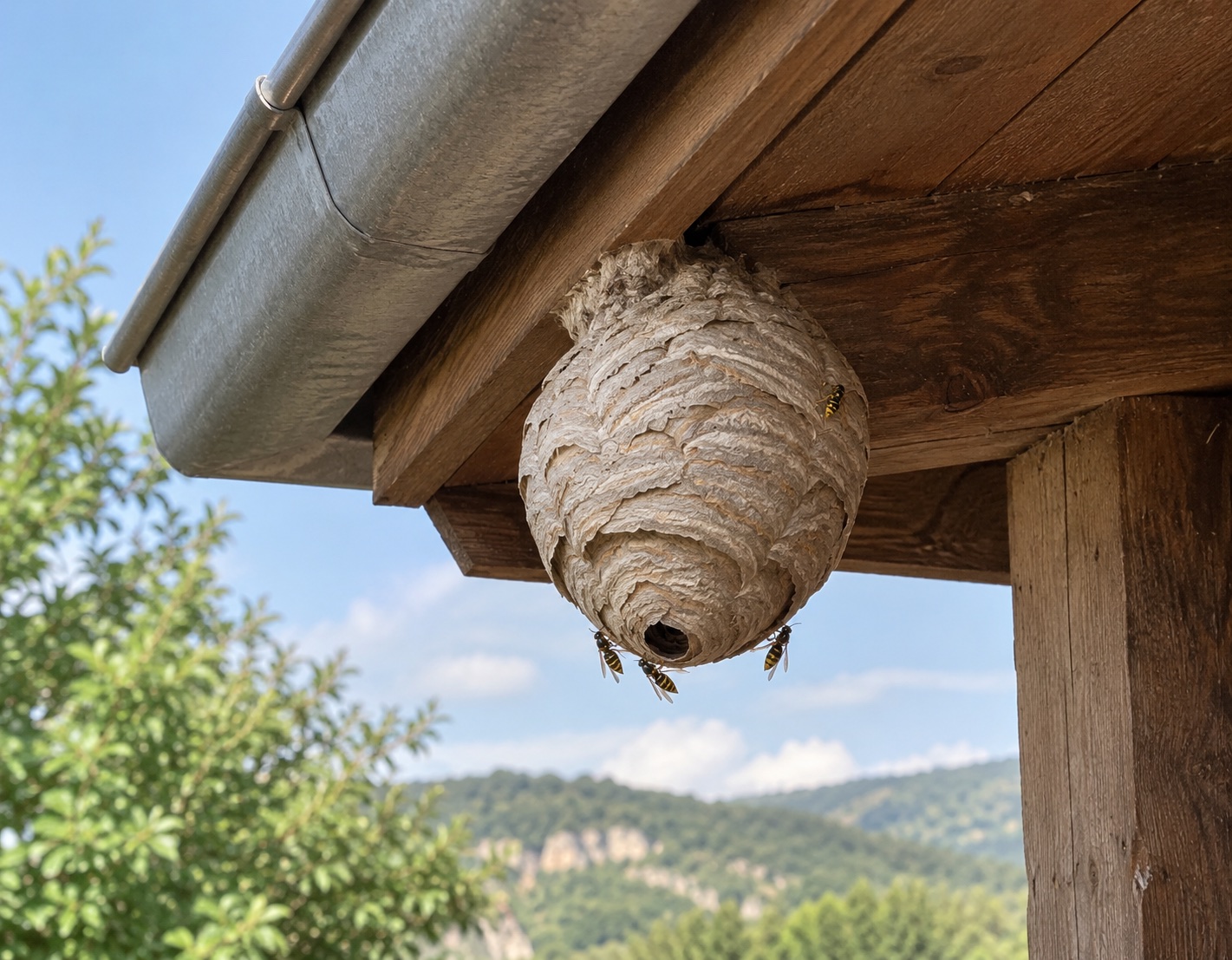
What is a wasp nest?
For social wasps, a nest is where the queen lays eggs and the colony raises young. Nesting habits differ by species. Seeing one insect alone does not establish that a nest is nearby.
What does a wasp nest look like?
Some nests are exposed, umbrella-like combs; others have a papery outer envelope. A nest may be out of sight inside a wall or underground. Shape and colour alone do not reliably identify the species. If you cannot tell whether the insects are wasps or bees, do not disturb the nest and leave the assessment to a professional.
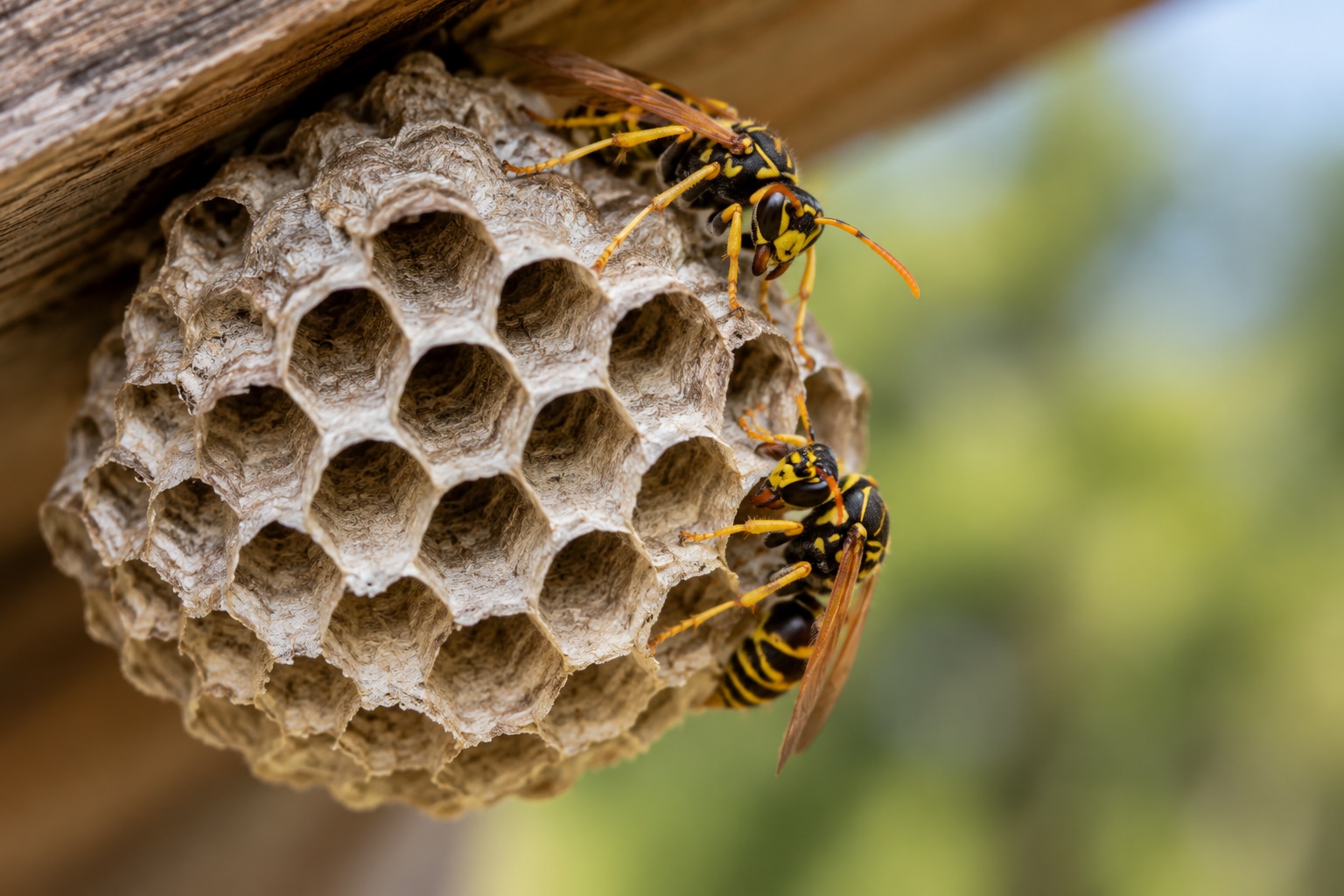
Where do wasps build nests?
Depending on the species, nests can occur under eaves, on balconies, in sheds, attics and wall cavities, in trees or shrubs, and in underground spaces. Do not approach a busy entrance to investigate it.
Is a wasp nest dangerous?
Simply finding a nest is not an emergency. Risk depends on its location and activity: whether people pass close by, children play nearby, pets can reach it, or someone has a history of severe allergy. Disturbing an active colony can provoke defensive behaviour and multiple stings.
When can a nest be left alone?
A nest away from people can sometimes be left undisturbed. Avoid the area and observe only from a safe location. Wasps prey on other insects, and some visit flowers; a nest does not automatically need removal.
When might removal be needed?
Seek professional assessment if an active nest is beside a regularly used entrance, balcony or path; children or pets cannot avoid it; insects enter the building; or the nest is inaccessible. A professional can assess whether intervention is needed.
What should you never do?
Do not hit, shake, burn or break open an active nest. Do not pour fuel or improvised chemicals on it, seal an active entrance, open a wall, climb an unsafe roof or ladder, or spray an inaccessible nest from close range. These actions can disturb the colony and result in multiple stings.
What if the nest is near your home?
Keep back and route children and pets elsewhere. Observe only where your presence does not disturb the insects. There is no universal safe distance: if activity starts around you, withdraw. Contact a professional if daily access or living space overlaps the nest area.
What if the nest is in a wall or roof?
A nest inside a wall, roof, chimney or ventilation cavity may not be visible. Sealing an active outside entrance can send insects looking for another way out, potentially into the building. Do not open the structure yourself; ask a professional to assess it.
What happens in winter, and are old nests reused?
Many social wasp colonies are seasonal: the old colony dies off in cold weather, while fertilised queens overwinter and start new nests. Old nests are generally not reused, but taxa and climates vary. Do not assume a nest is empty from the calendar alone; visible traffic means it is active.
What should you do after a sting?
Local pain, redness and swelling are common. Move away from the nest, wash the site with soap and water, and apply a cold compress wrapped in cloth. Get timely medical advice after multiple stings, a sting in the mouth or throat, or worsening symptoms.
Breathing difficulty, tongue or throat swelling, fainting, or rapidly spreading rash and weakness may signal a severe allergic reaction. Seek emergency medical help immediately; in Georgia, call 112. If the person has a prescribed adrenaline auto-injector, use it as directed and still call for emergency help. This page cannot diagnose a reaction.
Why do wasps matter?
Many wasps hunt other insects; some visit flowers and contribute to pollination. They also form part of food webs. Judge a nest by its location and actual risk to people, rather than assuming every nest must be destroyed.
Frequently asked questions
Georgian everyday names such as „კრაზანა“ and „ბზიკი“ overlap; a Georgian synonym dictionary links them. The name alone does not establish a species. Use nest location and activity to judge risk.
Sources and supported claims
- Penn State Extension — Getting Rid of Paper Wasps, Yellowjackets, and Other Stinging Insects
Risk by nest location, when a nest may be left alone, and seasonal colonies.
- University of Minnesota Extension — Wasps and bees
Different nest types and sites, seasonal cycle, and exceptions to old-nest non-reuse.
- Penn State Extension — European Hornet
Risk of sealing an active wall-cavity entrance and an example of nocturnal activity.
- Penn State Extension — Common Social Bees and Wasps
Social wasp nests, colony defence, insect predation, and flower visits.
- NHS — Insect bites and stings
Care for local reactions, multiple stings, and emergency warning signs.
- NHS — Anaphylaxis
Severe allergic reaction signs, emergency help, and prescribed auto-injector use.
- 112 Georgia — Frequently asked questions
Georgia's emergency medical assistance number is 112.
- საქართველოს ეროვნული ბიბლიოთეკა — ქართულ სინონიმთა ლექსიკონი: „კრაზანა“
The Georgian synonym dictionary lists „ბზიკი“ under „კრაზანა“; common names alone do not identify a species.