


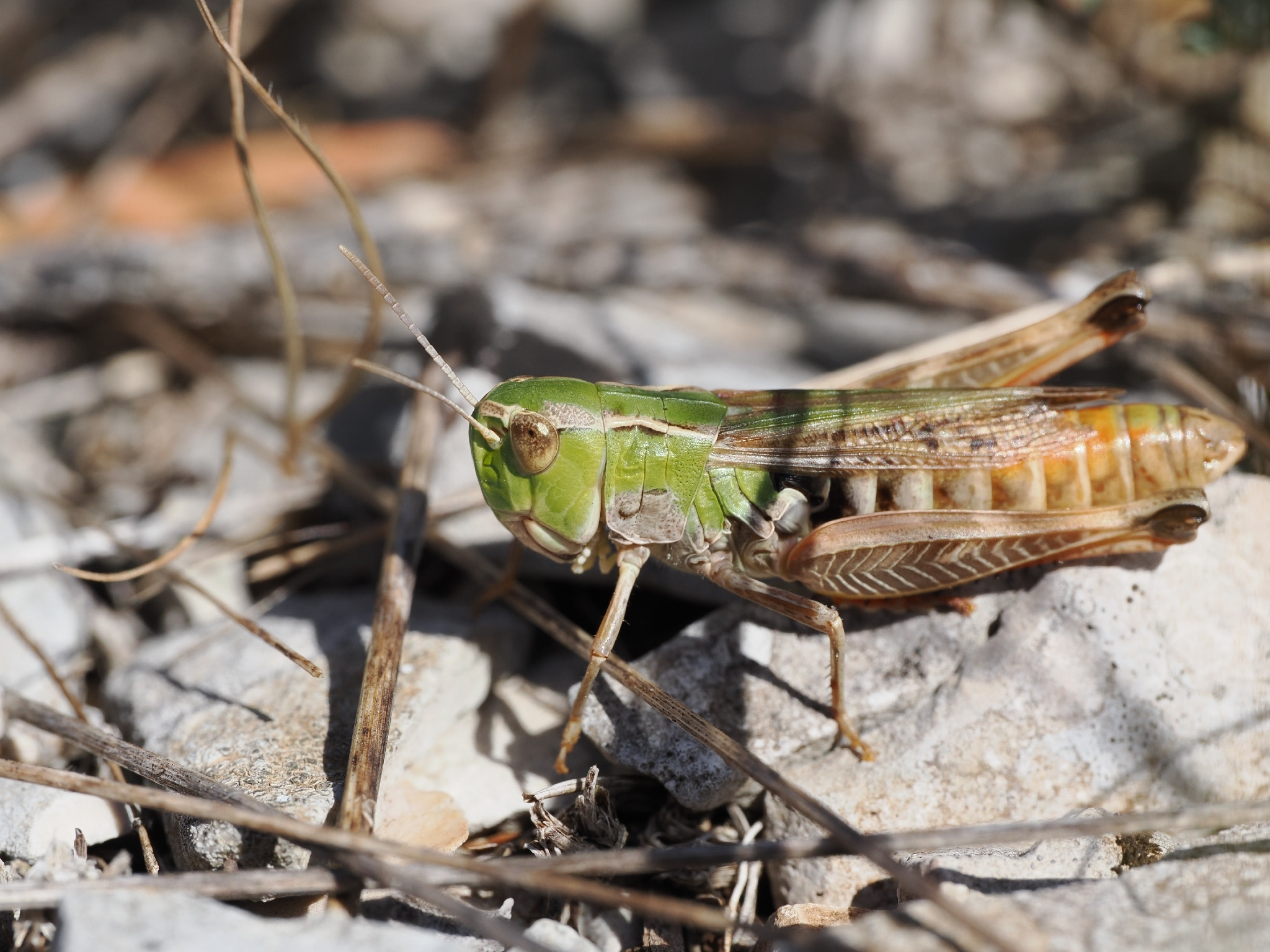

White-headed toothed grasshopper
Stenobothrus fischeri
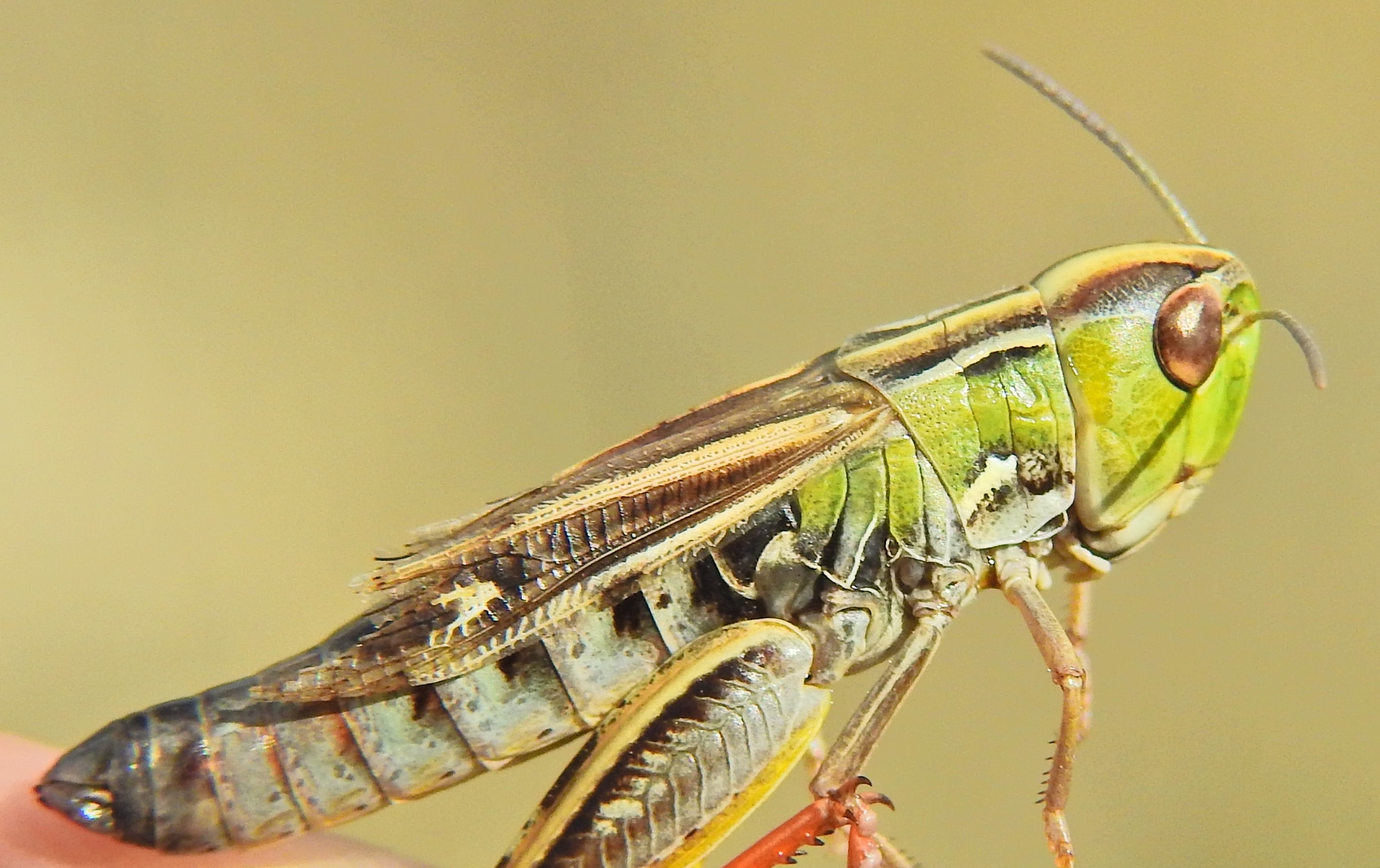
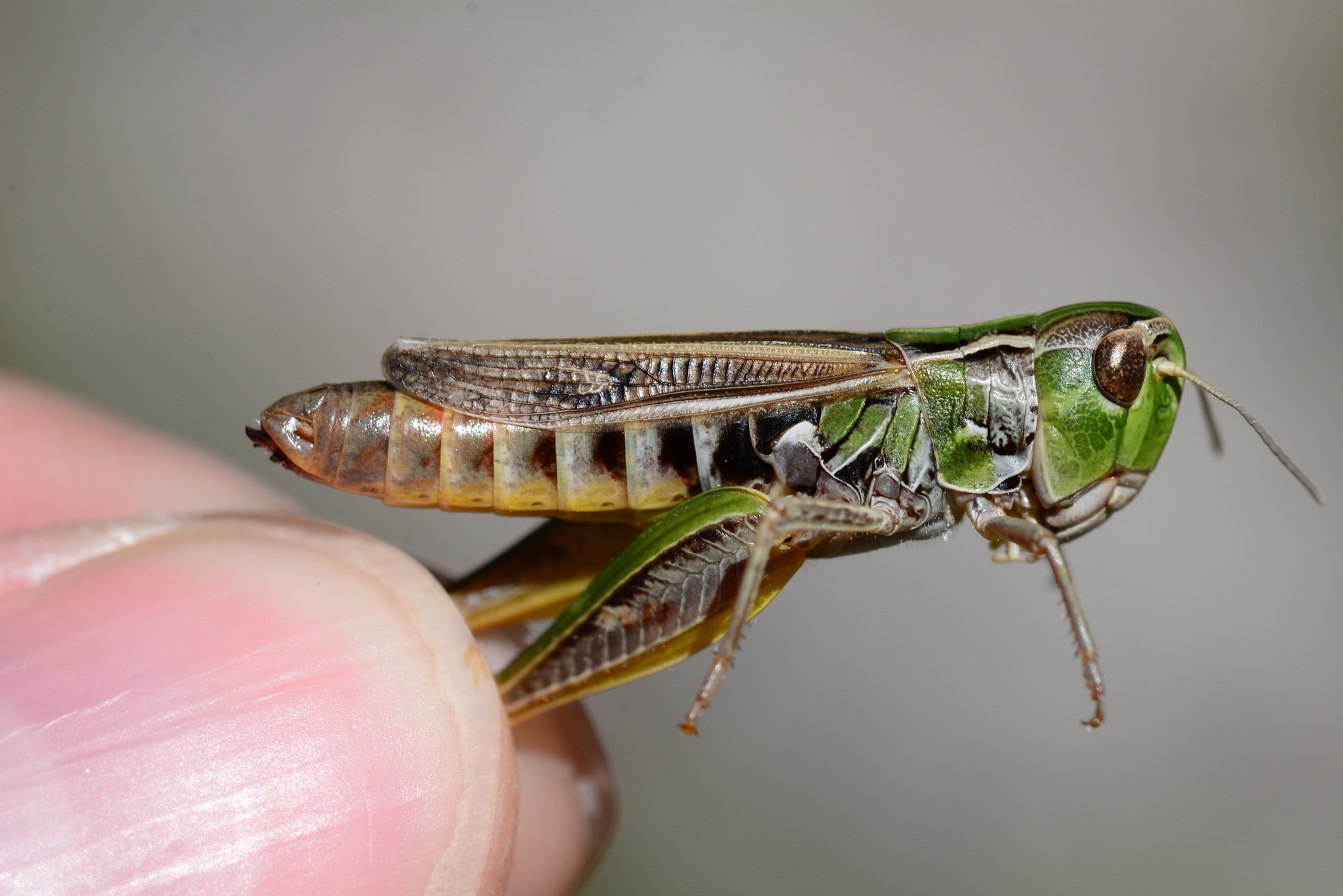
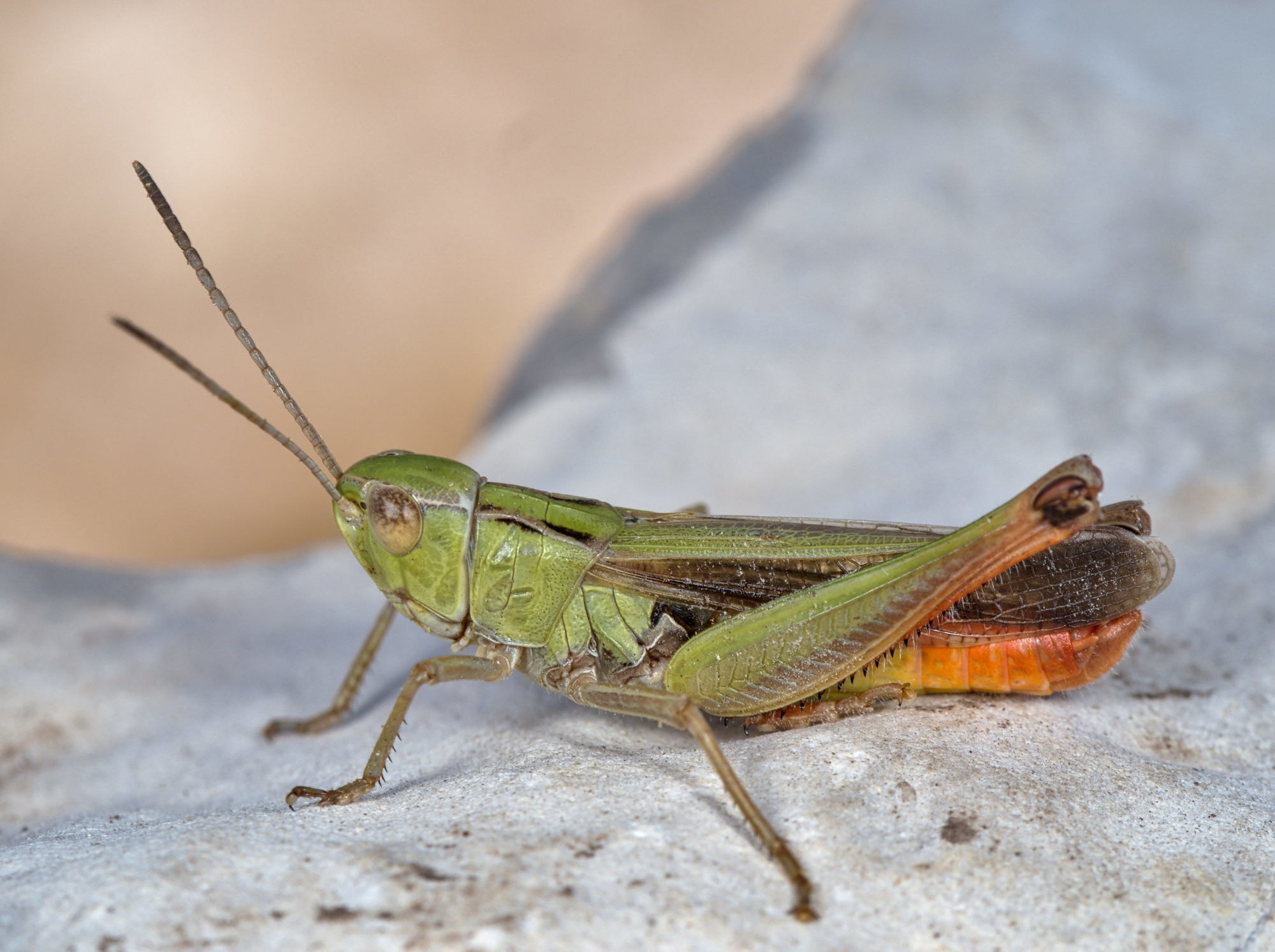
Jérémie Février · Saint-Michel
Key facts in one look
- Group
- Insect
- Family
- Acrididae
- Male song phrase
- 3–5 s, 40–55 syllables
- Status in Georgia
- Listed for the country's fauna
- Conservation
- NE
The white-headed toothed grasshopper (Stenobothrus fischeri) is a grasshopper of dry steppes and sparse, nutrient-poor grasslands that ranges from Europe to Mongolia. It is hard to tell by looks from the similar stripe-winged grasshopper, but its song is quite different. The male's phrase lasts 3–5 seconds and is made of dozens of fast syllables. When it becomes very numerous, it damages fields. To identify one, record its song first.
Identification
White-headed toothed grasshopper: how to identify it
Like the similar stripe-winged grasshopper it belongs to the genus Stenobothrus, and the two are hard to tell apart by looks. The main features are in the male's cerci and the veins of the forewing, so a close photo is needed. In the field the male's song separates it most reliably.
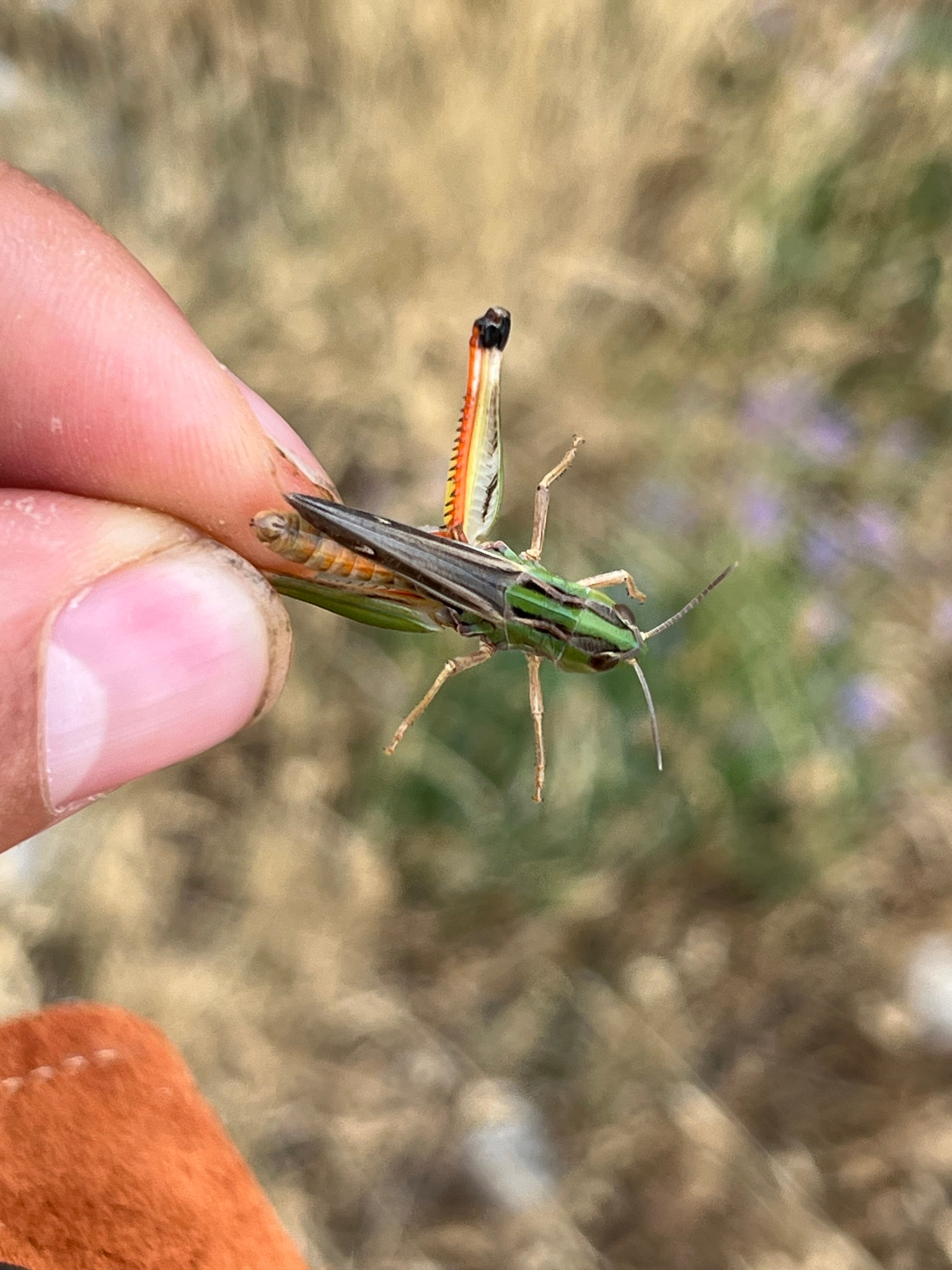
The male's cerci are flattened from the sides towards the tip. In the stripe-winged grasshopper they are simply conical. This feature only shows in a close photo or with a hand lens.
On the forewing the Cu1 and Cu2 veins are less fused than in the stripe-winged grasshopper. The wing mark (stigma) lies farther from the wing tip than in S. nigromaculatus. The forewings are much narrower than in S. rubicundulus.
One phrase of the male lasts 3–5 seconds and has more than 40 syllables. S. festivus and S. stigmaticus have similar but shorter phrases, with fewer than 40 syllables. Record the song and count the syllables.
Often confused with
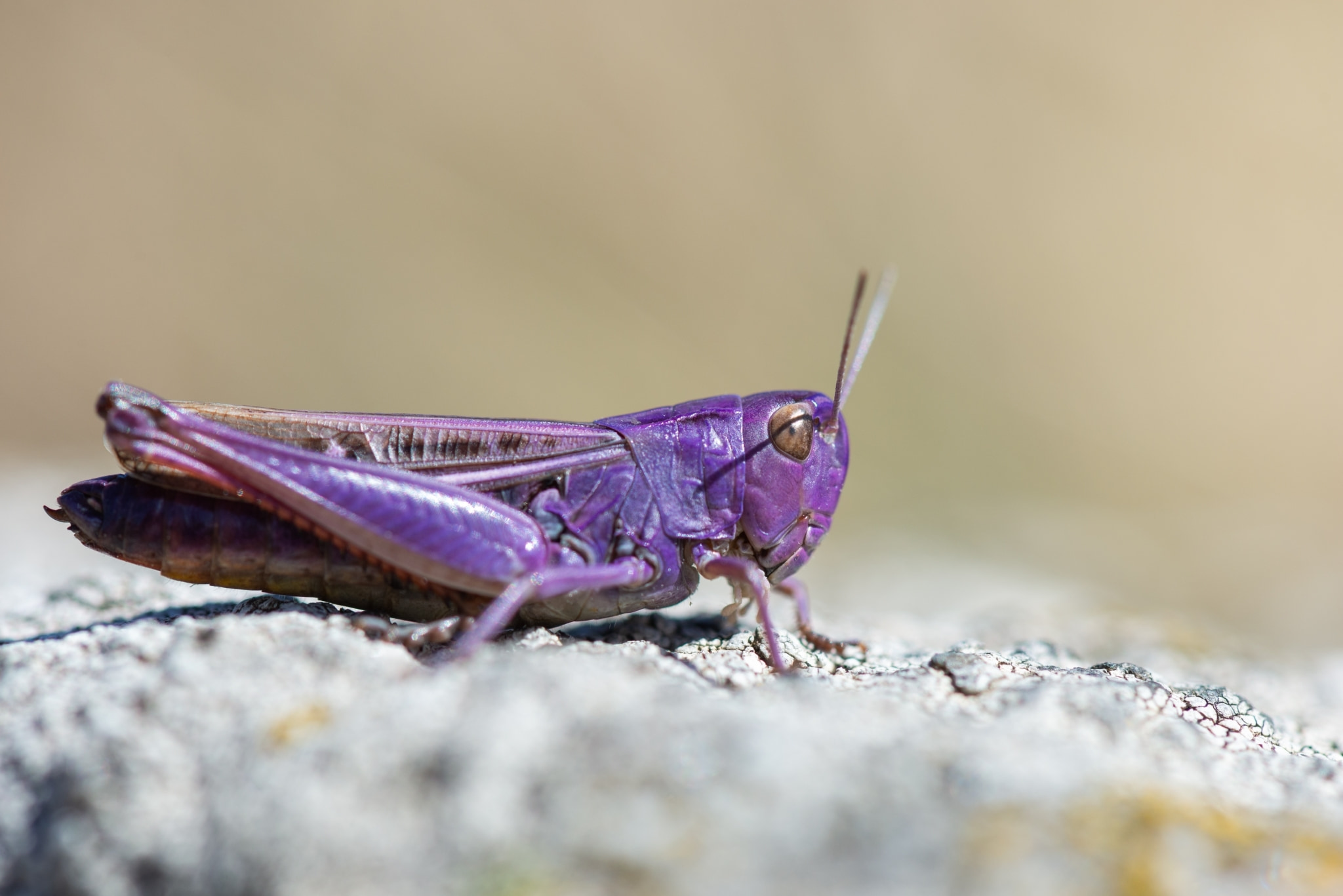
The white-headed toothed grasshopper is an insect of dry, open places. It lives in sparse, very dry and nutrient-poor grasslands and in steppes. In southern Ukraine it lives in the steppes, in the Tien Shan it was recorded in mountain steppes, and in Mongolia it occurs in desert steppes and deserts.
The white-headed toothed grasshopper is listed for Georgia's fauna. It has been found in a few places in eastern Georgia: two records come from Mtskheta-Mtianeti, in Mtskheta Municipality, one from Kakheti, near Sagarejo, and one from Tbilisi, in Samgori. The dated records are from June and July.
Data: Reptiles.ge + iNaturalist · Methodology
- Field observation
- Several records in one spot
- Region with records
The white-headed toothed grasshopper feeds on herbaceous plants. When it becomes very numerous, it damages cereal grasses, hayfields and alfalfa. Little else is known about its diet.
The male's song is one continuous phrase lasting about 3–5 seconds. It holds 40–55 syllables, at about 12–13 syllables a second. The phrase starts quietly and usually reaches full strength about halfway through. Near a female the male sings a long and complex courtship song. This song easily separates it from the similar stripe-winged grasshopper, whose phrase lasts 10–25 seconds and is very slow. The song is the easiest way to recognise it.
Related guides
Continue with related pages
Questions
Frequently asked questions
White-headed toothed grasshopper: short answers to common questions.
Yes, it is listed in the catalogue of Georgia's grasshoppers. It has been found in Mtskheta-Mtianeti, in Mtskheta Municipality, in Kakheti, near Sagarejo, and in Tbilisi, in Samgori. Elsewhere it chooses dry steppes and sparse, nutrient-poor grasslands. If you find a grasshopper in such a place, check it by its song.
Most easily by the song. Its phrase lasts 3–5 seconds and is made of 40–55 fast syllables. The stripe-winged grasshopper sings for 10–25 seconds, at only 1.2–1.5 syllables a second. In a close photo the male's cerci also help: in this species they are flattened from the sides towards the tip, in the stripe-winged grasshopper simply conical.
No, the white-headed toothed grasshopper is harmless to people. It does not bite and has no venom. It feeds on plants and harms fields only when it becomes very numerous. If you find one, take a photo and leave it where it is.
References
What this profile is based on
Species profiles are compiled from peer-reviewed literature and established biodiversity databases, and are reviewed as new taxonomic and conservation data become available.
Prepared by the Reptiles.ge editorial team from the sources listed here.


