


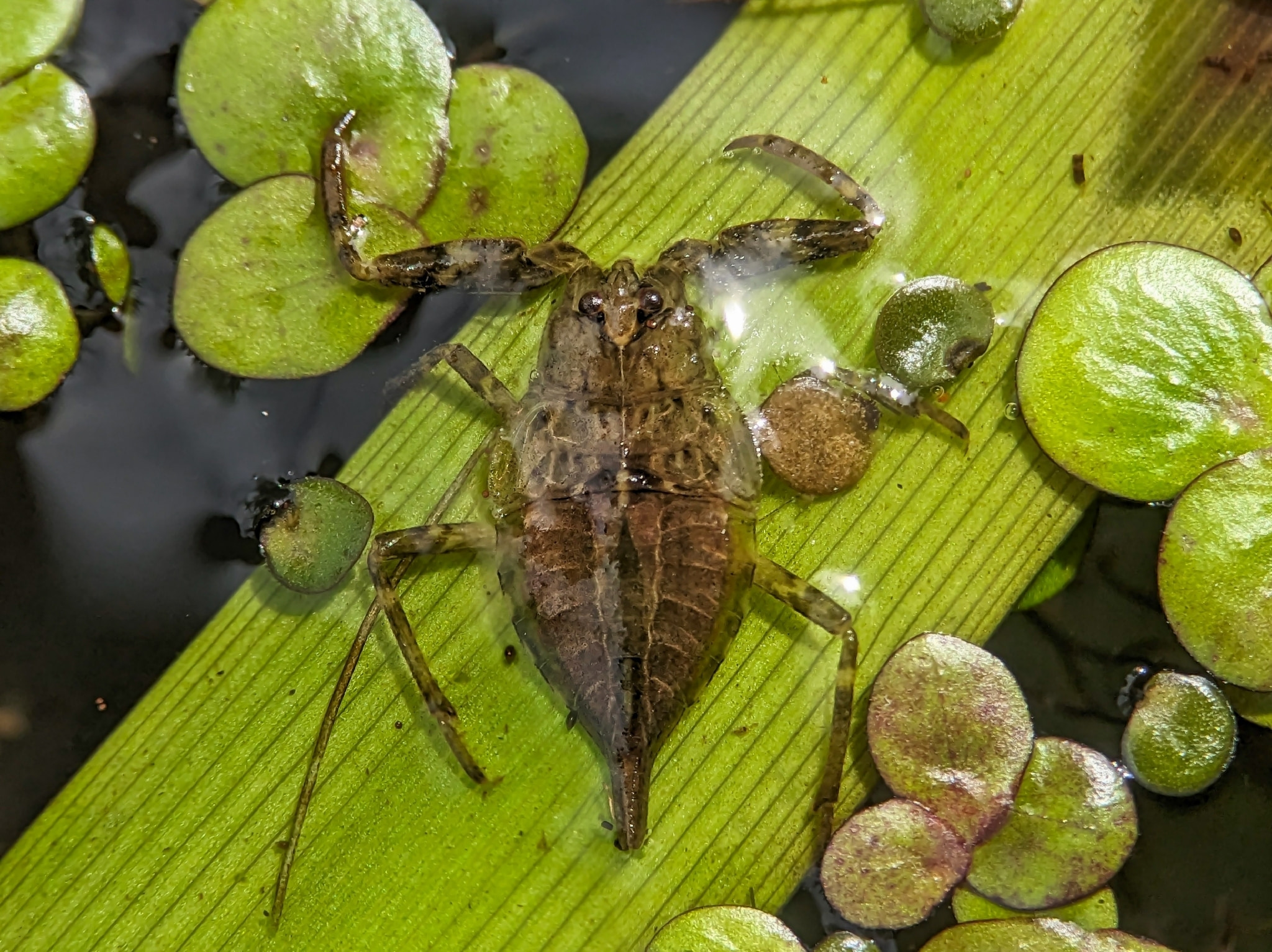

Water scorpion
Nepa cinerea
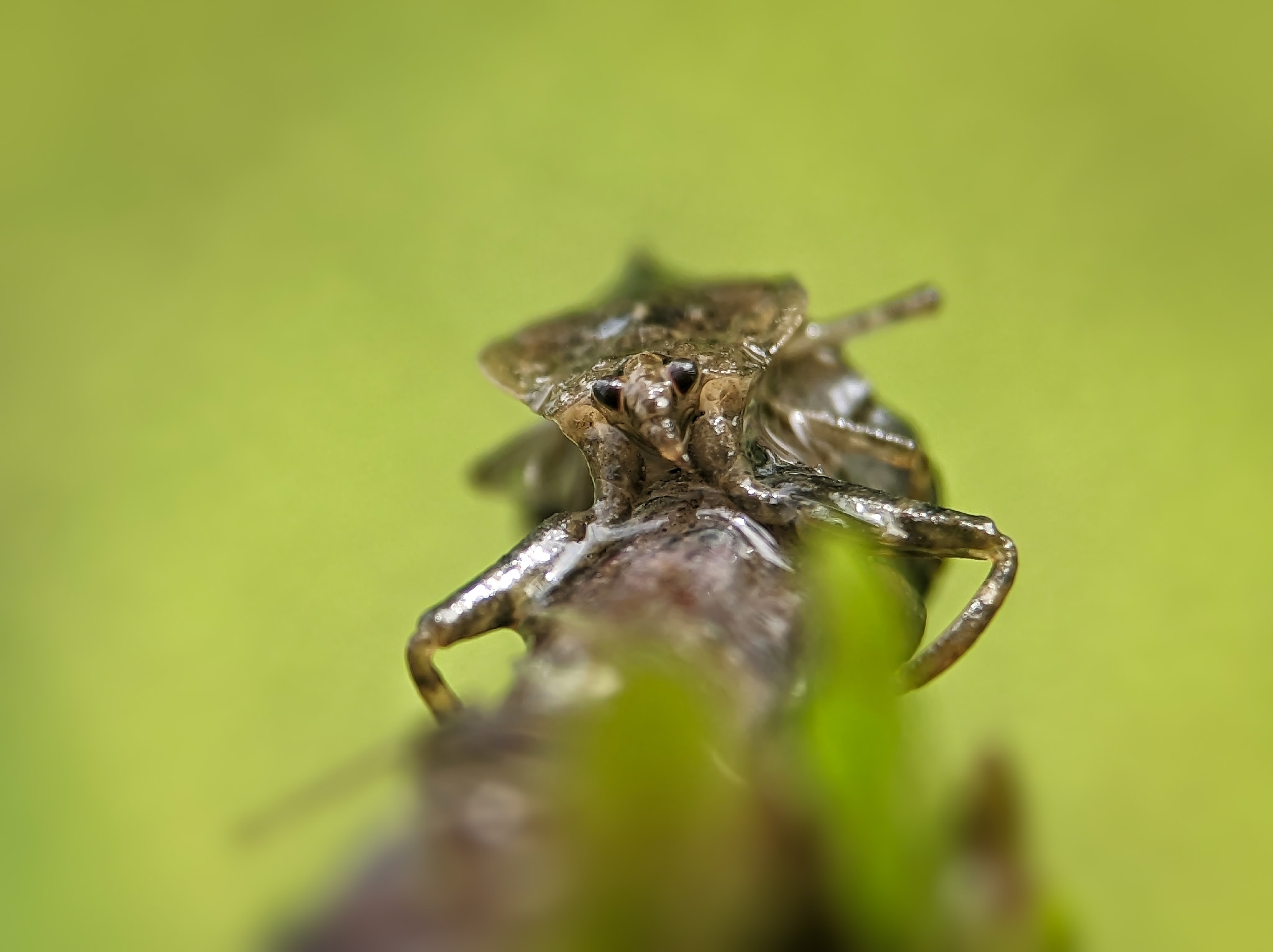
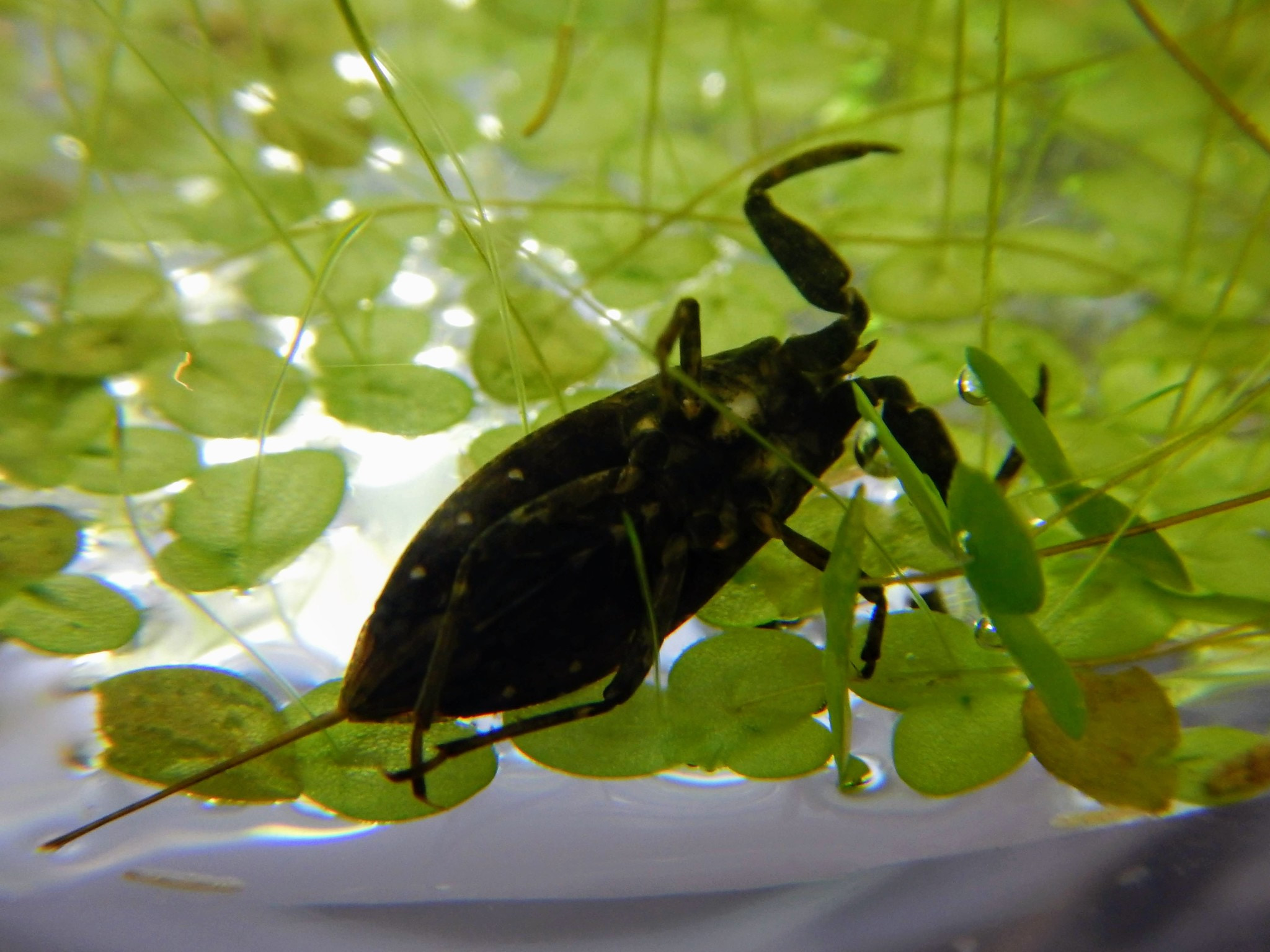
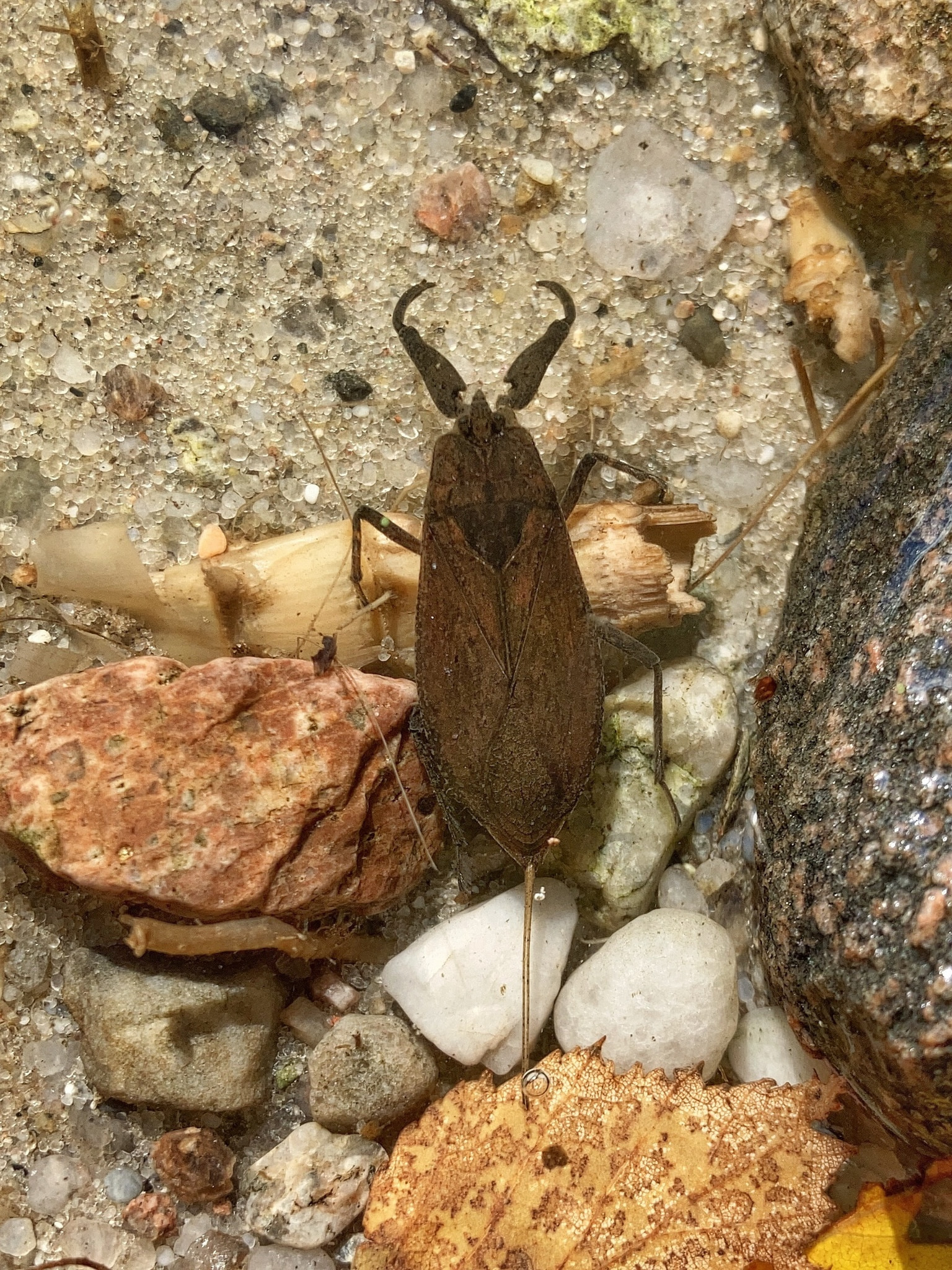
No Facei_i · Zugdidi, Samegrelo Georgia field photo
Key facts in one look
- Size
- 17–25 mm, plus ~10 mm tube
- Group
- Insect
- Family
- Nepidae
- Status in Georgia
- Listed for the country's fauna
- Activity
- All year; nymphs May–Jul
- Conservation
- NE
The water scorpion (Nepa cinerea) looks like a scorpion only at first glance: its front legs are like pincers, and a long "tail" trails behind. The tail is not a sting but a breathing tube that takes air from the water surface. The body is 17–25 mm long, flat and dark brown, so among old leaves and mud it is almost invisible. There it waits motionless for water insects, tadpoles and fish fry. Look among the fallen leaves at the edge of a pond or pool: one of the leaves may turn out to be a water scorpion.
Identification
Water scorpion: how to identify it
A flat, oval, brown water bug, 17–25 mm long, with a breathing tube of about 10 mm behind. The main features are the pincer-like front legs and the long "tail". It looks like a leaf, so it is hard to spot in water.
The front legs are for grasping: the lower leg folds against the thigh like a pocket knife. The middle and hind legs are used only for walking. The head is small and triangular, with two hemispherical eyes and a short beak.
The body is flat and broad, 6–10 mm wide. At the rear end there is a two-part breathing tube about 10 mm long.
The upper side of the abdomen is red. You will see this only when the bug opens its wings.
Colour
The body is dark or greyish brown, sometimes reddish. The front legs are mostly grey. The upper side of the abdomen is red, black at the base and tip, but it shows only when the wings are open.
Swatches are illustrative. Do not identify a species by colour alone.
The water scorpion is a bug of still or slow-flowing, muddy water. It lives in ponds, pools, small rivers and lakes, mostly near the shore in shallow water. It is common at the edges of garden ponds too. It hides among water plants, mud and old leaves. It seldom goes into deep water or onto land.
The water scorpion is listed for the true bug fauna of Georgia. Samtskhe-Javakheti has the most records: Borjomi, Bakuriani and Lake Tabatskuri. It has also been found in Adjara, Tbilisi, Samegrelo-Zemo Svaneti, Kvemo Kartli, Mtskheta-Mtianeti, Kakheti, Guria and Racha-Lechkhumi and Kvemo Svaneti. Dated records run from April to October.
Data: Reptiles.ge + iNaturalist · Methodology
- Field observation
- Several records in one spot
- Photo record
- Region with records
It is a predator. It eats water fleas, the larvae of aquatic insects, fish fry and amphibian tadpoles. It catches prey from ambush: it snaps its front leg shut like a pocket knife and clamps the victim. Then it pierces it with its beak and sucks out the fluids.
It spends much of its time motionless on water plants, on mud or among old leaves, waiting for prey. It keeps the tip of its breathing tube near the surface. It is a poor swimmer: it has no swimming hairs and moves awkwardly in open water, so it walks slowly over the bottom. Its wings are fully developed, though its ability to fly has sometimes been doubted. It mates in spring. The female lays 10–20 eggs in rotting plant matter or in algae. The nymphs hatch from May to July, pass through five stages and become adult by September. Adults spend the winter on the bottom of muddy water and live for several years.
Related guides
Continue with related pages
Yes, it is listed for the true bug fauna of Georgia. Look for it at the edges of ponds, pools and small rivers, in shallow, muddy water, among plants and old leaves.
No. The "tail" that looks like a scorpion's sting is a breathing tube. Through it the insect takes air from the water surface. If you pick it up, it may bite you with its beak, but this is not very painful for people.
Small water animals: water fleas, insect larvae, fish fry and tadpoles. It catches prey with its front legs, pierces it with its beak and sucks out the fluids.
Its wings are fully developed. Its ability to fly has sometimes been doubted, but flight has been recorded. When it opens its wings, a red abdomen shows that is otherwise hidden under them.
References
What this profile is based on
Species profiles are compiled from peer-reviewed literature and established biodiversity databases, and are reviewed as new taxonomic and conservation data become available.
Prepared by the Reptiles.ge editorial team from the sources listed here.


