



Eurasian penduline tit
Remiz pendulinus
g_kolotin · Avtozavodsky District
Key facts in one look
- Diet
- Insects and spiders; seeds
- Status in Georgia
- Year-round resident, breeds
- Size
- 10–11.5 cm
- Habitat
- Waterside scrub, trees and reedbeds
- Family
- Remizidae
- Protection
- Globally LC, 2019; in Georgia LC, 2021
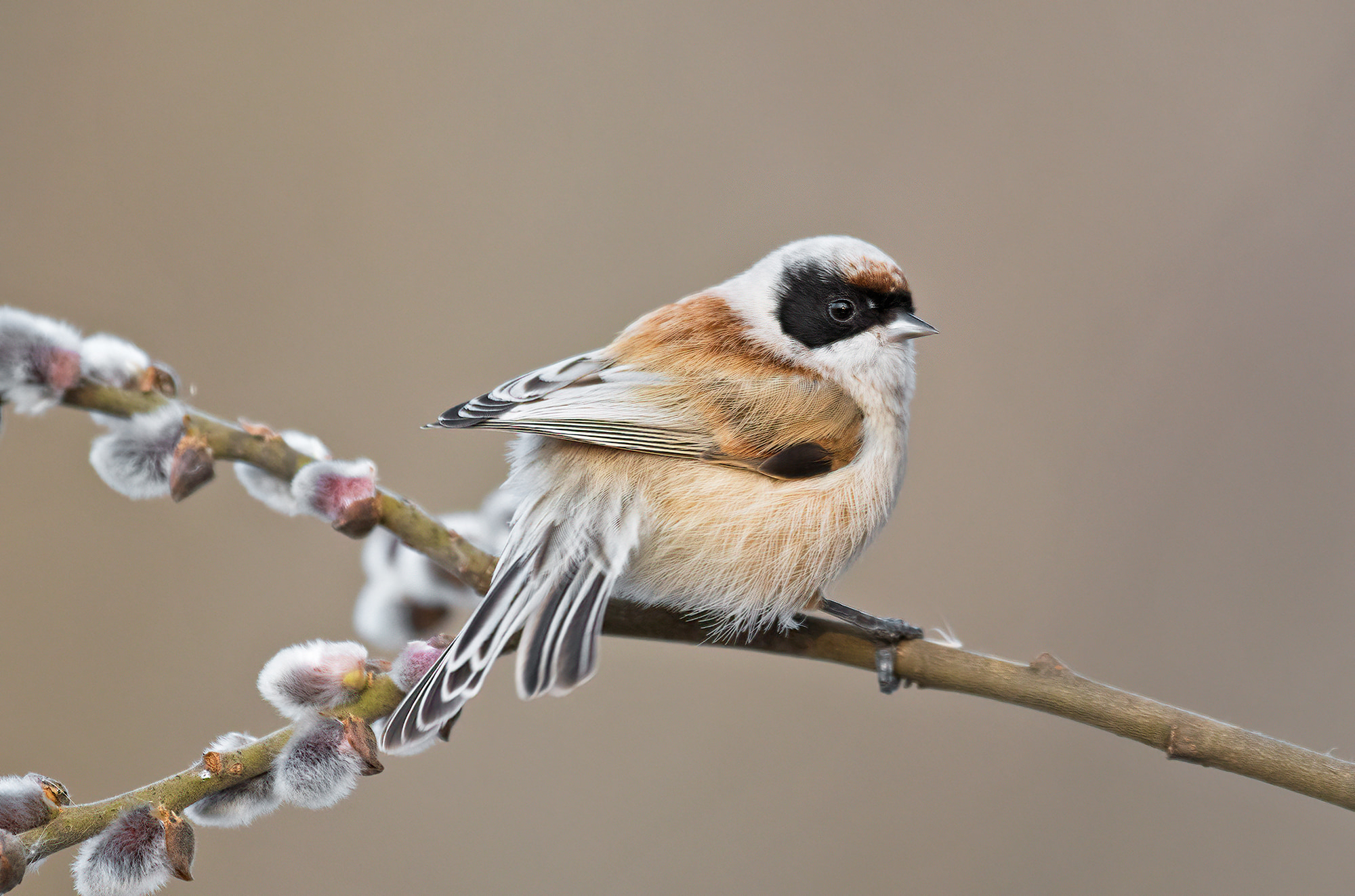
The penduline tit's main mark is its nest: a pouch woven from plant fibres, grass, hair and wool, hanging free from a thin branch, often over water. The bird itself is small, 10–11.5 cm long, with a pale grey head, a black mask through the eye and a chestnut back. In Georgia it lives and breeds all year round. It picks scrub and reedbeds along rivers, lakes and marshes. If you see a soft pouch hanging from a branch by the water, leave it alone: there may be eggs inside.
Identification
Eurasian penduline tit: how to identify it
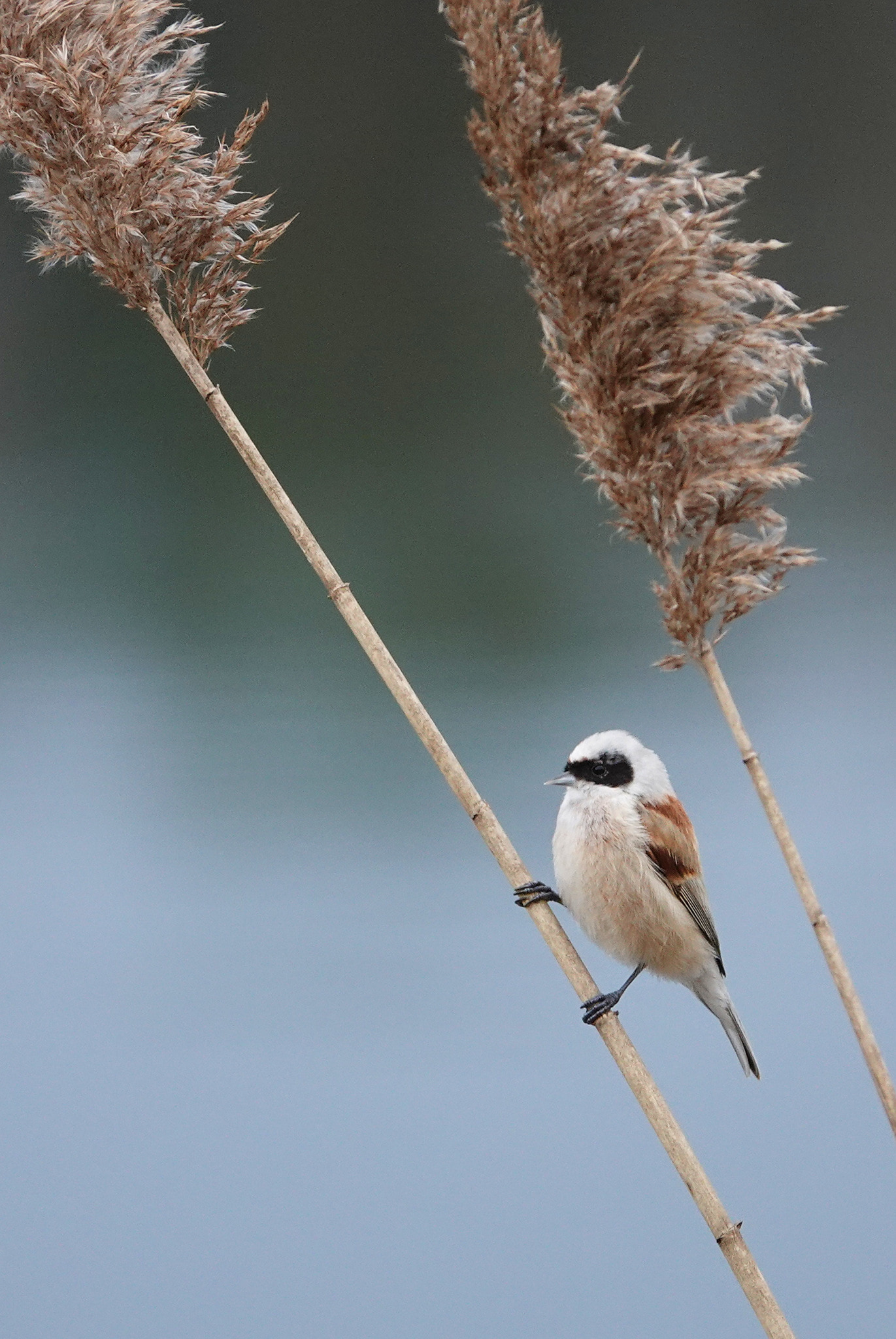
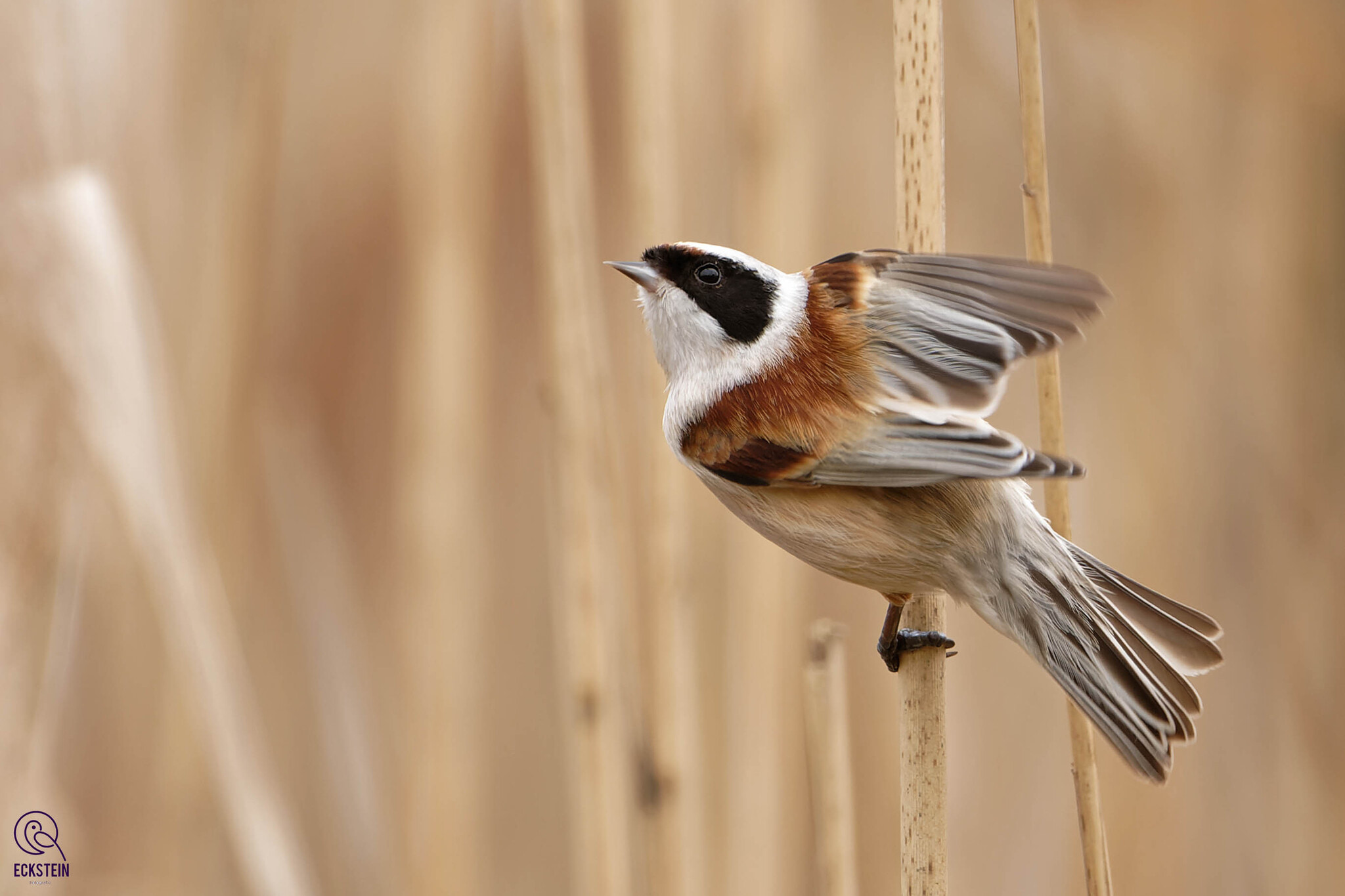
A small bird, 10–11.5 cm long, with a fine pointed bill and a fairly long tail. The head is pale grey, with a black mask through the eye, and the back is chestnut.
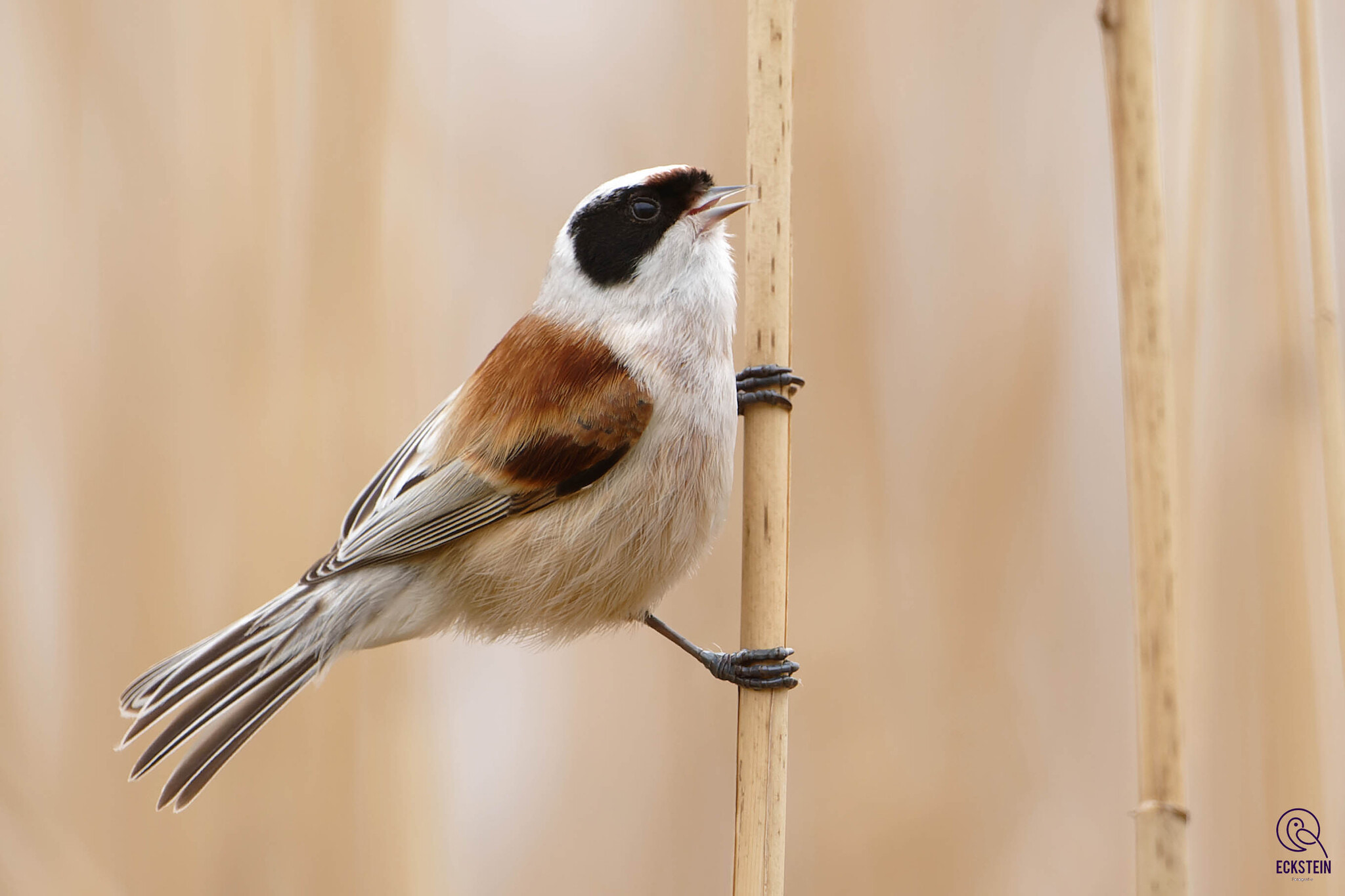
Length 10–11.5 cm, weight 8–12.5 g. The bill is fine and pointed, the tail fairly long. The wing is up to 60 mm.
The head is pale grey, with a black mask through the eye, and the back is chestnut or reddish brown. The sexes look very alike. The male has a broader mask and a more rufous back.
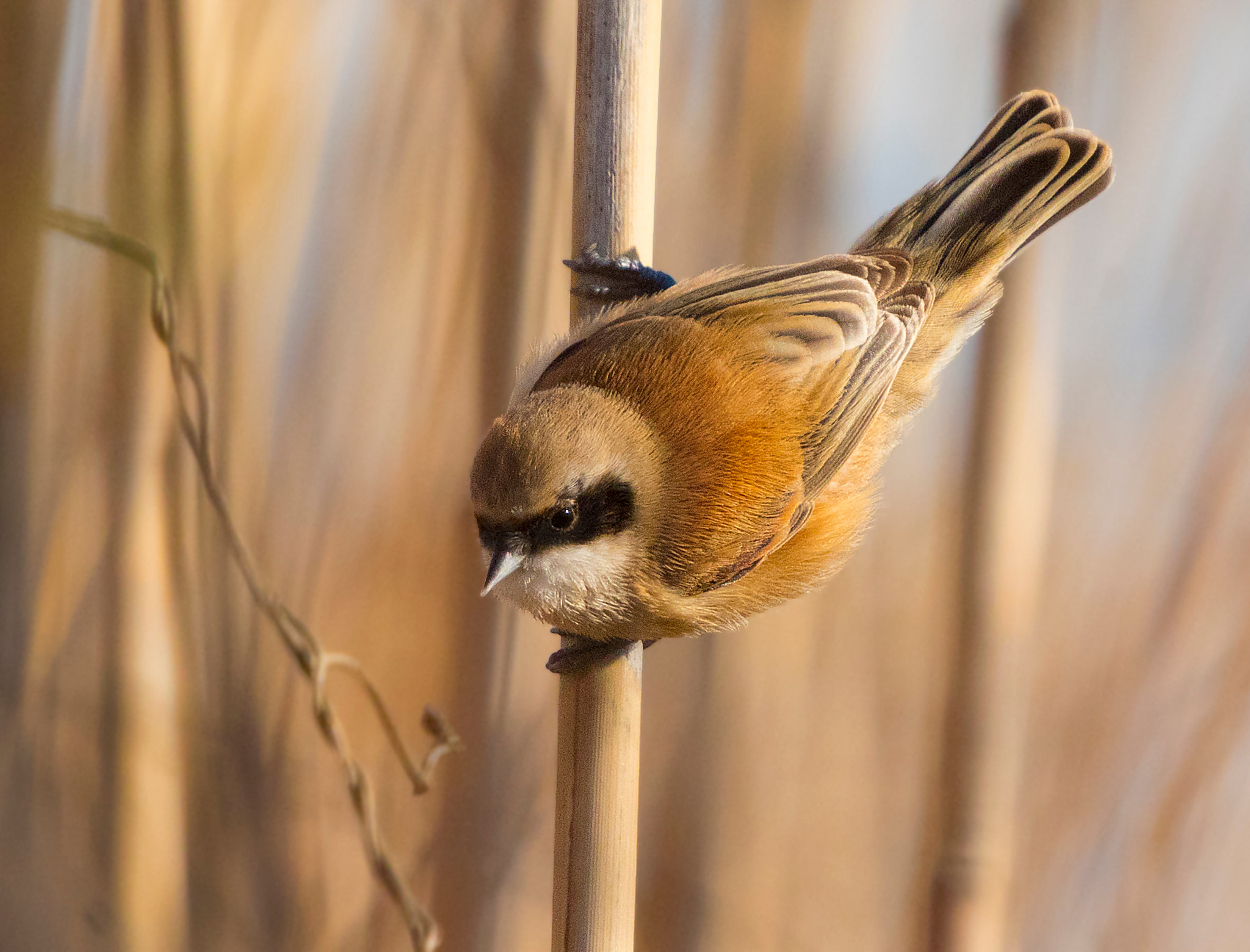
Young birds do not have the black mask yet, so they are harder to identify. The nest is easier to spot than the bird: a soft pouch hanging from a branch, with an entrance tube on one side.
Colour
Swatches are illustrative. Do not identify a species by colour alone.
It is a bird of the waterside. It picks scrub and trees along rivers, lakes and marshes, and also feeds in reedbeds. It hangs its nest from thin, long branches of willow, elm and birch, often over water. Sometimes it ties the nest to reeds instead, about a metre above the water.
The Eurasian penduline tit lives and breeds in Georgia all year round. Most records fall in April and May. They rise again in September and October and are few in the winter months. Most records come from Kakheti and Kvemo Kartli. It has also been found in Adjara, Tbilisi, Mtskheta-Mtianeti, Samtskhe-Javakheti and Samegrelo-Zemo Svaneti. The oldest record is a museum specimen collected near Mtskheta in 1908.
Data: Reptiles.ge + iNaturalist · Methodology
- Field observation
- Several records in one spot
- Region with records
It eats mainly insects and spiders, and also seeds, such as those of willow. It forages mostly in trees, but also in reeds, taking insects from the stems and seeds from the seed heads. In reeds it grips the stem with one foot and pulls out a clump of seeds with the other. It feeds its nestlings on insect larvae and spiders.
The call is a thin, drawn-out whistle, "tsee-tsee". It is migratory in the north of its range and resident in the south. In the 1980s and 1990s its breeding range spread in Western Europe, and its winter range moved south as far as northern Morocco. Both sexes build the nest, which takes about 20 days. The nest is about 25 cm high and 17 cm across, with an entrance tube on one side. From late April to early July it lays 6–8 white eggs, one a day. Only one parent incubates, for 14 days: more often the female, sometimes the male. The young leave the nest at about 22 days.
Globally the Eurasian penduline tit's risk of extinction is rated low (LC, 2019). It is a widespread bird of the western Palearctic, and its numbers are growing. Europe holds 420,000–840,000 birds. In Georgia's national assessment (2021) its risk is also rated low (LC), and its numbers are stable. The list of the birds of Georgia gives it as a year-round resident and breeder.
Related guides
Continue with related pages
Yes. It lives and breeds in Georgia all year round. It picks scrub and reedbeds along rivers, lakes and marshes. It is easiest to find by its nest: a soft pouch hanging from a branch by the water.
Both sexes weave it from plant fibres, grass, hair and wool. The nest hangs free from a thin, long branch, often over water. It is about 25 cm high, with an entrance tube on one side. Building takes about 20 days.
By the black mask through the eye, the pale grey head and the chestnut back. It is small, 10–11.5 cm, with a fine pointed bill. Young birds do not have the mask yet. If you cannot see the bird, look for its nest on waterside branches.
Mainly insects and spiders, and also seeds, such as those of willow. It forages both in trees and in reeds. In reeds it grips the stem with one foot and pulls out seeds with the other. It feeds its nestlings on insect larvae and spiders.
Not in Georgia: it is a year-round resident here. Northern populations migrate, southern ones stay. Its winter range has also spread south as far as northern Morocco.
No, it is harmless to people. Globally its risk of extinction is low (LC, 2019). In Georgia's national assessment (2021) its risk is also low (LC), and its numbers are stable. Do not take down its nest, and do not catch wild birds.
References
What this profile is based on
Species profiles are compiled from peer-reviewed literature and established biodiversity databases, and are reviewed as new taxonomic and conservation data become available.
Prepared by the Reptiles.ge editorial team from the sources listed here.


