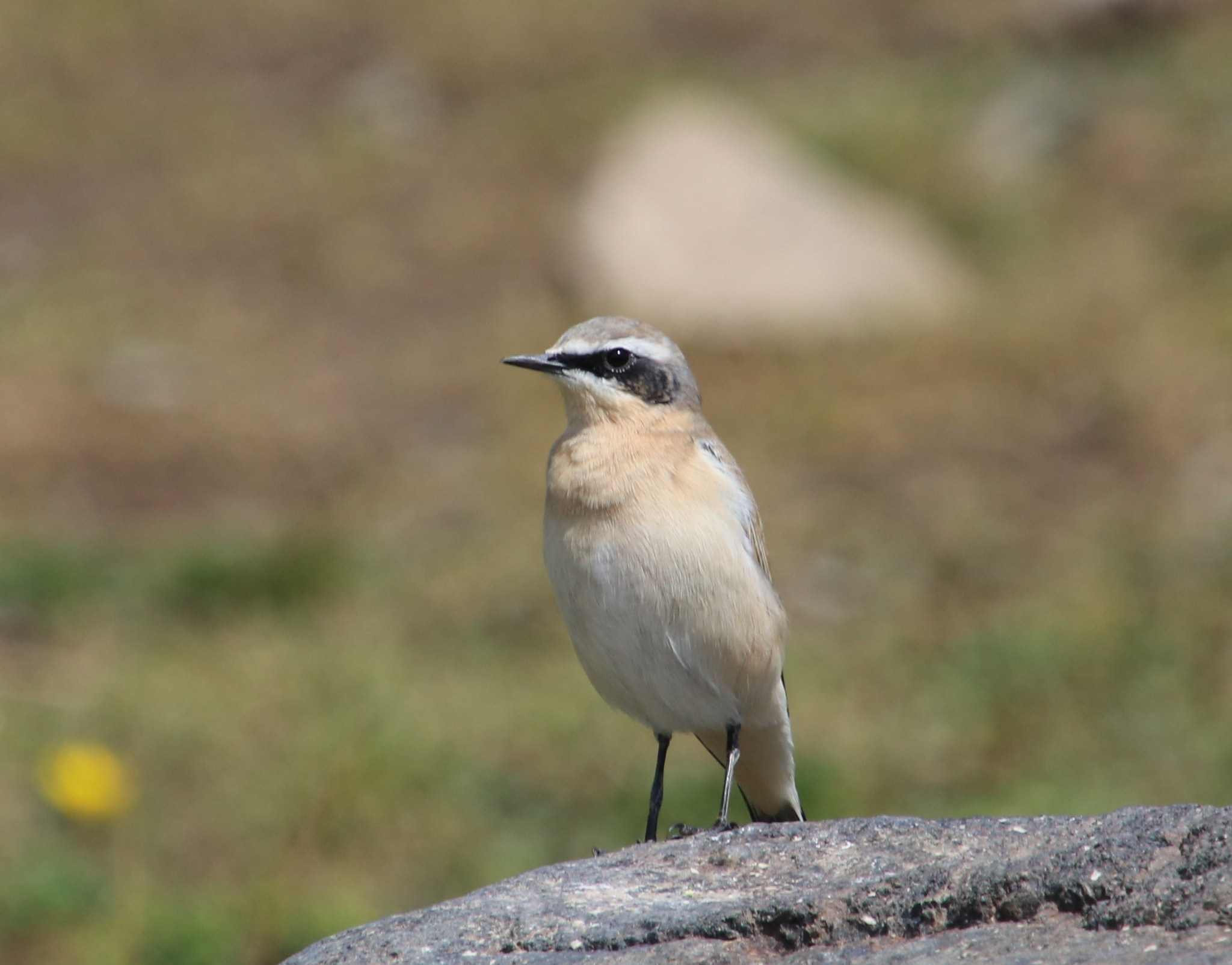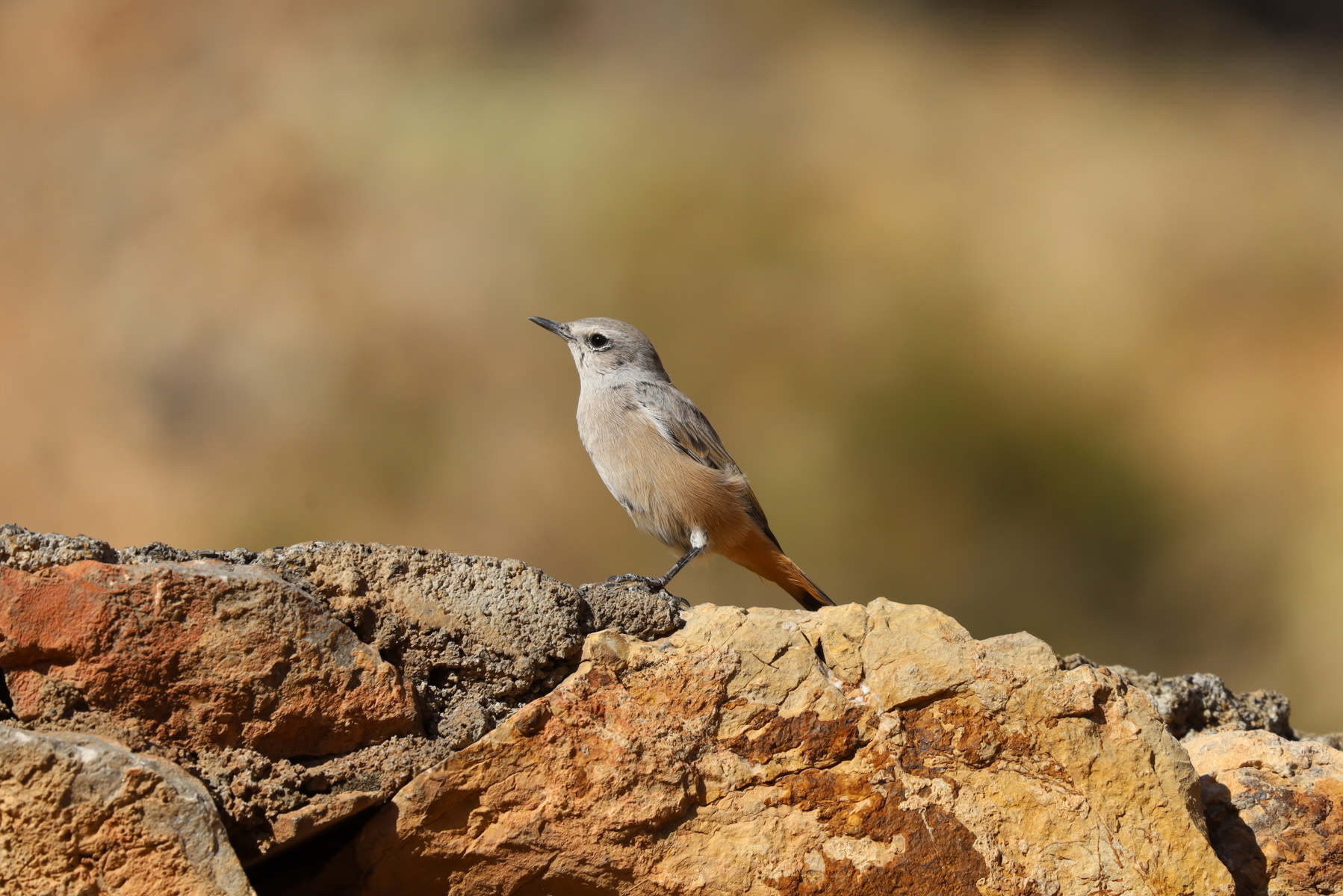

Red-tailed wheatear
Oenanthe chrysopygia
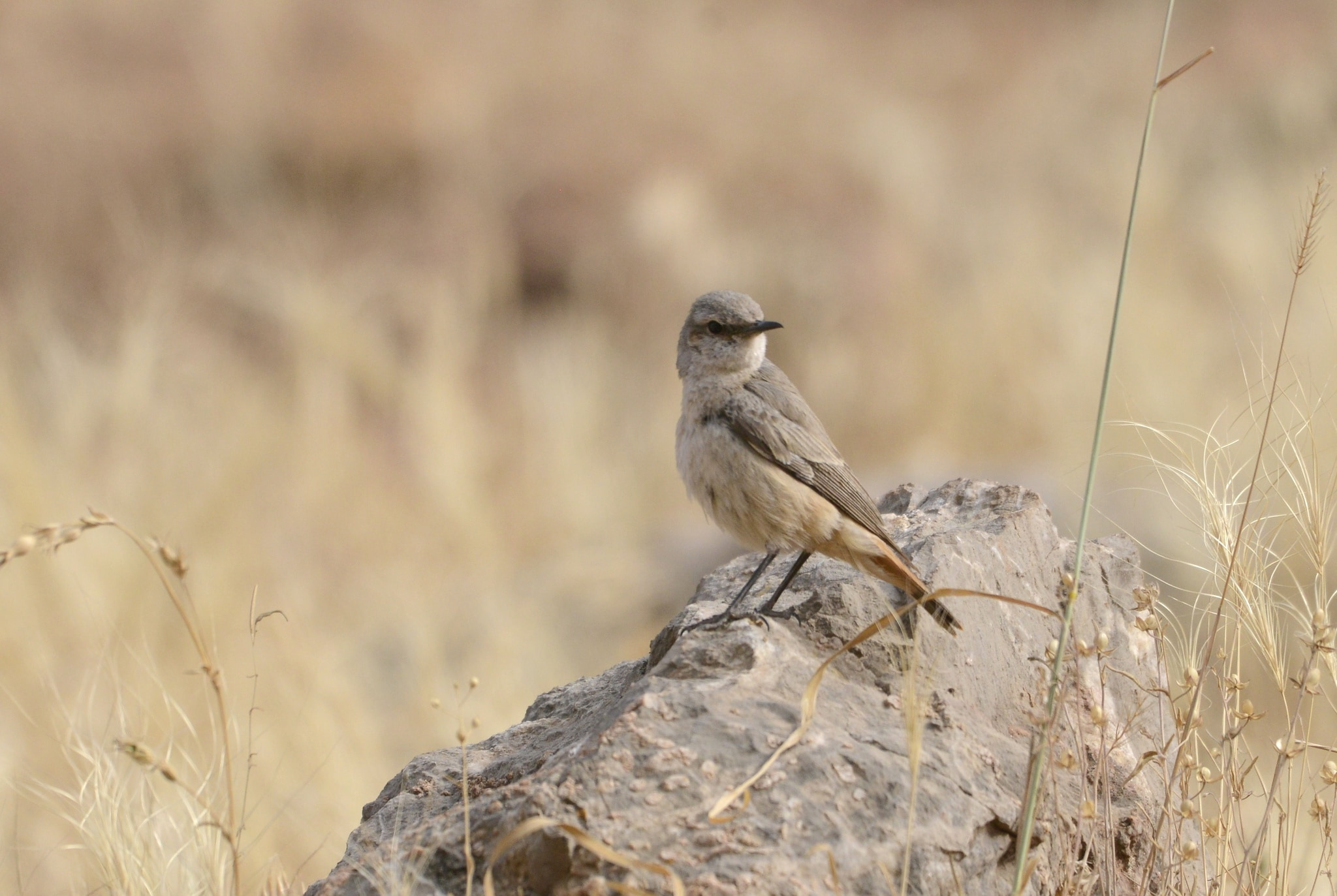
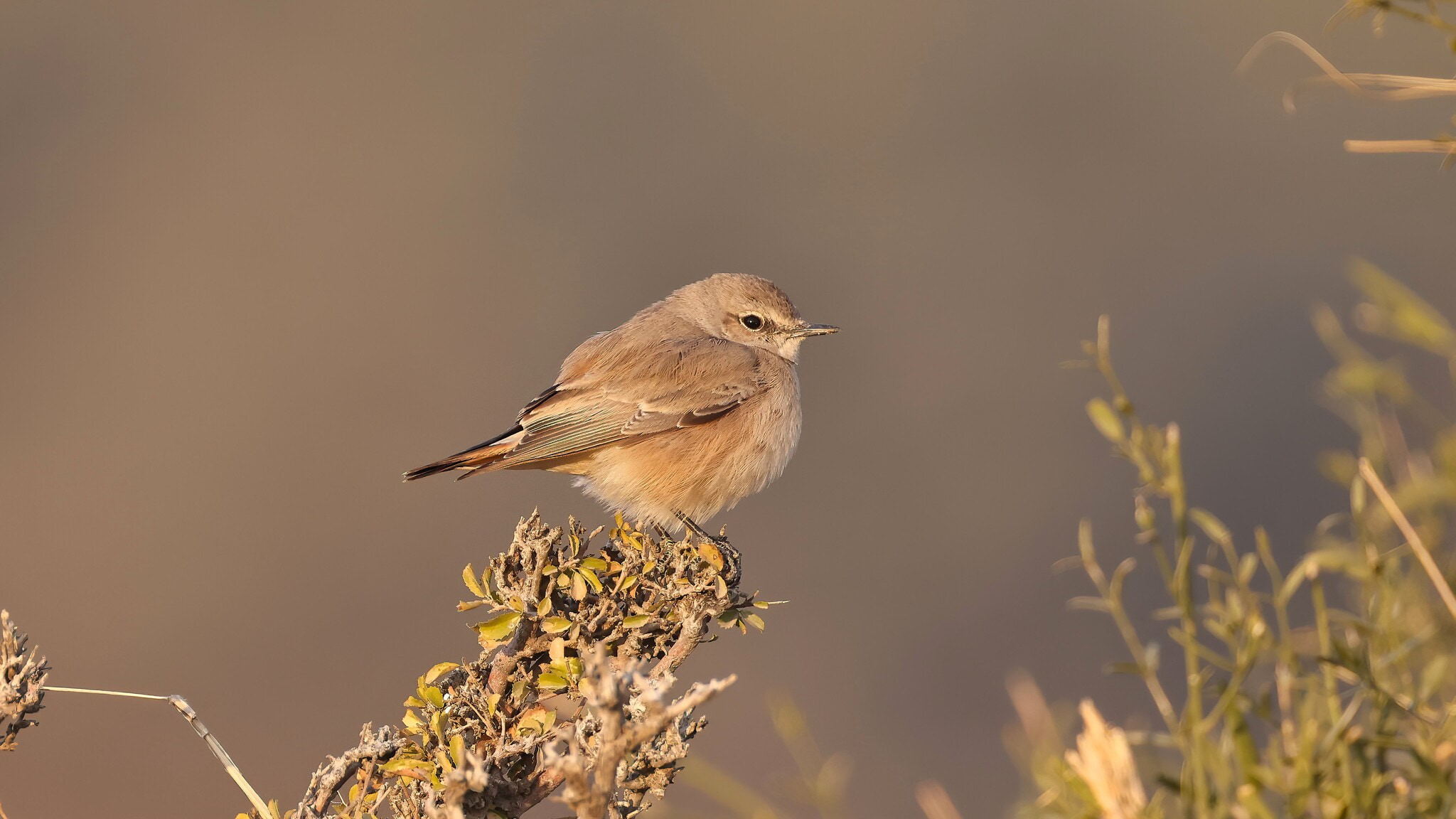
Irina Bortnikova · Vayots Dzor
Key facts in one look
- Diet
- Insects
- Status in Georgia
- Unconfirmed
- Size
- 14.5 cm
- Habitat
- Rocky mountain slopes
- Family
- Muscicapidae
- Conservation
- Least Concern
The red-tailed wheatear is a small, grey-brown bird, 14.5 cm long and weighing 20–27 g. Its tail sets it apart: the rump and the bases of the outer tail feathers are rusty red, and the rest is black. It breeds from north-east Turkey, Armenia and Azerbaijan east to Afghanistan and western Pakistan, at 1,200–4,000 m. It is on the list of the birds of Georgia, but its status here is not defined and its presence has not been confirmed. It breeds in neighbouring countries, so if you see a rusty-tailed wheatear in dry southern mountains, take a photograph.
Identification
Red-tailed wheatear: how to identify it
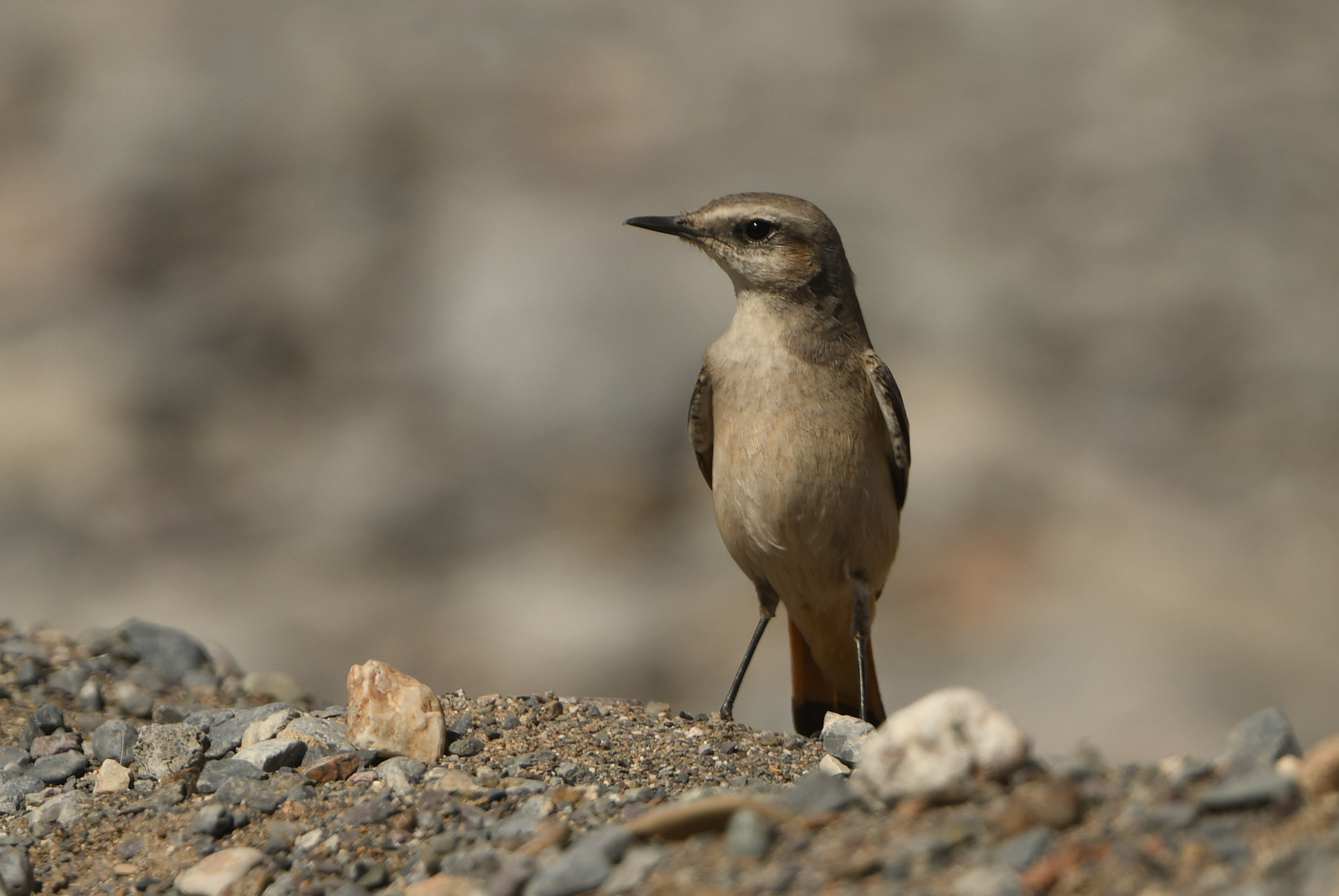
A small, grey-brown wheatear, 14.5 cm long. The first thing you notice is the rusty rump and the black and rufous tail. The underparts are greyish-white and the ear-coverts are reddish. It is most often confused with the Kurdish wheatear.
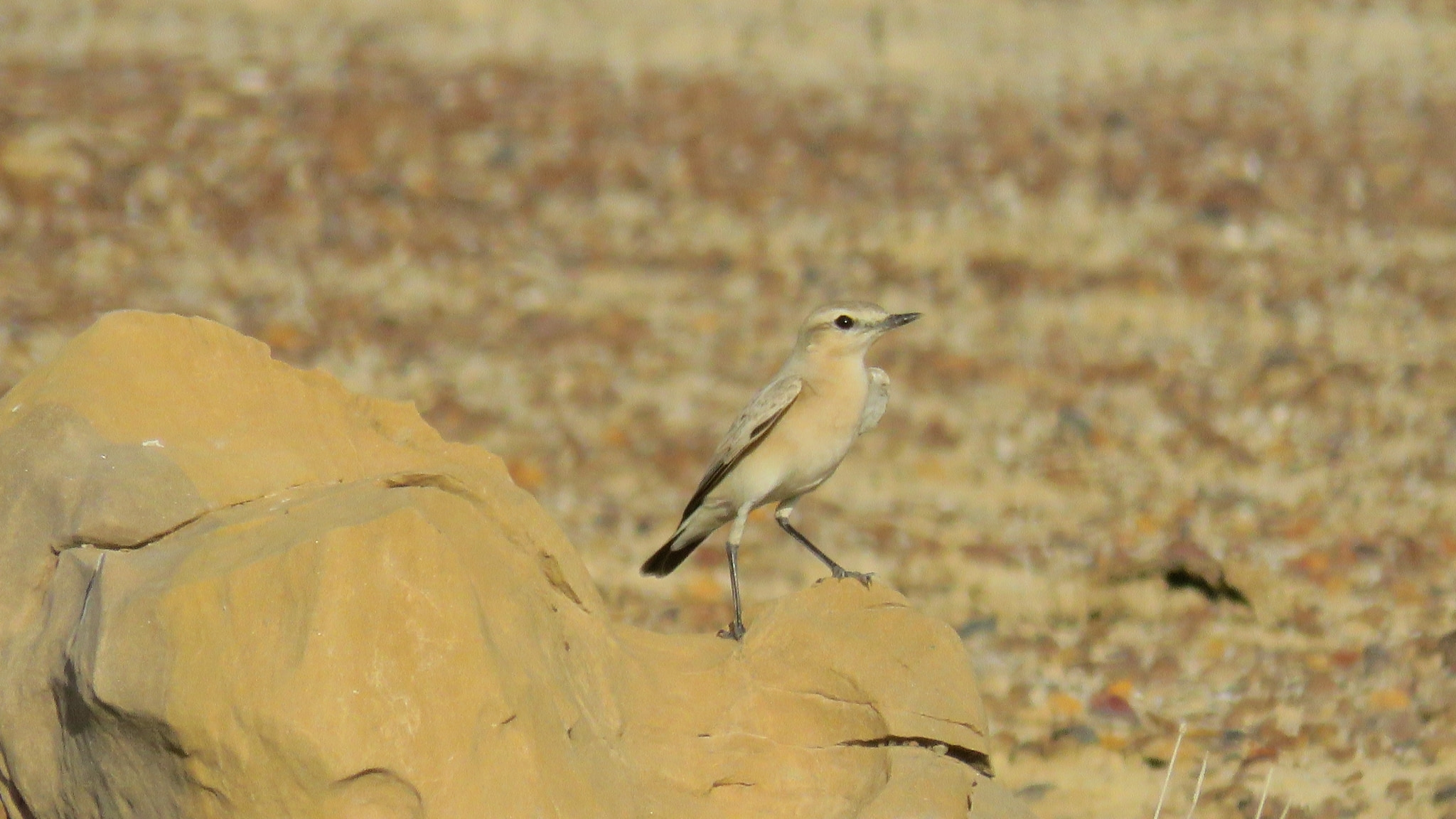
The upperparts are mainly grey-brown and the underparts greyish-white. A faint pale stripe runs over the eye, and the ear-coverts have a rufous tinge. The underwing-coverts are silvery white and show in flight.
The rump and the bases of the outer tail feathers are reddish-rufous, and the rest of the tail is black. This gives a T-shaped pattern, but in rufous instead of white. This is the mark that separates it from other wheatears.
Males and females look almost alike. The male only has black between the eye and the bill. The wingspan is 26–27 cm.
The female Kurdish wheatear can be very similar, but it usually has white bases to the outer tail feathers. Male Kurdish wheatears and some females look quite different, with a black face and throat and greyer upperparts. To tell the females apart, you need a photograph of the tail.
Colour
Swatches are illustrative. Do not identify a species by colour alone.
Often confused with

It breeds in mountains at 1,200–4,000 m, on steep, barren, rocky slopes with almost no vegetation. It spends the winter lower down, on rocky hills, steppe, scrubland and semi-desert. It winters in the Arabian Peninsula, Eritrea, southern Iraq and Iran, Pakistan and north-west India. Its habitats in Georgia are not known.
No records yet
The atlas has no confirmed observation of this species yet, so we do not know which regions of Georgia it lives in.
Share an observationSeen this species? A photo and the place are enough.
It feeds mainly on insects: ants, beetles and caterpillars. It searches for food mostly on bare ground. It also picks insects from plants and digs with its bill for beetle larvae. It often launches attacks on prey from an exposed perch on a rock or stone.
It is a migrant: it breeds in mountains and moves south to lowlands for the winter. It breeds from late March or April to June and raises two broods a year. The nest is a cup of grass and other plant material, built in a hole in rocks, among stones or in a wall. It lays 4–6 pale bluish-white eggs, sometimes with reddish-brown spots, which are incubated for 13 days. The song is a simple repeated whistle, and the calls are clicks, rasping sounds and whistles.
Related guides
Continue with related pages
It has not been confirmed. It is on the list of the birds of Georgia, but its status is not defined and the reports are unconfirmed. There is no reliable photograph or specimen yet. It does breed in neighbouring Armenia, Azerbaijan and north-east Turkey.
It is a grey-brown, rather plain wheatear with a rusty rump. The bases of the outer tail feathers are rusty too, and the rest is black, forming a T-shaped pattern. The ear-coverts have a rufous tinge. If the rump is white, it is another wheatear.
Male Kurdish wheatears and some females have a black face and throat, which the red-tailed wheatear lacks. Females are the hardest to separate. The female Kurdish wheatear usually has white bases to the outer tail feathers, while the red-tailed wheatear has rusty ones. So the tail should be clearly visible in a photograph.
In mountains at 1,200–4,000 m, on steep, barren, rocky slopes. It breeds from north-east Turkey through Iran to Afghanistan, southern Tajikistan and western Pakistan. In winter it moves lower, to rocky hills, steppe and semi-desert.
Mainly insects: ants, beetles and caterpillars. It searches for food on bare ground and also picks it from plants. It digs with its bill to find beetle larvae. It often attacks prey from a rock or a stone.
It breeds from late March or April to June and raises two broods a year. The nest is a cup of grass in a hole in rocks, among stones or in a wall. It lays 4–6 bluish-white eggs, which are incubated for 13 days.
It is not dangerous to people. Worldwide it is Least Concern (LC, 2019), and in Georgia it has not been nationally evaluated (NE). If you see it in Georgia, photograph it and do not disturb it.
References
What this profile is based on
Species profiles are compiled from peer-reviewed literature and established biodiversity databases, and are reviewed as new taxonomic and conservation data become available.
Prepared by the Reptiles.ge editorial team from the sources listed here.