


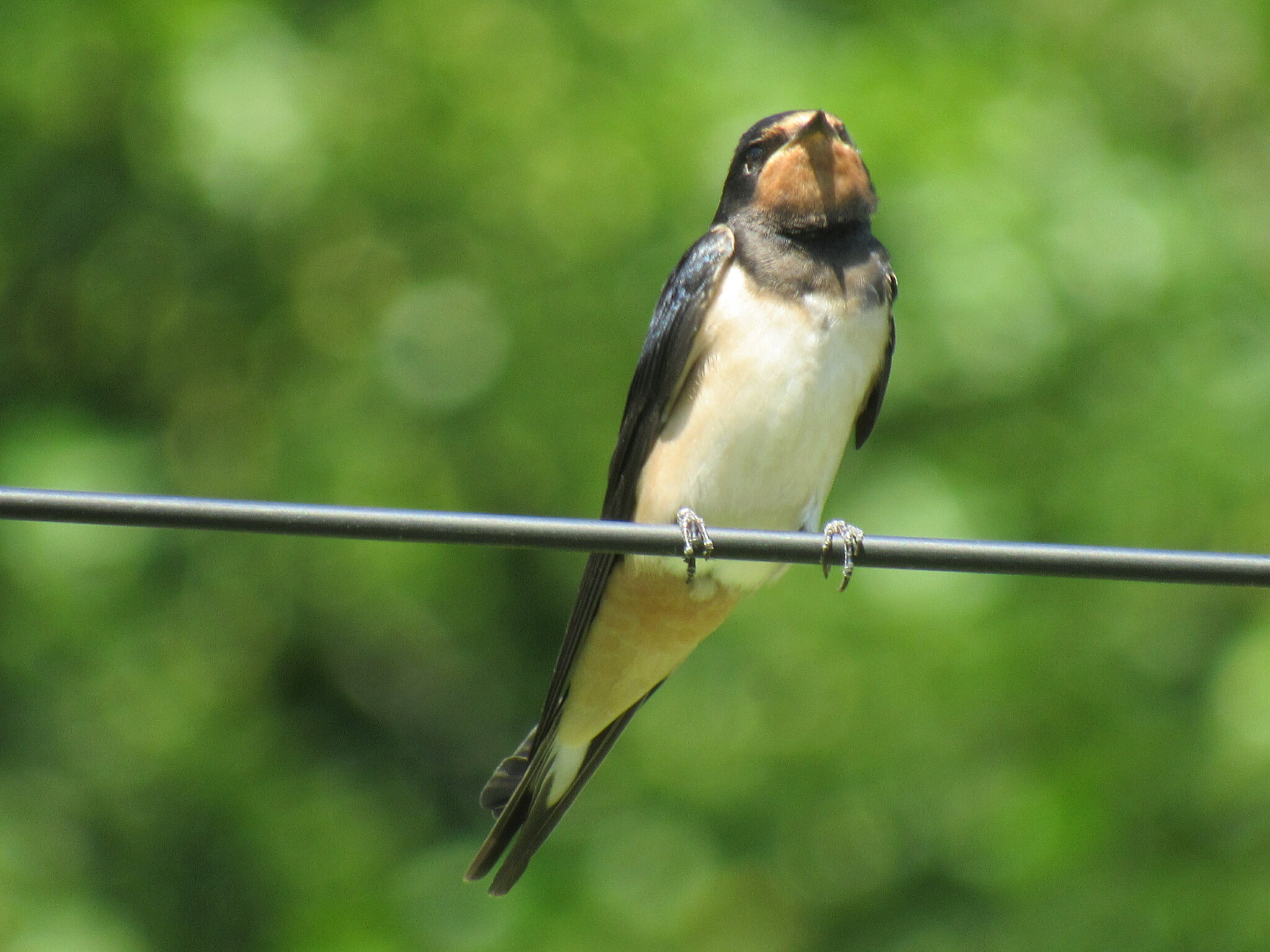

Barn swallow
Hirundo rustica
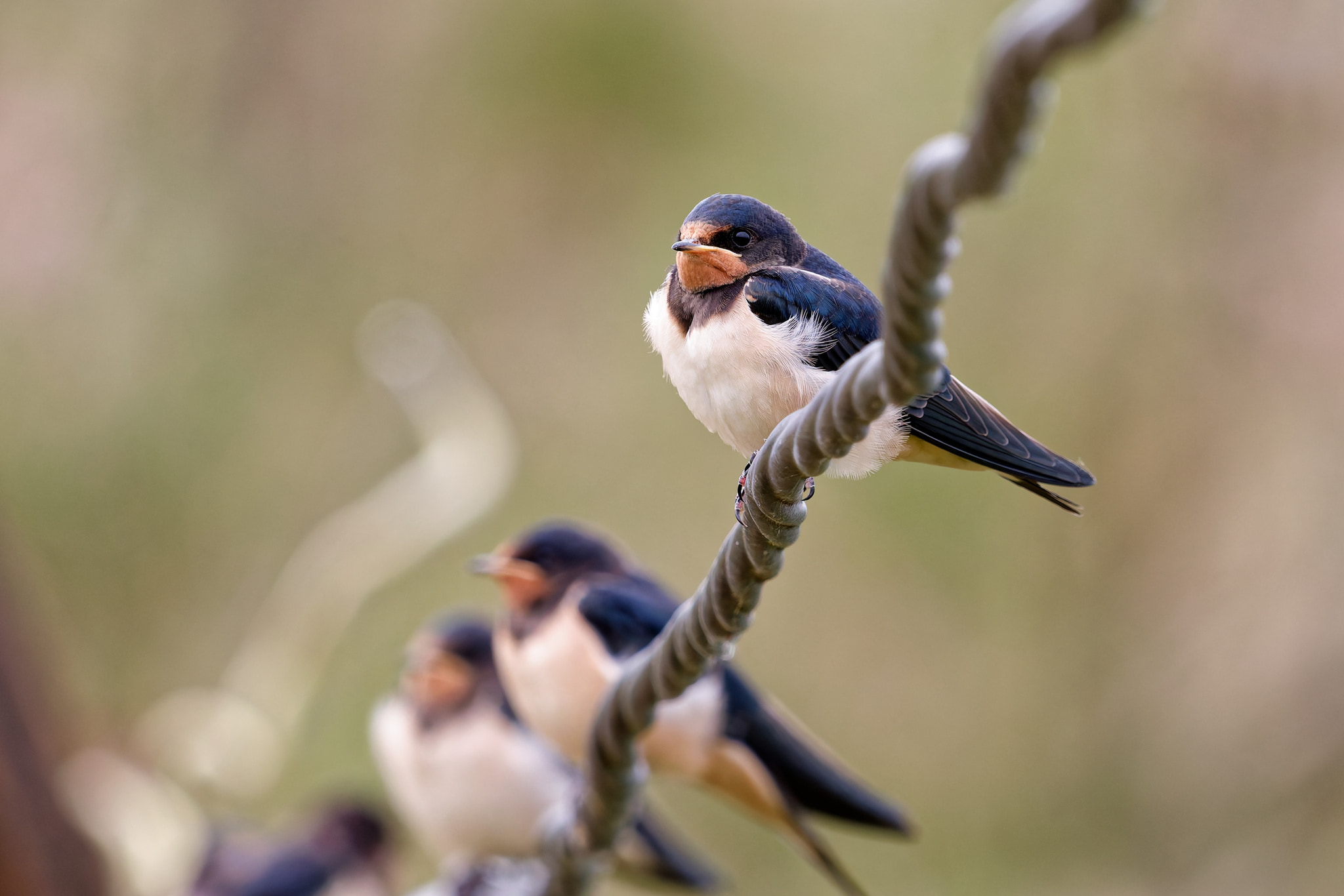
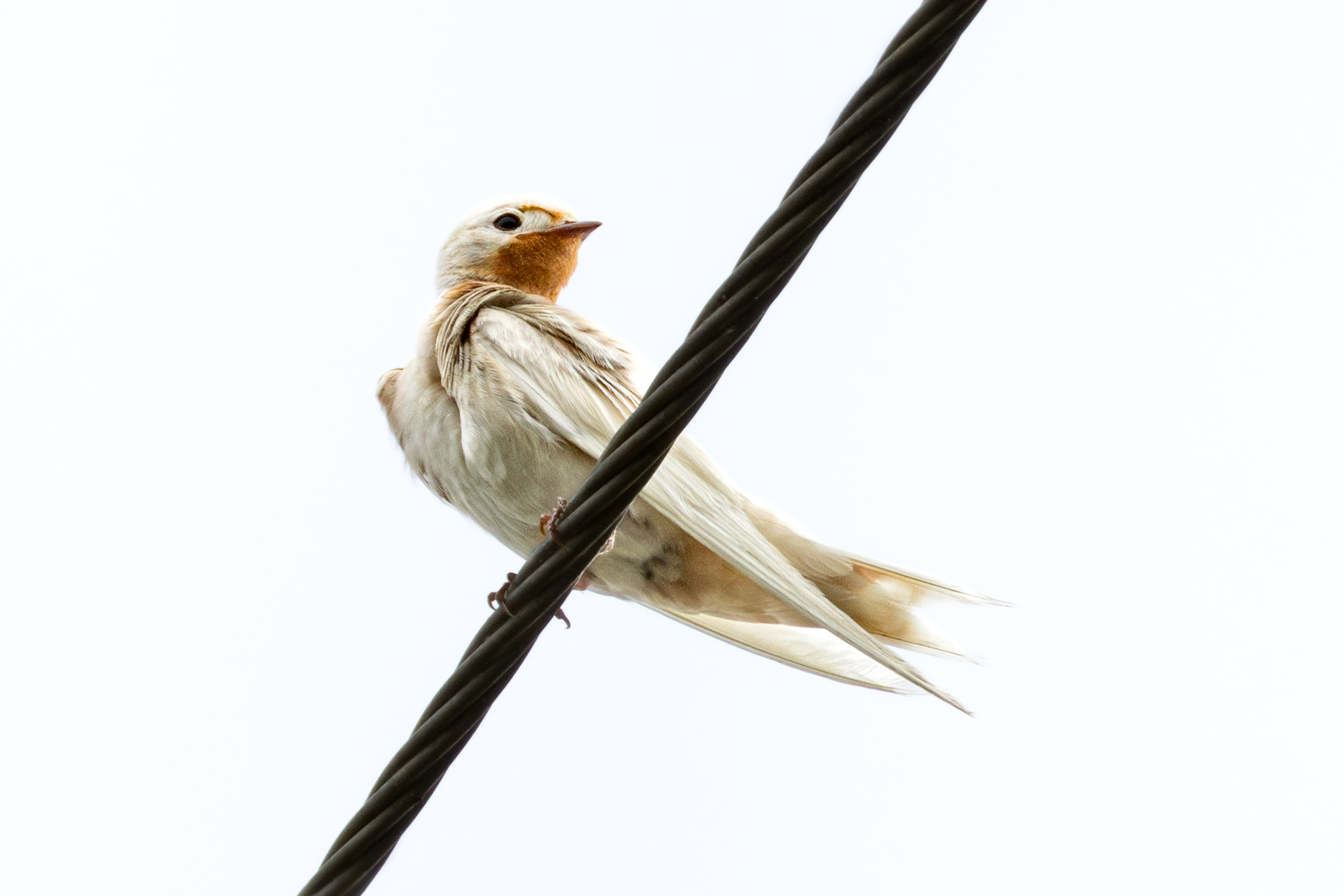
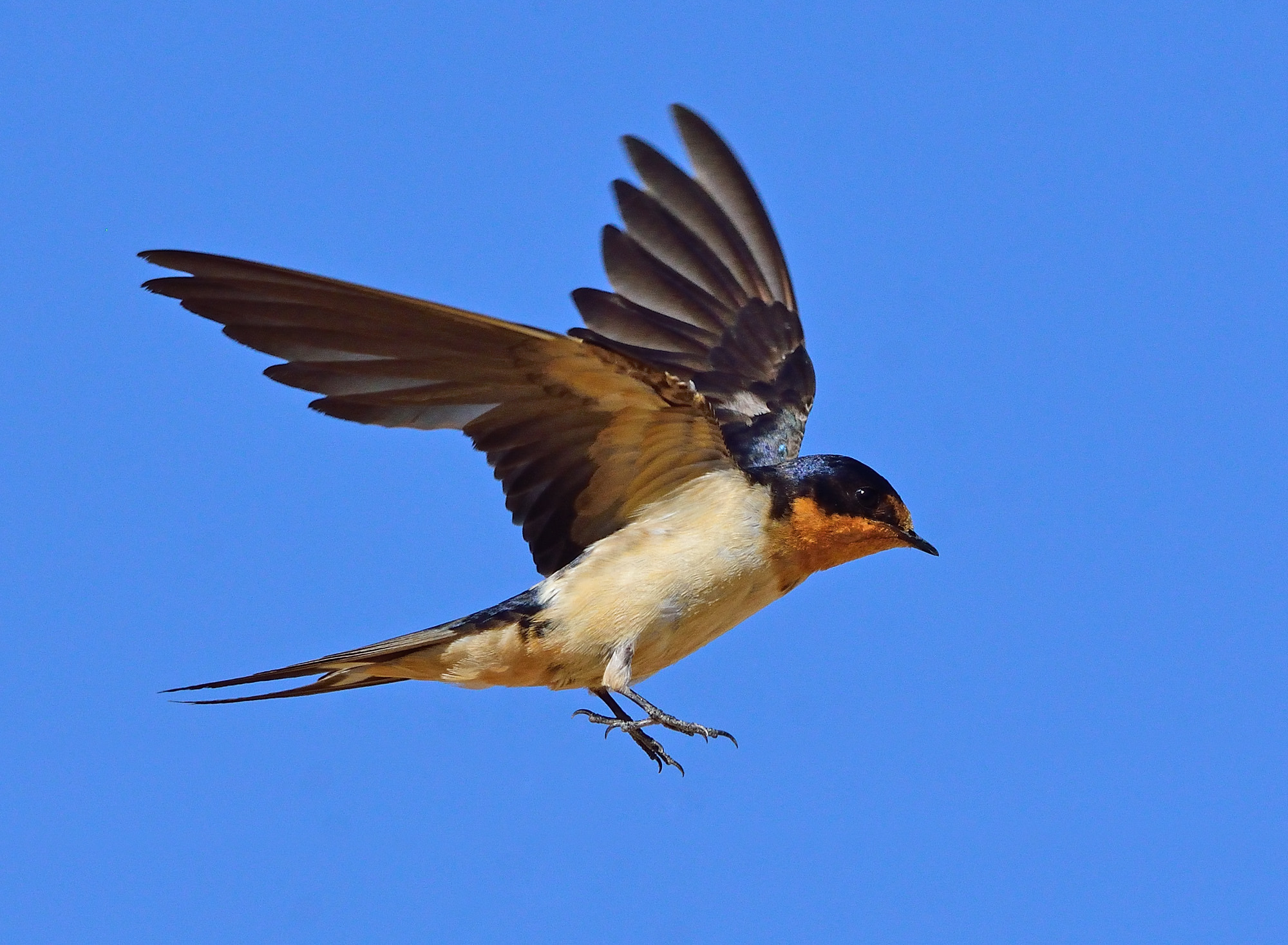
kokoreva46452 · Samegrelo-Zemo Svaneti Georgia field photo
Key facts in one look
- Size
- 17–19 cm
- Diet
- Flying insects
- Status in Georgia
- Breeding and on passage
- Habitat
- Open country, pasture and farms
- Family
- Hirundinidae
- Conservation
- Least Concern
The Barn swallow is the most widespread swallow in the world and has been seen on every continent, even as a vagrant in Antarctica. It lives alongside people and builds its mud nest in barns, stables and under bridges. In Georgia it is a breeding bird that also occurs on passage, but it does not spend the winter here. It is glossy dark blue above, with a rusty red forehead and throat, and its tail ends in long, fork-like streamers. If a swallow has a red throat and a dark blue band across the breast, you are looking at a Barn swallow.
Identification
Barn swallow: how to identify it
A swallow 17–19 cm long, of which 2–7 cm are the elongated outer tail feathers. The upperparts are steel blue, the forehead, chin and throat rusty red, and the underparts off-white. A broad dark blue band across the breast separates the throat from the off-white belly.
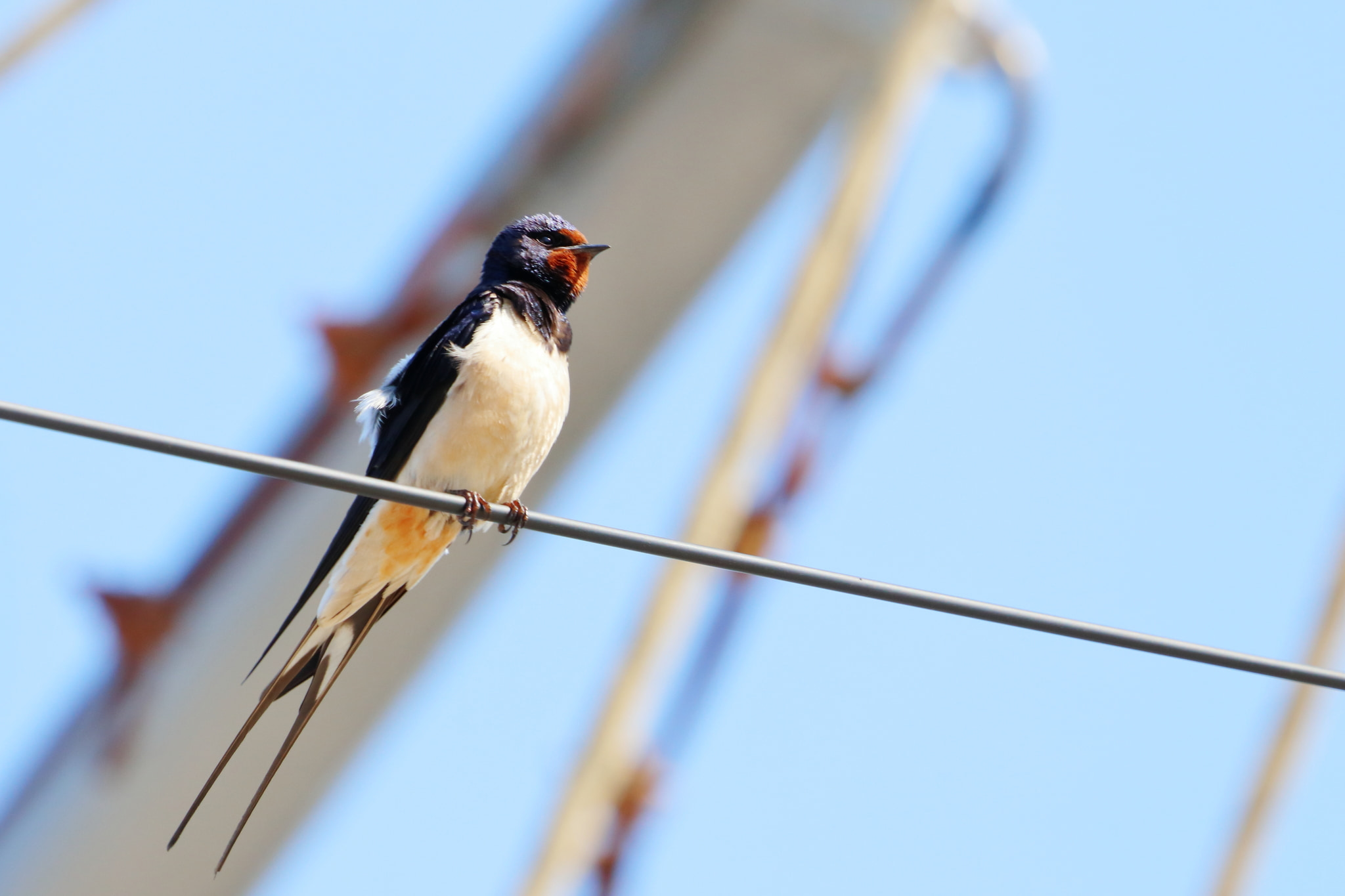
The tail is deeply forked, with the outer feathers drawn out into long streamers, the classic “swallow tail”. A row of white spots runs across the outer end of the upper tail. The wingspan is 32–34.5 cm and the weight 16–22 g.
The female looks like the male but has shorter streamers, less glossy blue and paler underparts. Young birds are browner, with a paler reddish face and whiter underparts. They lack the long streamers, so a short-tailed youngster can easily look like another swallow.
The house martin has a white rump and pure white underparts. The Red-rumped swallow has no dark breast band and no white tail spots. The Barn swallow has both a red throat and a blue breast band, so in flight look at the throat and breast from below.
Colour
Swatches are illustrative. Do not identify a species by colour alone.
It is a bird of open country and chooses pasture with low vegetation, meadows and farmland, preferably with water nearby. It avoids dense woodland, steep slopes and densely built-up places. For nesting it needs open buildings such as barns, stables and culverts, and for perching it uses wires, roof ridges and bare branches. Before such buildings spread, it nested on cliffs and in caves, which is now rare. It breeds from sea level up to 2700 m, and up to 3000 m in the Caucasus. In European towns it is replaced by the house martin.
The barn swallow map combines public iNaturalist observations. Regions are taken from the records-by-region table, and the status column separates regions with enough records from regions with too few records. Record counts reflect observation effort rather than population density. Eleven regions have enough records: Kakheti, Kvemo Kartli, Mtskheta-Mtianeti, Tbilisi, Adjara, Abkhazia, Shida Kartli, Imereti, Samtskhe-Javakheti, Samegrelo-Zemo Svaneti and Guria.
Data: Reptiles.ge + iNaturalist · Methodology
- Field observation
- Several records in one spot
- Photo record
- Region with records
It feeds on flying insects caught in the air, typically 7–8 m above the ground or water. It often follows livestock, people or farm machinery and catches the insects they disturb. In the breeding areas about 70% of its food is large flies, and aphids also make up a large share. On the wintering grounds flying ants are important food, and it also takes grasshoppers, crickets, dragonflies, beetles and moths. It drinks in flight, skimming low over the water and scooping it up with an open bill.
In Georgia it is a breeding bird that does not stay outside the breeding season, and it also occurs on passage. Birds that breed in Europe and Asia winter in Africa, Arabia and the Indian subcontinent, and some cover up to 11,660 km a year. After breeding they gather in communal roosts, sometimes thousands strong, often in reed beds. Reed beds are also important feeding places before and during migration, where the birds build up fat. The male returns to the breeding site before the female, chooses a nest site and advertises it with a circling flight and song. The nest is a neat cup of mud pellets lined with grass and feathers, built by both parents but more often by the female. A new nest takes about two weeks to build, so old nests are highly prized. It usually raises two broods a year, both in the same nest. The female lays 2–7, usually 4–5, reddish-spotted white eggs and in Europe does almost all the incubation. The chicks hatch after 14–19 days and leave the nest 18–23 days later. After that the parents feed them for about another week.
It is Least Concern on the IUCN Red List (LC, 2019). Its range is enormous, and its population is estimated at about 190 million birds. Historically it gained from the open land left by forest clearance and from human buildings. In parts of Europe and Asia its numbers are slowly declining because intensive farming reduces its insect food. In Georgia's updated national assessment (2021), which is not yet officially adopted, it is also Least Concern (LC), with a stable population.
Related guides
Continue with related pages
Yes. In Georgia it is a breeding bird and also occurs on passage. It does not stay here outside the breeding season. Its presence in the country is confirmed by photographs and ringing data.
The Barn swallow has a reddish throat, a dark blue breast band and a long, deeply forked tail. The house martin has a white rump and pure white underparts. The Barn swallow builds an open cup nest, while the house martin builds a closed one. If you see the bird from above, look for the white rump.
It is 17–19 cm long, of which 2–7 cm are the tail streamers. It weighs 16–22 g and has a wingspan of 32–34.5 cm. Females and young birds have shorter streamers.
Flying insects caught in the air. In the breeding areas about 70% of its food is large flies, and it also eats many aphids. It often follows livestock or farm machinery and catches the insects they disturb. That is why it is no surprise to see it around a farmyard or a barn.
Usually inside open buildings: barns, stables and under bridges. The nest is a cup of mud pellets fixed to a beam or a ledge on a wall. It repairs and reuses the same nest year after year. Building a new nest takes about two weeks, so do not knock an old one down.
It is harmless to people. Globally it is considered Least Concern (LC, 2019). Georgia's updated national assessment (2021) also rates it Least Concern (LC). It is a wild bird, so do not catch it or destroy its nest.
References
What this profile is based on
Species profiles are compiled from peer-reviewed literature and established biodiversity databases, and are reviewed as new taxonomic and conservation data become available.
Prepared by the Reptiles.ge editorial team from the sources listed here.


