



Cetti's warbler
Cettia cetti
Croftylock · Brinklow Rd
Key facts in one look
- Size
- 13–14 cm
- Diet
- Small insects and larvae, spiders, snails
- Status in Georgia
- Breeder, migrant, winter visitor
- Habitat
- Dense scrub and reeds by water
- Family
- Cettiidae
- Protection
- Globally LC, 2017; in Georgia LC, 2021
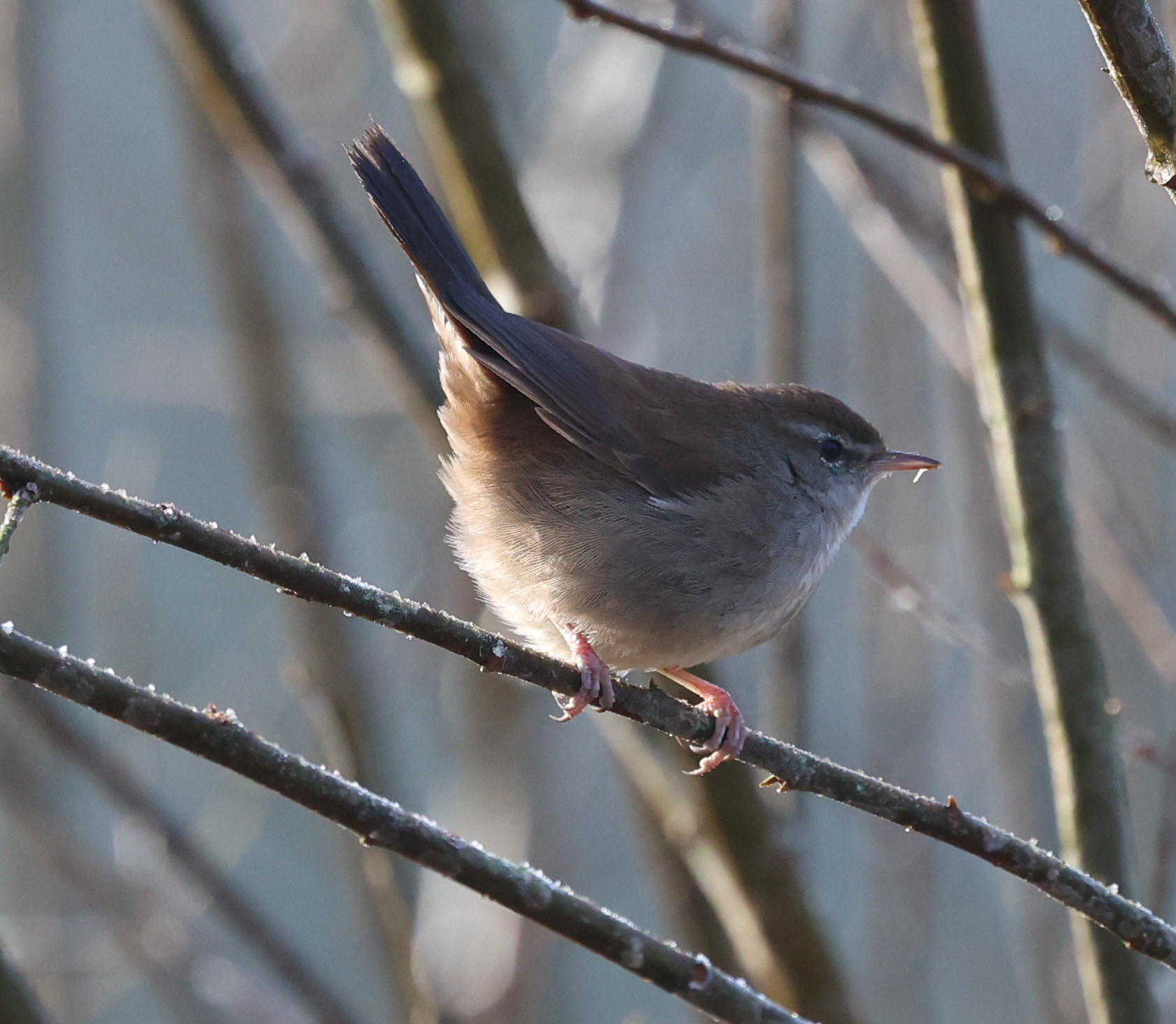
Cetti's warbler is heard far more often than it is seen: a loud, short song bursts from dense scrub, and the bird disappears again. It is a dark chestnut-brown bird 13–14 cm long, with short, rounded wings and a broad tail. A narrow pale grey stripe runs over the eye. It lives in damp scrub and reeds by water. In Georgia it breeds, passes through on migration and also occurs in winter. If you are trying to see one, listen first.
Identification
Cetti's warbler: how to identify it
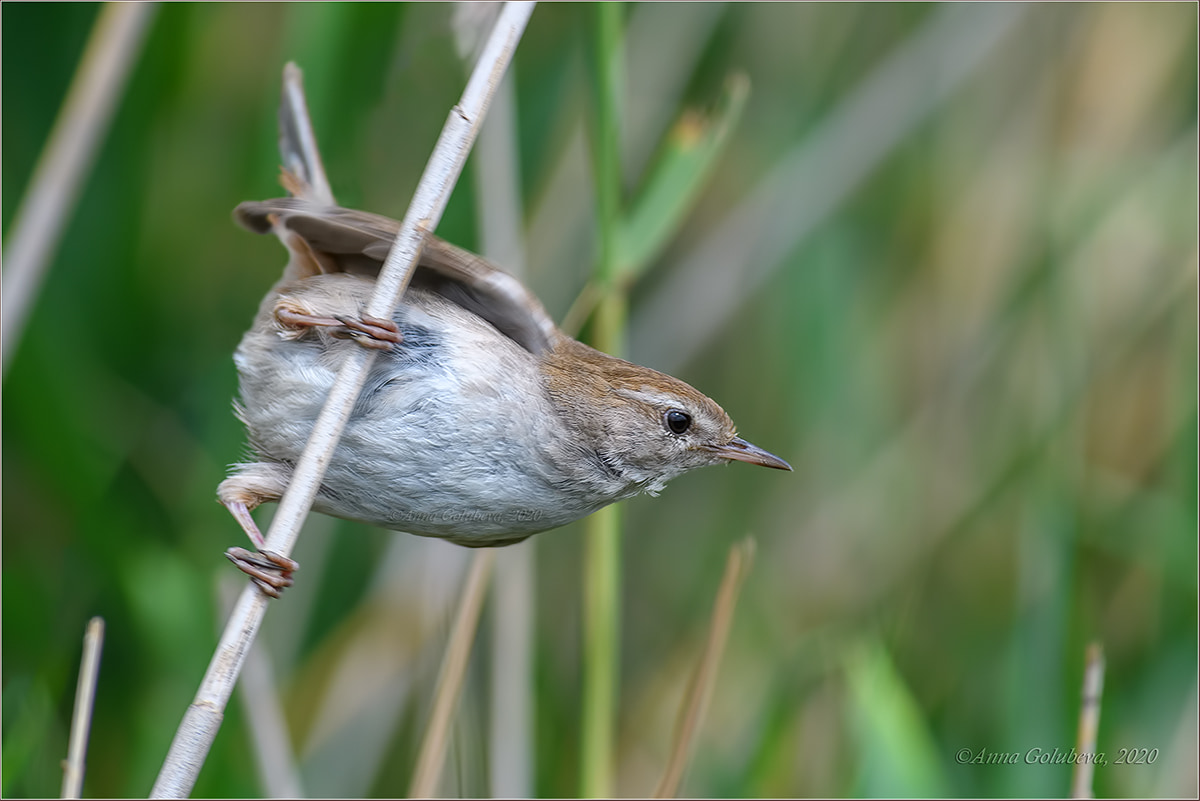
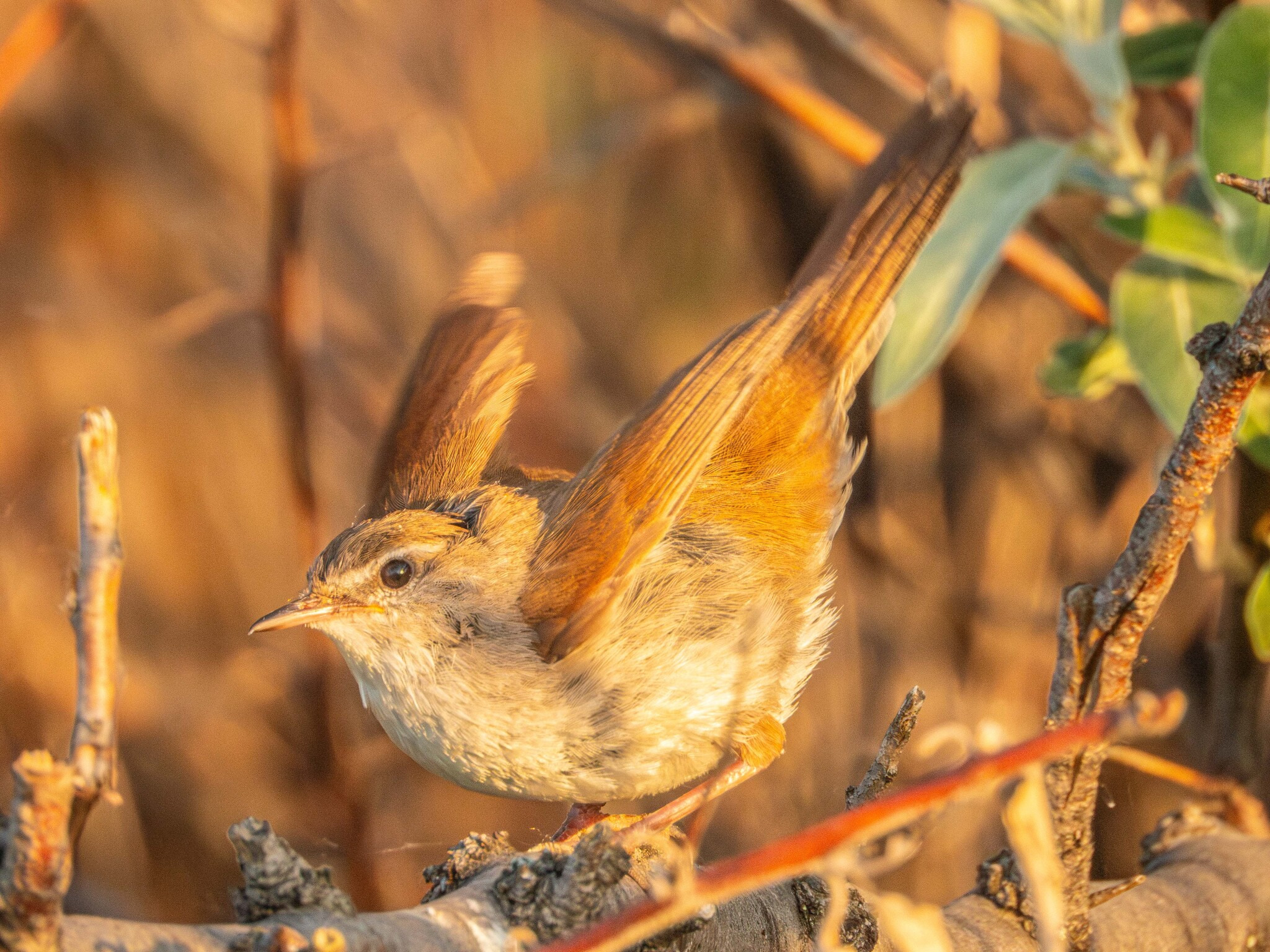
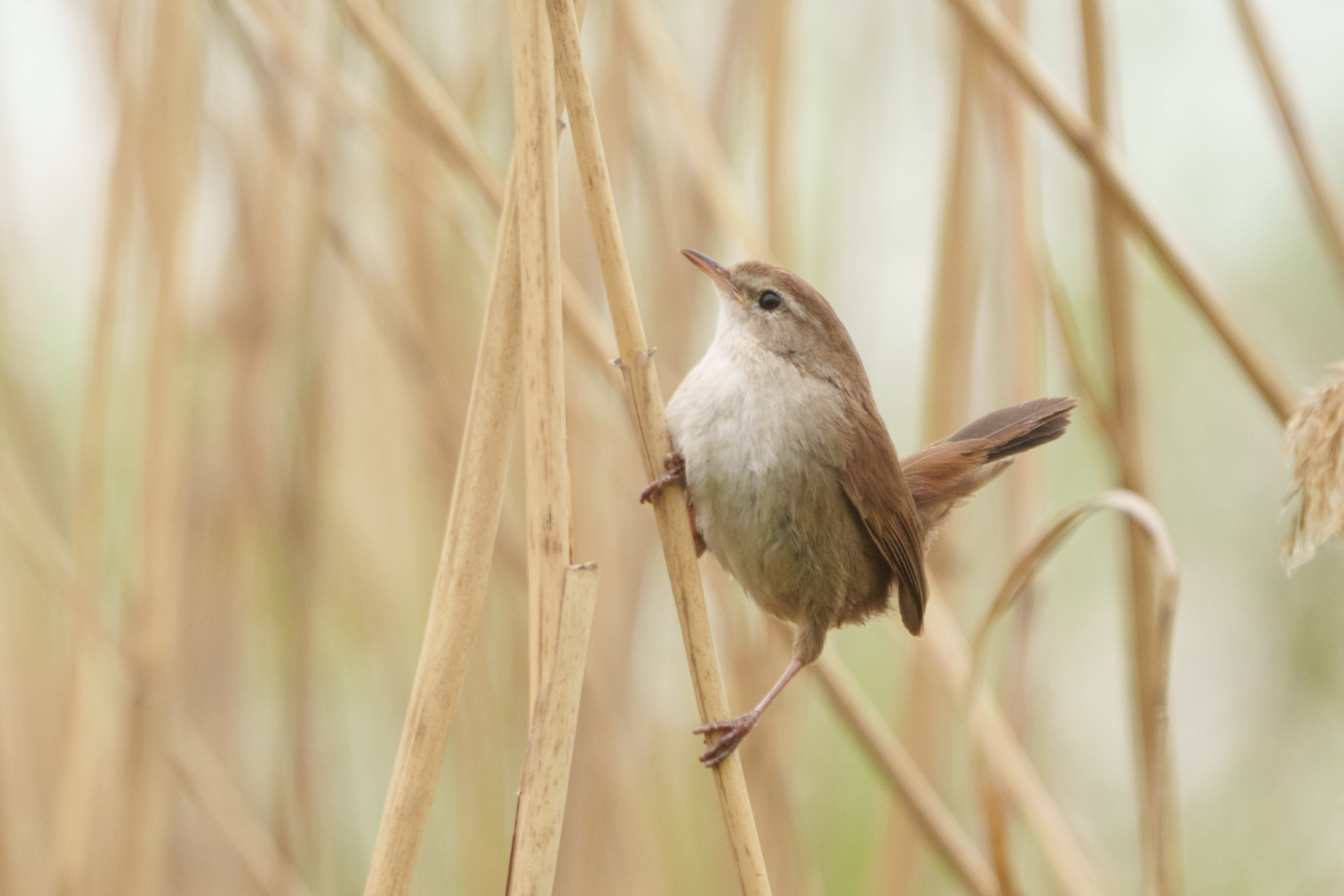
A brown bird 13–14 cm long, with short, rounded wings and a broad tail. It is dark chestnut-brown above and pale greyish below. A narrow pale grey stripe runs over the eye.
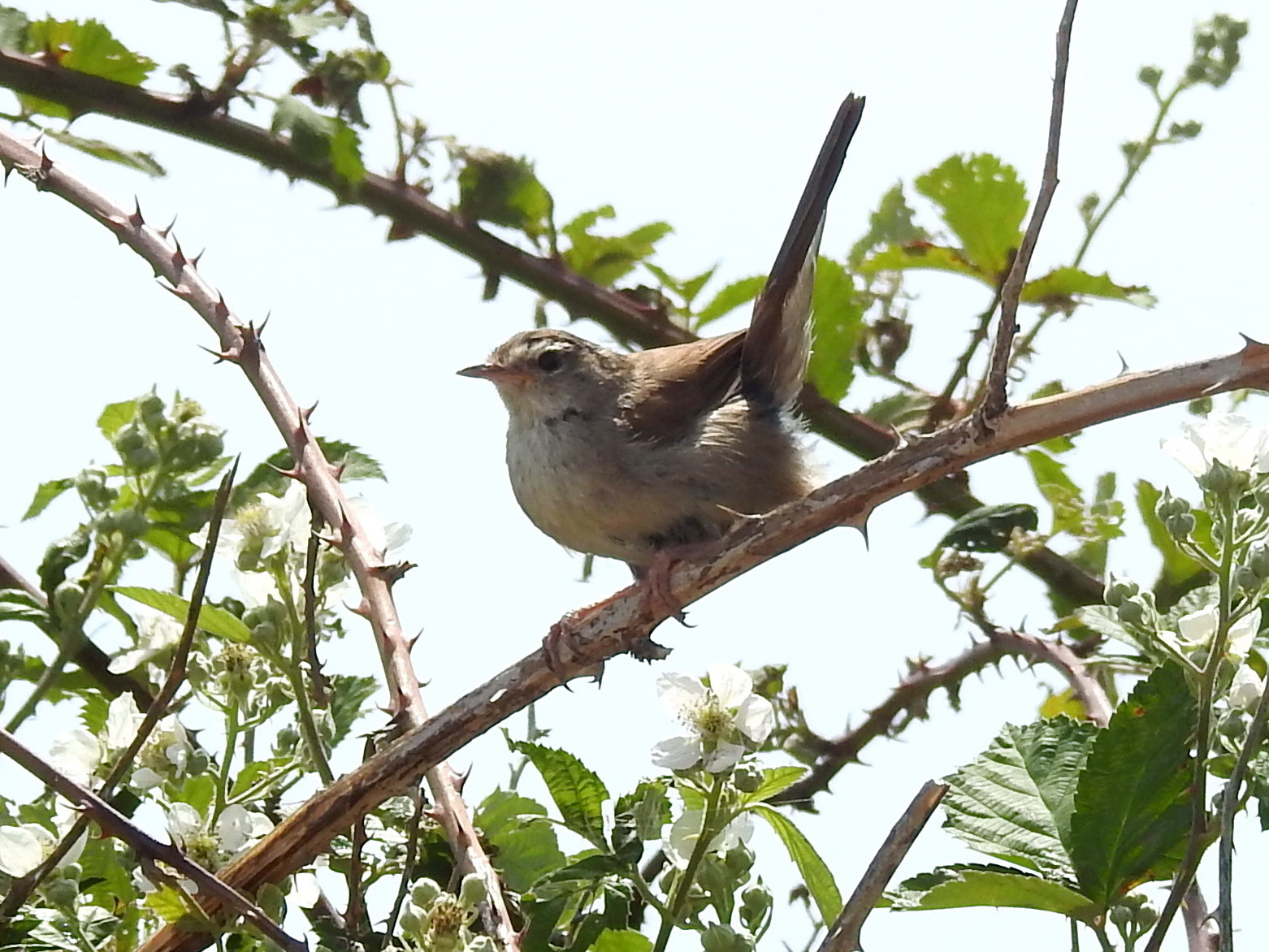
Length 13–14 cm. Males weigh about 15 g, females 12 g. The head is rounded, the wings short and rounded, and the tail longer and broader than in many similar birds.
The upperparts are rich chestnut or dark reddish-brown. The throat and breast are pale grey-brown, with brownish tones on the flanks and belly. A narrow pale grey stripe runs over the eye, and the black eye stands out. Both sexes look alike, the male is only larger.
Young birds look like adults but have fresher plumage. Compared with similar reed birds, it has a short neck, a compact body and a broad tail. If a brown, broad-tailed bird creeps low in a bush and suddenly sings loudly, it is a Cetti's warbler.
Colour
Swatches are illustrative. Do not identify a species by colour alone.
It is a bird of dense scrub in damp places: by ponds, lakes, marshes and rivers, but not in the water itself. It lives among reeds, willows, brambles and nettles, and in hawthorn bushes. It nests and feeds close to the ground, in the lowest layer of the bushes.
Cetti's warbler breeds in Georgia and also occurs on migration and in winter. There are records from every month of the year, but most fall in May and June. Most records come from Samtskhe-Javakheti, followed by Kvemo Kartli, Mtskheta-Mtianeti and Kakheti. It has also been found in Adjara, Tbilisi, Imereti, Samegrelo and Shida Kartli. The oldest record dates from May 1984, in Mtskheta-Mtianeti.
Data: Reptiles.ge + iNaturalist · Methodology
- Field observation
- Several records in one spot
- Region with records
It eats insects, mostly small, soft-bodied insects and their larvae. It also takes spiders, small snails and other invertebrates, and sometimes picks seeds. It prefers the tiniest insects, which are digested faster. It searches the lower parts of bushes and also hops on the ground.
It lives a hidden life and rarely leaves dense cover. The song is loud and short, delivered in sudden bursts. The male moves energetically through the bushes, flicking its wings and tail. It spends much of the summer holding its territory and does little to care for the young. It usually attracts more than one female, sometimes up to three. Only the female builds the nest: an untidy cup of leaves and stems, lined with feathers and hair, set in dense vegetation 30–45 cm above the ground. She lays 4–5 chestnut-red eggs. The female incubates for 16–17 days and does most of the feeding too. The young leave the nest after 14–16 days, and the parents feed them for at least 15 more days. In Europe it usually raises two broods a year.
Globally the risk of extinction for Cetti's warbler is rated low (LC, 2017). Europe holds 600,000–1,600,000 breeding pairs, and numbers have grown strongly since 1990. Hard winters hit it badly: in Britain numbers fell by more than a third after the winter of 1985–86, then recovered quickly. In Georgia's national assessment (2021) its risk is also rated low (LC), and its numbers are stable. The list of the birds of Georgia gives it as a breeder, a migrant and a winter visitor.
Related guides
Continue with related pages
Yes. In Georgia it breeds, passes through on migration and also occurs in winter. It lives in dense, damp scrub and reeds by water. It rarely comes out of the bushes, so listen for its loud, sudden song.
By colour, shape and voice. It is dark chestnut-brown above, with a pale grey-brown throat and breast and a narrow pale grey stripe over the eye. The wings are short and rounded, the tail broad. Compared with similar reed birds, its neck is shorter and its body more compact. If a short, loud song bursts from a bush and no bird shows, that is typical of it.
Mostly small, soft-bodied insects and their larvae. It also takes spiders, small snails and other invertebrates. Sometimes it picks seeds as well. It forages low in bushes and on the ground.
In dense vegetation, 30–45 cm above the ground. Only the female builds the nest, from leaves and stems, lined with feathers and hair. She lays 4–5 chestnut-red eggs and incubates them for 16–17 days. In Europe it usually raises two broods a year.
In Georgia it breeds, passes through on migration and also occurs in winter. Populations in the east of its range make short-distance movements. Hard winters are dangerous for it: after one, numbers drop sharply, then recover quickly.
No, it is harmless to people. Globally its risk of extinction is low (LC, 2017). In Georgia's national assessment (2021) its risk is also low (LC), and its numbers are stable. Do not catch wild birds.
References
What this profile is based on
Species profiles are compiled from peer-reviewed literature and established biodiversity databases, and are reviewed as new taxonomic and conservation data become available.
Prepared by the Reptiles.ge editorial team from the sources listed here.


