



Short-eared owl
Asio flammeus
Jim Gain · San Joaquin County
Key facts in one look
- Size
- 34–43 cm
- Diet
- Rodents, above all voles
- Status in Georgia
- Year-round resident, breeds
- Habitat
- Marshes, meadows, steppe, open country
- Family
- Strigidae
- Protection
- Globally LC, 2021; in Georgia LC, 2021
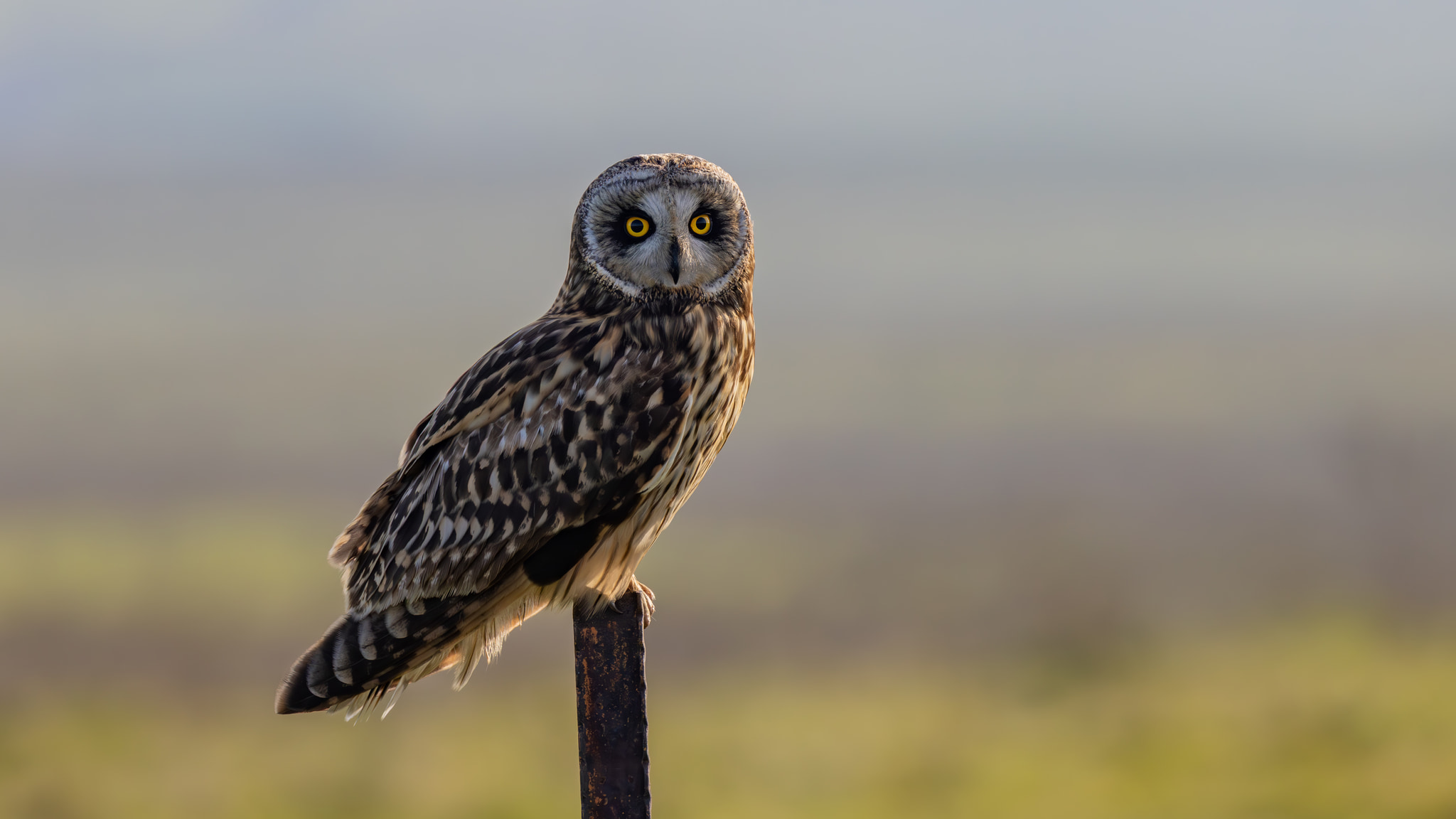
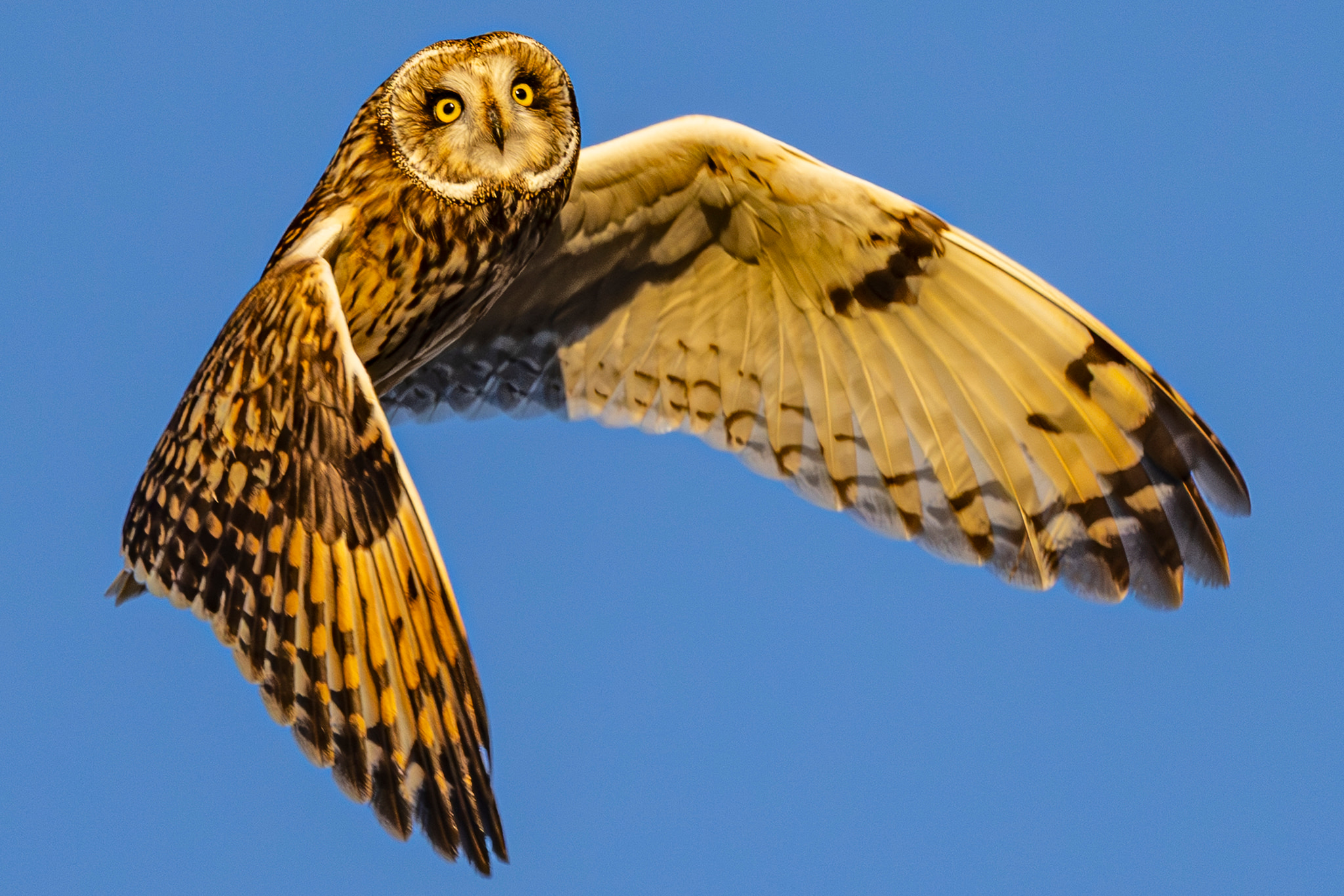
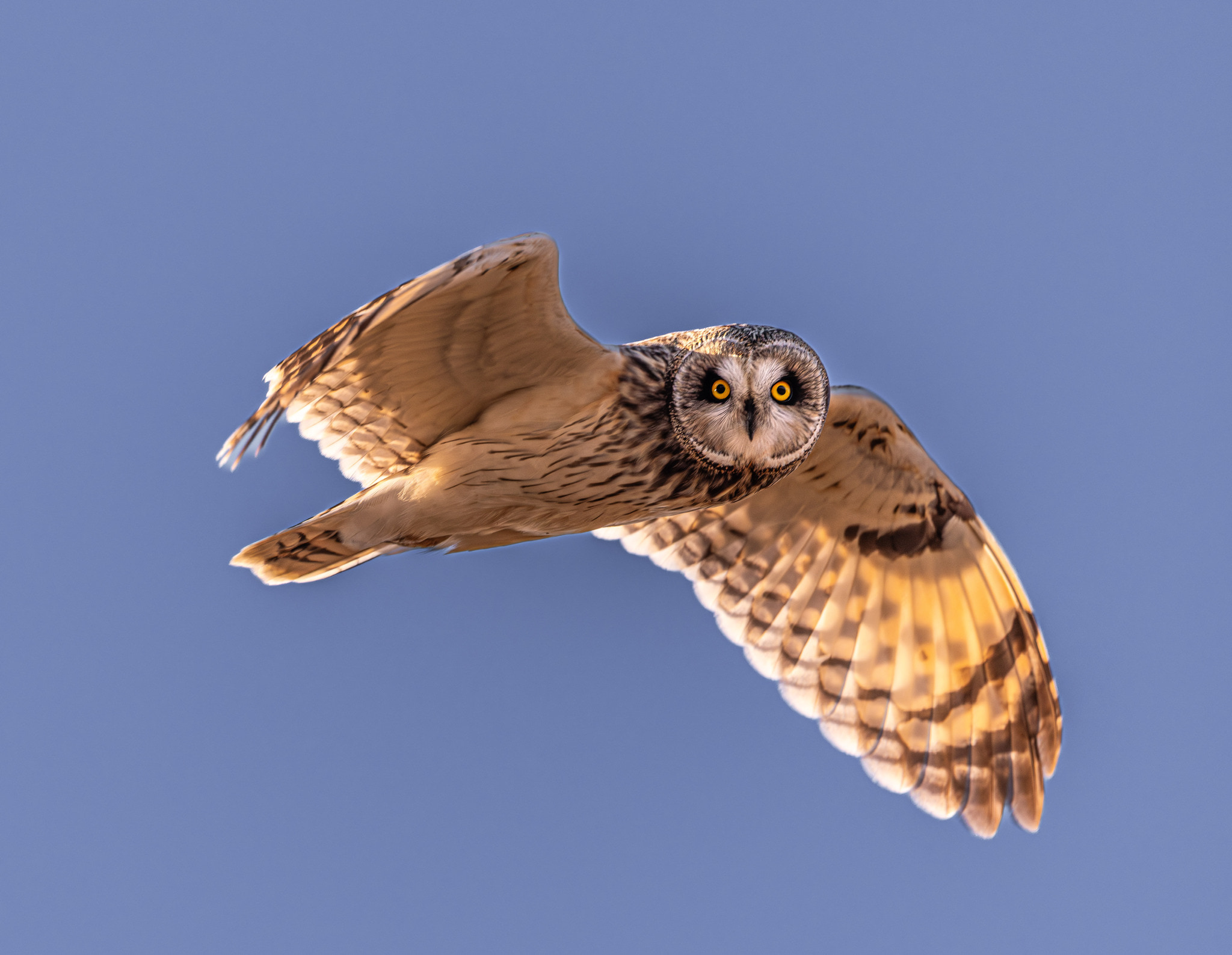
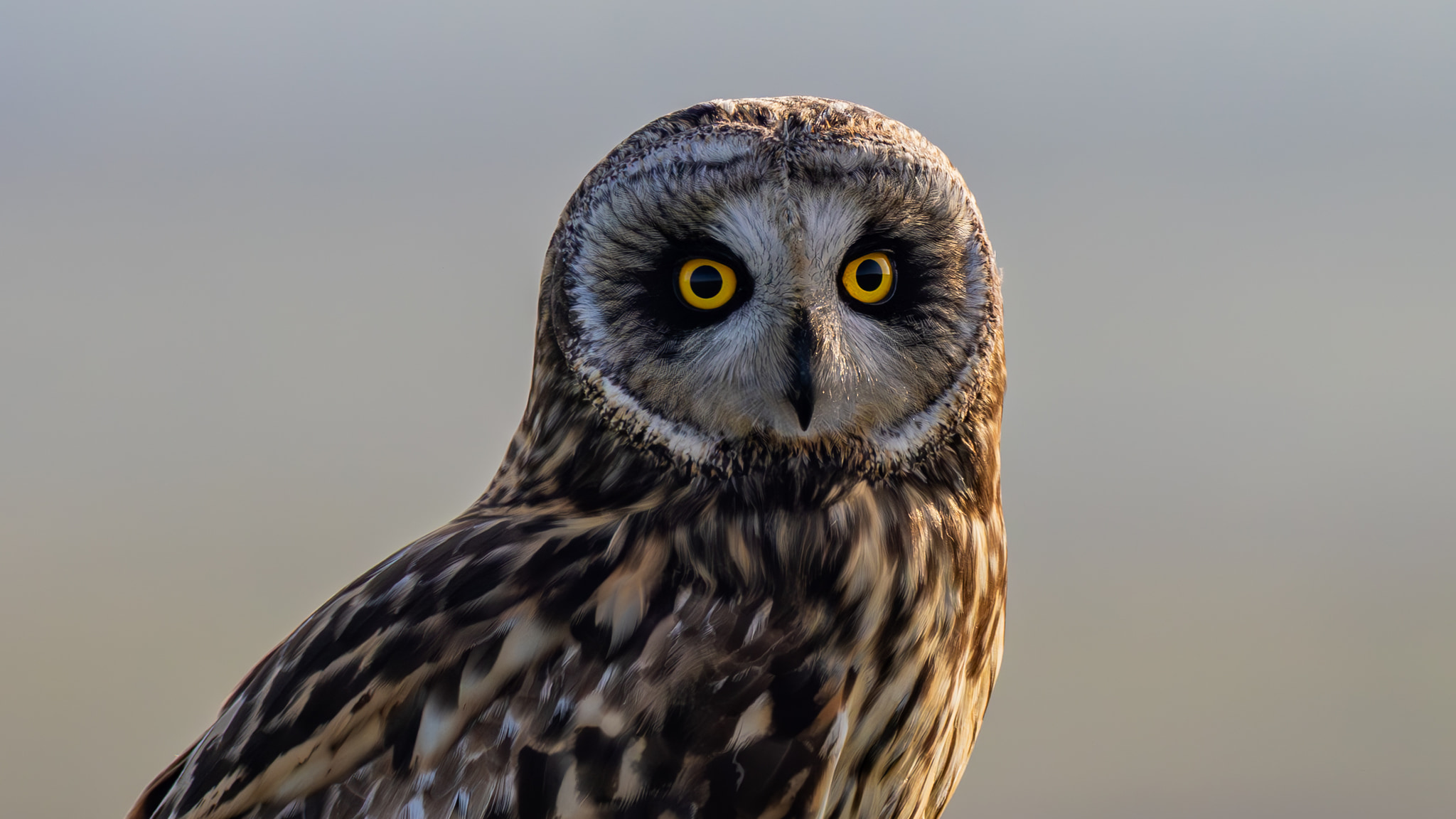
The short-eared owl is not a forest owl: it is a bird of open country, of marshes, meadows, steppe and tundra. It often hunts by day and flies low over the ground with a floppy, rocking flight, like a large bat or moth. Its big yellow eyes sit in black rings, and the short feather "ears" on its head usually do not show. In Georgia it lives and breeds all year round. Birds from the northern part of the range move south in winter, and when voles are scarce it wanders in search of food.
Identification
Short-eared owl: how to identify it
An owl 34–43 cm long and 206–475 g, with a wingspan of 85–110 cm. The head is big, the neck short, the eyes yellow with black rings. The "ears" are short and seldom seen.
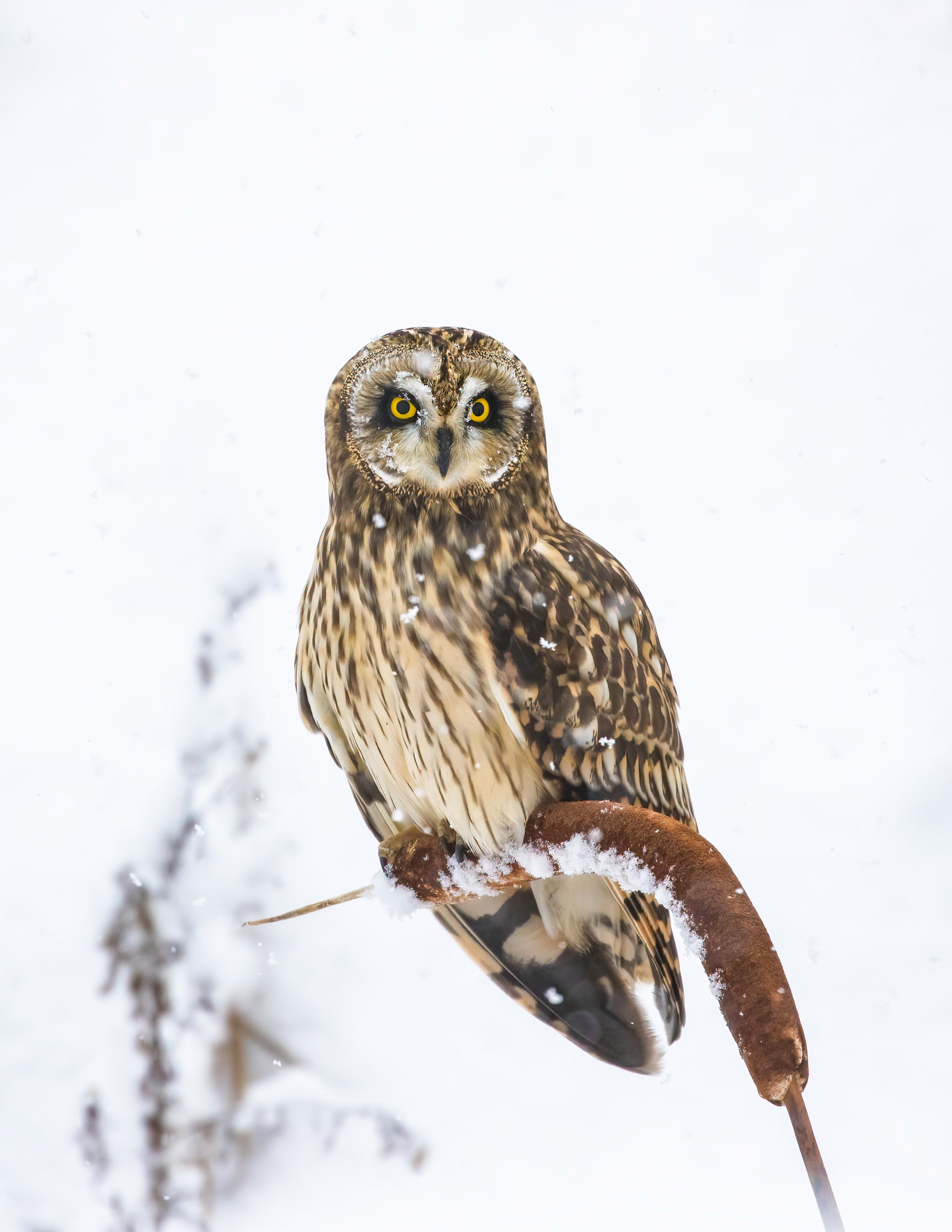
Length 34–43 cm, weight 206–475 g, wingspan 85–110 cm. The female is slightly larger than the male. The wings are long and narrow, and the flight is rocking, with irregular wingbeats, like a moth's or a bat's.
The plumage is tawny to brown and mottled, with barred wings and tail. The upper breast has bold streaks that end on the breast. Black rings surround the yellow eyes, and the facial disc is whitish. The bill is short, strong, hooked and black.
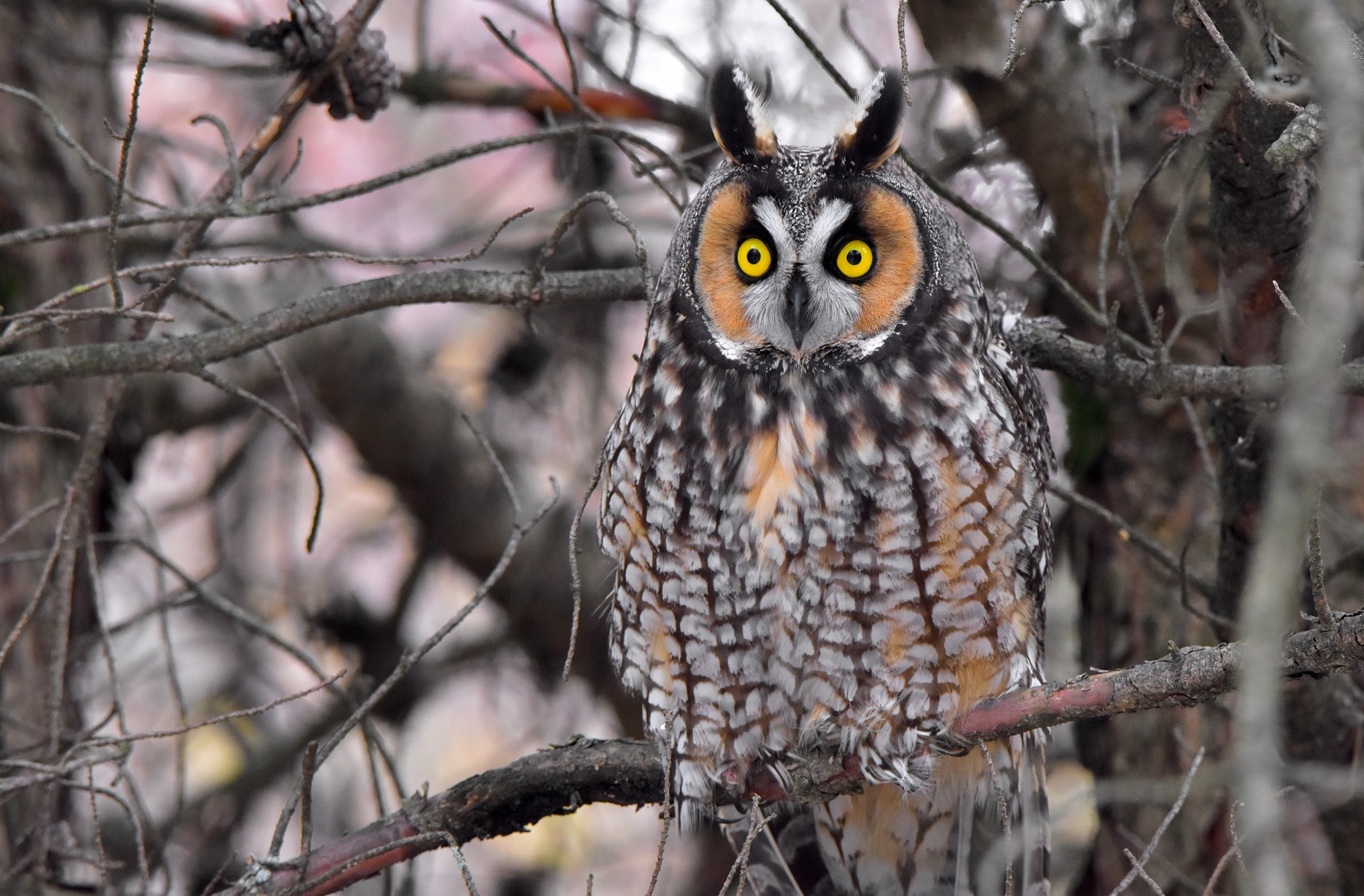
The long-eared owl has long "ears", often orange eyes and a dark line running up and down through the eyes. The short-eared owl is paler and sandier, and in flight shows a broad white band along the rear edge of the wing. If you see an owl flying low over open ground by day, it is most likely a short-eared owl.
Colour
Swatches are illustrative. Do not identify a species by colour alone.
Often confused with
It chooses open, treeless ground: damp lowlands on the edges of marshes, meadows, steppe, prairie and tundra, and farmland too. It lives mostly in the lowlands, but in the Caucasus it climbs to 2,300 m. It avoids wooded country: among trees the long-eared owl takes its place. In Georgia it lives and breeds all year round. It has been photographed on the Shiraki plain.
The short-eared owl lives and breeds in Georgia all year round. Most records come from Adjara and Kakheti; in Adjara they fall mainly in September and October. It has also been found in Mtskheta-Mtianeti, Kvemo Kartli, Samegrelo-Zemo Svaneti, Samtskhe-Javakheti and Tbilisi. Records run from March to June and from September to December, with the most in October. The oldest record comes from Kobuleti, in September 2009.
Data: Reptiles.ge + iNaturalist · Methodology
- Field observation
- Several records in one spot
- Region with records
It feeds above all on rodents, especially voles. It also takes other small mammals: mice, shrews, rats and moles. On coasts and near wetlands it attacks waders, terns and small gulls, and it tops up its diet with grasshoppers and beetles. It searches for prey flying only a few feet above the ground and drops onto it feet first. It coughs up undigested bones and fur as pellets.
Unlike most owls, it often hunts by day, early in the morning and in the evening, when voles are active too. Several owls may hunt over the same field. It is partly migratory and nomadic: when voles are scarce, it wanders in search of food. On the breeding grounds it gives raspy, bark-like calls; in winter it is silent. Unlike most owls, it builds its own nest, a hollow on the ground hidden in low vegetation and lined with grass and feathers. It usually lays 4–7 white eggs, and up to 12 in years when voles are plentiful. It raises one brood a year. The female does most of the incubating, for 21–37 days. The young leave the nest before they can fly and take wing at a little over four weeks. A parent draws predators away from the nest by pretending to have a broken wing.
Globally the short-eared owl's risk of extinction is rated low (LC, 2021). Its range is huge, and there are 1.2–2.1 million birds in the world. Even so, it is declining in places, for example in the southern part of the United States. In Georgia's national assessment (2021) its risk is also rated low (LC), and its numbers are stable. The list of the birds of Georgia gives it as a year-round resident and breeder.
Related guides
Continue with related pages
Yes. It lives and breeds in Georgia all year round. Look for it in open country, by marshes and over meadows, not in forest. It has been photographed on the Shiraki plain.
The long-eared owl has long "ears" and often orange eyes; the short-eared owl has short, usually hidden "ears" and yellow eyes. The short-eared owl is paler and sandier. In flight it shows a white band on the rear edge of the wing. It lives in open country, the long-eared owl in trees.
Above all rodents, especially voles. It also takes mice, shrews and other small mammals. Near water it attacks small birds too. It tops up its diet with grasshoppers and beetles.
On the ground, in a hollow hidden in low vegetation and lined with grass and feathers. It usually lays 4–7 eggs, up to 12 in years when voles are plentiful. The female does most of the incubating, for 21–37 days.
It hunts at night too, but often by day, early in the morning and in the evening. This matches the times when voles are active. So you may see a short-eared owl flying low over open ground in daylight.
No, it is harmless to people and useful in fields. Globally its risk of extinction is low (LC, 2021). In Georgia's national assessment (2021) its risk is also low (LC), and its numbers are stable. Do not catch wild birds.
References
What this profile is based on
Species profiles are compiled from peer-reviewed literature and established biodiversity databases, and are reviewed as new taxonomic and conservation data become available.
Prepared by the Reptiles.ge editorial team from the sources listed here.


