


500 Colchian pheasants released in Vashlovani Protected Areas
The birds were donated by the Kartu foundation. Pheasants in Vashlovani were first counted in 2021, and only repeat counts like that one will show what the release achieves.

The Agency of Protected Areas has released 500 Colchian pheasants at several sites in the Vashlovani Protected Areas. The news came out on 30 October 2026. According to the agency, the aim is to restore the species in its natural range and strengthen the population. It is the second release of this kind this autumn: in early October, chukars and grey partridges were released in Borjomi-Kharagauli.
What happened in Vashlovani?
The Colchian pheasants were released in Kakheti, in Georgia’s far south-east. The announcement does not say on which day or at which sites.
According to the agency, the release helps restore the species and its breeding in its natural range. The agency runs such projects in coordination with the National Wildlife Agency. The birds were handed over to the Vashlovani Protected Areas by the Kartu charitable foundation.
The announcement says that, on the initiative and with the funding of Bidzina Ivanishvili’s family, several thousand pheasants, chukars and grey partridges have already been returned to the wild in Georgia. We could not verify this number independently: the announcement names neither the years nor the places.
The second release this autumn
Three weeks before Vashlovani, on 9 October, 100 chukars and 100 grey partridges were released in Borjomi-Kharagauli National Park. The Kartu foundation had gifted them to Gori Municipality. We reported then that, according to the agency, similar releases also took place in the Algeti, Tbilisi, Mariamjvari, Kolkheti and Tana protected areas.
Which species and how many birds were released in those five areas has not been made public yet.
What the 2021 count tells us
The first pheasant count in Vashlovani took place in 2021. From 10 to 19 April, during the crowing season, researchers covered about 60 kilometres and listened for the two-note crow of male pheasants at 41 points. On average, 3.97 crows were heard per point in three minutes.
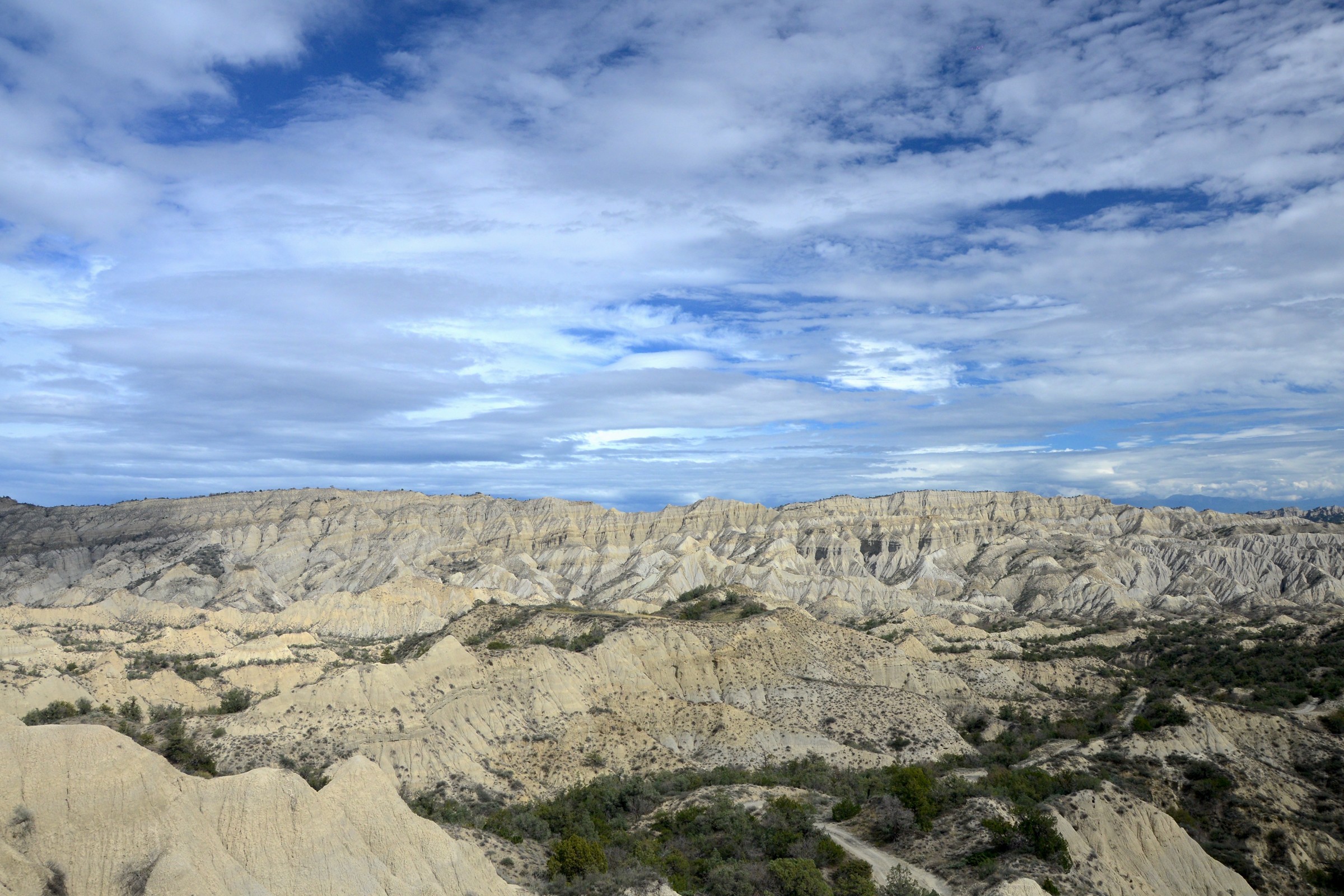
The count showed two different habitats. In the Alazani floodplain forest, poplar and oak with dense undergrowth at 150–250 metres, the average was 1.62 crows at 8 points. In the semi-arid open forest and scrub of Shavi Mta, at 300–800 metres, it was 4.30 at 32 points. On the mountain slopes, crows were heard almost three times as often as in the floodplain.
In late August and early September, researchers also searched 40 kilometres of routes for hens with broods. They saw only two hens with broods and one male, too few to draw conclusions. The authors write that this was the first study of its kind in Vashlovani and that there are no older data to compare it with.
What holds pheasants back in Vashlovani
The 2021 study named three human factors. The first is sheep flocks: Vashlovani is their main winter pasture, and sheep graze even inside the protected area. The flocks come with shepherds and several dogs, and they move through the very scrub where pheasants hide during the day.
The second is hunting at the edge of the protected area. No illegal hunting was recorded inside it during the study, but local hunters said they hunt pheasants on the land next to the boundary. The third is the burning of farm fields: one uncontrolled fire was recorded a few hundred metres from the protected area.

The authors recommended annual, long-term pheasant monitoring, an action plan to prevent fires, and a study of ways to reduce the impact of sheep grazing. Judging the outcome of releasing 500 birds needs exactly this kind of repeat count, and the 2021 data are its starting point.
What we don’t know
The agency’s announcement does not say where and how the birds were raised, in which parts of Vashlovani they were released, or whether they will be followed after release. So we cannot yet say how many will survive the winter or whether the release will grow the local population.
Origin matters. Males of the local Colchian, or black-necked, pheasant have no white neck ring. Many introduced and farm-bred birds do. Crossing with such birds is a threat to local pheasants. The announcement does not say which form the released birds belong to.
The pheasant is a breeding resident in Georgia. It is listed as Least Concern (LC) on the IUCN Red List and is also LC in Georgia’s 2024 bird checklist. Its scientific name, Phasianus colchicus, refers to Colchis. More birds are on the birds hub, and more protected-area stories are in the news.

