


Black Sea dolphins and the war: where the “120,000” estimate comes from
According to an Al Jazeera report, the war has killed more than 120,000 dolphins in the Black Sea. It is one Ukrainian researcher’s estimate: it does not rest on a peer-reviewed study and cannot yet be checked.
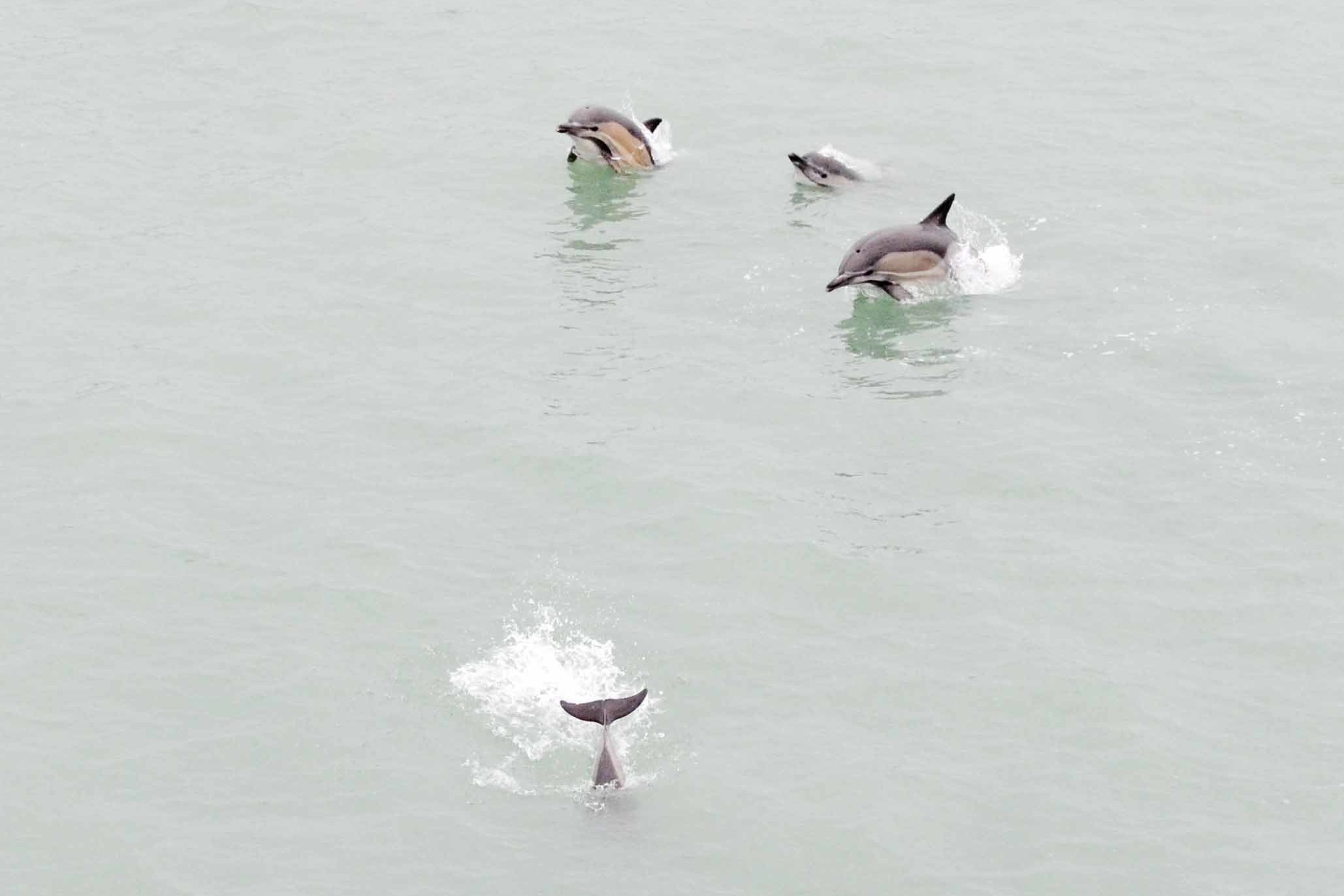
On 31 October 2026 Al Jazeera published a report on how the Russia-Ukraine war is damaging the Black Sea. Its main source is Ivan Rusev, a researcher at Ukraine’s Tuzly Lagoons National Park. By his estimate, more than 120,000 dolphins had died by 2026, about a quarter of the Black Sea’s cetaceans. What lies behind the number, and what do independent surveys show?
What does Al Jazeera report?
The report was filed from Kyiv. Its main source is Ivan Rusev, head researcher at the Tuzly Lagoons National Park in southern Ukraine. By Rusev’s estimate, the war had killed more than 120,000 dolphins by 2026, one in four of the cetaceans living in the Black Sea. He also says about 50,000 dolphins died in 2022 alone.
Three cetacean species live in the Black Sea: the bottlenose dolphin (Tursiops truncatus), the short-beaked common dolphin (Delphinus delphis) and the harbour porpoise (Phocoena phocoena). Rusev says the fighting is killing hundreds of times more of all three than fishing and poaching did before. He estimates the population will need 30–50 years to recover.
How reliable is the number?
Al Jazeera does not say how the 120,000 was counted. What is known is how Rusev reached his 2022 figure. In October 2022 he said about 2,500 marine mammal carcasses had been found on the coasts of Ukraine, Bulgaria and Romania, and that, according to international studies, only 5% of dead dolphins wash ashore. If 2,500 is 5%, the total comes to about 50,000. He said he had no data from the Russian coast.
This is a rough extrapolation, not a peer-reviewed study. The result depends entirely on what share of carcasses reaches the shore, and that share is not precisely known. In the report, environmentalists in Bulgaria, Romania and Turkey also say dolphin deaths have risen, but the cause cannot always be established. Dimitar Popov of the Bulgarian group Green Balkans says most stranded carcasses are too decomposed to show net marks. Russian monitors blame the deaths on parasites and viral infections.
The “quarter” is also hard to check. The largest cetacean survey of the Black Sea was flown from aircraft in summer 2019. It covered the waters of Bulgaria, Georgia, Romania, Turkey and Ukraine, 52% of the sea’s area. For the surveyed area the estimates are about 108,000 common dolphins, 22,700 bottlenose dolphins and 93,800 harbour porpoises, about 225,000 in total. The authors treat these as minimum figures: they do not account for animals that were underwater or missed, or for the other 48% of the sea, including Crimean and Caucasus waters. If 120,000 is a quarter, the full number would have to be about 480,000. Al Jazeera does not say which estimate the share is based on.
What is killing the dolphins?
Rusev says explosions and warship sonar disorient dolphins and damage their echolocation, the sound they use to find their way. A dolphin that can no longer hunt loses weight fast. The report also names pollution: oil and fuel leaking from sunk and damaged warships, tankers and cargo ships, and chemicals from munitions. Pollution weakens the immune system, leaving dolphins more vulnerable to morbillivirus infection. The destruction of the Kakhovka dam in 2023 was an additional blow.
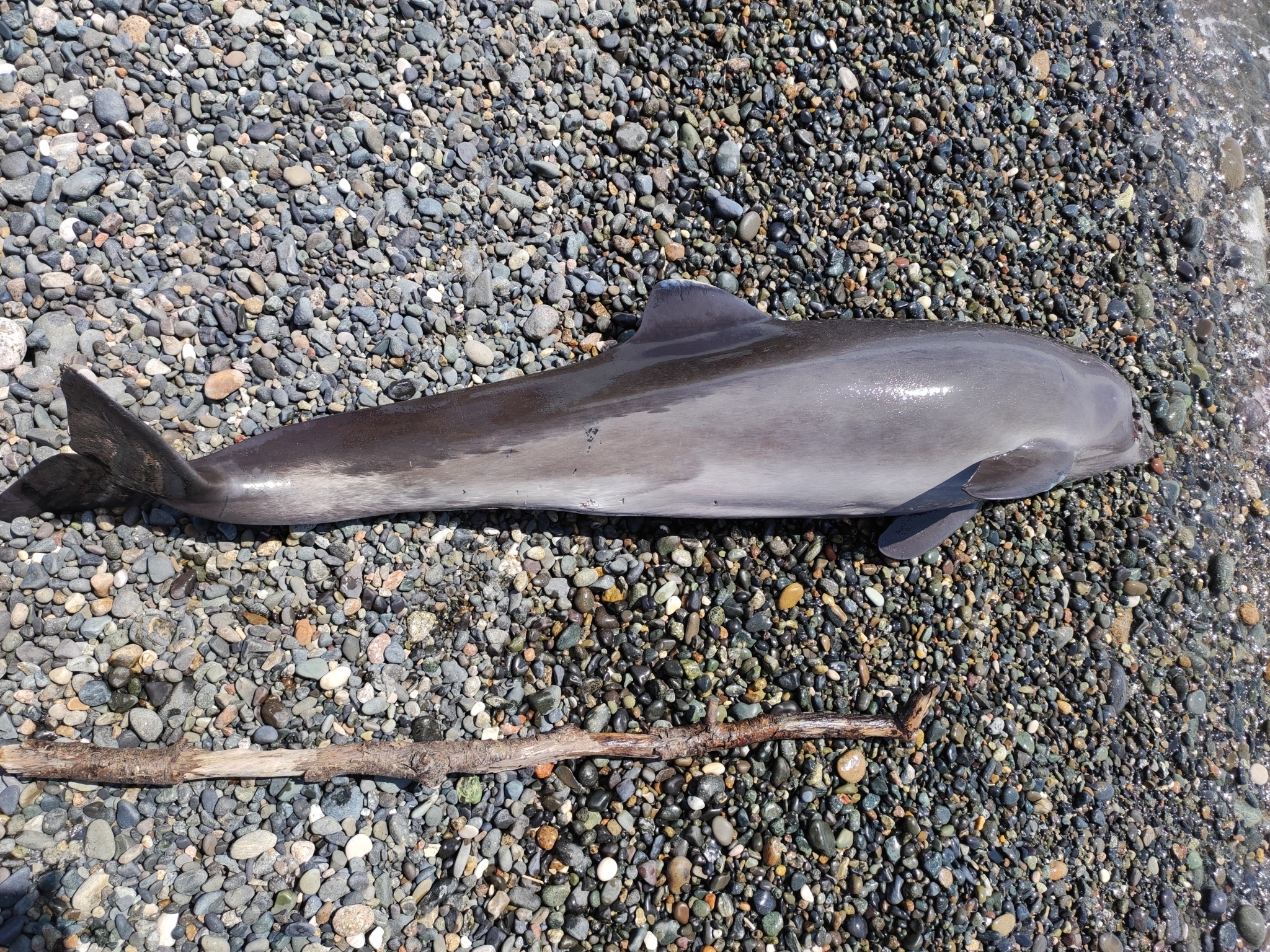
Pre-war threats have not gone away. According to the report, fishers still find dolphins drowned in nets. The authors of the 2019 survey estimate that harbour porpoises alone are caught in nets at a rate of about 11,800–16,200 a year, 5–7% of the population. The same paper says war-related threats could change the picture.
And Georgia?
Georgia is not mentioned in the Al Jazeera report. In the 2019 survey, only common dolphins were recorded in Georgian waters, about 6,200 square kilometres: about 2,200–3,000 animals. No bottlenose dolphins or harbour porpoises were seen here during those two weeks.
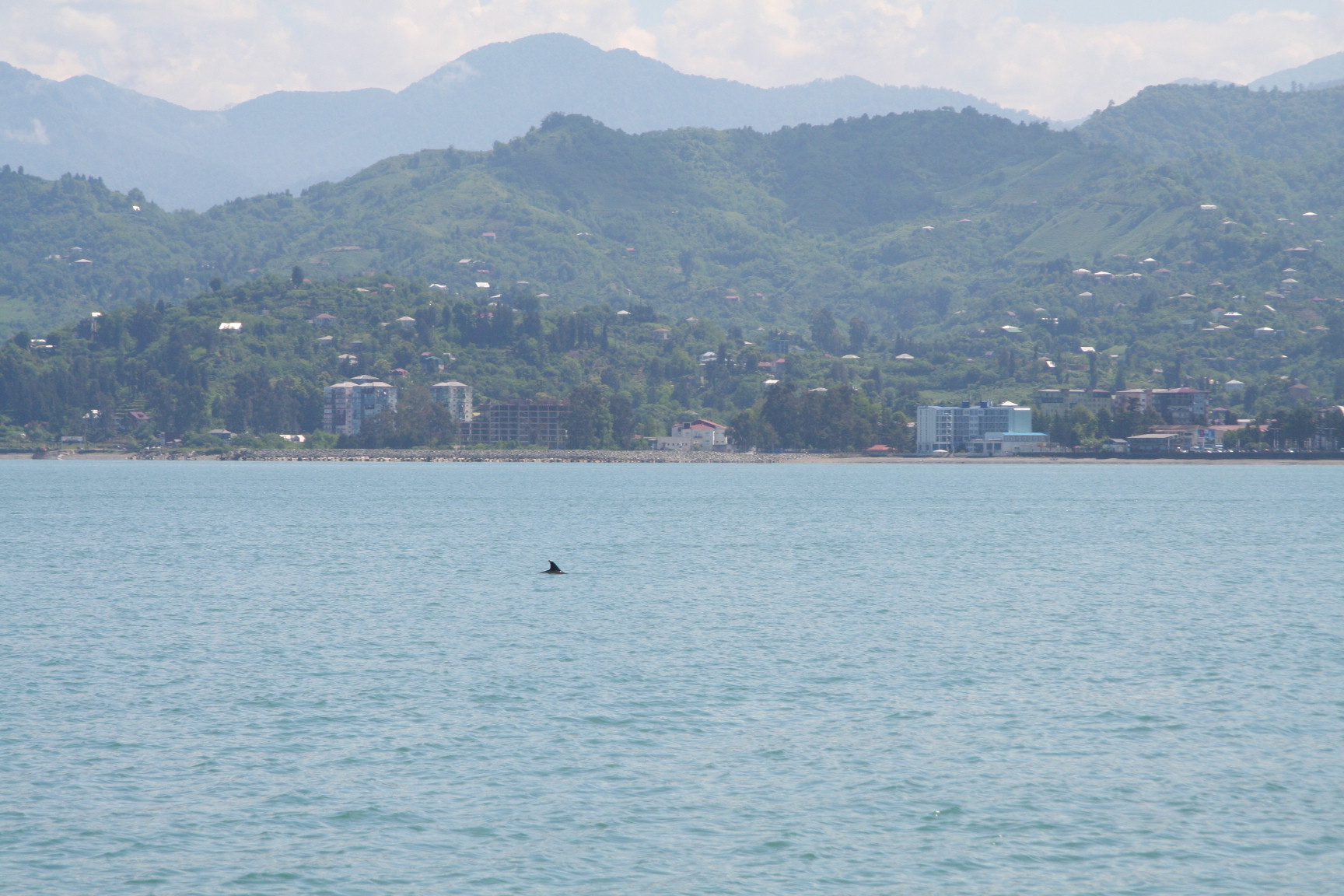
In September we reported that between 1 March and 1 May 2026 about 40 dolphins washed ashore from Sarpi to Anaklia. According to ichthyologist Archil Guchmanidze, this is the highest figure of the past decade. No cause was named then or since. None of the sources used here links strandings on the Georgian coast to the war, so we do not suggest it either.
Rusev’s 120,000 remains one researcher’s estimate until a new, post-war survey of Black Sea cetaceans is carried out. The authors of the 2019 survey recommend repeating such a survey at least every six years. More stories are in the news.

