



European bison
Bison bonasus
Mikhail Ezdakov · Ul'yanovskiy rayon
Key facts in one look
- Diet
- Plant eater: grasses, shoots, bark, leaves
- Status in Georgia
- Extinct, lived here until the early 20th century
- Size
- Bull 1.8–2.1 m at the shoulder, 615–920 kg
- Habitat
- Forest, mountain forest, meadows
- Family
- Bovidae
- Conservation
- EX
The European bison no longer lives in Georgia's forests. In the 19th and early 20th centuries it was found at the headwaters of the Bzyb, Kodori and Enguri, and a 2021 national assessment rates it Extinct (EX) in Georgia. Archaeological remains suggest it once lived across the whole Greater and Lesser Caucasus. It is a heavy, humped wild ox with a beard on its throat and black horns curving to the side. In the early 20th century it vanished from the wild completely and survived only in captivity. Today thousands of bison graze in Europe's forests again, and herds of mixed descent live in the Caucasus.
Identification
European bison: how to identify it
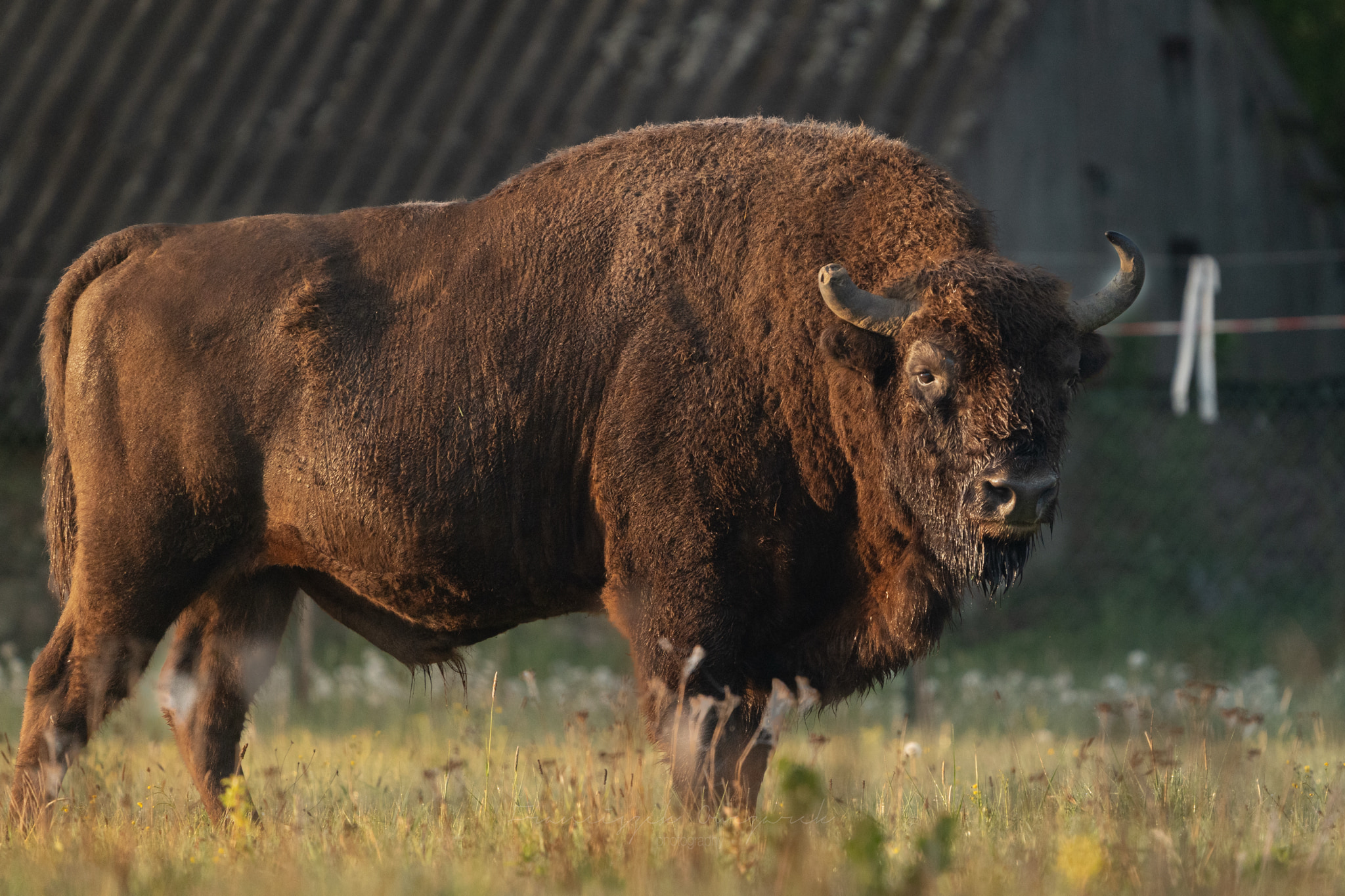
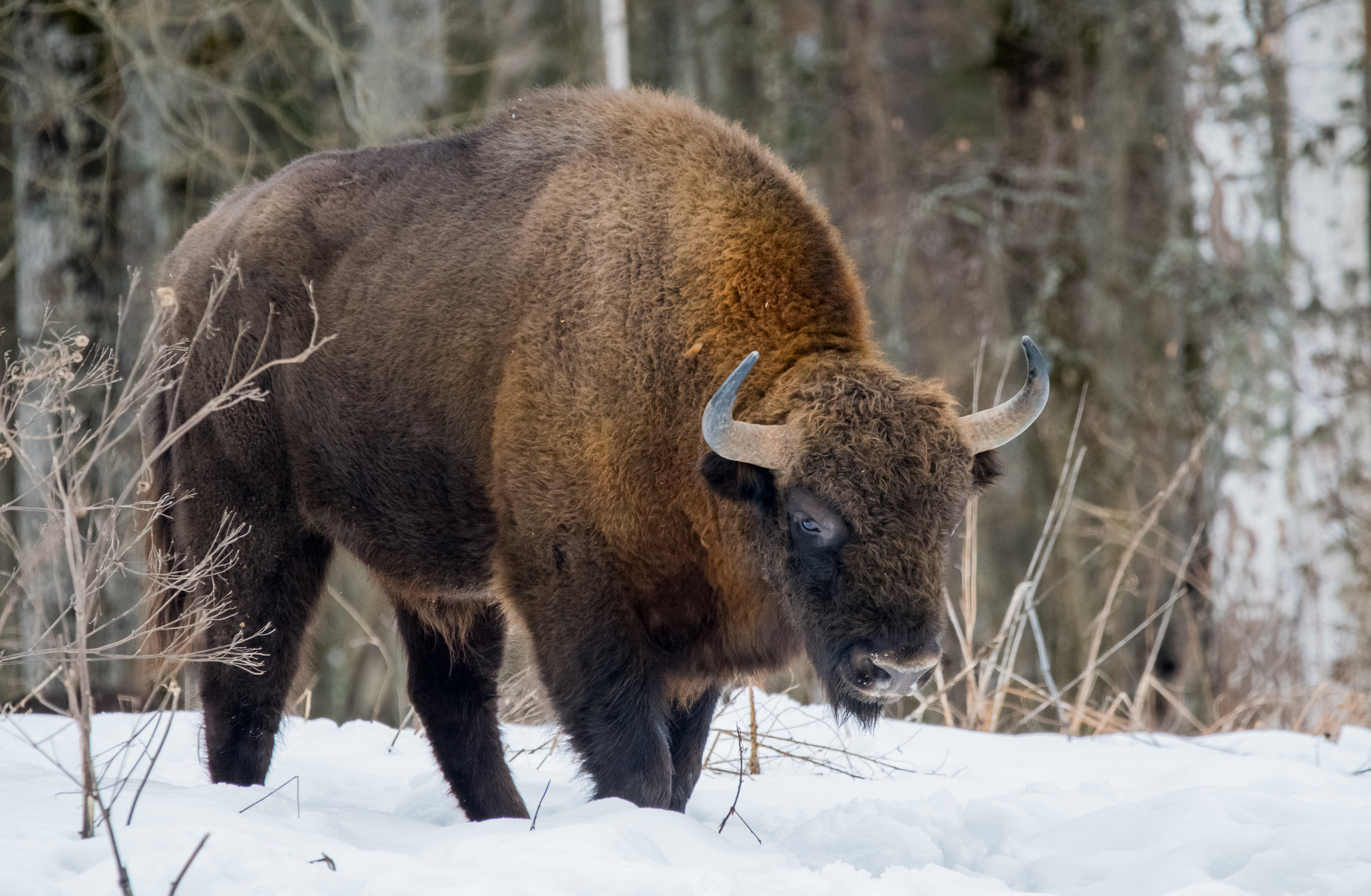
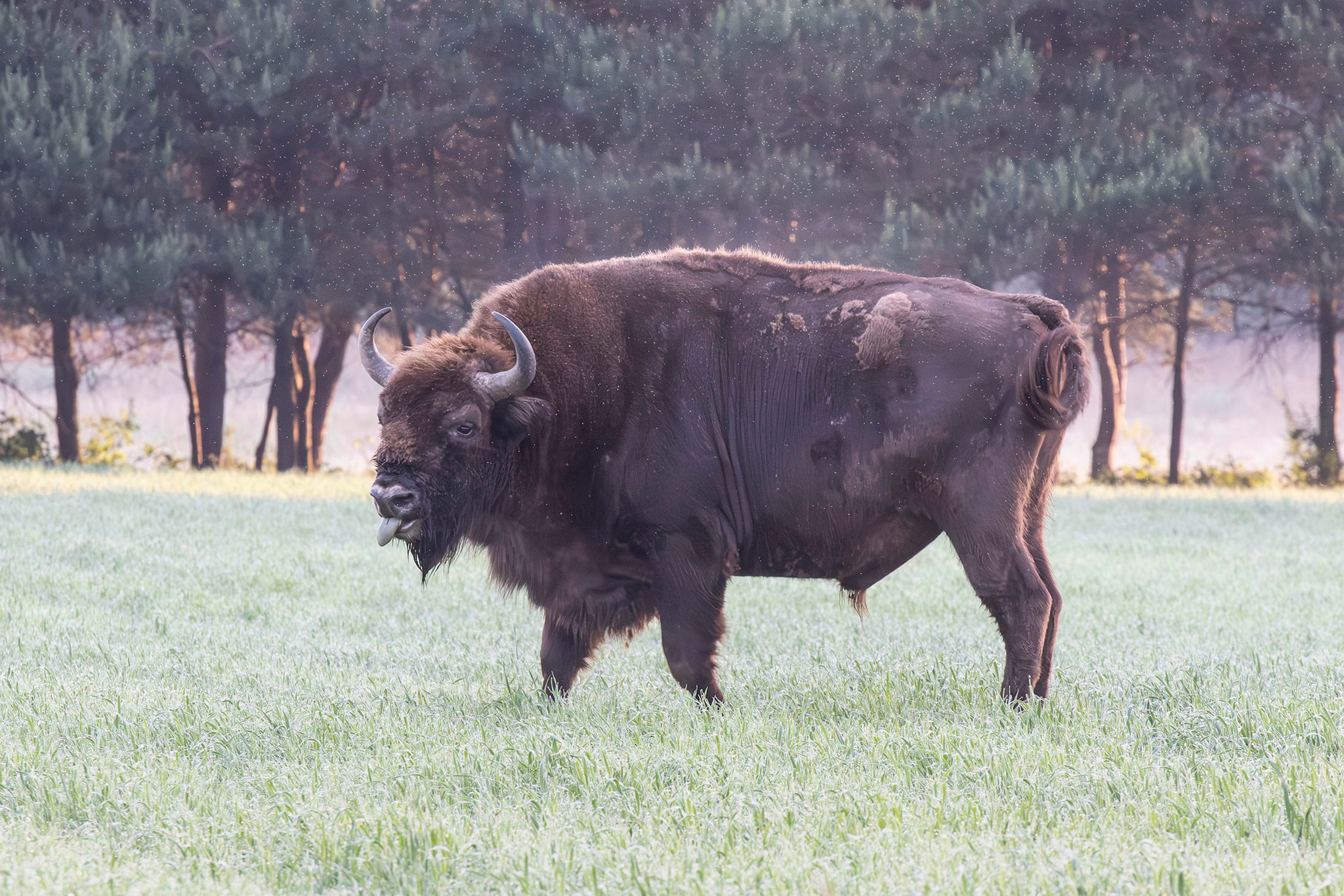
The European bison is a massive, tall wild ox with a brownish coat. It has a high hump over the shoulders, higher in bulls. Long hair on the front of the body forms a mane, and a beard on the throat and chin. Its black, smooth horns curve to the side and forward, with the tips set wider apart than the bases. The Caucasian bison was darker, with a chocolate tint.
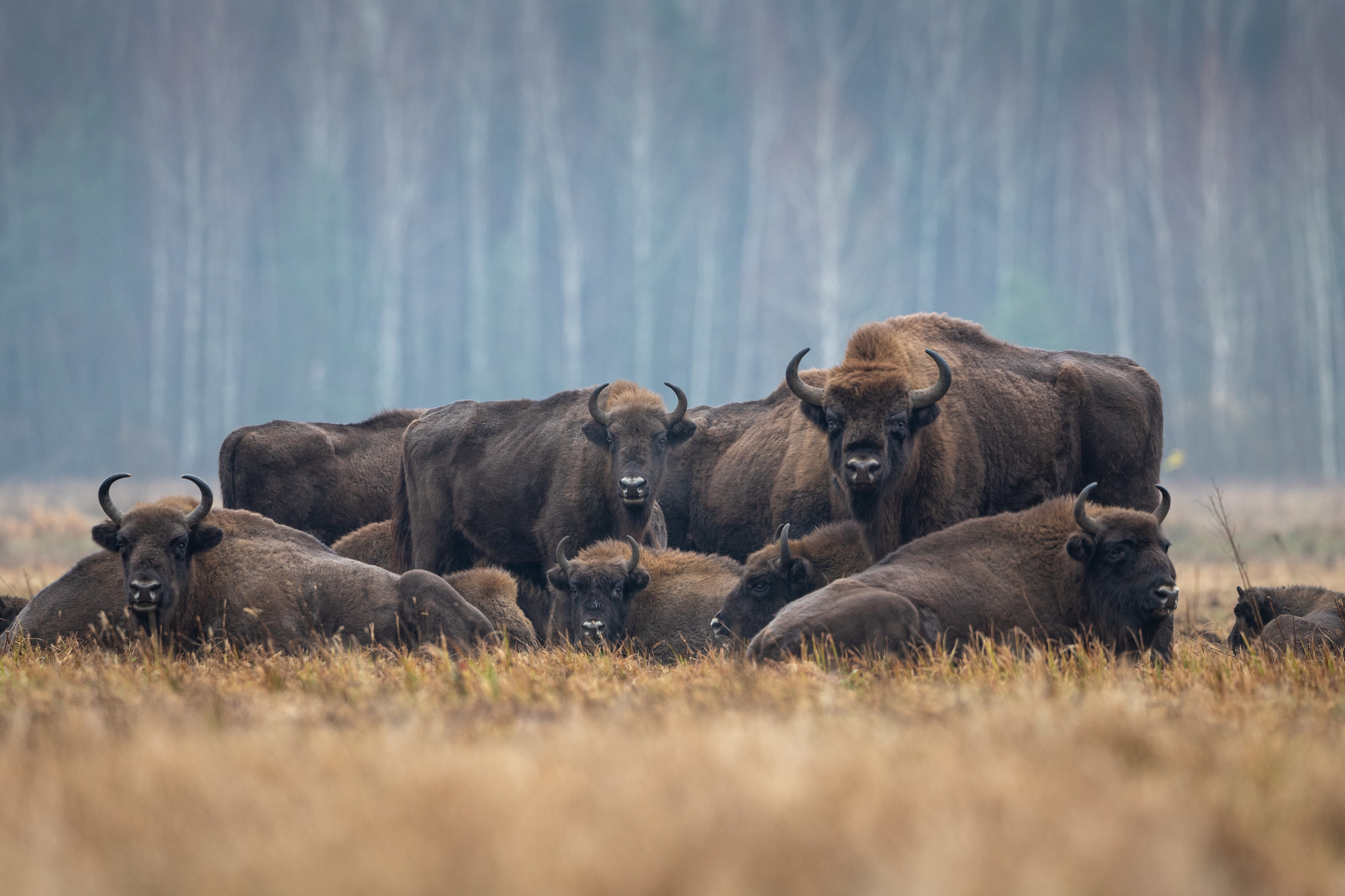
A bull has a body length of 2.8–3.3 m, a height of 1.8–2.1 m and a weight of 615–920 kg. A cow is smaller: 2.4–2.9 m long, 1.69–1.97 m tall and 424–633 kg. A newborn calf weighs 15–35 kg.
The coat is greyish-brown with an ochre tint. The summer coat is dark brown, with a darker head. The winter coat is darker, longer, thicker and curlier. The hair on the head and forehead is curly, and the tail is long and hairy.
The hump is formed by long spines of the thoracic vertebrae, and both sexes have it. The horns reach up to 65 cm along the outer curve, with up to 78 cm between the tips. A cow's horns are thinner, shorter and more curved.
The Caucasian bison was slightly smaller than the lowland bison, with a darker, chocolate-tinted, curly coat and a distinctive bend to its horns. Its bulls weighed about 480 kg on average and rarely more than 700 kg. Caucasian calves were reddish. The pure Caucasian bison no longer exists: today's Caucasian herds are of mixed descent.
The European bison is an animal of broadleaf, coniferous and mixed forests, though historically it also lived in open country. Its core areas are usually close to meadows and water. Winter food is scarce in the forest, so open meadows and pastures suit it better. The Caucasian bison lived in mountain forests. Its exact historical range in Georgia is not known. In the 19th and early 20th centuries it was found in the western Caucasus, at the headwaters of the Shakhe, Sochi, Mzymta, Psou, Bzyb, Kodori and Enguri rivers. The last wild bison of the Caucasus, three animals, were killed in 1926 near Mount Alous, between the Urushten and Malaya Laba rivers. No wild bison live in Georgia today.
No records yet
The atlas has no confirmed observation of this species yet, so we do not know which regions of Georgia it lives in.
Share an observationSeen this species? A photo and the place are enough.
The European bison is a plant eater. It grazes mainly on grasses, sedges and other herbs, and also eats shoots, twigs, bark and leaves of trees and shrubs. In summer an adult bull eats about 32 kg of food a day. Mosses, horsetails, ferns and fungi make up only a tiny share of its food. It needs to drink every day and breaks ice to do so in winter. Winter food is scarce in the forest, so in the Białowieża Forest the bison are fed hay in winter.
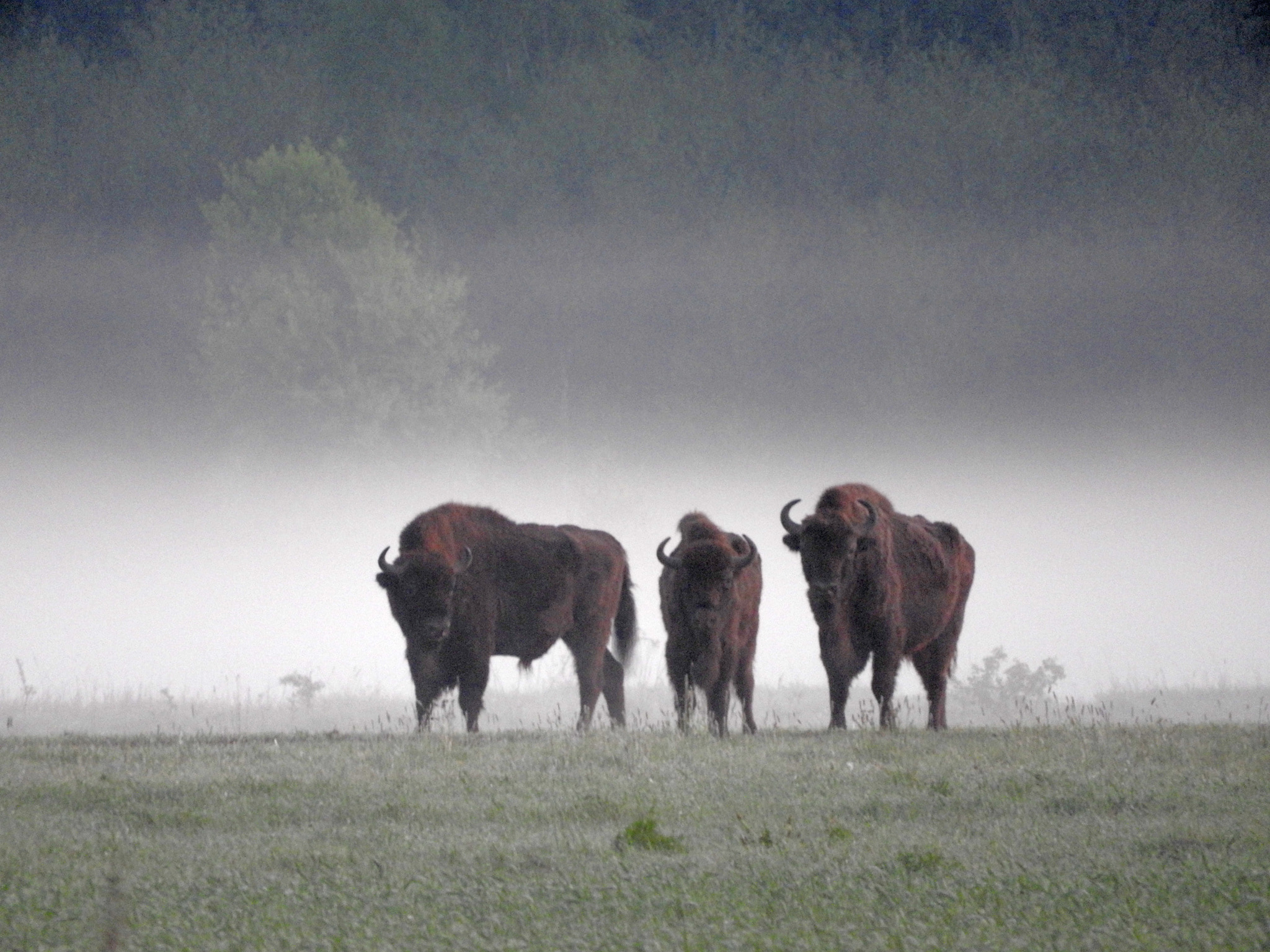
The European bison lives in herds. A herd has 8–13 animals on average, mostly cows and young, and a cow leads it. Adult bulls live apart and join the herds only in the rut. The rut runs from August to October. Bulls then fight each other and sometimes injure each other badly. Gestation lasts about 264 days, and the cow usually gives birth to a single calf between May and July. A newborn female calf weighs about 24 kg, a male 28 kg. Calves start eating grass at 19–22 days and suckle for about five months. They mature at 1.5–2 years, and a cow has her first calf at about 4. In the wild it lives 18–24 years, females longer than males, and up to 30 years in captivity.
Globally the European bison is Near Threatened (NT, 2020). The 2020 assessment moved it down from Vulnerable (VU) because the wild population grew from about 1,800 animals in 2003 to more than 6,200 in 2019. Of 47 free-ranging herds, only eight are large enough to be genetically viable in the long term. Most herds are isolated from each other and live in forests that do not suit them well. The European bison is not on Georgia's 2014 Red List. A 2021 national assessment rates it Extinct (EX) in Georgia. In the early 20th century the species survived only in captivity, and it was returned to the wild in the 1950s. The pure Caucasian subspecies is extinct, and its genes survive only in a mixed lowland-Caucasian line.
Related guides
Continue with related pages
No, the European bison is extinct in Georgia. In the 19th and early 20th centuries it lived at the headwaters of the Bzyb, Kodori and Enguri. A 2021 national assessment rates it Extinct (EX) in Georgia. No wild bison live in Georgia today.
In the mountain forests of the western Caucasus, at the headwaters of the Bzyb, Kodori and Enguri. Its exact historical range is not known. Archaeological remains suggest it once lived across the whole Greater and Lesser Caucasus.
It is a massive, brownish wild ox with a high hump over the shoulders. Long hair forms a mane on the front of the body and a beard on the throat and chin. Its black, smooth horns curve to the side and forward. The hair on its head and forehead is curly.
A bull stands 1.8–2.1 m at the shoulder and weighs 615–920 kg. A cow is smaller: 1.69–1.97 m and 424–633 kg. The Caucasian bison was smaller than the lowland one: its bulls weighed about 480 kg on average.
Grasses, sedges and other herbs, plus shoots, bark and leaves of trees and shrubs. In summer an adult bull eats about 32 kg of food a day. It needs water every day. Food is scarce in the forest in winter, so in some places bison are fed hay.
There is no risk in Georgia, because wild bison no longer live here. It is a huge, powerful animal, though, and bulls fight each other in the rut. Bison that move onto farmland often come into conflict with people. Watch a wild bison from a distance and do not approach it.
Globally it is Near Threatened (NT, 2020). It is not on Georgia's 2014 Red List. A 2021 national assessment rates it Extinct (EX) in Georgia.
References
What this profile is based on
Species profiles are compiled from peer-reviewed literature and established biodiversity databases, and are reviewed as new taxonomic and conservation data become available.
Prepared by the Reptiles.ge editorial team from the sources listed here.


