


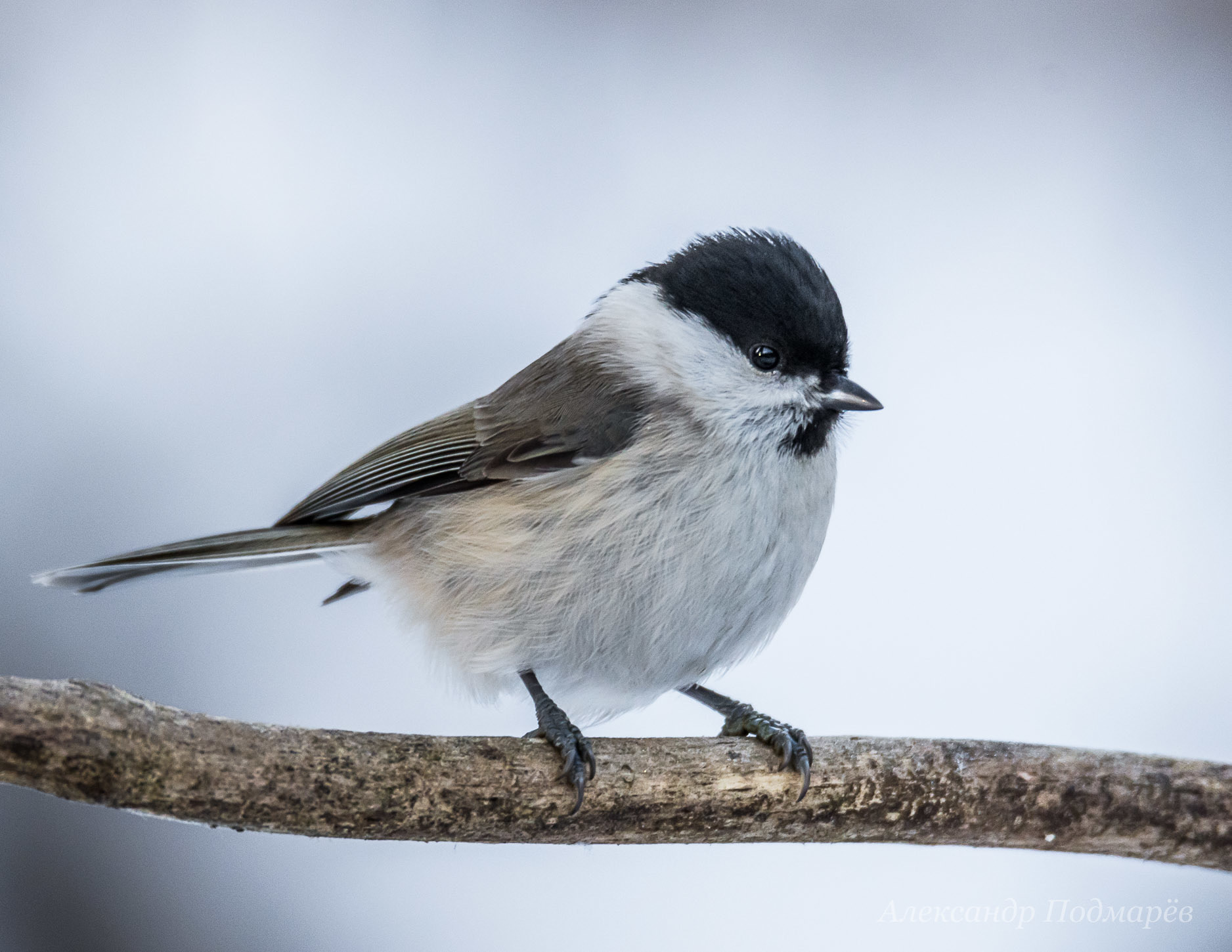

Marsh tit
Poecile palustris
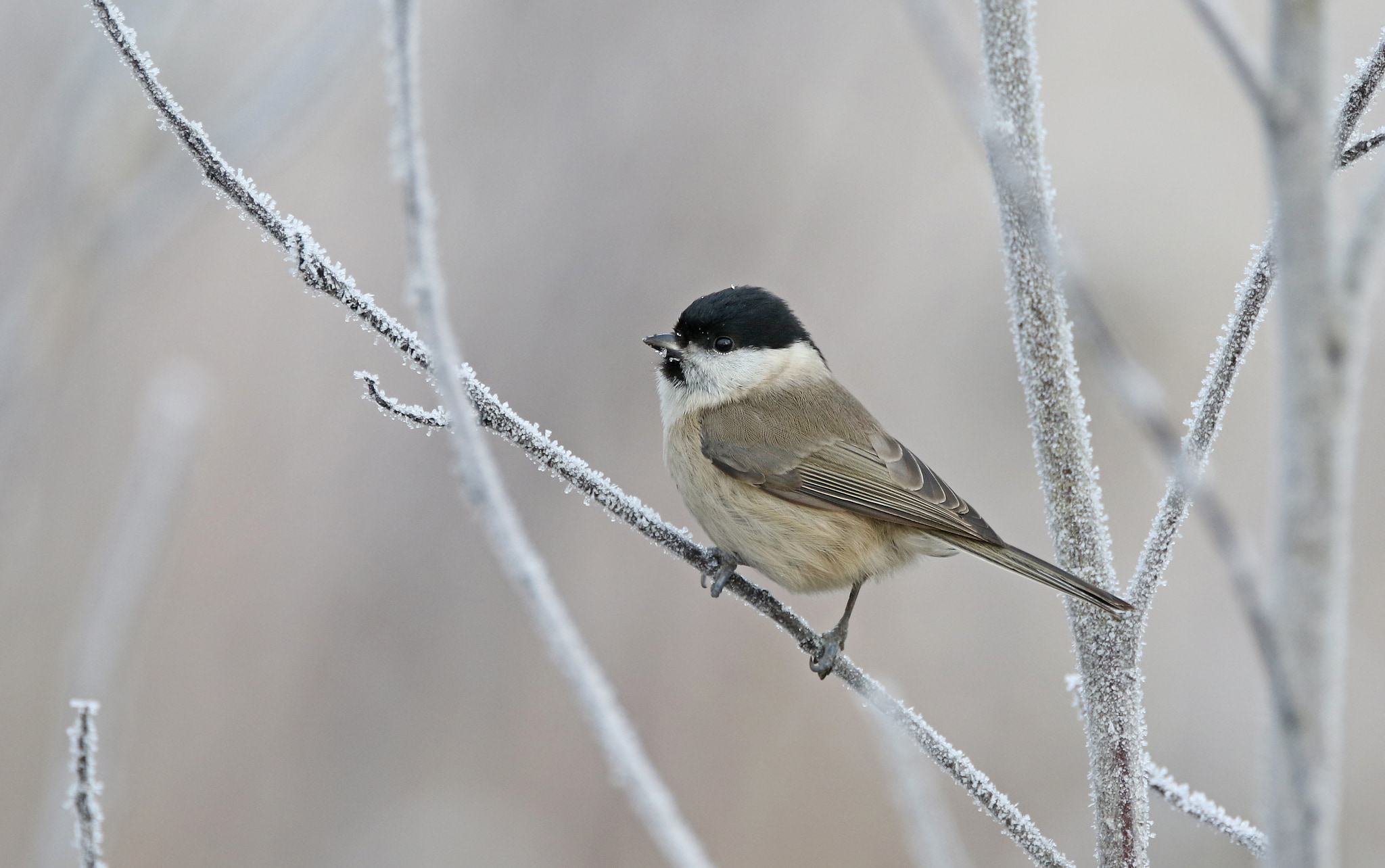
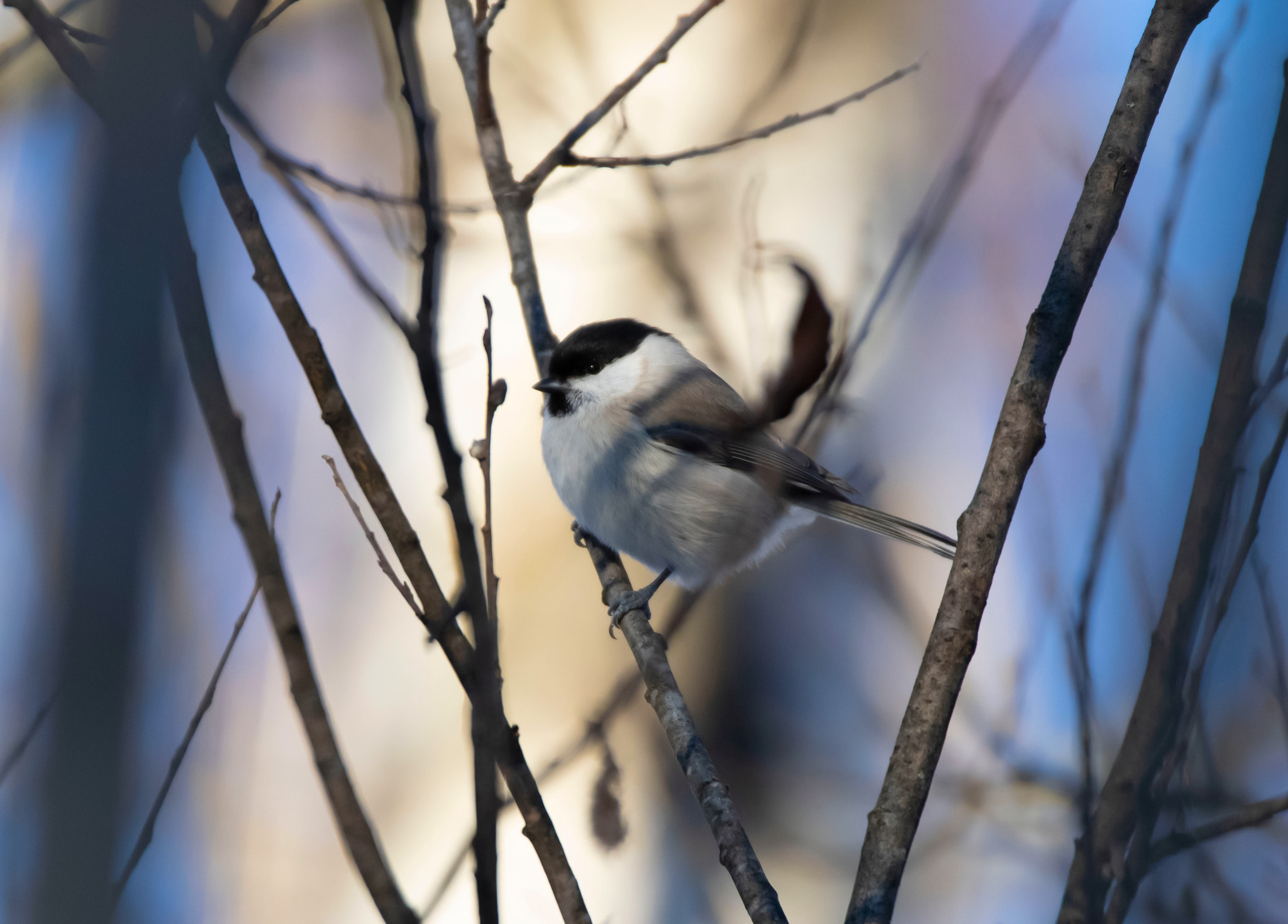
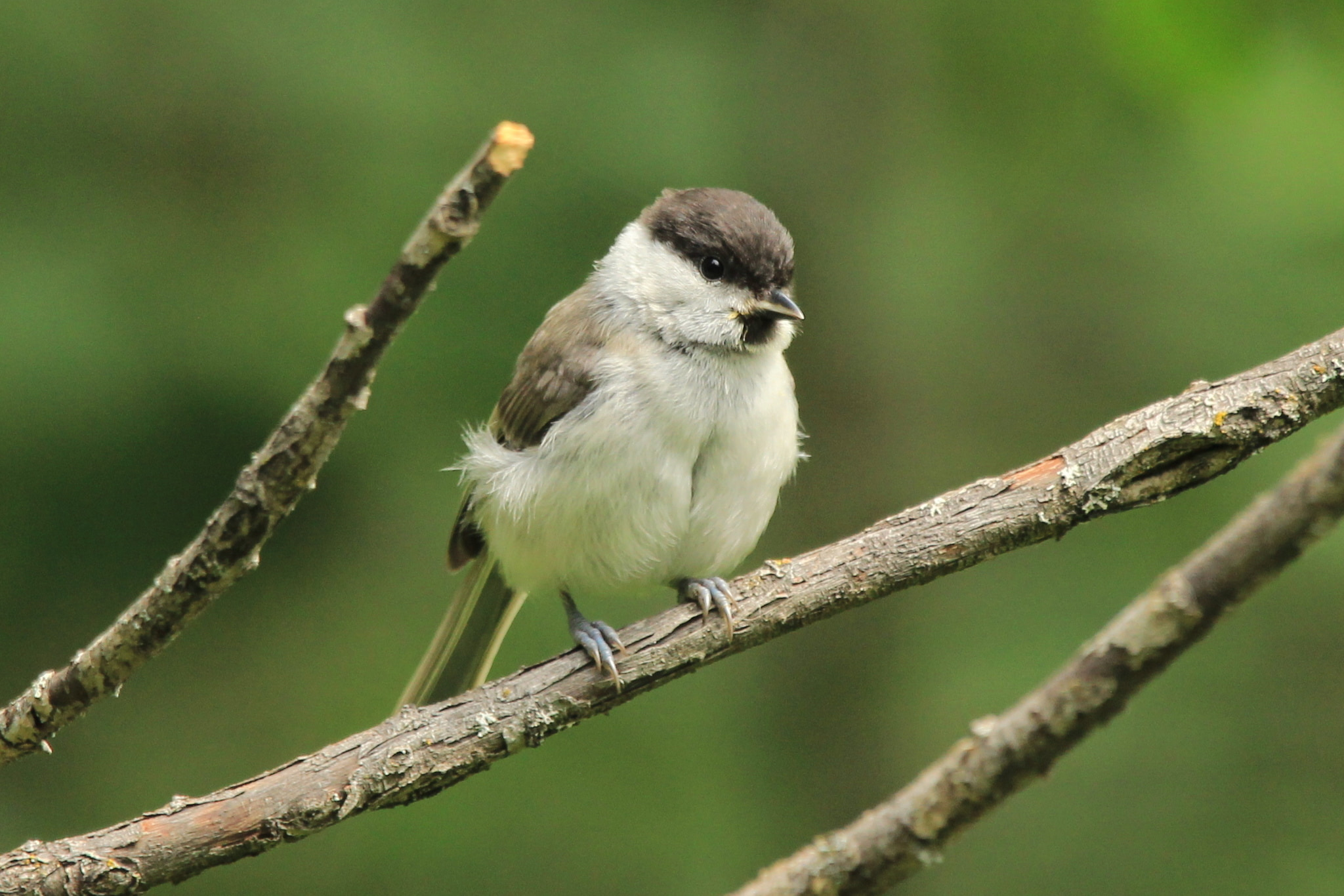
zveroboy57 · Krasnokamsky District
Key facts in one look
- Size
- 11.5–12 cm
- Diet
- Insects, spiders; seeds, especially beech mast
- Status in Georgia
- Year-round resident, breeds
- Habitat
- Moist broadleaved woodland, riverside trees, gardens
- Family
- Paridae
- Protection
- Globally LC, 2017; in Georgia NE, 2021
The marsh tit hides seeds and remembers where it put them, which is probably why it stays on its territory all year. It is a small tit with a greyish-brown back, a glossy black cap and white cheeks. In Georgia it lives and breeds all year round. It is a bird of moist broadleaved woodland, often oak or beech. It is very hard to tell from the willow tit by looks, so listen to its voice.
Identification
Marsh tit: how to identify it
A small tit, 11.5–12 cm long and 12 g. The cap and nape are glossy black, the cheeks white, with a small black bib under the bill. The back, wings and tail are greyish brown. The willow tit looks almost the same, so the voice is the most reliable mark.
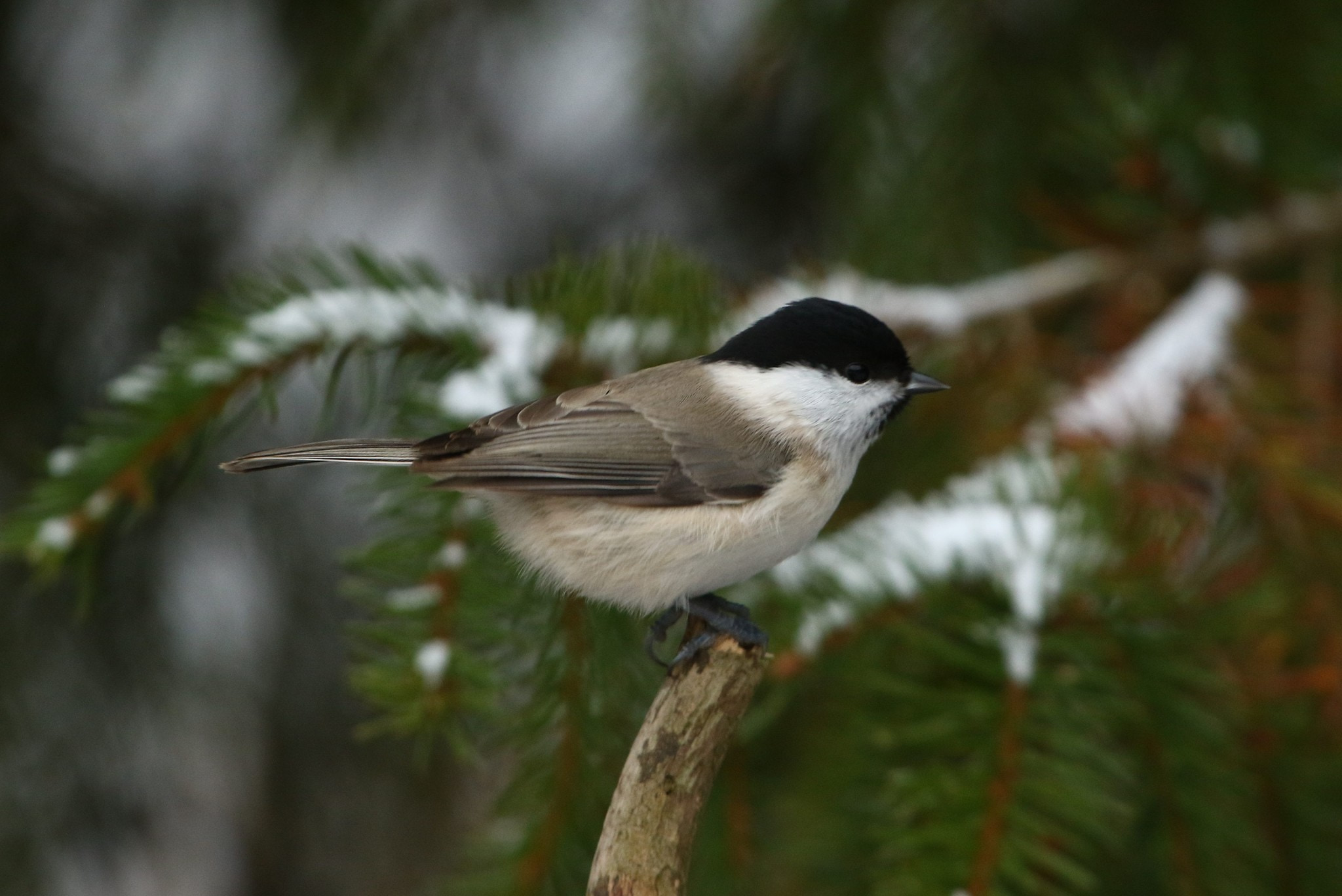
Length 11.5–12 cm, weight 12 g, wingspan 19 cm. The head is small and short, in proportion to the body. The markings are crisp and neat.
The cap and nape are black, with a blue sheen at close range. The black bib under the bill is small, the cheeks white, turning dusky brown on the ear coverts. The upperparts, wings and tail are greyish brown, the underparts off-white with a buff or brown tinge on the flanks. Young birds have a duller cap and bib.
The willow tit has a pale wing panel, a less glossy cap, a bigger bib and looks bull-necked. None of these marks is fully reliable: a young marsh tit can show a pale wing panel too. The best way to tell the two apart is by voice: the marsh tit gives an explosive "pitchou".
Colour
Swatches are illustrative. Do not identify a species by colour alone.
It is a bird of moist broadleaved woodland, often oak or beech. It also lives in alder woods, riverside trees, parks, gardens and orchards. It looks for a dense shrub layer under the canopy and avoids parts of a wood with little undergrowth. In Europe it breeds mostly in the lowlands, up to 1300 m. In the Caucasus it occurs on both slopes of the Greater Caucasus. In Georgia it has been seen in Samtskhe-Javakheti, around Borjomi, and once in Adjara.
The marsh tit lives and breeds in Georgia all year round. Almost all records come from Samtskhe-Javakheti, around Borjomi, and it has also been seen once in Adjara. Records run from April to December, November and December included, so it is still seen at the start of winter. The oldest record is a museum specimen collected in Samtskhe-Javakheti in December 1897.
Data: Reptiles.ge + iNaturalist · Methodology
- Field observation
- Several records in one spot
- Region with records
In spring and summer it eats mostly spiders and insects, caterpillars among them. In autumn and winter it turns to seeds, nuts and berries, thistle seeds included. Beech mast is its favourite food. In winter it also comes to feeders at the forest edge for sunflower seeds. It hides large numbers of seeds: on and in the ground, in leaf litter, in stumps, under moss and lichen on trees. In one study the birds ate 43 seeds an hour and hid 83. It takes the oldest stores first and remembers the hiding places rather than searching at random. Its hippocampus is 31% bigger than the great tit's, although the great tit is the larger bird.
It is a resident bird: most stay on their breeding territory all year. In winter the young join mixed flocks, and such a flock seldom holds more than one or two marsh tits. It moves nimbly among the branches and often hangs upside down by one leg. The most typical call is an explosive "pitchou", which often runs into "pitchou-bee-bee-bee". Unlike many tits, it has a well-defined song, such as a ringing "schip-schip-schip". Pairs often stay together for life. It nests in a tree hole, sometimes in a wall or in the ground, and also uses nest boxes. It does not dig its own hole: it picks an existing hollow and sometimes enlarges it. The nest is made of moss, lined with hair. In late April or May it lays 5–9 white eggs speckled with red. The female incubates for 14–16 days, and the chicks leave the nest after 18–21 days.
Globally the marsh tit's risk of extinction is rated low (LC, 2017). It is widespread in temperate Europe and northern Asia, but declining in places: in Britain its numbers fell by more than 50% between the 1970s and 2007. One cause is thought to be the loss of the woodland shrub layer, for example through browsing by deer. In Georgia's national assessment (2021) it was not assessed (NE). The list of the birds of Georgia gives it as a year-round resident and breeder.
Related guides
Continue with related pages
Yes. It lives and breeds in Georgia all year round. In the Caucasus the subspecies P. p. kabardensis lives on both slopes of the Greater Caucasus. In Georgia it has been seen in Samtskhe-Javakheti, around Borjomi, and once in Adjara. It is a resident bird, so it stays here in winter too.
By looks, only with great difficulty. The marsh tit has a glossier cap, a smaller bib and usually no pale wing panel. In young birds this mark does not work. The voice is the most reliable: the explosive "pitchou" is the marsh tit's call.
In spring and summer mostly spiders and insects. In autumn and winter seeds, nuts and berries, above all beech mast. It hides seeds and remembers the hiding places. At feeders it comes for sunflower seeds.
In a tree hole, sometimes in a wall or in the ground. It does not dig its own hole; it picks an existing hollow and sometimes enlarges it. It also uses nest boxes. In late April or May it lays 5–9 eggs.
No, it is a resident bird. Most stay on their breeding territory all year, probably because they live on stored seeds. In winter it sometimes joins mixed flocks of other tits.
No, it is harmless to people. Globally its risk of extinction is low (LC, 2017), although its numbers are falling in places. In Georgia's national assessment (2021) it was not assessed (NE). Do not catch wild birds.
References
What this profile is based on
Species profiles are compiled from peer-reviewed literature and established biodiversity databases, and are reviewed as new taxonomic and conservation data become available.
Prepared by the Reptiles.ge editorial team from the sources listed here.


