


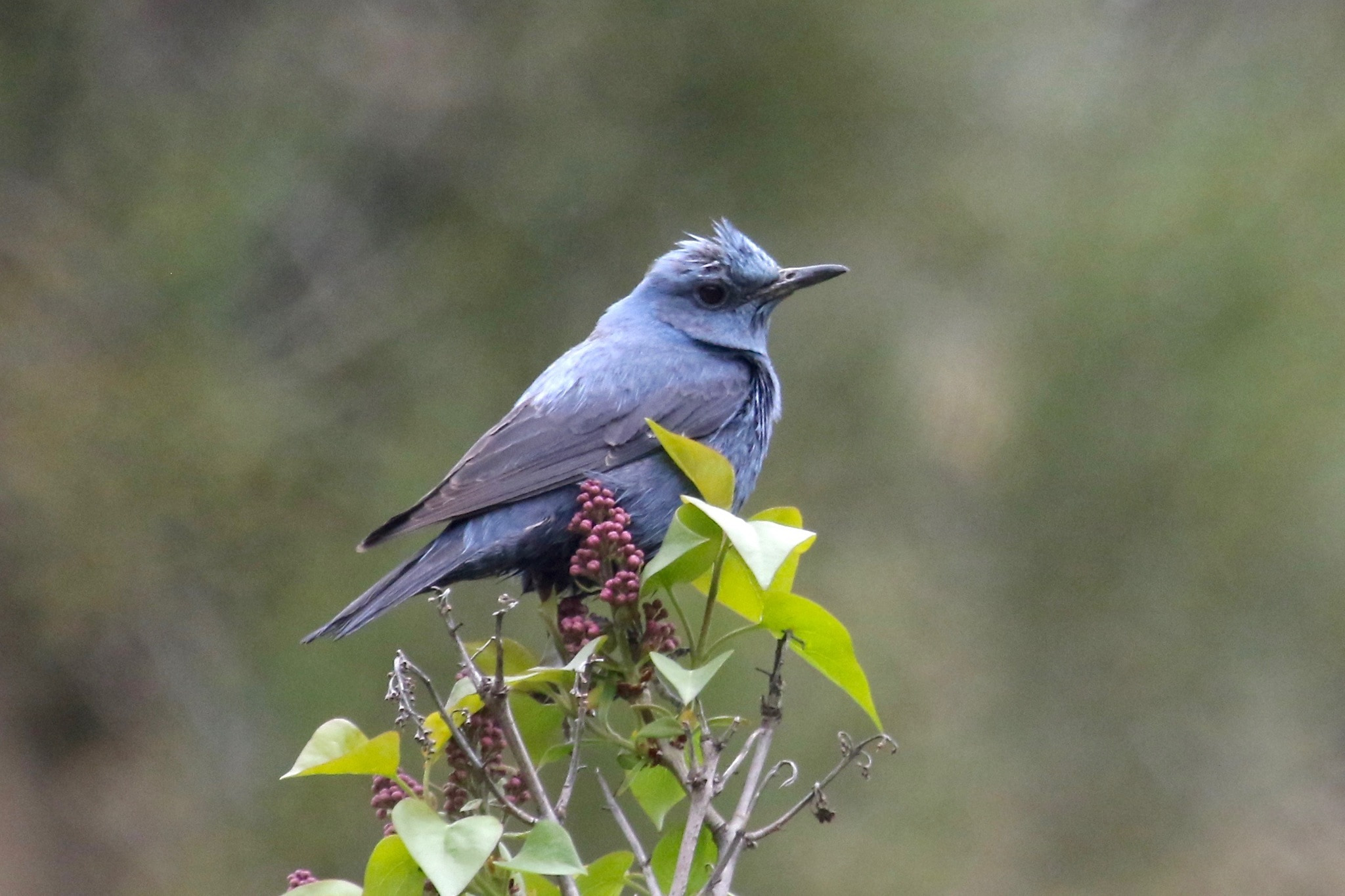

Blue rock thrush
Monticola solitarius
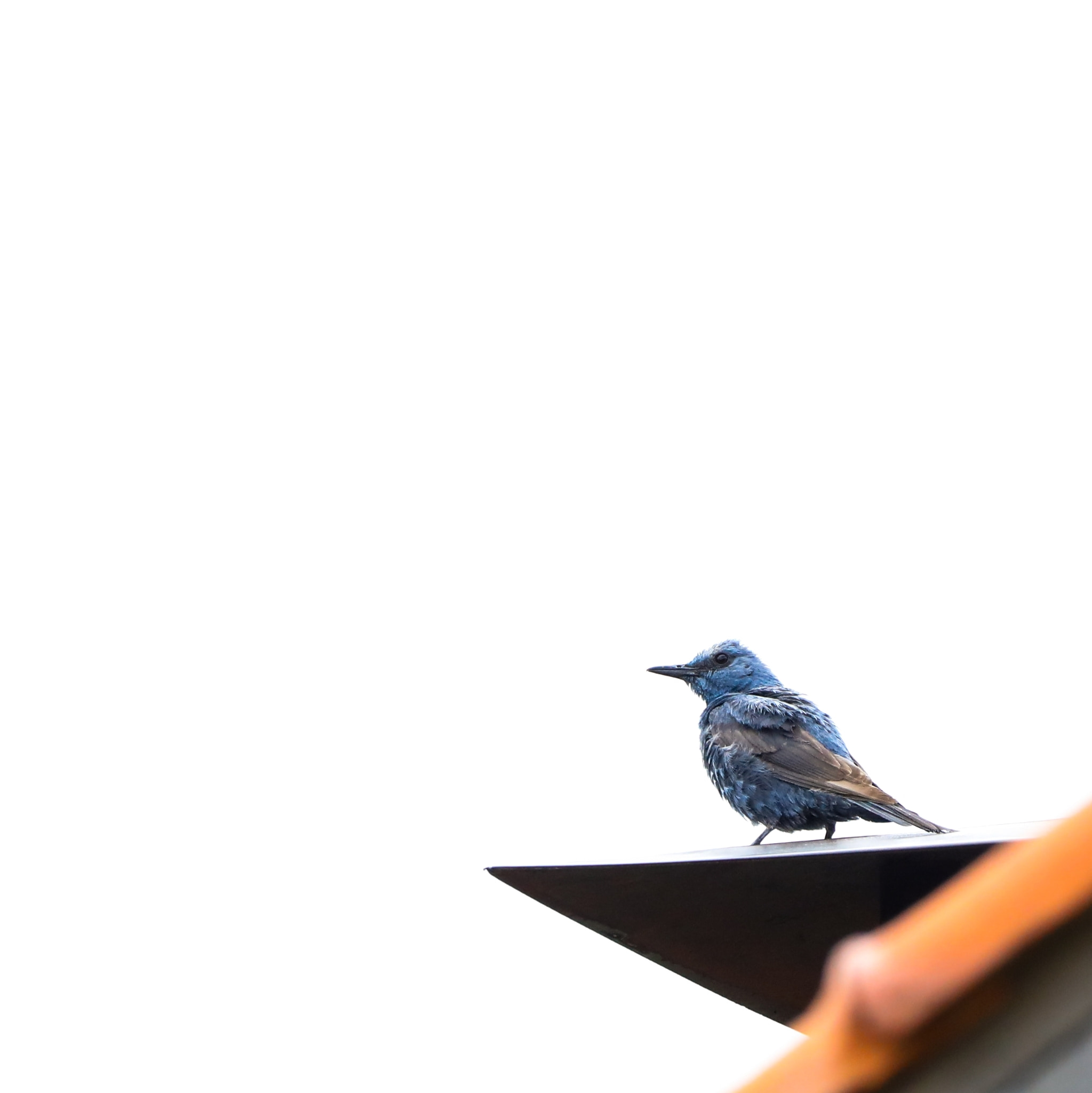
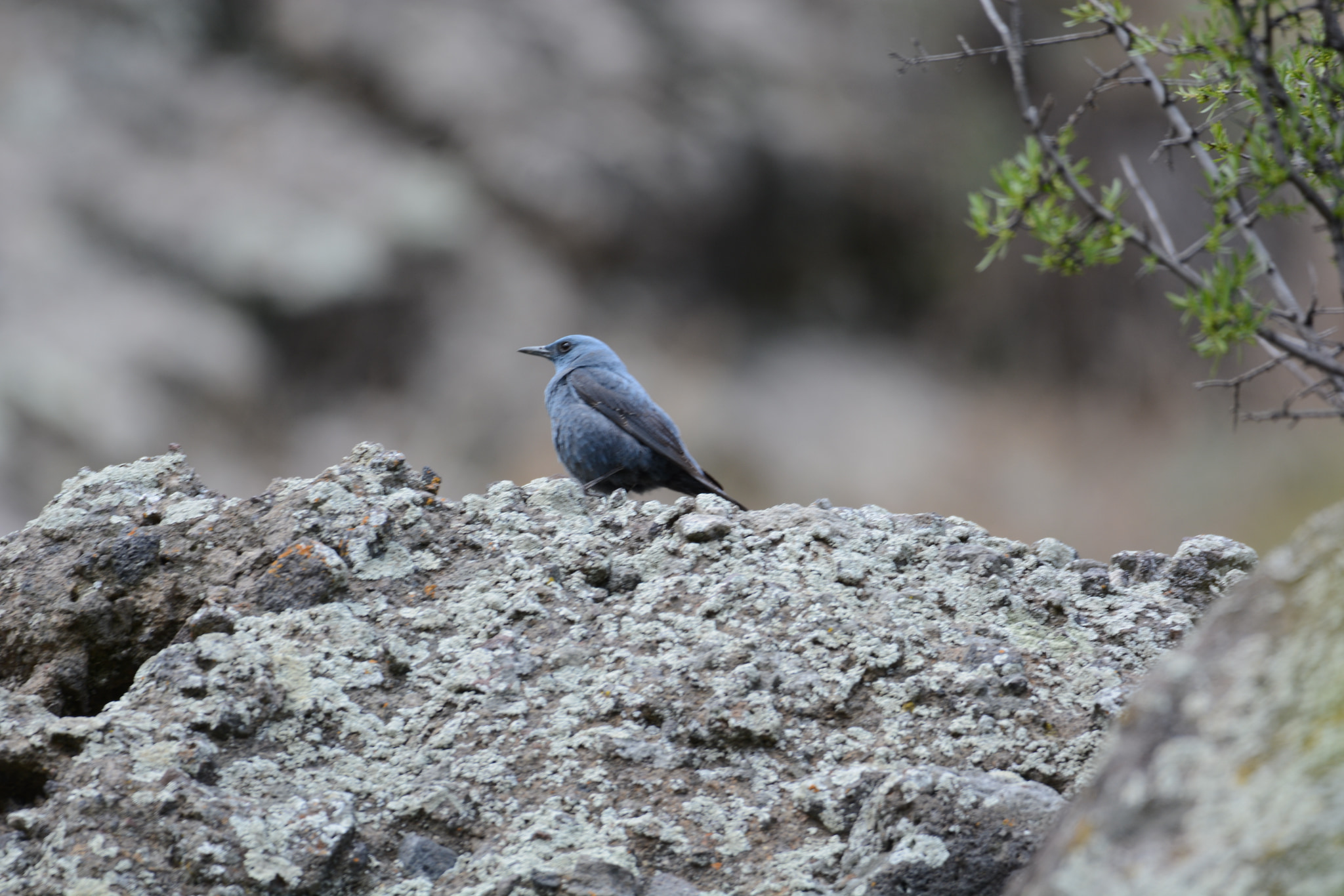
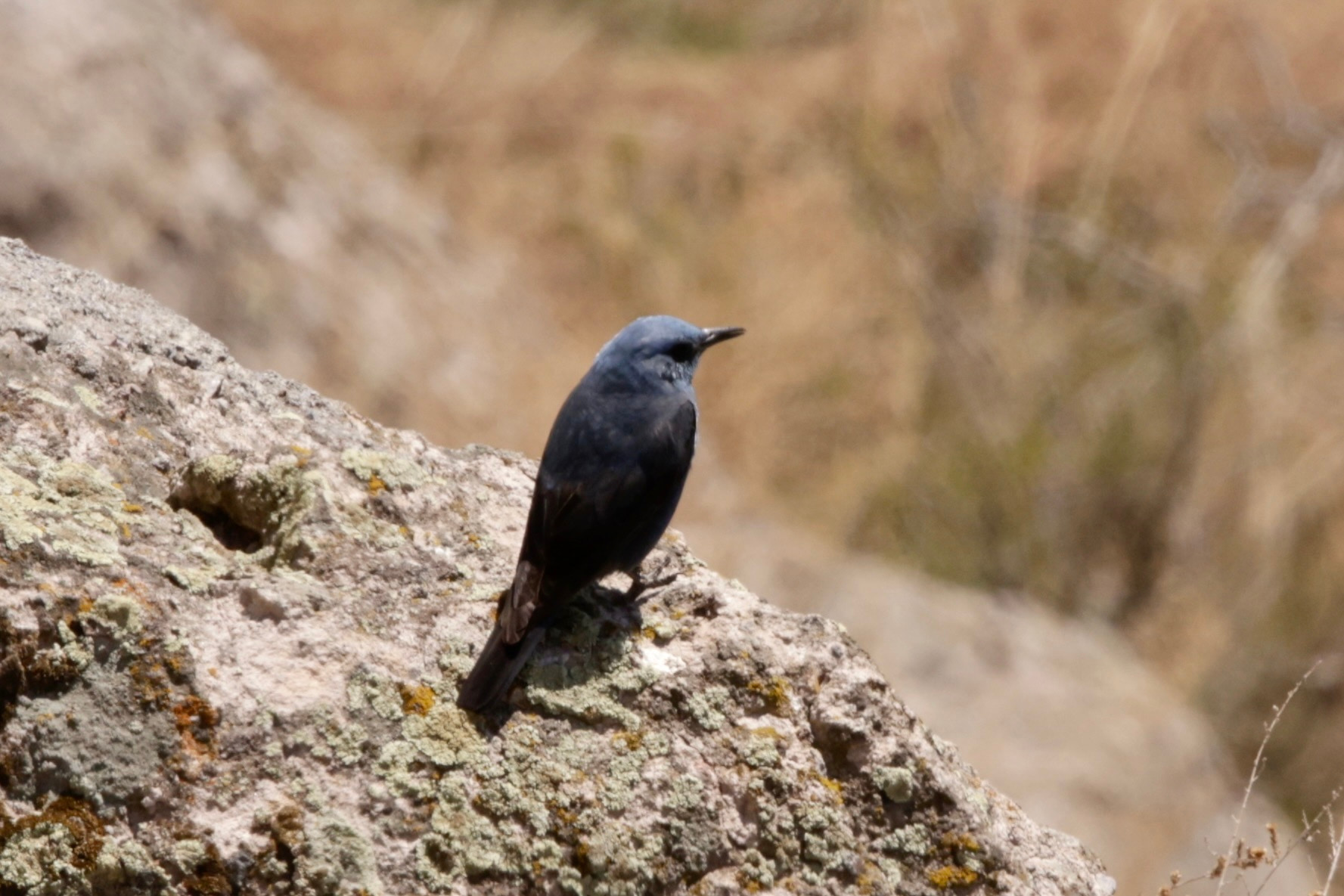
abcdefgewing · Mtskheta-Mtianeti Georgia field photo
Key facts in one look
- Size
- 21–23 cm
- Diet
- Insects, small reptiles, berries and seeds
- Status in Georgia
- Breeding bird and passage migrant
- Recorded regions
- Samtskhe-Javakheti; Kakheti
- Habitat
- Rocky gorges, cliffs and old buildings
- Family
- Muscicapidae
- Protection
- Globally LC, 2016; in Georgia LC, 2021
The blue rock thrush (Monticola solitarius) is a starling-sized bird, 21–23 cm long, with a long, slim bill. The breeding male is unmistakable: its whole plumage is blue-grey, with only the wings darker. The female is dark brown, with scaly underparts. The male's song is clear and melodious, like the rufous-tailed rock thrush's but louder. In Georgia it is a breeding bird and a migrant: it is seen from April to October. It has been seen most often in Aspindza municipality, around Vardzia and Gogasheni, and also in Dedoplistskaro municipality. It is not dangerous to people.
Identification
Blue rock thrush: how to identify it
A starling-sized bird, 21–23 cm long, with a long, slim bill. The breeding male is blue-grey all over, with darker wings. The female is dark brown, with scaly underparts.
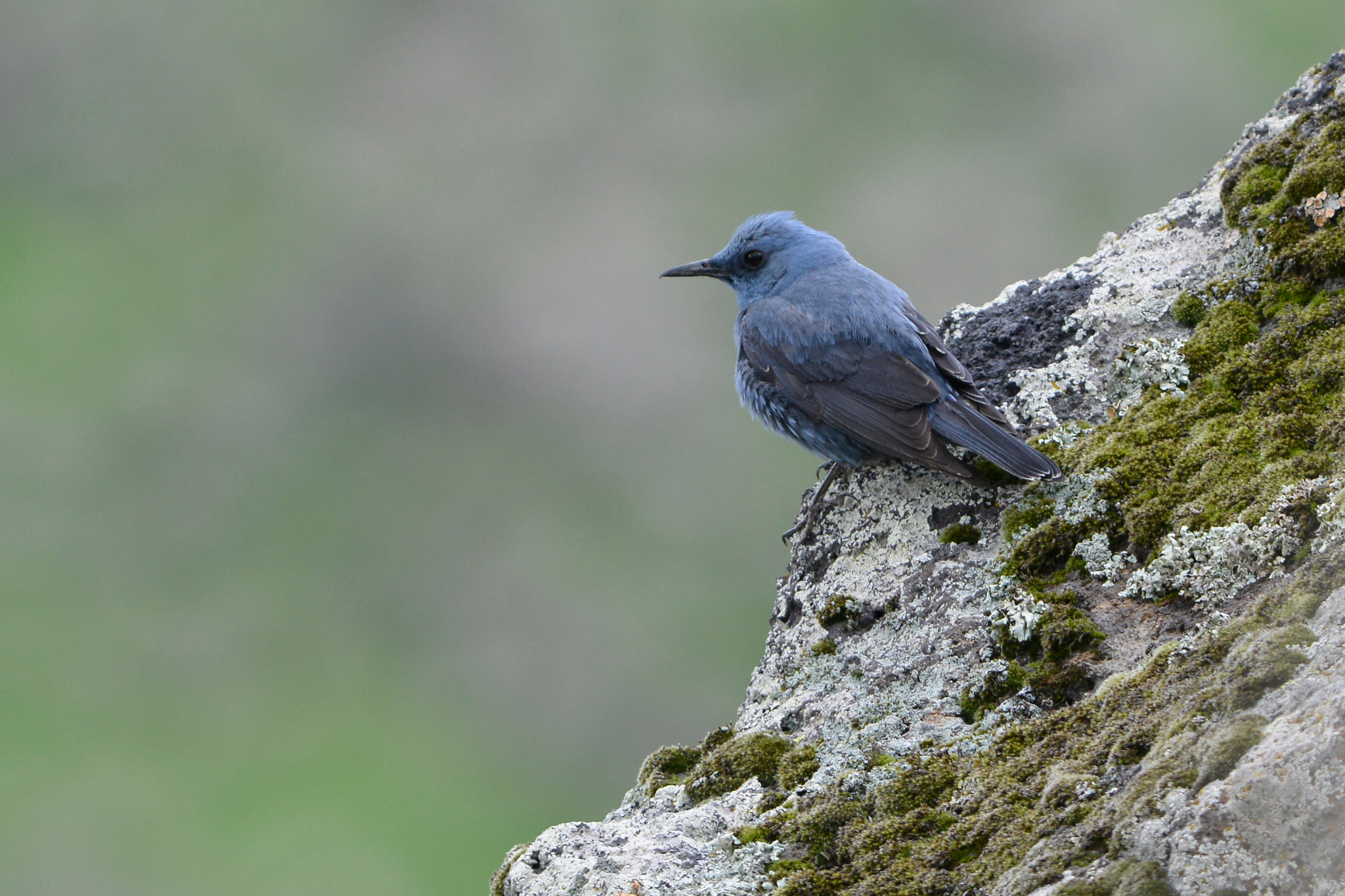
It is 21–23 cm long, about the size of a starling. The bill is long, slim and black, and the legs are blackish.
The breeding male is blue-grey from head to tail, with only the wings darker. Females and young birds are dark brown above and paler brown and scaly below.
The male rufous-tailed rock thrush has orange underparts and a white back. Females of both species are brown, but the blue rock thrush lacks the rufous tail sides of the rufous-tailed rock thrush. The blue rock thrush is also larger and longer-tailed.
Colour
Swatches are illustrative. Do not identify a species by colour alone.
It breeds in open, mountainous country: mountain valleys with rock walls up to 3,000 m, rocky sea coasts, the ruins of old buildings and sometimes settlements. It nests in a rock crevice, a small cave or a wall. It often lives near water, because it drinks a lot and bathes every day. In Georgia it is seen most often in Samtskhe-Javakheti: in Aspindza municipality near Vardzia and Gogasheni, in Akhaltsikhe at Rabati fortress, and in Akhalkalaki municipality. In Kakheti it has been seen in Dedoplistskaro municipality near Chachuna and near Udabno. Single birds have also been seen in the Gori and Bolnisi municipalities.
The blue rock thrush map combines public iNaturalist observations. Regions are taken from the records-by-region table, and the status column separates regions with enough records from regions with too few records. Record counts reflect observation effort rather than population density. Two regions have enough records: Samtskhe-Javakheti and Kakheti.
Data: Reptiles.ge + iNaturalist · Methodology
- Field observation
- Several records in one spot
- Photo record
- Region with records
It is omnivorous: it eats a wide range of insects and their larvae, small reptiles, berries and seeds. It hunts by waiting: it sits on a high perch until an insect comes into view. It picks berries up from the ground or plucks them from plants.
European and North African birds are mainly resident, apart from altitudinal movements, while some Asian populations migrate to Africa, India and Southeast Asia for the winter. The male sings from the top of a rock, and sometimes in flight with its tail spread, ending the song with a dive. The song carries especially well in the evening or in rain, when other birds fall silent. It is a rather shy bird. A pair returns to the same nest site every year. The nest is made of grass stems and roots and lined with softer material. It usually lays 3–5 eggs.
Related guides
Continue with related pages
Yes. In Georgia it is a breeding bird and a migrant. Photographed birds have been seen from April to October, most of them in May, June and September.
Most often in Samtskhe-Javakheti, around Vardzia and Gogasheni and in Akhaltsikhe at Rabati fortress. In Kakheti it has been seen in Dedoplistskaro municipality near Chachuna and near Udabno. Look in rocky gorges, on steep walls and on fortress ruins.
The breeding male is blue-grey all over, with darker wings, and about the size of a starling. The female is dark brown, with scaly underparts. It often sits on top of a rock and sings from there.
The male rufous-tailed rock thrush has orange underparts and a white back, while the male blue rock thrush is blue-grey all over. Females of both are brown, but only the rufous-tailed rock thrush has rufous tail sides. The blue rock thrush is larger and longer-tailed.
Insects and their larvae, small reptiles, berries and seeds. It waits on a high perch until prey appears. It drinks a lot and bathes every day, so it often lives near water.
It is harmless to people. Globally its risk of extinction is low (LC, 2016), and in Georgia's national assessment (2021) it is also LC, with stable numbers. It is a wild bird, so do not catch it or touch its nest.
References
What this profile is based on
Species profiles are compiled from peer-reviewed literature and established biodiversity databases, and are reviewed as new taxonomic and conservation data become available.
Prepared by the Reptiles.ge editorial team from the sources listed here.


