


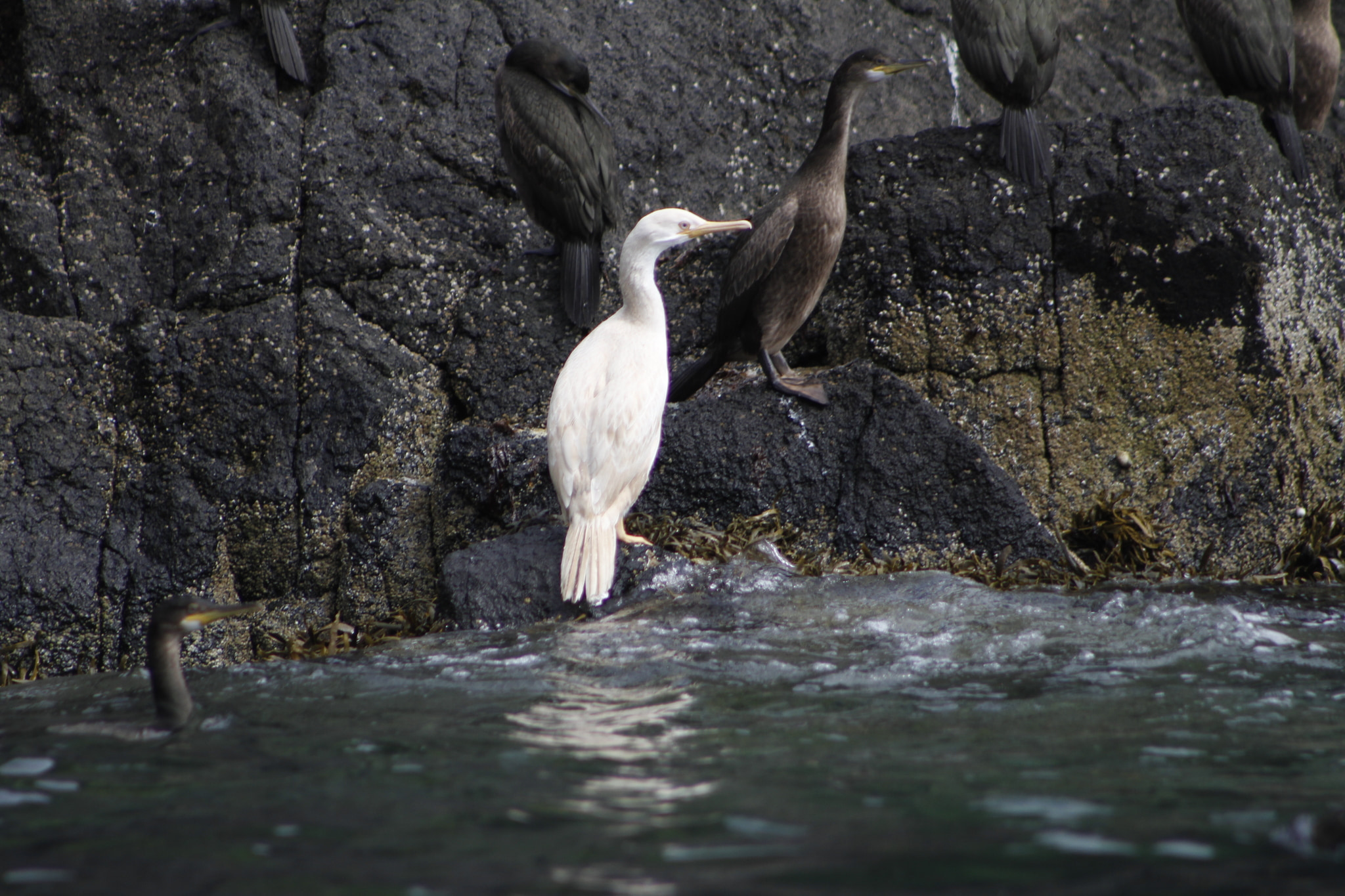

European shag
Gulosus aristotelis
Stergios Vasilis · near Markelou islet
Key facts in one look
- Size
- 68–78 cm; wingspan 95–110 cm
- Diet
- Sea fish
- Status in Georgia
- Winter visitor, does not breed
- Habitat
- Rocky sea coasts
- Family
- Phalacrocoracidae
- Protection
- Global LC, 2018; Georgia NE, 2021
The European shag is one of the deepest divers among the cormorants: it has been recorded diving to 61 m. It is smaller and lighter than the great cormorant, with a thin bill and black plumage with a green sheen. In the breeding season it grows a small crest on the head, which gives it its Georgian name. It lives almost only at sea and is rare on inland waters. In Georgia it is a winter visitor and does not breed. If you see a black cormorant on the coast, first check the bill and the size: the great cormorant is bulkier.
Identification
European shag: how to identify it
A black seabird 68–78 cm long, with a wingspan of 95–110 cm. The plumage has a metallic green sheen, the bill is thin and there is a yellow patch on the throat. It looks like a great cormorant but is smaller and lighter.
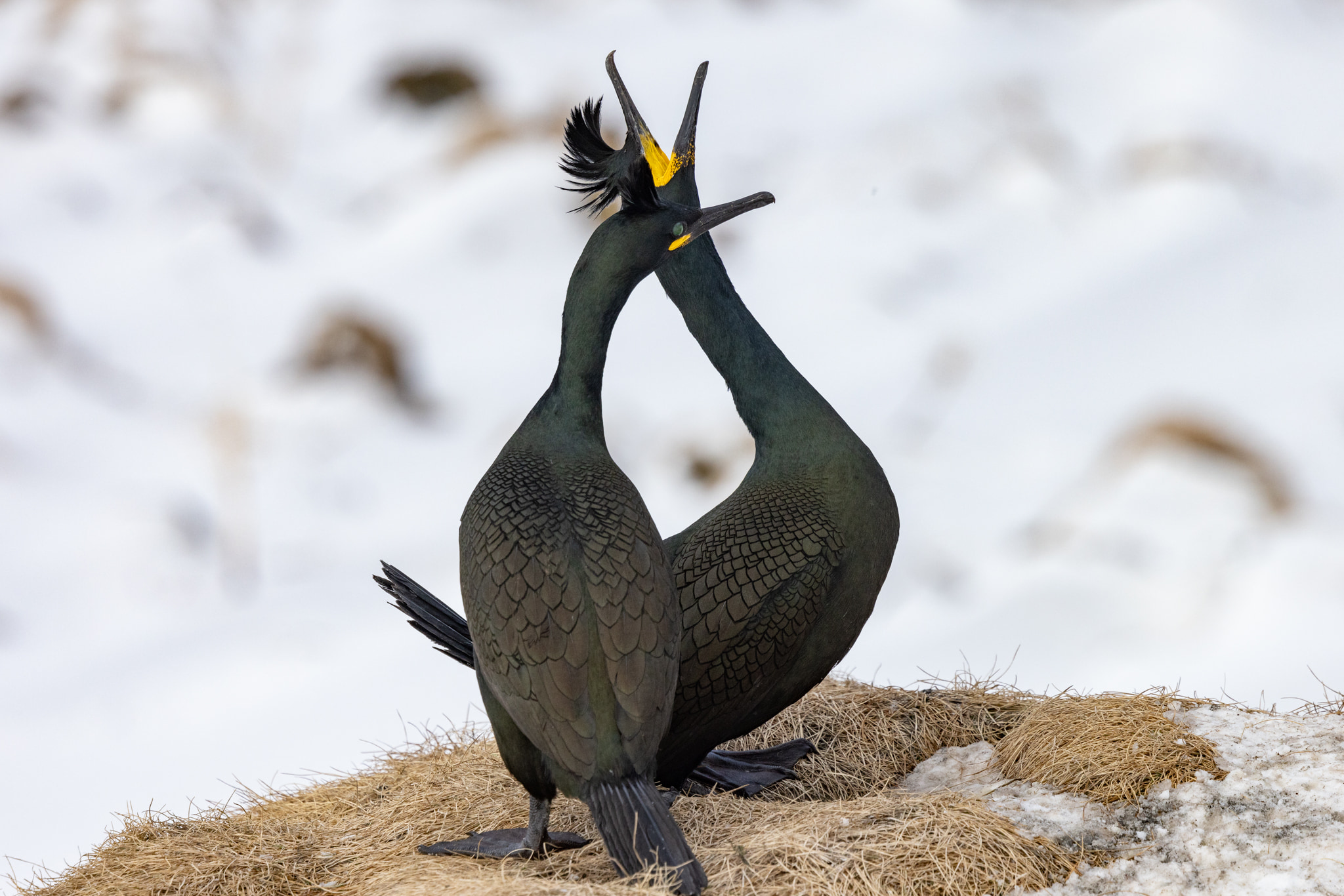
Length 68–78 cm, wingspan 95–110 cm. The tail is long, with 12 feathers. The bill is long and thin, and there is a yellow patch on the throat.
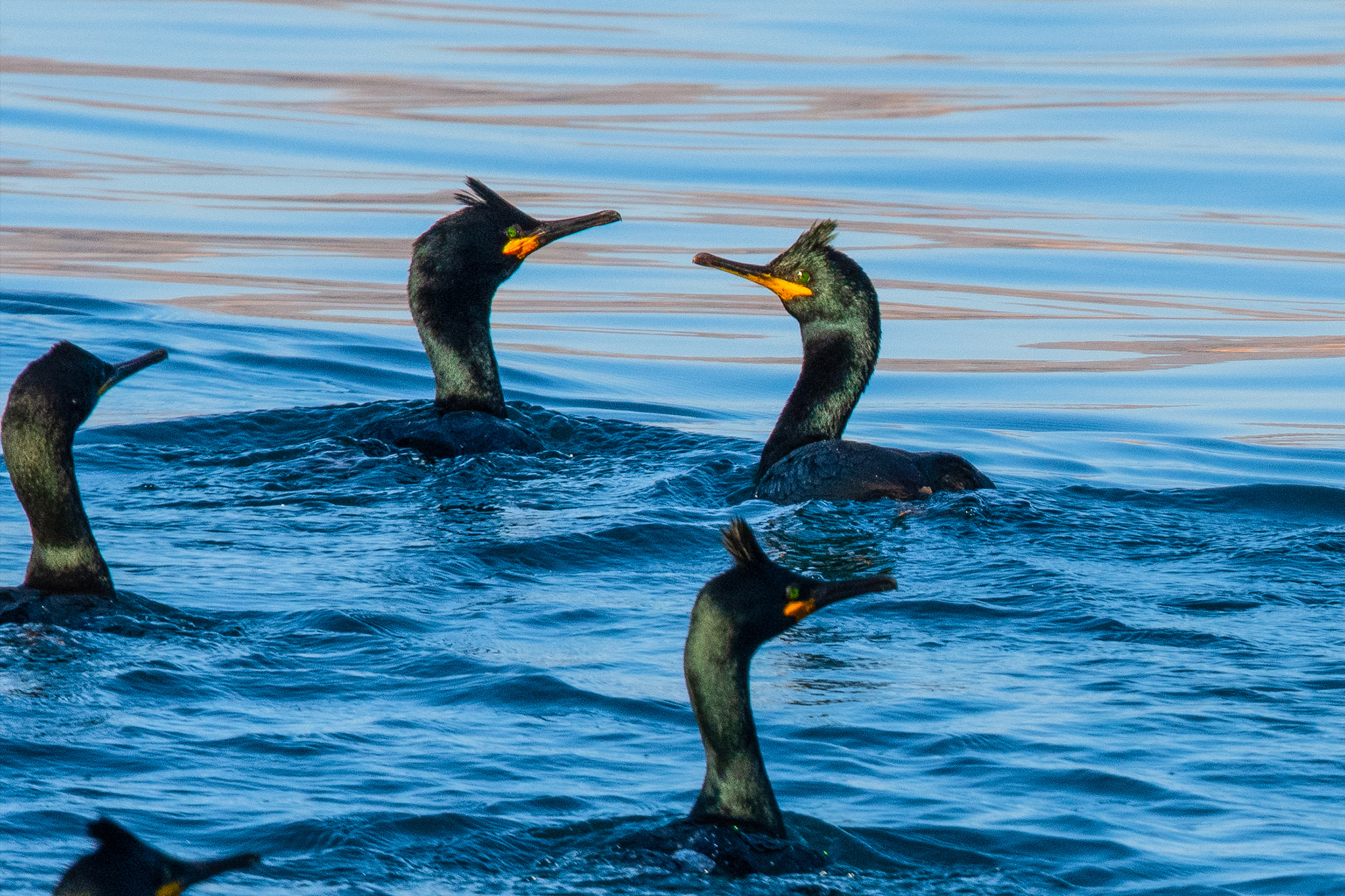
The adult is all black with a metallic green sheen, which is why it is sometimes called the green cormorant. In the breeding season it has a small crest on the head and yellow bare skin at the base of the bill. In winter plumage it has no crest.
The great cormorant is larger and bulkier, with a thicker bill, no crest and a purplish, not green, sheen. It has a white patch on the cheeks and throat, which the shag lacks. A young shag has a dark belly, a young great cormorant a pale one. If the bird is on inland water, it is more likely a great cormorant.
Colour
Swatches are illustrative. Do not identify a species by colour alone.
Often confused with

It is a bird of rocky sea coasts. It nests on cliff ledges, in crevices and in small caves, and mostly winters within its breeding range. In winter it uses any coast that is well supplied with fish. Unlike the great cormorant, it is rare on inland waters. The subspecies G. a. desmarestii lives on the coasts of the Black Sea and the Mediterranean. In Georgia it is a winter visitor and does not breed.
The European shag is a winter visitor to Georgia and does not breed here. All records come from the sea coast of Adjara: the Chorokhi delta, the Batumi and Makhinjauri area and Kobuleti. Most records fall in October, the rest between September and March, and one in June. It is seen at sea as single birds or small groups of up to four.
Data: Reptiles.ge + iNaturalist · Methodology
- Field observation
- Several records in one spot
- Region with records
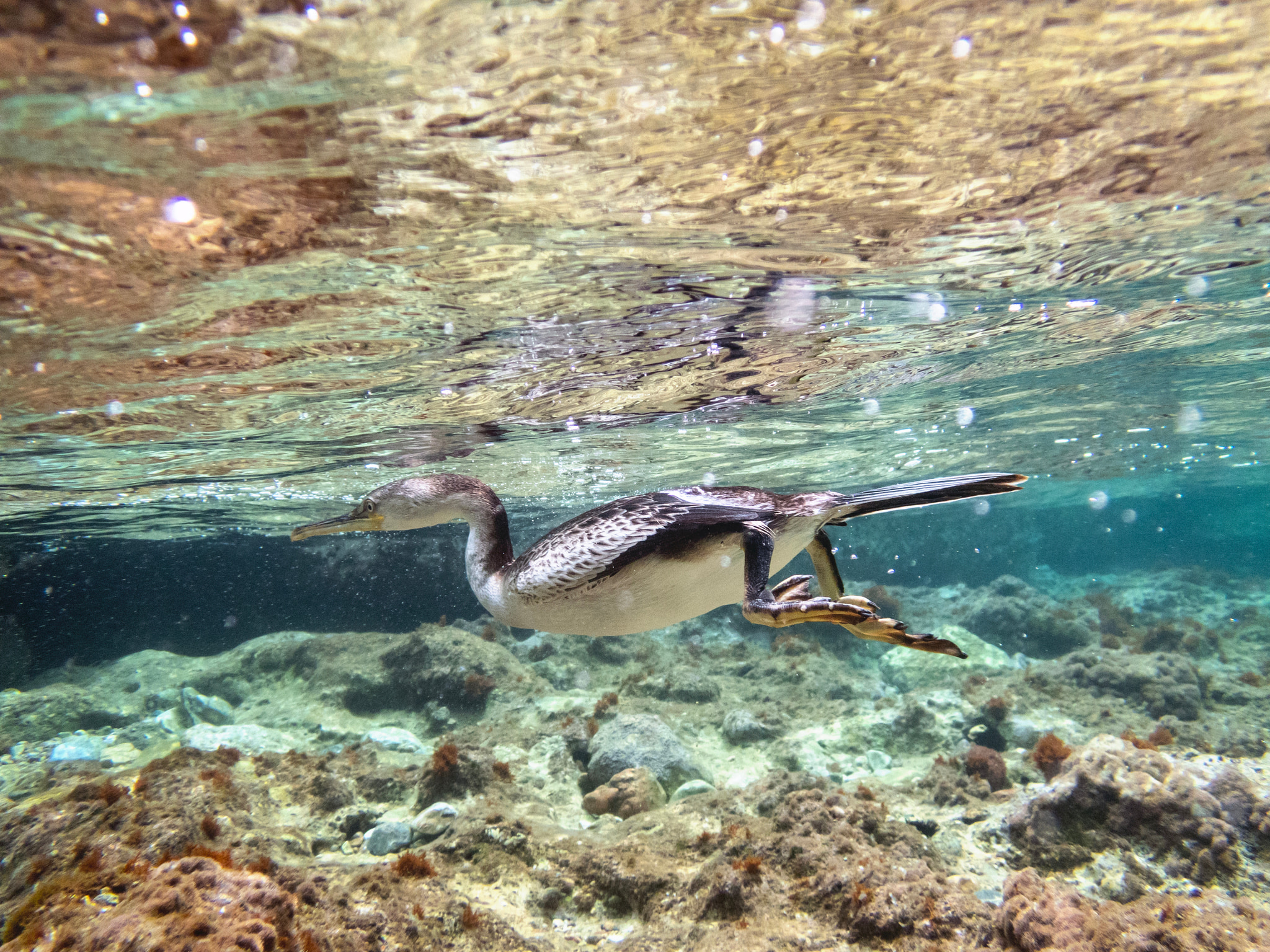
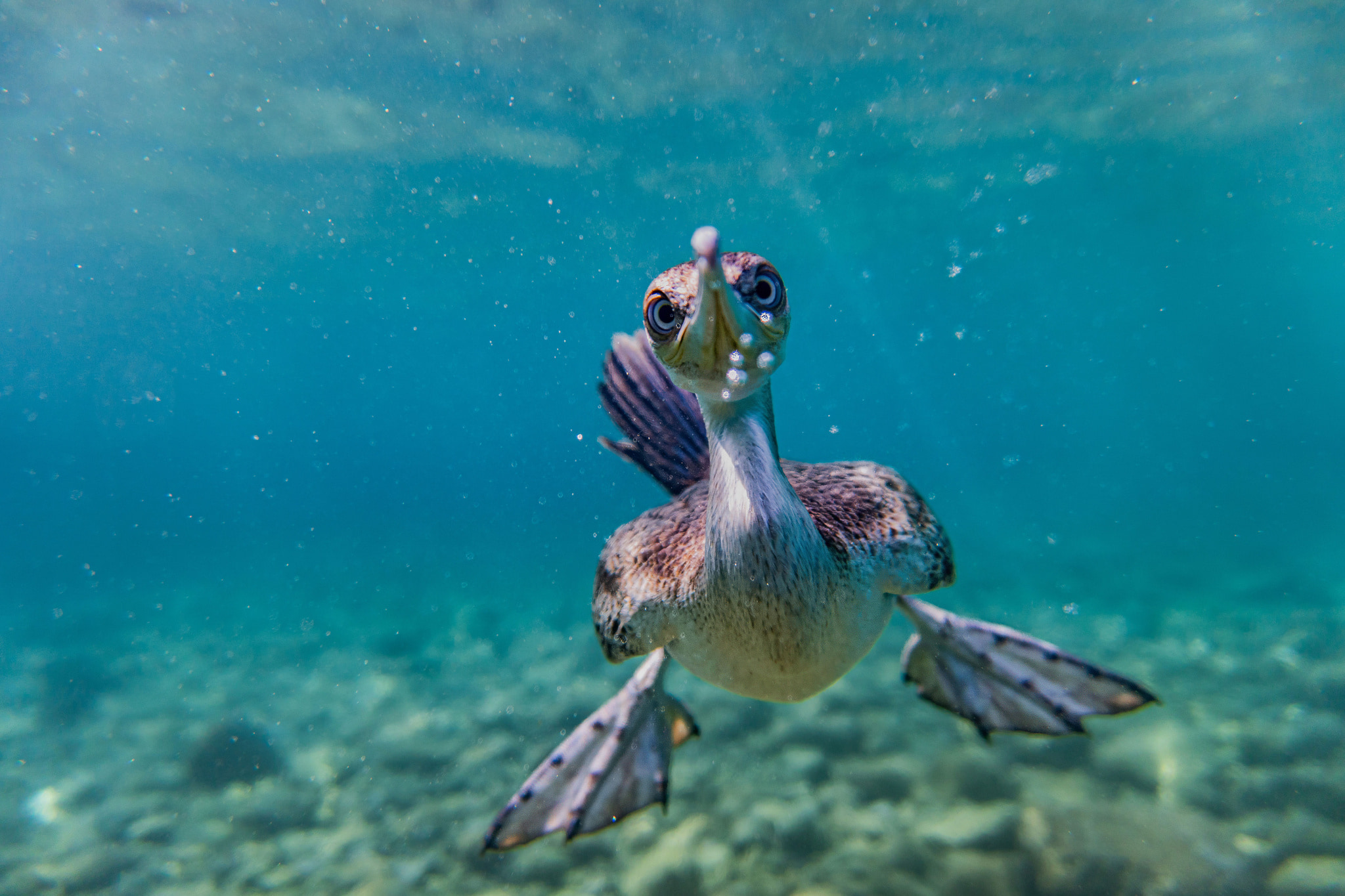
It feeds on sea fish and finds its food mostly on the seabed. It takes many kinds of fish, but its commonest prey is the sand eel. Before a dive it jumps slightly out of the water to give the dive extra push. A dive usually lasts 20–45 seconds, with about 15 seconds of rest in between. It can dive as deep as 61 m. It travels many kilometres from its roost to feed.
It is a wary bird that swims and dives well. It flies heavily and does not stay long in the air. It takes off with difficulty, usually from a rock or a ledge, and from water after a run-up. It is a quiet bird and gives low, hoarse calls only when disturbed, at the nest or when feeding chicks. Apart from the northernmost birds, it winters within its breeding range. The breeding season is long: it starts in late February, but some pairs start only in May or later. The nest is an untidy heap of rotting seaweed or twigs cemented with the bird's own droppings. It lays three eggs, which both parents incubate for 30–32 days. The chicks hatch without down and depend entirely on their parents for warmth. They start to fly after about two months.
Globally the European shag is rated Least Concern (LC, 2018). It breeds on the rocky coasts of western and southern Europe, southwest Asia and north Africa. In Britain 18,000 pairs bred in 2015. In Georgia's national assessment (2021) it was not evaluated (NE), and its population trend is unknown. The list of the birds of Georgia gives it as a winter visitor.
Related guides
Continue with related pages
Yes, as a winter visitor. It does not breed in Georgia. It is a seabird and is rare on inland waters. It was not evaluated in the national assessment (2021).
By size, bill and sheen. The European shag is smaller and lighter, with a thin bill and a green sheen. The great cormorant has a thick bill, a purplish sheen and a white patch on the cheeks and throat. In the breeding season the shag has a small crest on the head. On inland waters a great cormorant is far more likely.
It is 68–78 cm long, with a wingspan of 95–110 cm. It is smaller than the great cormorant and of lighter build. It has a long tail with 12 feathers.
Sea fish, which it hunts mostly on the seabed. Its commonest prey is the sand eel. It is one of the deepest divers among the cormorants, down to 61 m. A dive usually lasts 20–45 seconds.
On rocky sea coasts, on cliff ledges, in crevices and in small caves. The nest is a heap of seaweed or twigs cemented with droppings. It lays three eggs, and the chicks start to fly at about two months. It does not breed in Georgia.
No, it is harmless to people. Globally its extinction risk is low (LC, 2018). In Georgia's national assessment (2021) it was not evaluated (NE). Do not flush resting birds.
References
What this profile is based on
Species profiles are compiled from peer-reviewed literature and established biodiversity databases, and are reviewed as new taxonomic and conservation data become available.
Prepared by the Reptiles.ge editorial team from the sources listed here.


