


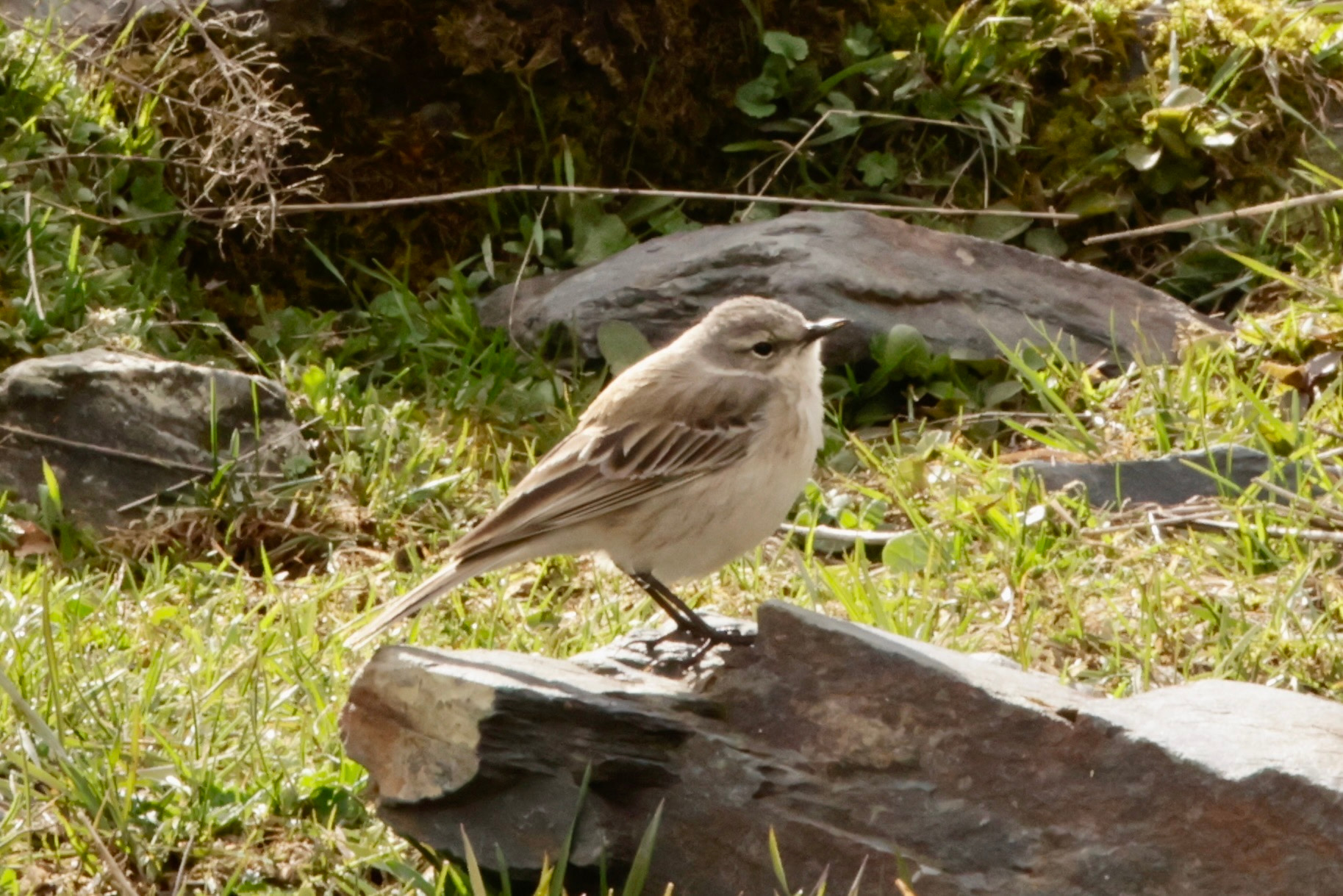

Water pipit
Anthus spinoletta
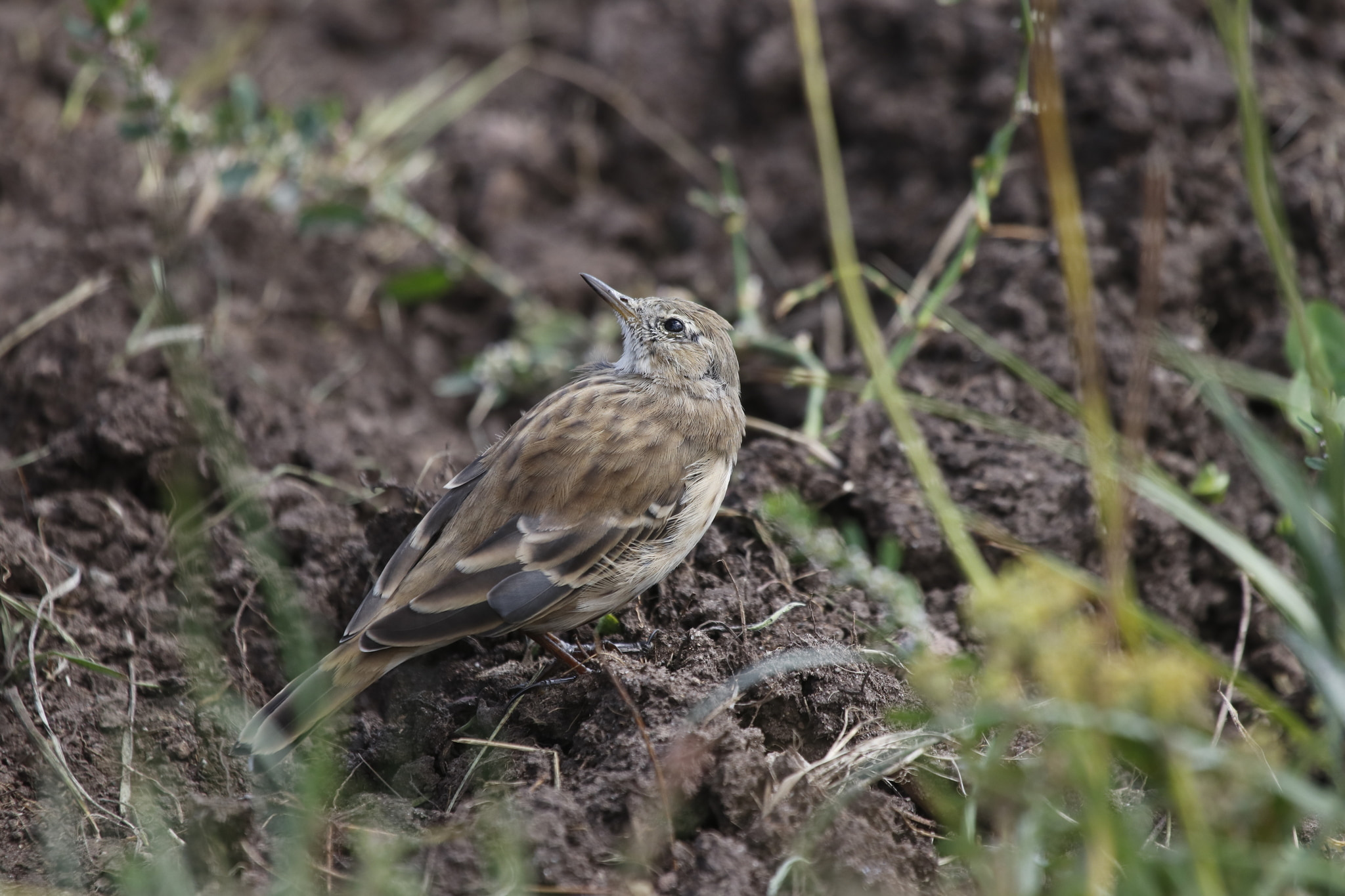
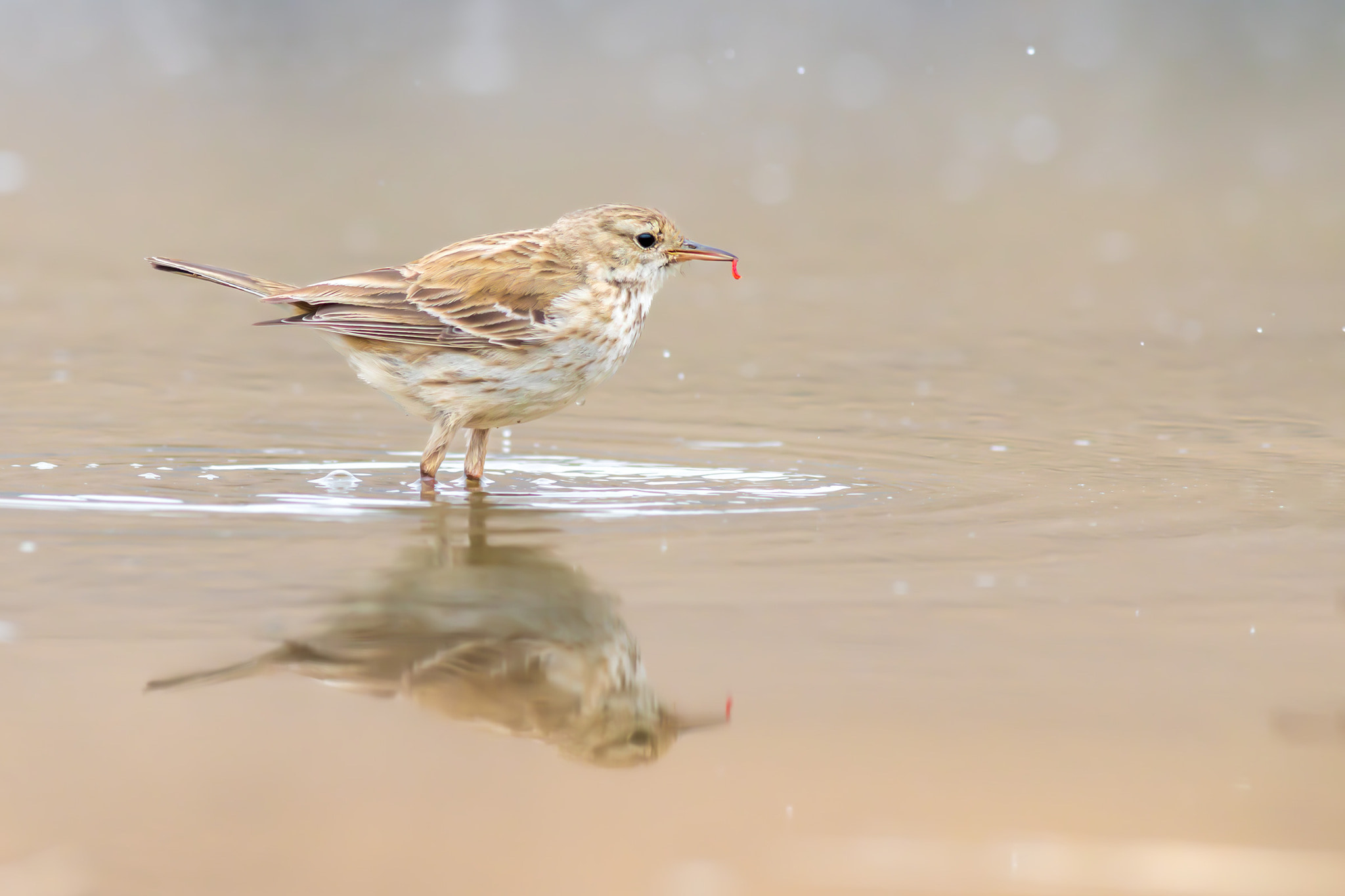
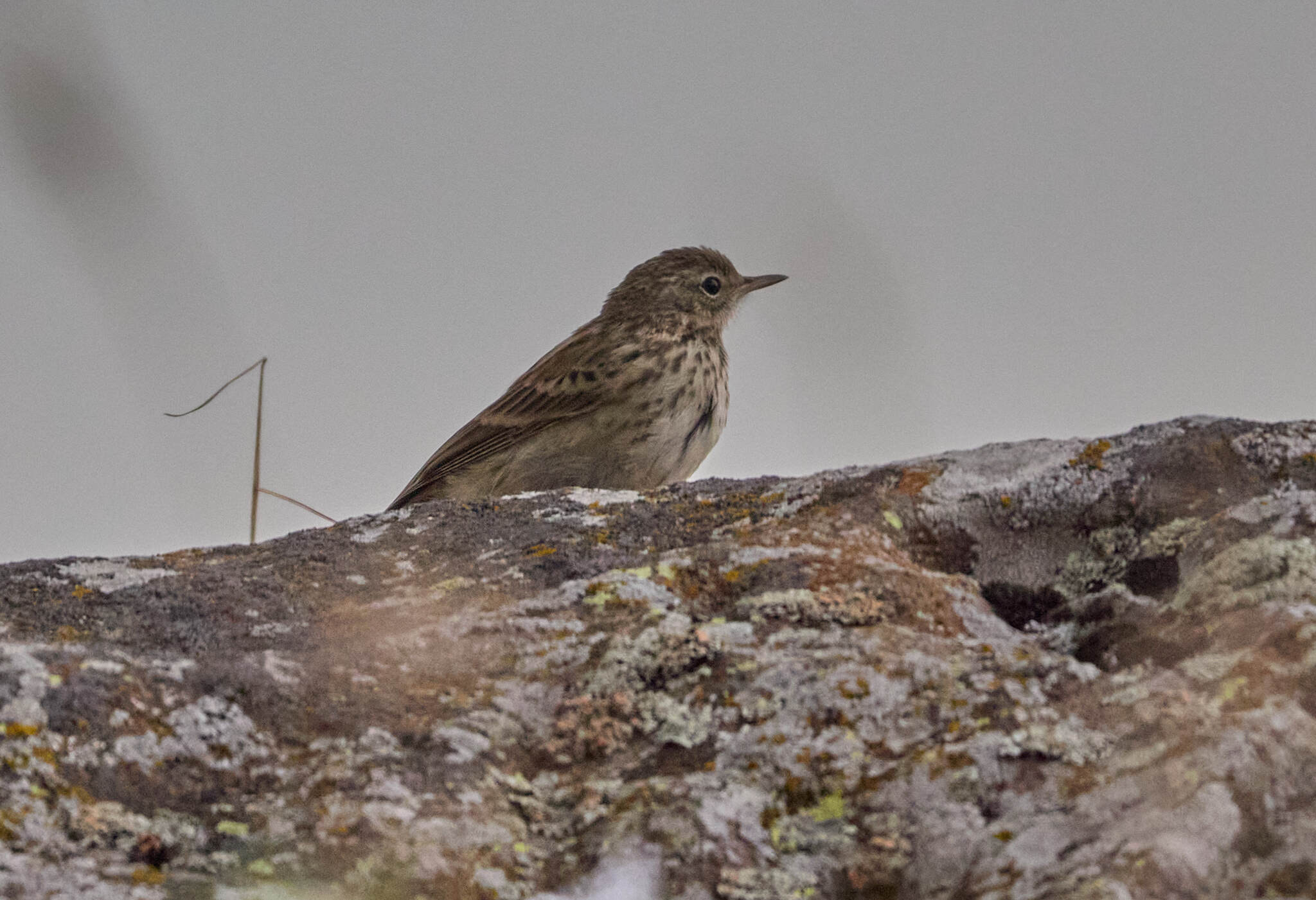
John Bruin · Kazbegi, Mtskheta-Mtianeti Georgia field photo
Key facts in one look
- Size
- 15–17 cm
- Diet
- Invertebrates, some plant material
- Status in Georgia
- Breeding bird
- Habitat
- Alpine pastures and high mountain meadows
- Family
- Motacillidae
- Conservation
- Least Concern
In the breeding season the water pipit (Anthus spinoletta) is a mountain bird: it lives on alpine pastures and short-grass high meadows, often near wet places. It breeds in Georgia. The Caucasian subspecies, Anthus spinoletta coutellii, lives here; in winter it moves to lower ground near its breeding areas. It is 15–17 cm long. In spring the head is grey with a broad white eyebrow, and the breast is pale pinkish buff. The legs are dark, which is a good way to tell it from the meadow pipit.
Identification
Water pipit: how to identify it
A 15–17 cm pipit with dark legs. In spring it has a grey head, a broad white eyebrow and a pink-tinged breast; in winter it is more streaked, with a whitish belly.
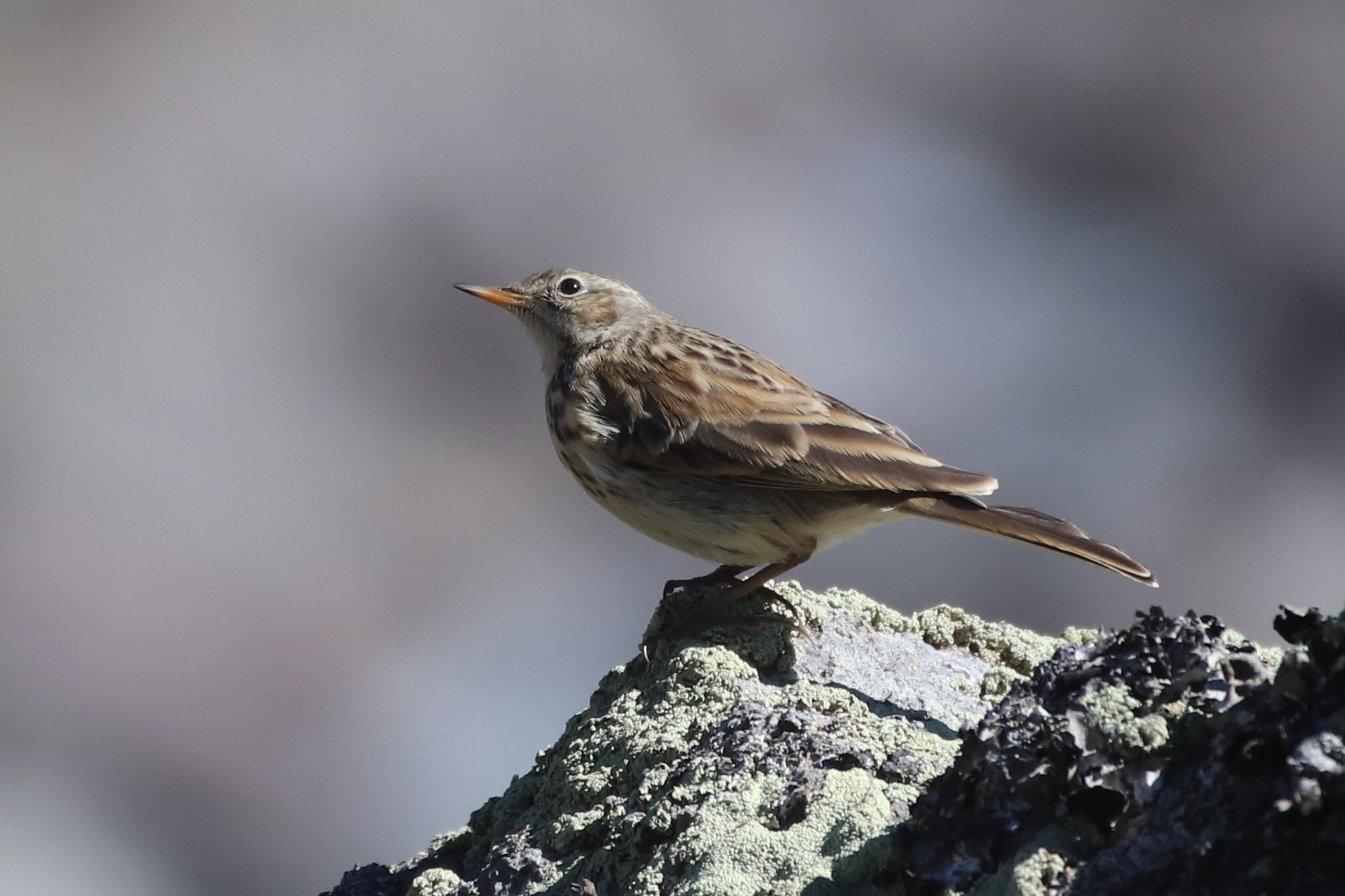
In spring the back is greyish brown with weak dark streaks, and the underparts are pale pinkish buff, fading to whitish on the belly. The head is grey with a broad white eyebrow. The outer tail feathers are white, and the legs and bill are dark brown or blackish. Length is 15–17 cm, weight 18.7–23 g.
In winter the head is greyish brown, the eyebrow duller, the back more streaked, and the underparts white with light brown streaks on the breast and flanks. The Caucasian subspecies is smaller and paler, more streaked above, and in summer its underparts are coloured over a wider area with a rusty tint.
The meadow pipit (Anthus pratensis) is very similar, but shorter-winged and shorter-tailed, with darker, more streaked underparts and pinkish yellow legs. The water pipit has dark legs and much paler underparts. So look at the legs first.
Colour
Swatches are illustrative. Do not identify a species by colour alone.
It breeds in the mountains, on alpine pastures and high meadows where the grass is short and there are some bushes or rocks. It often settles near wet ground and on slopes. Across its range it breeds from 615 to 3,200 m, mostly at 1,400–2,500 m. In winter most birds move lower: to marshes, coastal wetlands and rice fields, while some stay up to 2,000 m. The Caucasian subspecies winters at lower altitudes near its breeding areas. In Georgia it breeds; whether it stays all year or part of it leaves in winter is not fully established.
The water pipit map combines public iNaturalist observations. Regions are taken from the records-by-region table, and the status column separates regions with enough records from regions with too few records. Record counts reflect observation effort rather than population density. Seven regions have enough records: Mtskheta-Mtianeti, Kvemo Kartli, Samegrelo-Zemo Svaneti, Samtskhe-Javakheti, Shida Kartli, Tbilisi and Kakheti.
Data: Reptiles.ge + iNaturalist · Methodology
- Field observation
- Several records in one spot
- Photo record
- Region with records
It feeds mainly on invertebrates: grasshoppers and crickets, beetles, snails, millipedes and spiders. Chicks are often fed flies, caterpillars and other small insects. Near snow patches it also takes small insects that live on the snow. It picks food mostly on foot from the ground and vegetation and only occasionally catches a flying insect in the air. It also takes some plant material. In bad weather it forages more often and for longer, flying further in search of food.
It is active by day and usually forages alone or in pairs. It is a wary bird: if you approach, it takes off and lands quite far away. In spring the male climbs 10–30 m, flies an arc and glides down singing. The song has 4–5 blocks, each repeating one short note about six times. The call is a sharp "dzip"; the Caucasian subspecies' flight call is shorter and buzzier. The female builds the nest on the ground in vegetation or a hollow, sometimes in a cliff crevice. From late April to early July she lays 4–6 eggs and incubates them for 14–15 days. The chicks leave the nest 14–15 days later. There may be two broods a year.
It is Least Concern on the IUCN Red List (LC, 2018). The range is patchy because it breeds only in mountains, but the population is large and stable; Europe may hold up to 2 million breeding pairs. Georgia's national assessment (2021) also places it in the LC category, with a stable population. It is a wild bird, so do not catch it.
John Bruin · ward123 · Jason Fidorra · Giorgi Makharadze · Alexander Korobeynikov · Mikhail Nevsky · nixey · araneusdiadematus · Nikita Tiunov · Markus Ackermann · Patrik Katona · Pavel Shukov · Svetlana Strizhova
Related guides
Continue with related pages
Yes, it breeds in Georgia. The Caucasian subspecies lives here and in winter moves to lower ground near its breeding areas. Whether it stays all year or part of it leaves in winter and passes through on migration is not fully established. In summer you have to go up into the mountains to see it.
In summer on short-grass high meadows and alpine pastures, often near springs, streams and snow patches. It breeds mostly at 1,400–2,500 m. In winter it moves lower, to wetlands. It is a wary bird and takes off from far away.
In spring it has a grey head, a broad white eyebrow and a pale pinkish buff breast. The legs are dark and the tail sides white. In winter it is more streaked, with a whitish belly. Dark legs and pale underparts set it apart from the meadow pipit.
Mainly invertebrates: grasshoppers, beetles, snails, millipedes and spiders. Near snow patches it also takes small insects that live on the snow. It eats some plant material too. It finds most of its food on the ground while walking.
The female builds the nest on the ground in vegetation or a hollow, sometimes in a cliff crevice. From late April to early July she lays 4–6 eggs and incubates them for 14–15 days. The chicks leave the nest after 14–15 days. The male climbs 10–30 m while singing and glides back down.
It is harmless to people. Globally it is Least Concern (LC, 2018), and Georgia's national assessment (2021) is also LC, with a stable population. It is a wild bird, so do not catch it or touch its nest.
References
What this profile is based on
Species profiles are compiled from peer-reviewed literature and established biodiversity databases, and are reviewed as new taxonomic and conservation data become available.
Prepared by the Reptiles.ge editorial team from the sources listed here.


