Photo: Darius Bauzys
Grass snake
Natrix natrix
A non-venomous, semi-aquatic snake with a yellow "collar" — an inhabitant of wetlands, lakes, and damp forests; harmless.
At a glance
Key facts in one look
Habitat
Marshes, lakes, forest
Length
approx. 0.8–1.2 m
Venom
None — harmless
Conservation
Least Concern (LC)
Elevation
0–2,350 m
Family
Colubridae
Overview
Who is Grass snake
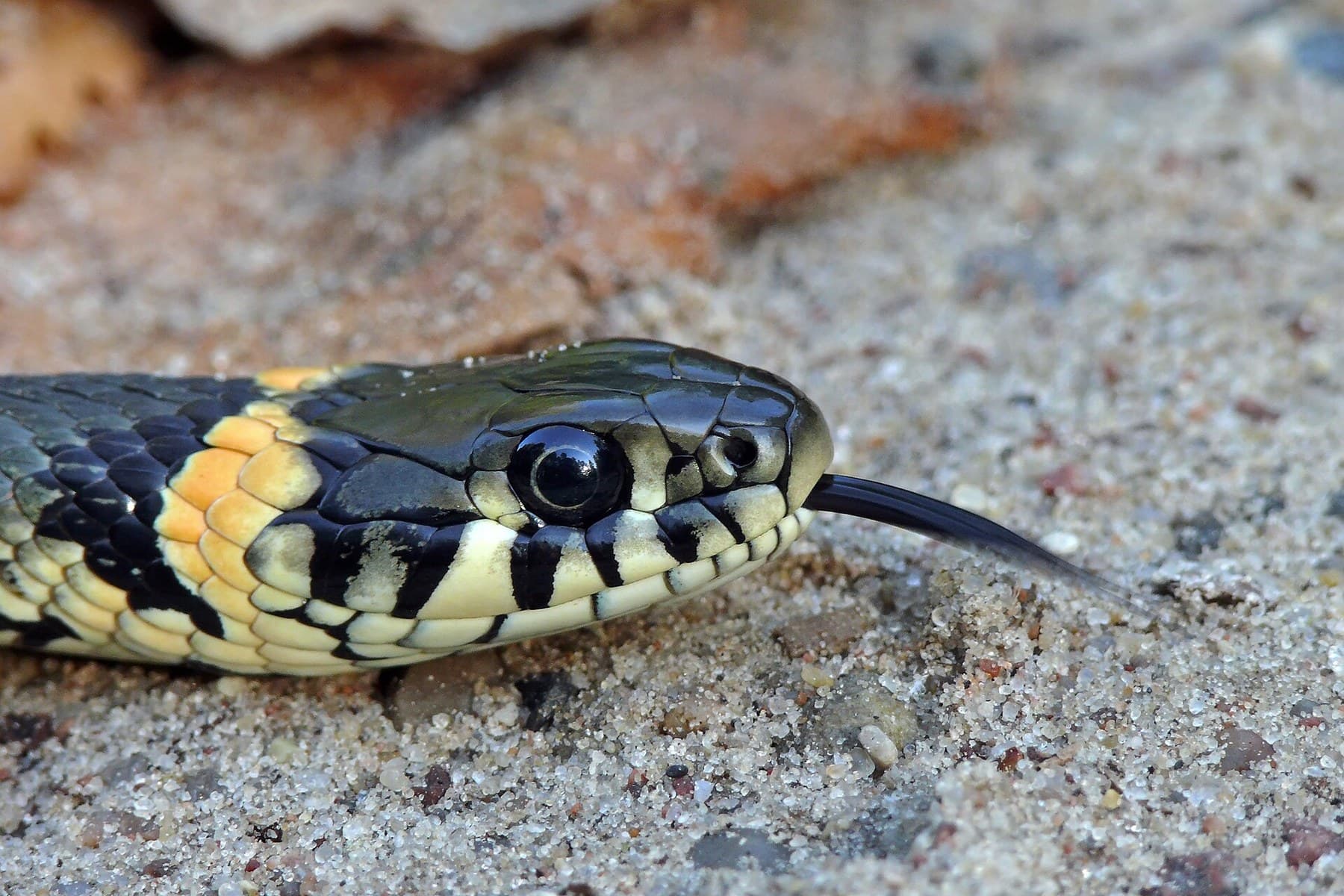
The grass snake (Natrix natrix) is a non-venomous, semi-aquatic colubrid — the eastern grass snake of Europe and western Asia, including Georgia, Armenia, Azerbaijan, and Turkey. In Georgia it is especially common in the humid west (Colchis lowlands, Adjara, Guria, Samegrelo, Abkhazia, Imereti), where it often outnumbers the dice snake (Natrix tessellata); it is scarcer in the dry east. Vertically it reaches about 2,350 m (Meskheti Range). A yellow or white "collar" behind the head is characteristic — the source of the name ringed snake. The formerly described "big-headed grass snake" (Natrix megalocephala) is now treated as a synonym of N. natrix. It is classified as Least Concern by the IUCN.
Last updated
Gallery
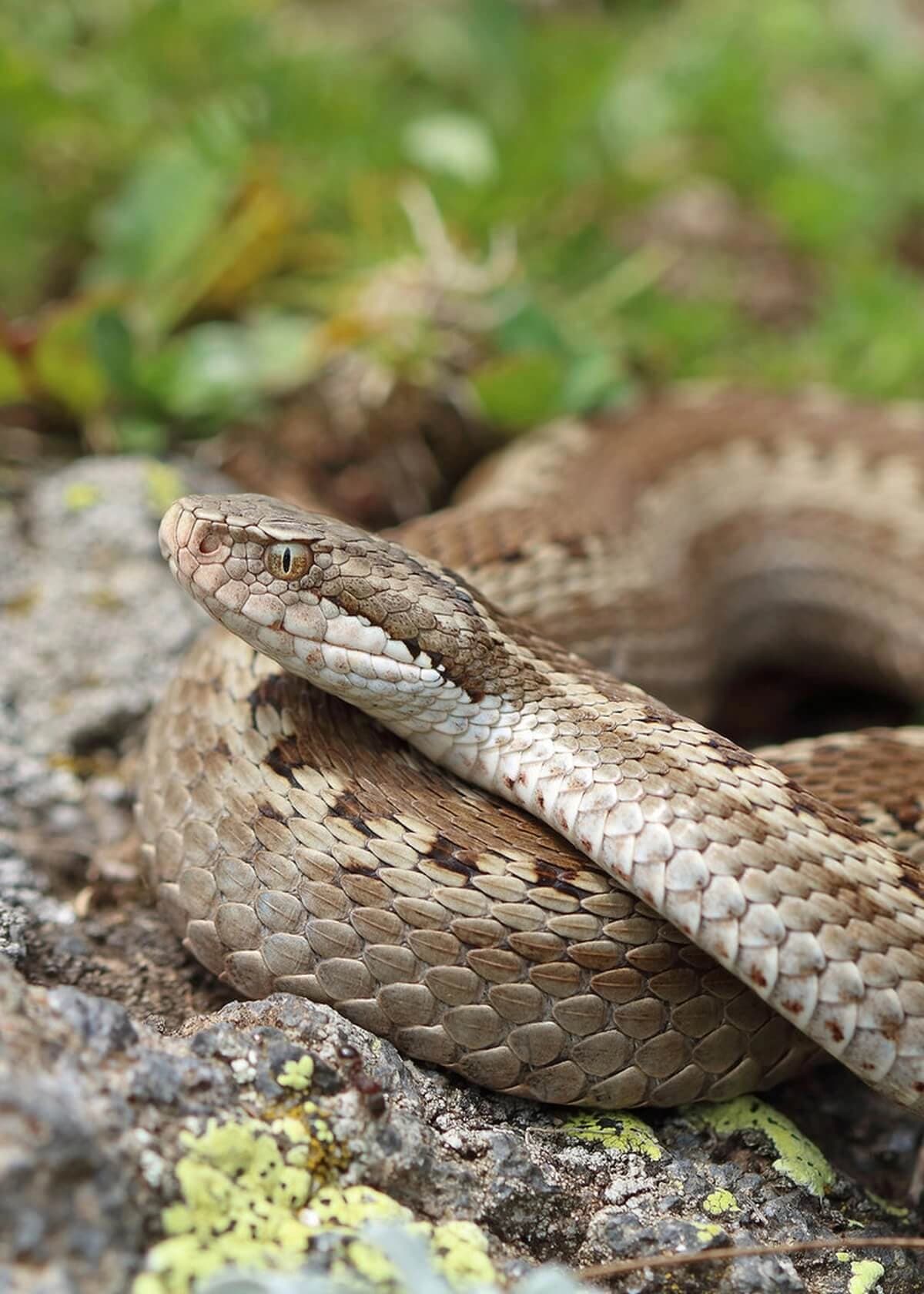
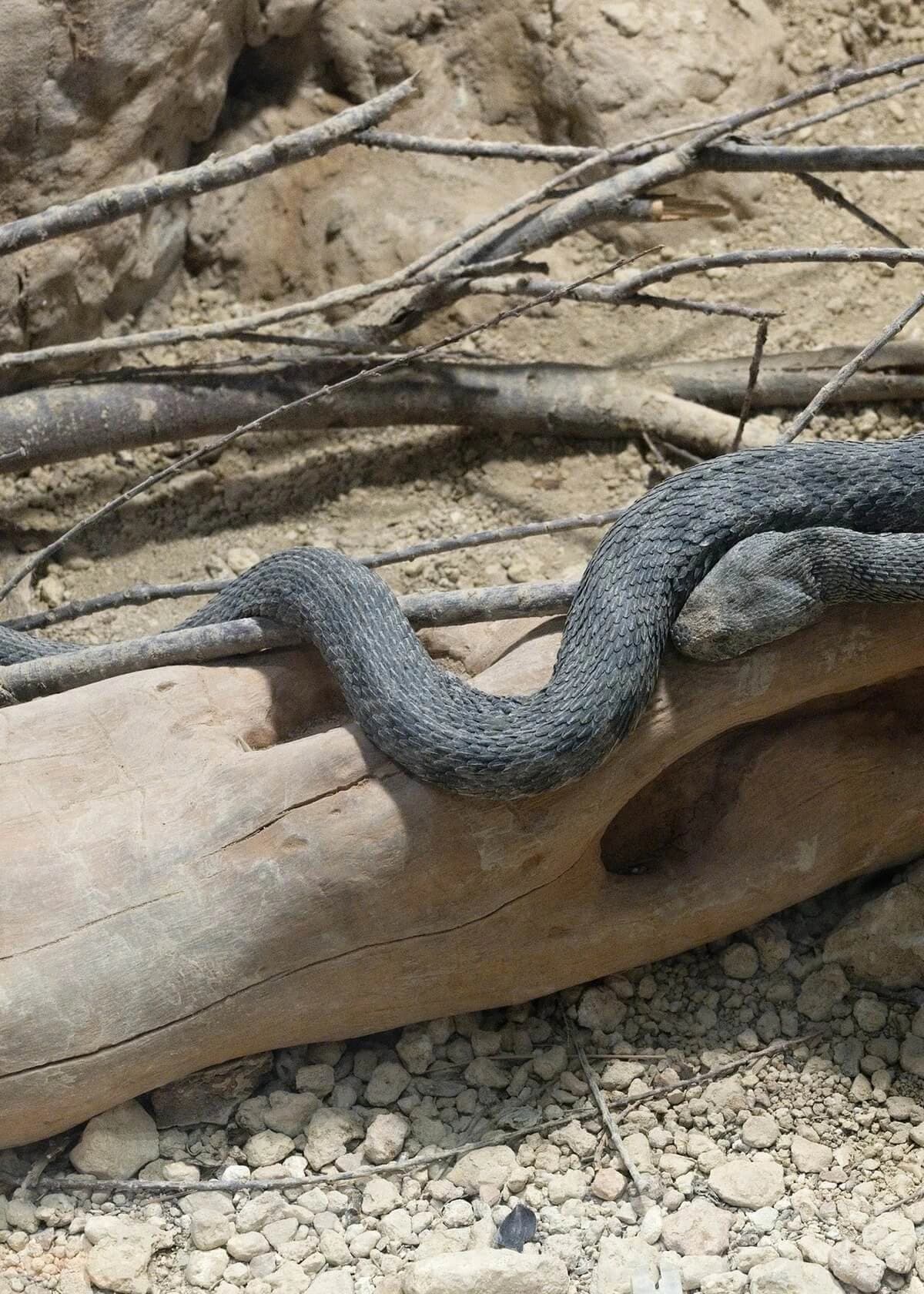
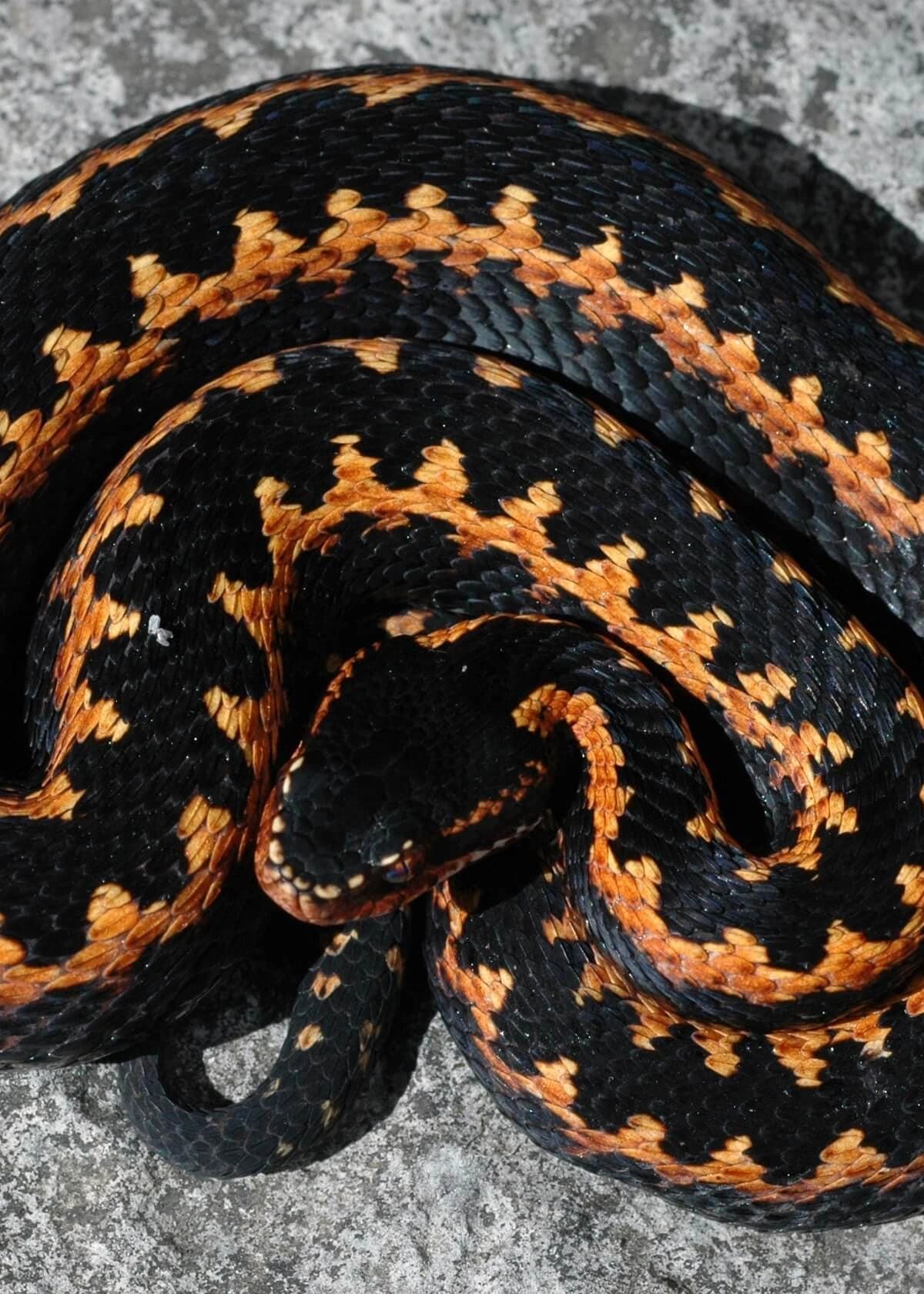
Grass snake in photos
Distribution
Where Grass snake lives in Georgia
Highlighted regions show where this species has been recorded.
Identification
How to identify Grass snake
The grass snake is a harmless, semi-aquatic colubrid. A yellow "collar" behind the head and damp habitats are the main cues — and help separate it from the dice snake.
- 01
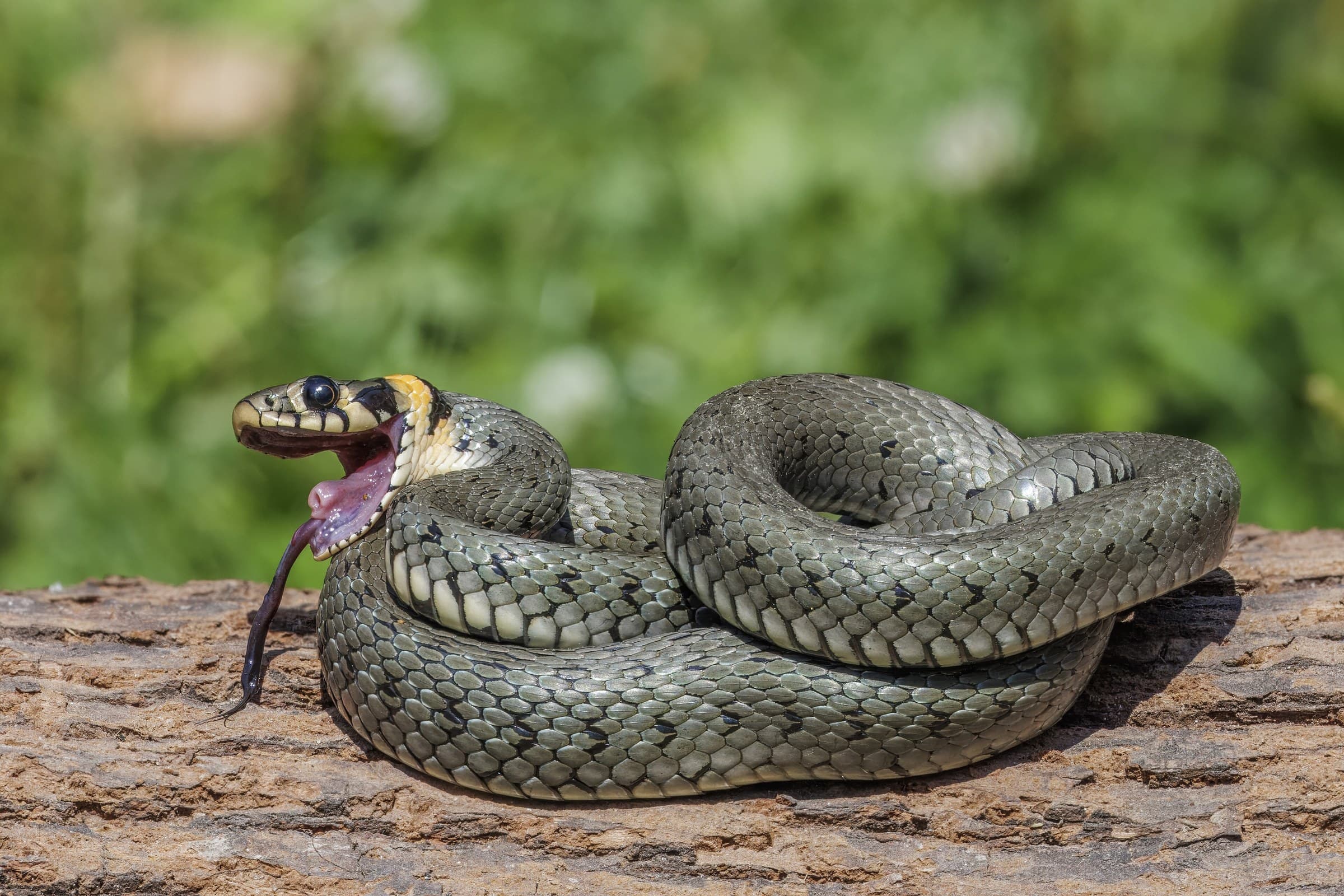
Behind the head there is often a yellow, white, or cream "collar" — the source of the name ringed snake.
- 02
The back is greenish, grey, or brown; nearly black (melanistic) forms also occur, especially in Colchis.
- 03
The pupil is round; it has no venom and is harmless.
- 04
Length is usually 0.8–1.2 m, rarely to 1.5 m; the head is slightly distinct from the body.
- 05
In Georgia it is more common in the humid west than the dice snake (Natrix tessellata), which favors semi-arid areas.
Biology
Diet, behavior, and conservation
Diet
It feeds mainly on amphibians — frogs, toads, and tadpoles; it also takes fish, but less than the dice snake. It swallows prey alive. It hunts in water and along the shore; sometimes it travels inland through woodland in search of toads.
Behavior
Active in the warm season, mostly by day; on hot nights it may move after dark. It hibernates from about October to April in burrows, crevices, and rotting vegetation. Mating usually occurs in spring — several males may coil around one female. It is egg-laying: in summer it lays roughly 8–40 eggs in a moist, warm spot (rotting vegetation, compost, bank soil); young hatch in late summer or early autumn. When threatened it releases a foul-smelling cloacal secretion, flattens its head like a viper, or feigns death (thanatosis) — often with the tongue out and mouth open.
Conservation
Classified as Least Concern on the IUCN Red List. It is locally common in humid western Georgia. It is widespread globally, though in some regions wetland drainage, water pollution, intensive agriculture, road mortality, and persecution reduce local populations. It is listed on Appendix III of the Bern Convention.
Questions
Frequently asked questions
Short answers to the most important questions about Grass snake.
No — it is non-venomous and harmless to humans. When threatened it may release a foul-smelling secretion or "play dead," but it poses no real danger.
Mainly in the humid west — Abkhazia, Samegrelo, Guria, Adjara, Imereti, and Racha; also in damp mountain valleys, including up to 2,350 m on the Meskheti Range. In the dry east it is scarcer than the dice snake.
The grass snake often has a yellow "collar" behind the head and prefers damp, shady habitats; it feeds mainly on amphibians. The dice snake has checkered, dice-like blotches, is more tightly bound to water, and in Georgia is more common in semi-arid areas; most of its diet is fish.
Mainly frogs, toads, and tadpoles; it also takes fish, but less than the dice snake. It swallows prey alive.
It is egg-laying. Mating occurs in spring; in summer it lays roughly 8–40 eggs in a moist, warm spot — young hatch in late summer or early autumn.
References
Sources & References
References
Sources & References
- IUCN Red List
- GBIF
- The Reptile Database
- Wikipedia
- Scientific publications
Species profiles are compiled from peer-reviewed literature and established biodiversity databases, and are reviewed as new taxonomic and conservation data become available.