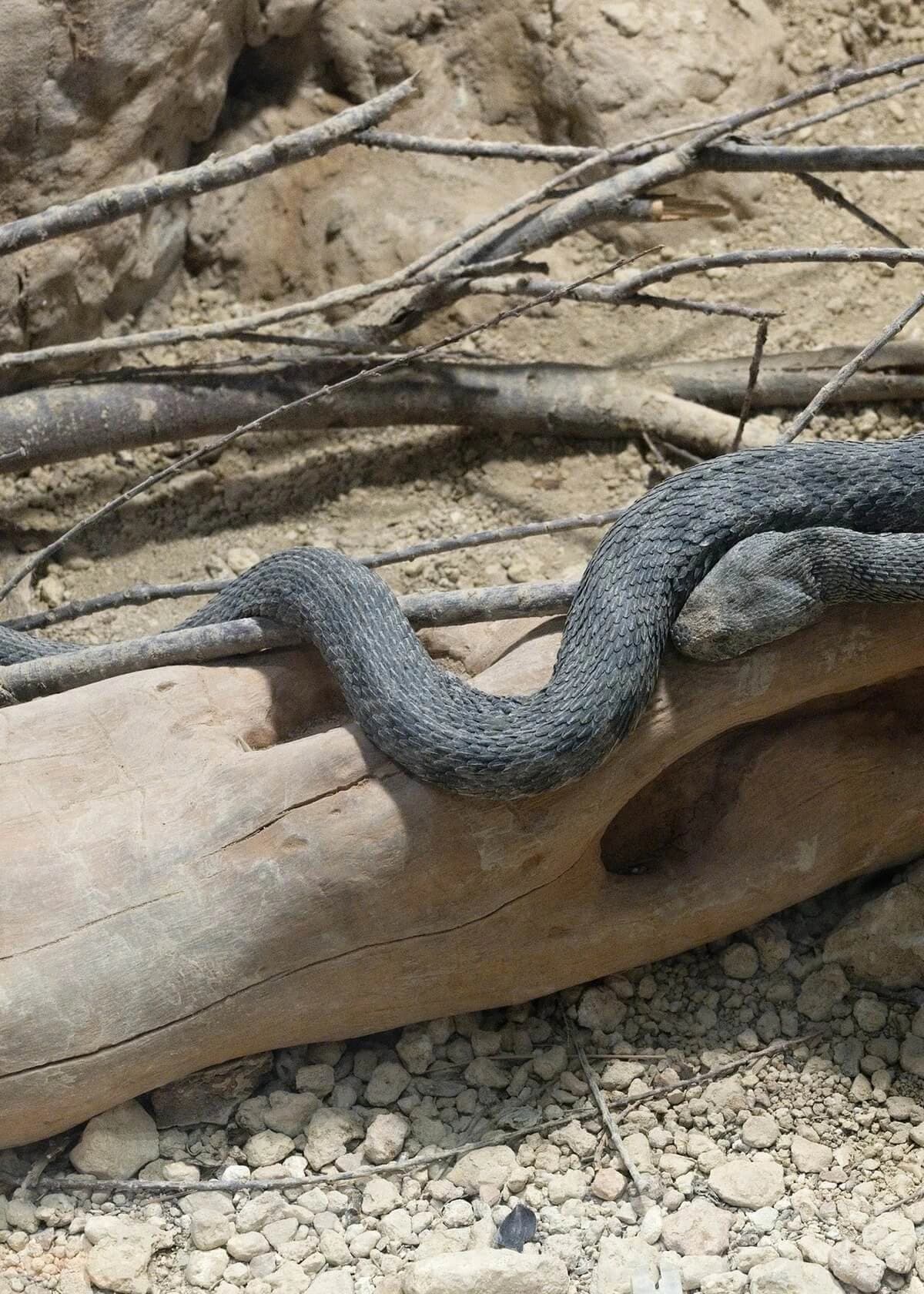
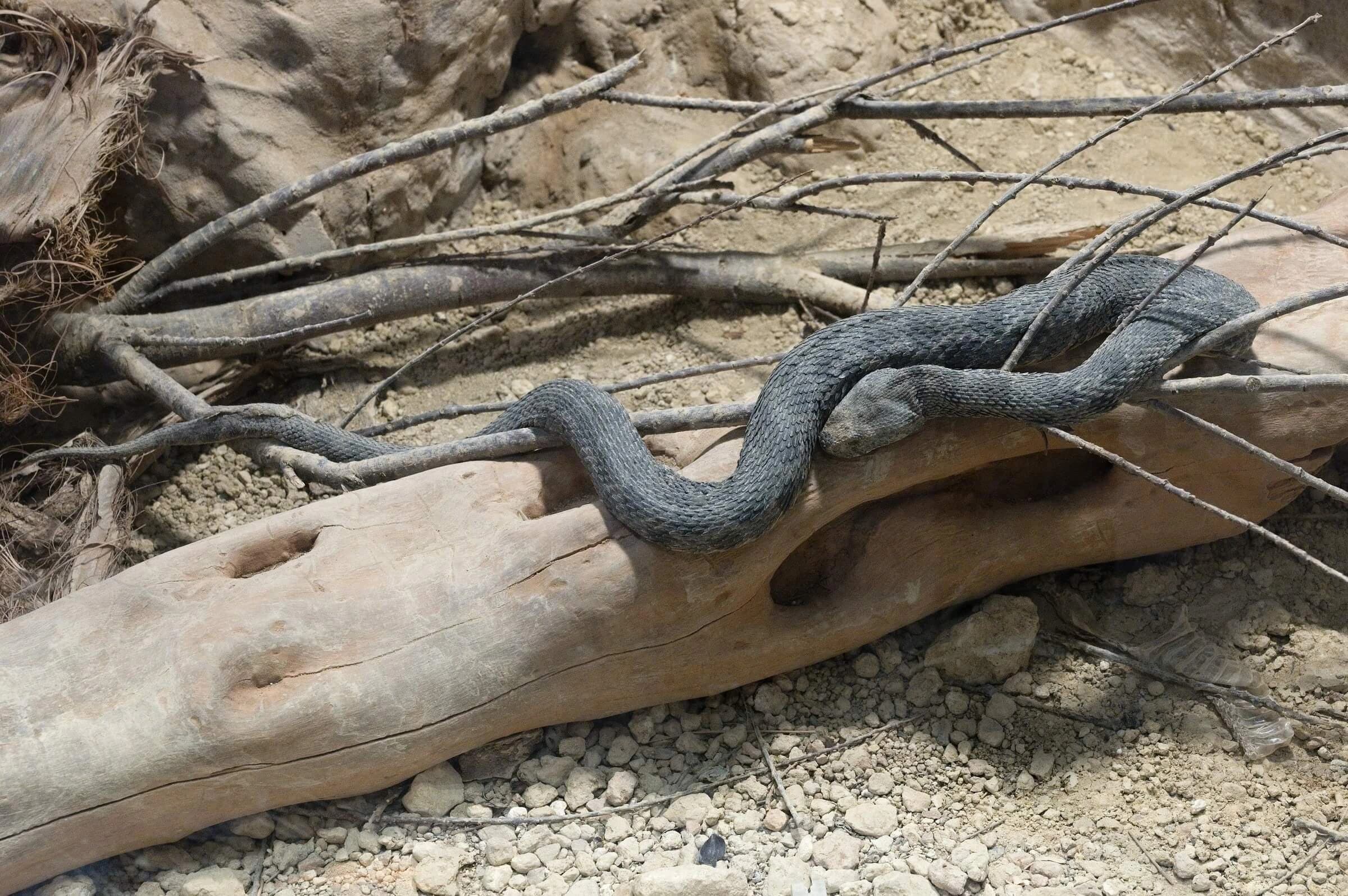
Levantine viper
Georgia's largest and most dangerous venomous snake — a resident of dry, rocky landscapes.
At a glance
Key facts in one look
Habitat
Eastern Georgia
Length
approx. 1–1.5 m
Venom
Highly dangerous
Conservation
Least Concern (LC)
Elevation
0–1,500 m
Family
Viperidae
Gallery
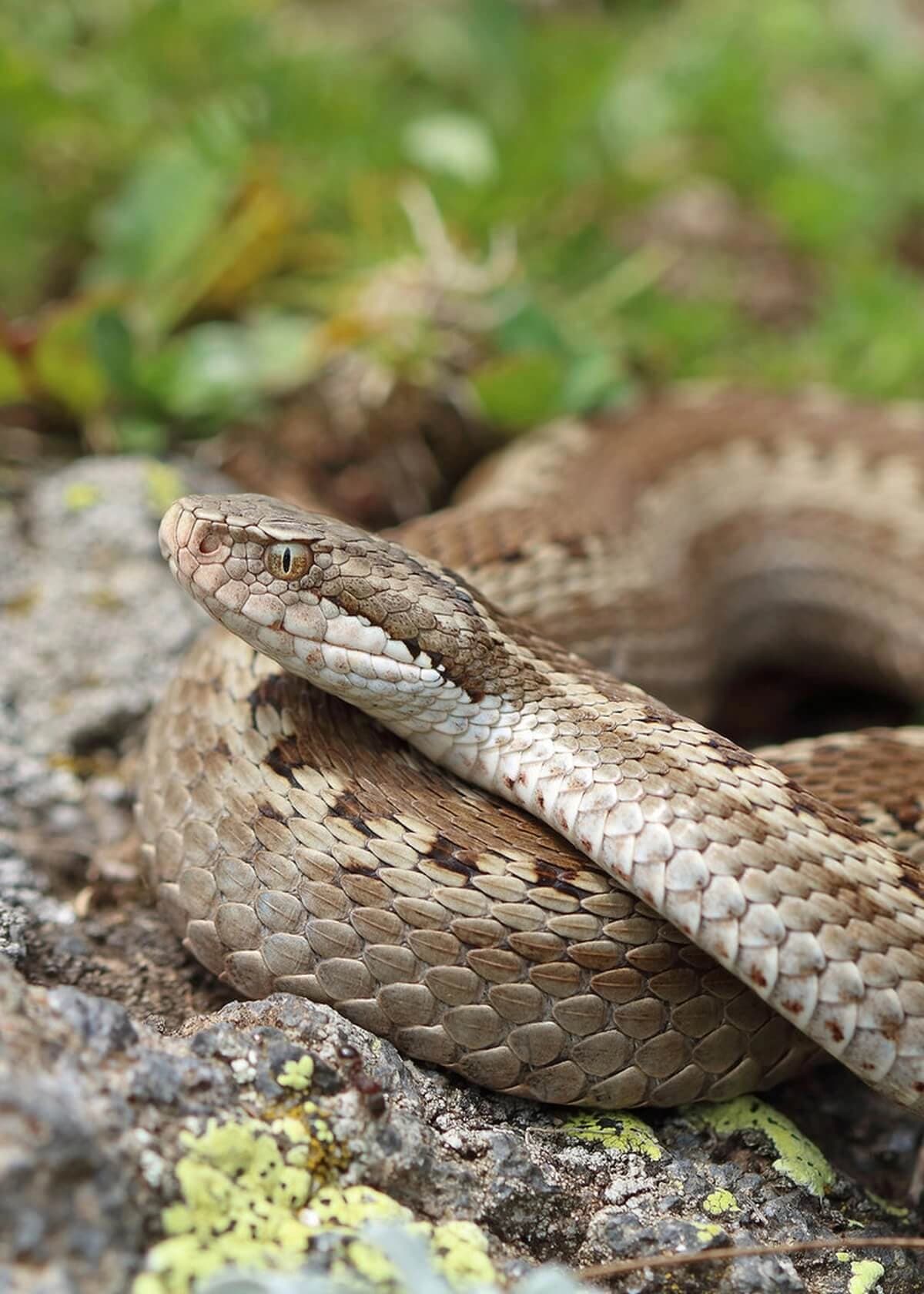
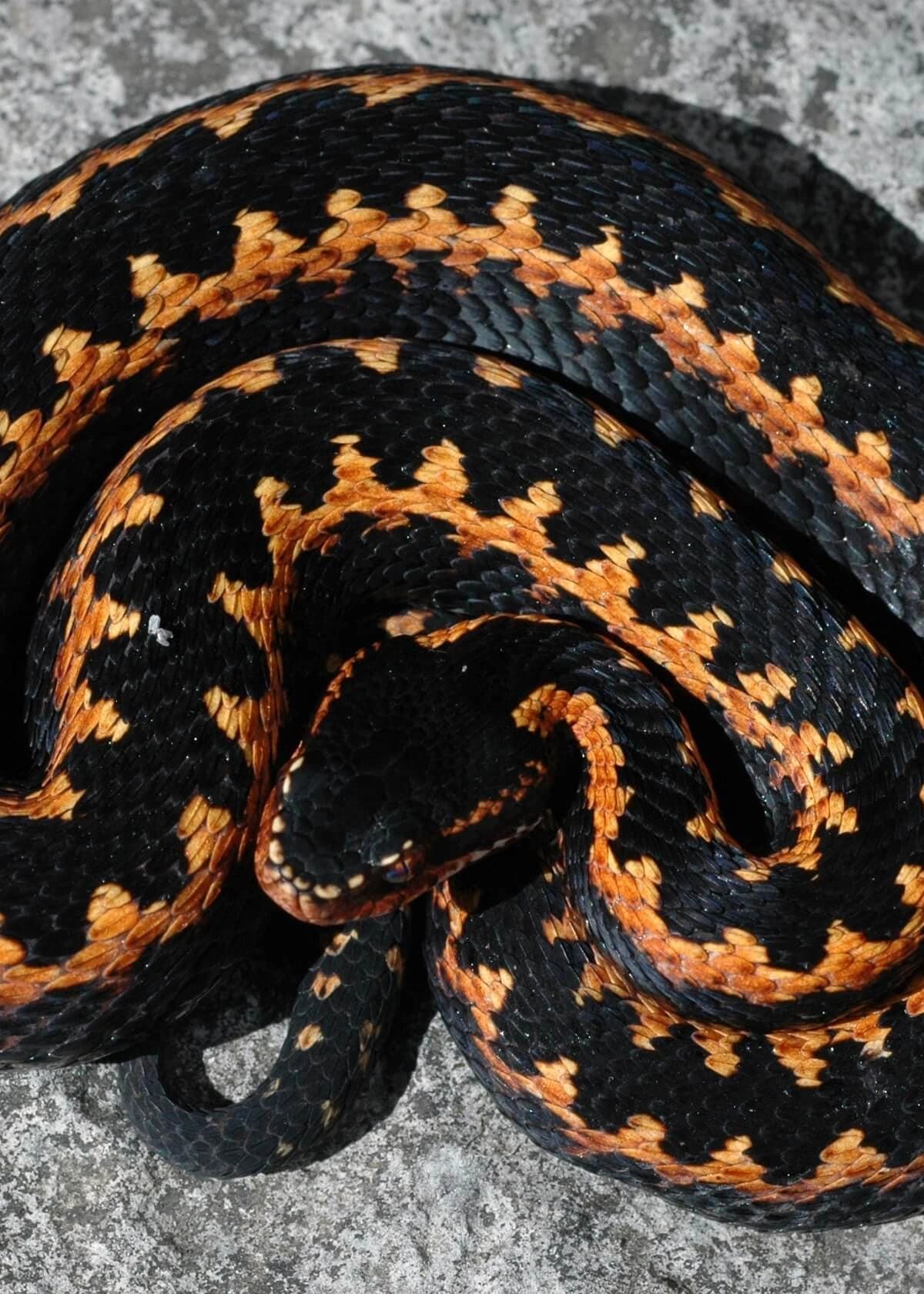
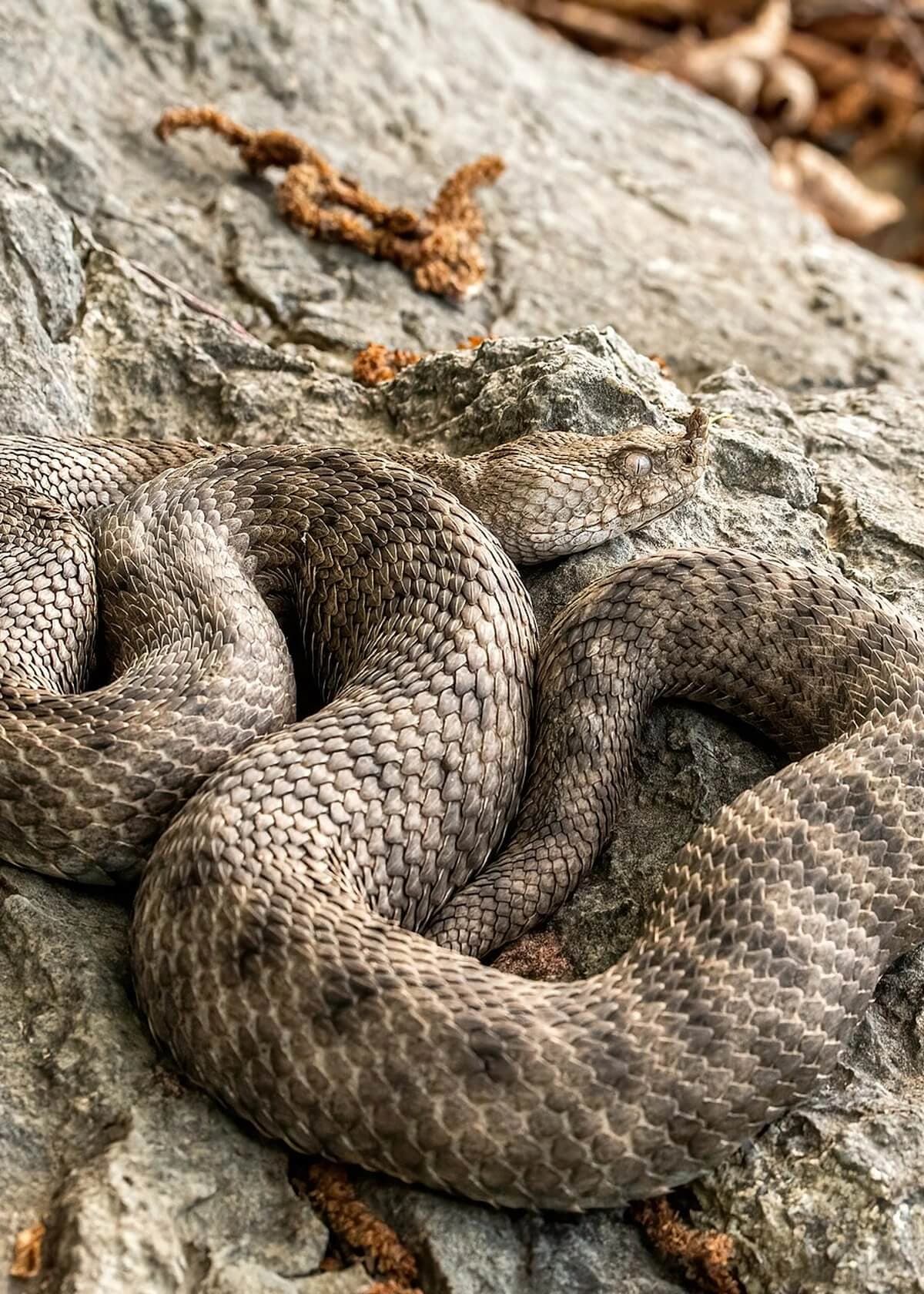
Levantine viper in photos
Interesting facts
What you should know
- 01
It is Georgia's largest viper and likely the only venomous snake whose bite poses a genuine threat to human life.
- 02
It is egg-laying — unlike Dinnik's viper, which is ovoviviparous; it lays roughly 15–20 eggs.
- 03
Its venom is hemotoxic: it damages red blood cells and blood vessels; the antivenom "Anti-Gyurza" is used in treatment.
- 04
The local name "gyurza" is used across the Caucasus and Central Asia; in English it is often called the Blunt-nosed or Levantine viper.
Biology
Diet, behavior, and conservation
Diet
Adults feed on rodents, small birds, lizards, and other small vertebrates. Juveniles hunt mainly small lizards. It hunts by ambush; it sometimes climbs shrubs and trees to catch birds.
Behavior
Active from late March to late October. In spring and autumn it moves by day; in summer heat it is active at night. It hibernates in rock crevices and burrows. It is egg-laying: mating occurs in April–May, and it lays roughly 15–20 eggs in late summer; young hatch in 35–45 days, at roughly 23–25 cm in length.
Conservation
Classified as Least Concern on the IUCN Red List; it also holds LC status in Georgia. Threats include habitat conversion, urbanization, overgrazing, and persecution by humans. It benefits the ecosystem by controlling rodent populations.
Questions
Frequently asked questions
Short answers to the most important questions about Levantine viper.
Very dangerous. In Georgia it is the largest viper and likely the only venomous snake whose bite can pose a genuine threat to human life. Its venom is hemotoxic — it damages blood and blood vessels.
Call emergency services immediately or go to a medical facility. The victim should stay calm; the bite site should not be cut, sucked, or bound with a tight tourniquet. The antivenom "Anti-Gyurza" is used in treatment.
In the dry and semi-arid zone of eastern Georgia — in the lower reaches of the Iori, Mtkvari, and Alazani rivers, in Shiraki, the Gareji desert, and around Tbilisi and Rustavi. It inhabits rocky terrain up to roughly 1,500 m.
In spring and autumn it is often active by day; in summer heat it shifts to a nocturnal lifestyle. Its active season runs from late March to late October.
It is egg-laying. Mating occurs in April–May; it lays roughly 15–20 eggs in late summer, and young hatch in 35–45 days.