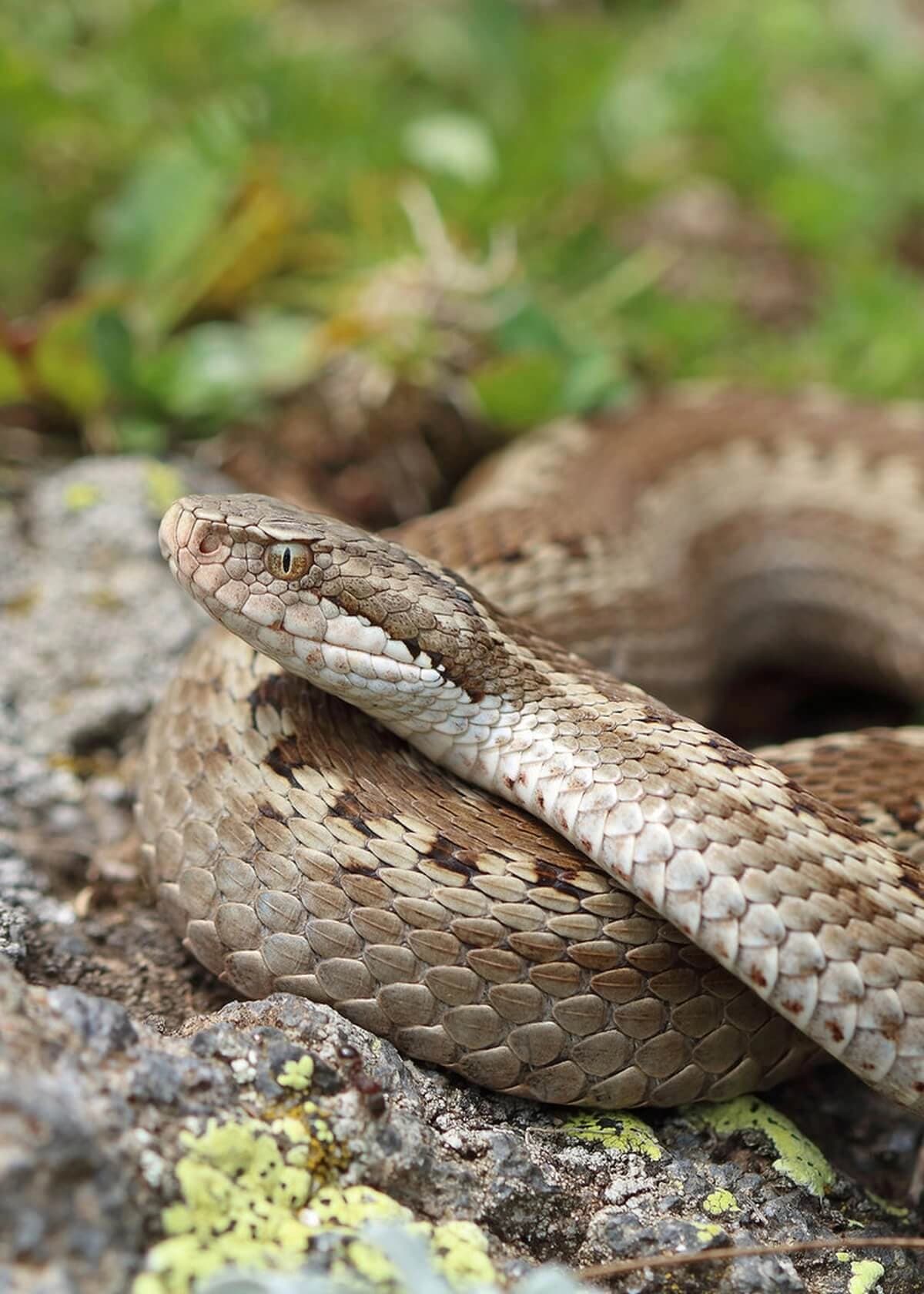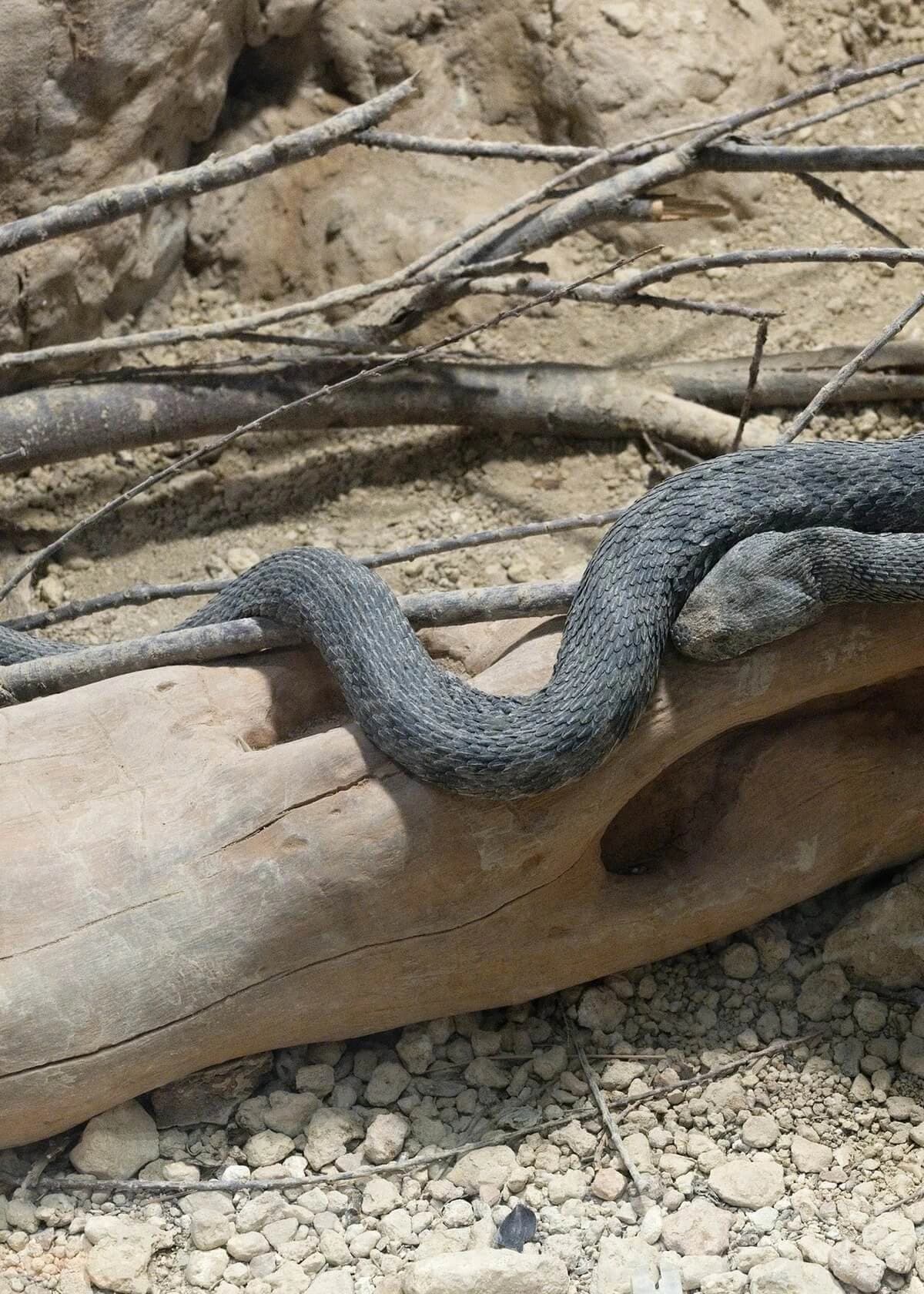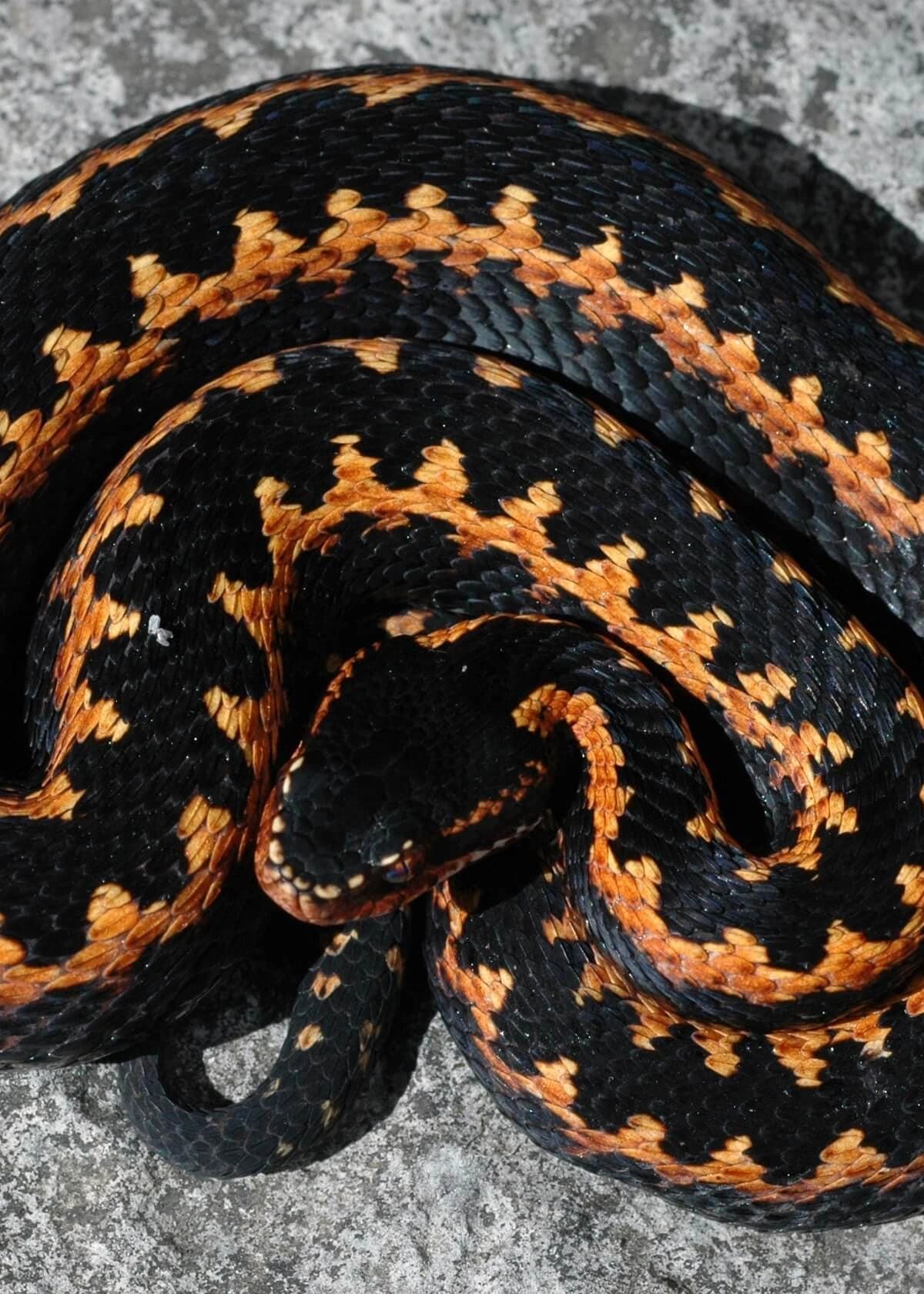
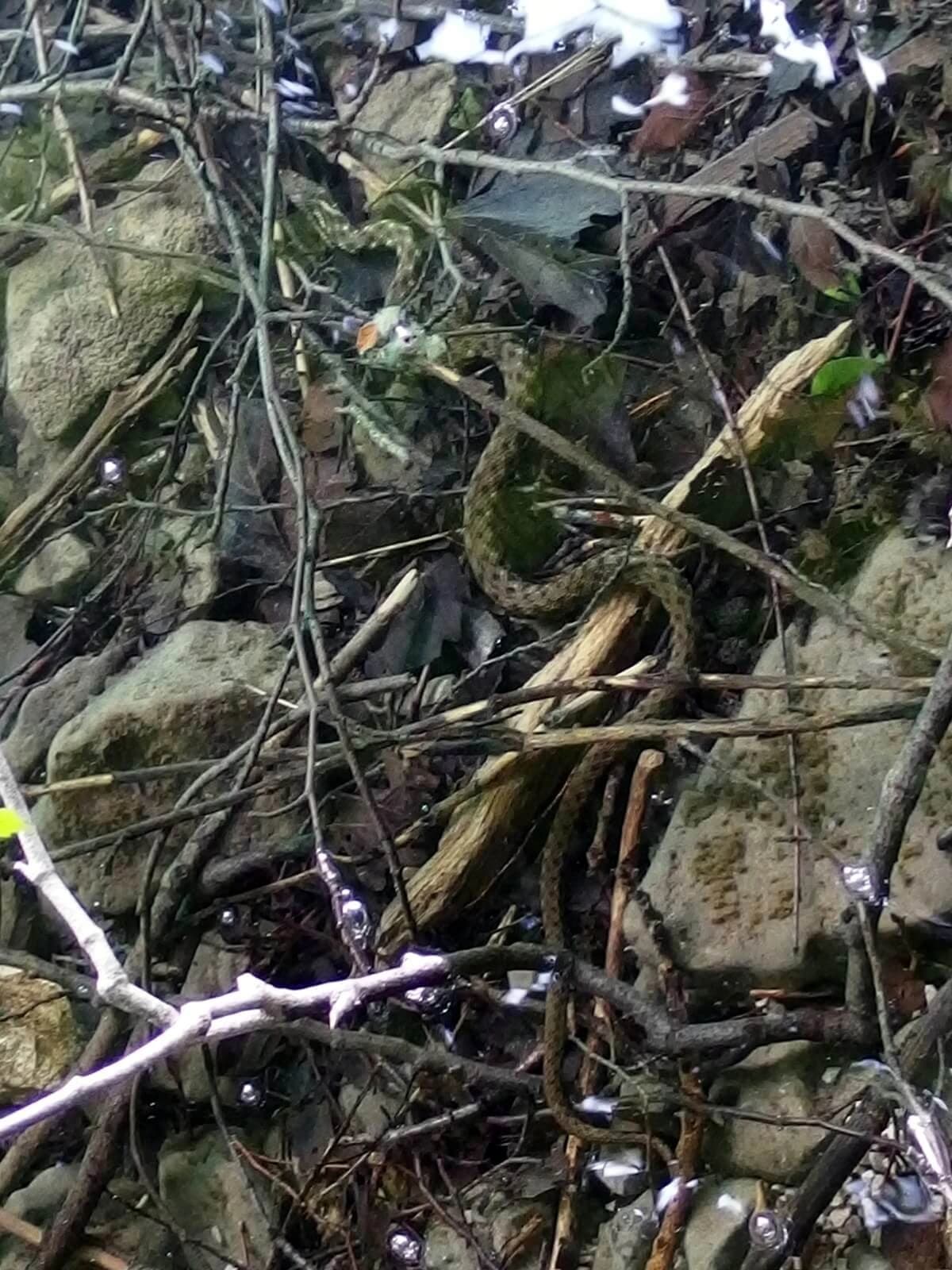
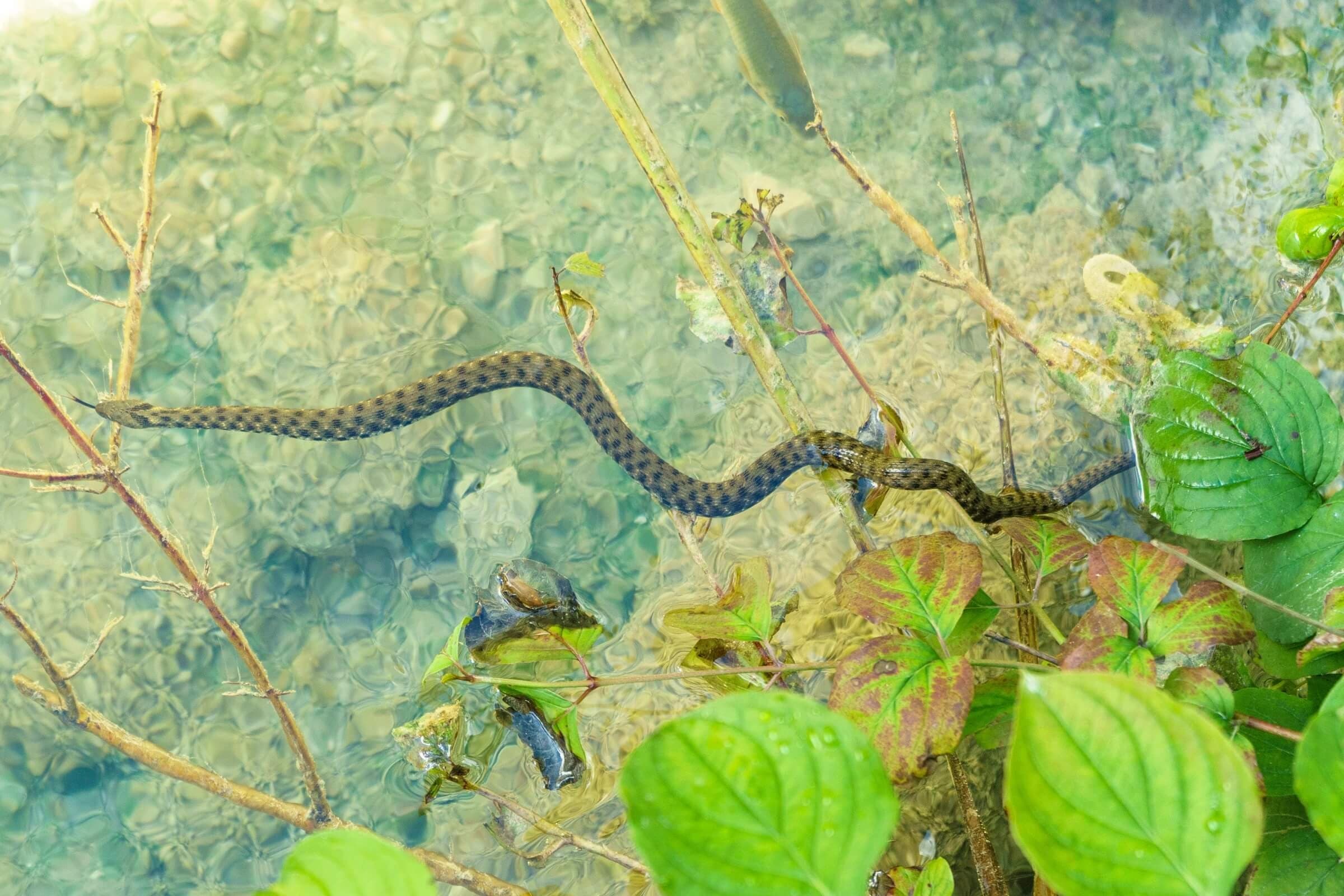
Dice snake
A non-venomous, semi-aquatic snake with checkered blotches — an inhabitant of rivers, lakes, and shorelines; harmless.
At a glance
Key facts in one look
Habitat
Rivers, lakes
Length
approx. 1–1.3 m
Venom
None — harmless
Conservation
Least Concern (LC)
Elevation
0–1,100 m
Family
Colubridae
Gallery
Dice snake in photos
Interesting facts
What you should know
- 01
It is non-venomous and harmless to humans; when threatened it releases a foul-smelling secretion or "plays dead."
- 02
The black spots on its belly resemble dice pips — the source of the English name dice snake.
- 03
It is widespread in Georgia and found in almost every type of water habitat.
- 04
Most of its diet is fish; it also catches amphibians — one of the most water-loving snakes in the region.
Biology
Diet, behavior, and conservation
Diet
It feeds mainly on fish; also amphibians — frogs, toads, and tadpoles. It swallows prey alive. It hunts in the water and along the shore; it is one of the most water-loving snakes in Europe.
Behavior
Active during the warm season; it hibernates from October to April in dry burrows and crevices near water. Mating usually occurs in March–May — at this time individuals may gather in groups. It is egg-laying: in July it lays roughly 10–30 eggs in a moist spot (soil, decaying vegetation, stone walls); young hatch in early September. When threatened it releases a foul-smelling secretion from the cloaca or feigns death (thanatosis).
Conservation
Classified as Least Concern on the IUCN Red List. It is widespread in Georgia and locally common. It is assessed as stable globally, though in some regions (e.g., the Czech Republic — critically endangered) habitat destruction, pollution, and invasive predators are reducing local populations.
Questions
Frequently asked questions
Short answers to the most important questions about Dice snake.
No — it is non-venomous and harmless to humans. When threatened it may release a foul-smelling secretion or "play dead," but it poses no real danger.
Almost throughout the country — near rivers, lakes, streams, and other water habitats. In the west typically up to 600 m, in the east up to 900 m; rarely noted up to 1,100 m.
The dice snake has checkered, dice-like blotches and is more tightly bound to water; in Georgia it is more common in semi-arid areas. The grass snake (Natrix natrix) often has a yellow "collar" behind its head and prefers damper habitats.
Mainly fish; also frogs, toads, and tadpoles. It swallows prey alive and often hunts in the water.
It is egg-laying. Mating occurs in March–May; in July it lays roughly 10–30 eggs, and young hatch in early September.