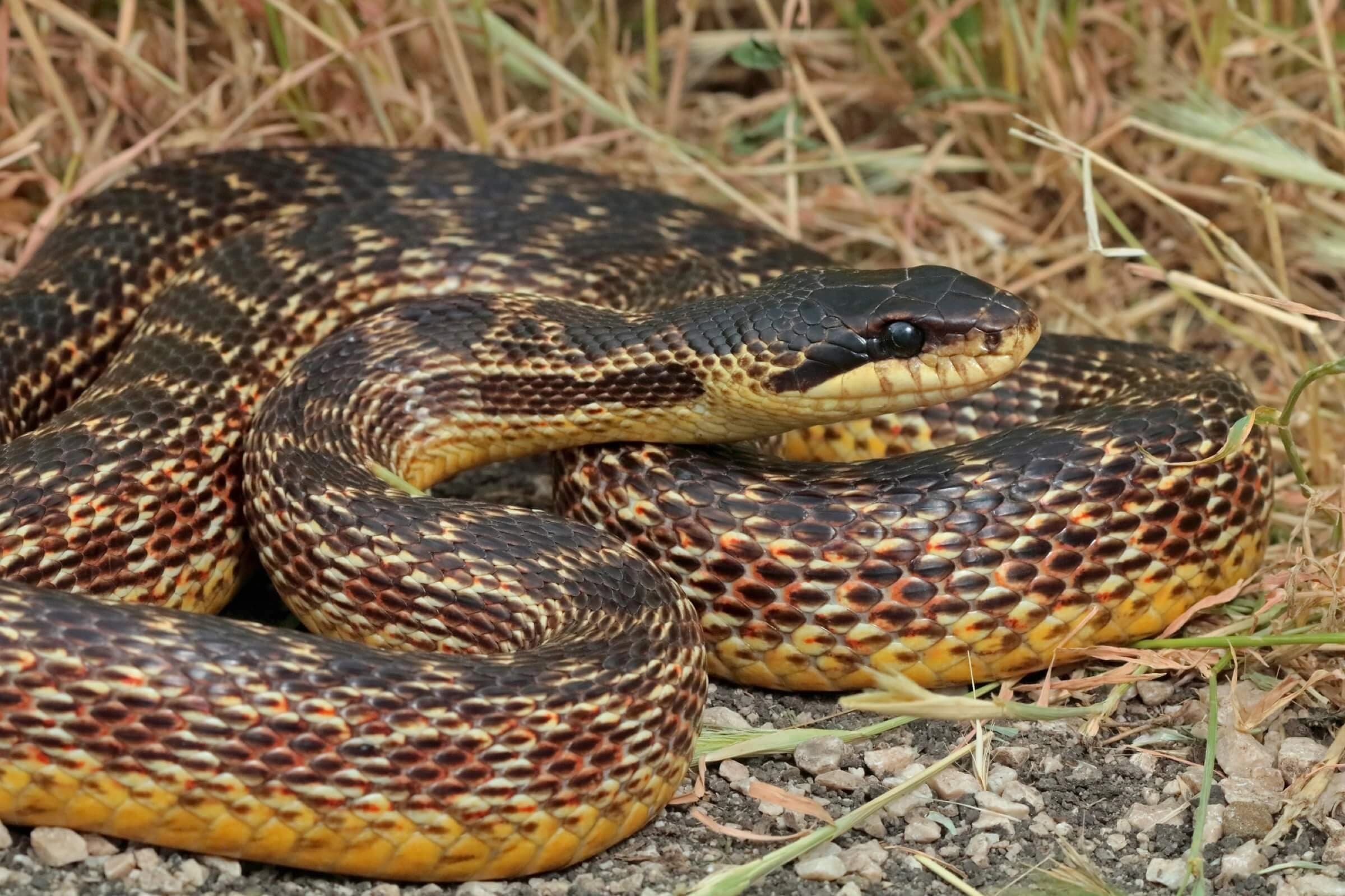
Urartian ratsnake
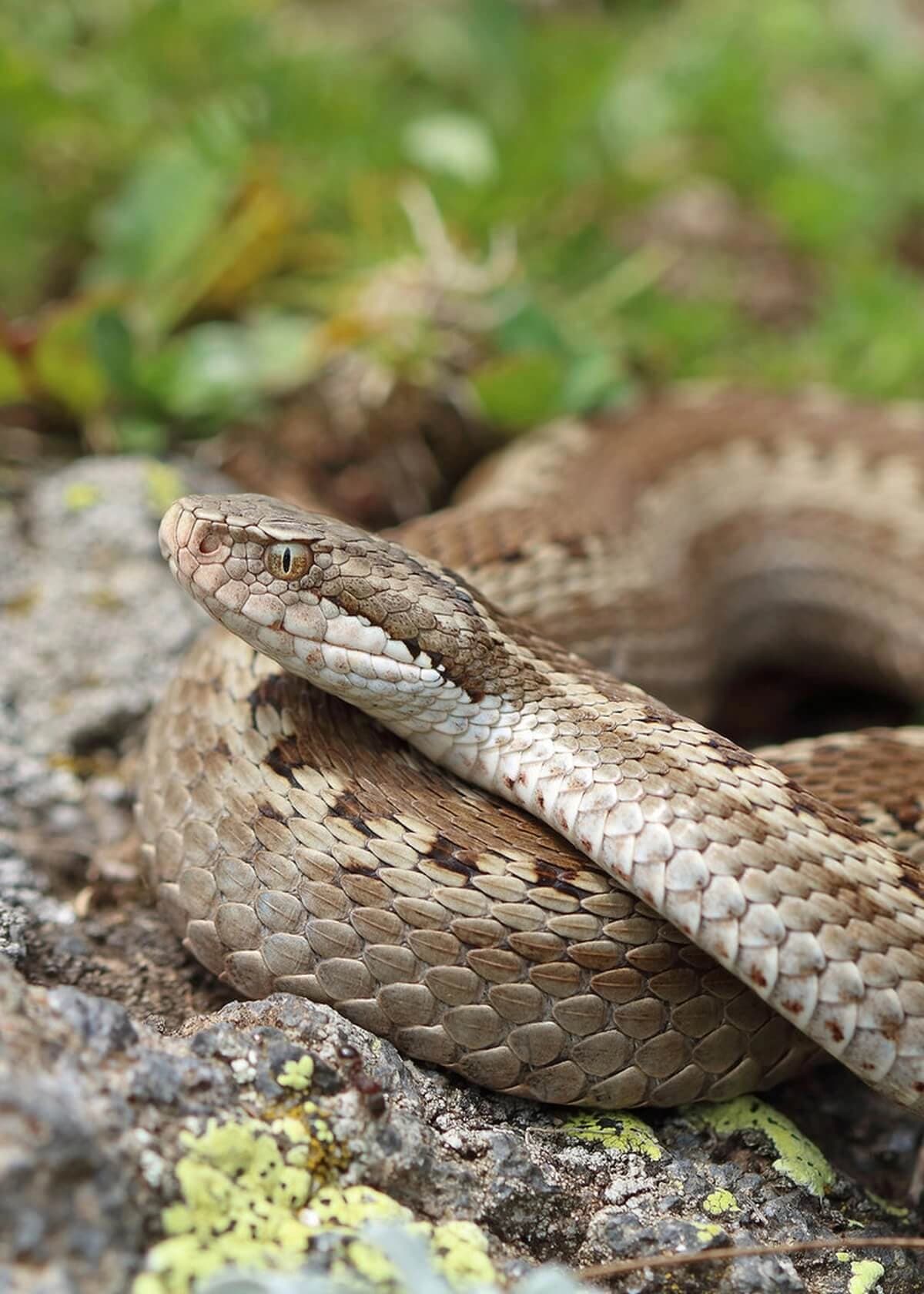
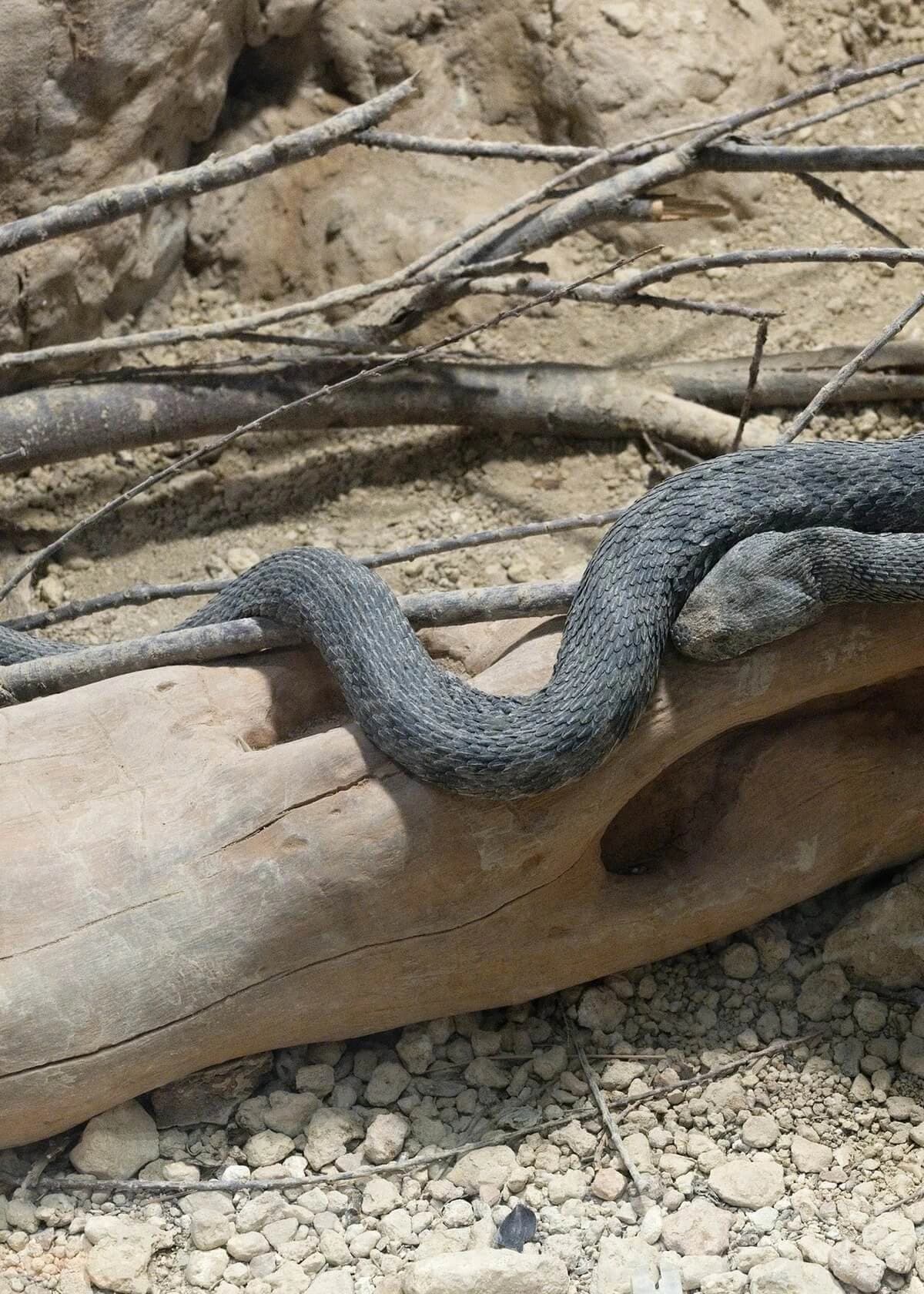
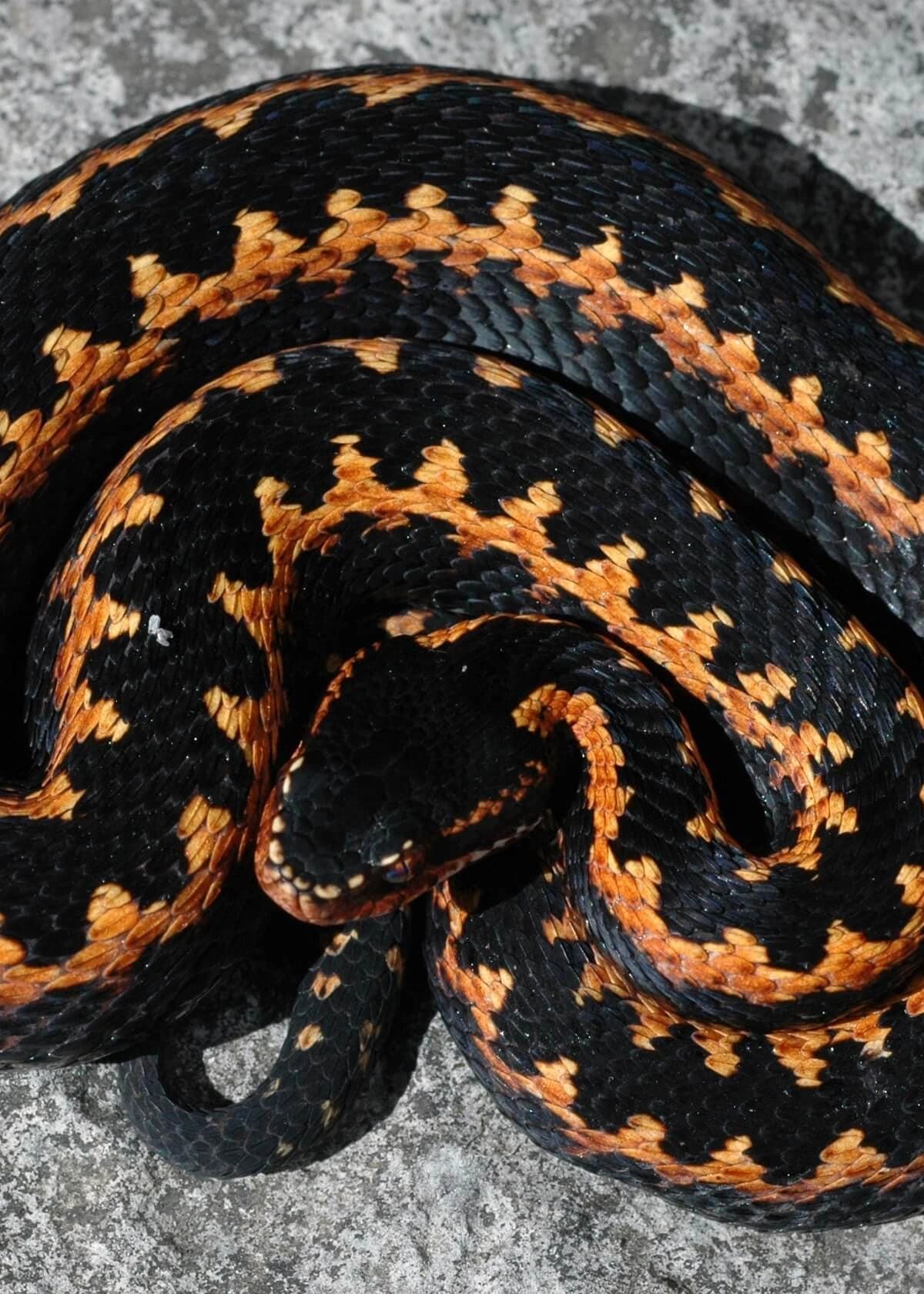
A harmless spotted ratsnake — described as a species in 2019; native to Kakheti and the dry landscapes of eastern Georgia.
At a glance
Key facts in one look
Habitat
Eastern Georgia
Length
approx. 0.8–1.2 m
Venom
None — harmless
Conservation
Not evaluated
Elevation
−25–2,600 m
Family
Colubridae
Gallery
Urartian ratsnake in photos
Interesting facts
What you should know
- 01
Named in honor of the ancient kingdom of Urartu — the species was described in 2019 (Jablonski et al.).
- 02
It was formerly confused with the four-lined/spotted ratsnake (Elaphe sauromates); the Caucasus and eastern Anatolia populations are now recognized as a separate species.
- 03
It has no venom — it kills prey by constriction; it is harmless to humans.
- 04
In Georgia it has been confirmed in Kakheti, the Dedoplistsqaro municipality, and around Tbilisi.
Biology
Diet, behavior, and conservation
Diet
It feeds on rodents, small birds, nestlings, and bird eggs; occasionally lizards too. It is a good climber — it often climbs shrubs and trees to raid nests. It kills prey by constriction; it has no venom.
Behavior
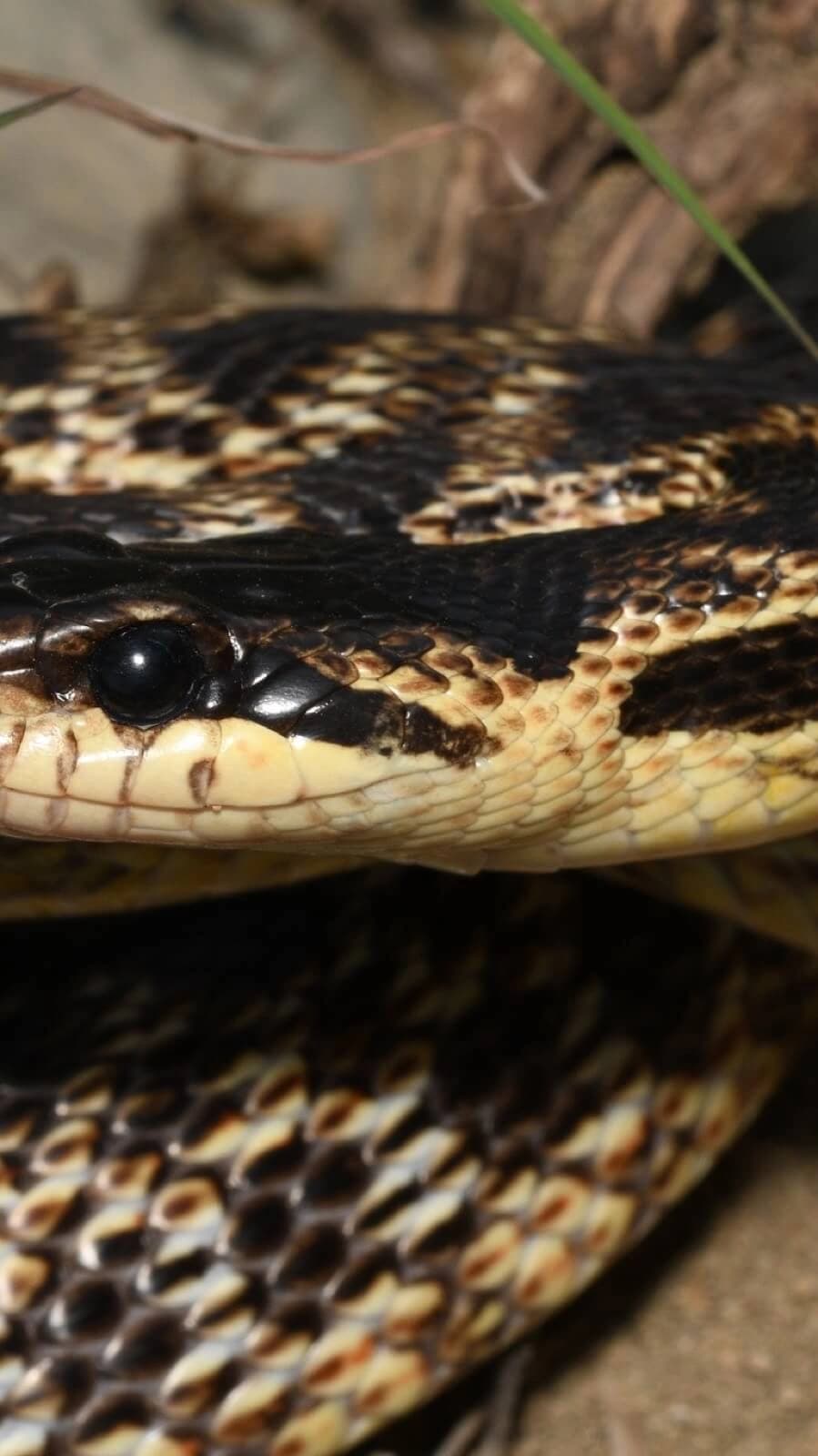
It is active by day. It is calm and cautious — when threatened it prefers to flee. Its head is relatively large, its snout profile often slightly upturned; its back bears 50–65 rounded brown or black blotches on a yellowish or whitish background, with a dark crown. It is egg-laying: mating occurs in spring, and the female lays several eggs (roughly 4–16, depending on her size); young hatch independently.
Conservation
It was described in 2019 and has not yet been separately assessed on the IUCN Red List. Its range is broad and the species is eurytopic; the similar species E. sauromates is assessed globally as Least Concern. Local threats include habitat conversion, road mortality, and killing due to confusion with venomous snakes. It benefits the ecosystem by reducing rodent numbers.
Questions
Frequently asked questions
Short answers to the most important questions about Urartian ratsnake.
No — it is harmless. It has no venom and kills prey only by constriction. When threatened it prefers to flee; it does not attack humans.
In eastern Georgia — in Kakheti (the Alazani plain, Dedoplistsqaro, Lagodekhi), around Tbilisi, and in the dry zone of the southeast. Its range is described extending west almost to Trialeti / toward Surami.
It looks very similar — it is a cryptic species. The difference is mainly genetic and geographic: E. urartica occurs in the Caucasus and eastern Anatolia, while E. sauromates occurs farther west (the Balkans, western/central Anatolia, the Pontic-Caspian steppes).
Rodents, small birds, nestlings, and eggs; occasionally lizards. It climbs trees and shrubs well to raid nests.
It is egg-laying. Mating occurs in spring; the female lays several eggs (usually roughly 4–16). Young hatch independently.