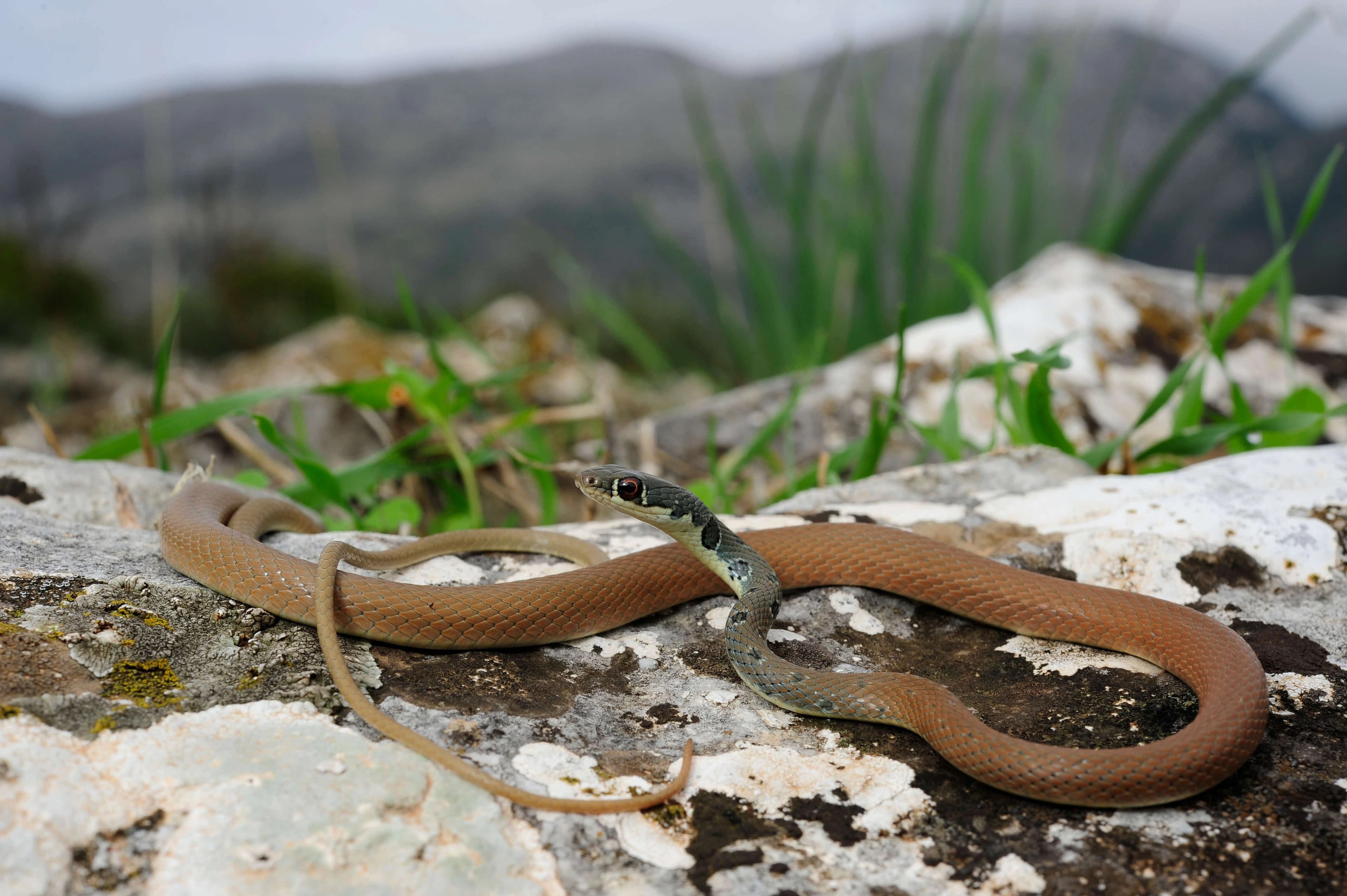
Dahl's whip snake
Platyceps najadum
A non-venomous, extremely slender racer with dark pale-edged neck spots and an olive to buckthorn-tan body — native to dry, rocky landscapes.
Last updated
At a glance
Key facts in one look
Habitat
Dry rocky terrain
Length
approx. 70–100 cm
Venom
None — harmless
Conservation
Least Concern (LC)
Elevation
0–2,000 m
Family
Colubridae
Gallery
Dahl's whip snake in photos
Identification
How to identify Dahl's whip snake
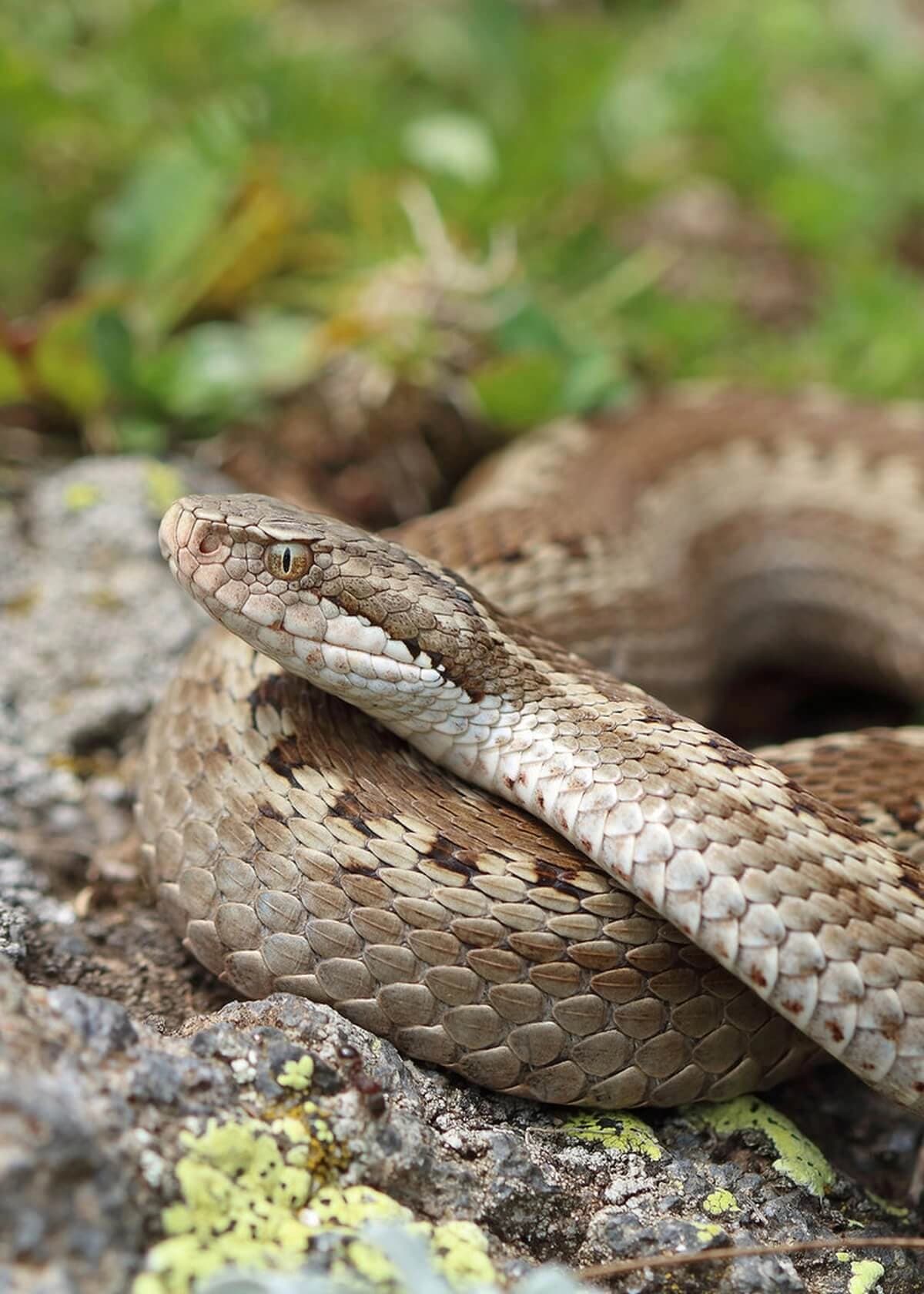
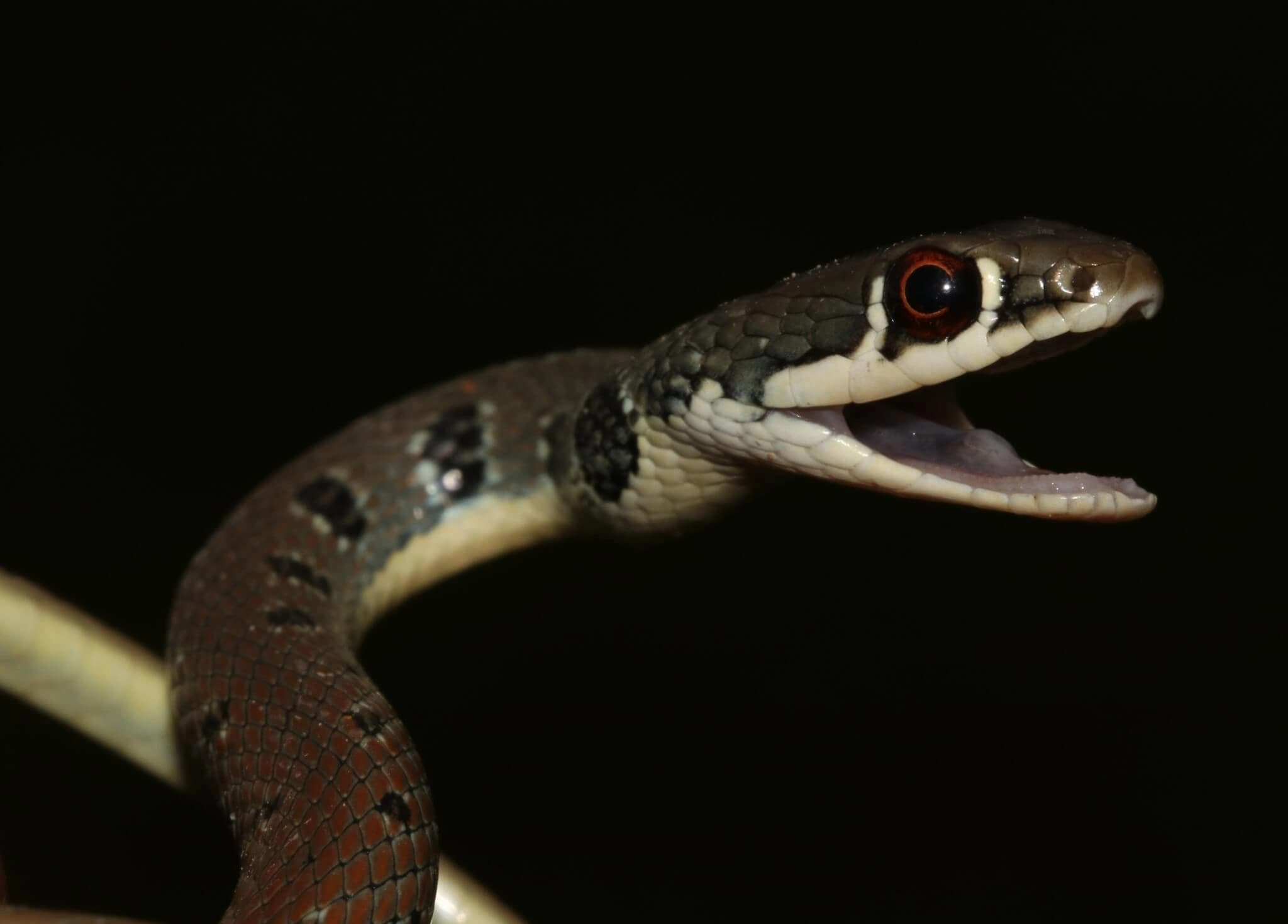
Dahl’s whip snake is a non-venomous, extremely slender, fast racer. Pale-edged neck ocelli are the main identification mark.
- 01
Dark, pale-edged spots (ocelli) on the neck are the key field mark.
- 02
The body is very slender; color is olive to buckthorn-tan.
- 03
The pupil is round — unlike the vertical pupil of venomous vipers.
- 04
Length is roughly 70–100 cm; it is one of the fastest racers in the region.
- 05
It occurs in dry, rocky habitats of eastern and southern Georgia.
Distribution
Where Dahl's whip snake lives in Georgia
Highlighted regions show where this species has been recorded.
Samtskhe — Javakheti · Shida Kartli · Kvemo Kartli · Kakheti
Interesting facts
What you should know
- 01
The dark pale-edged neck spots (ocelli) are the main identification mark of the species.
- 02
The body is so slender that the English name whip snake comes from that whip-like build.
- 03
It is non-venomous and harmless to humans — despite its speed and defensive displays.
- 04
In Georgia it has been recorded alongside other non-venomous racers — including in winter shelters of the red-bellied racer.
Biology
Diet, behavior, and conservation
Diet
It feeds mainly on lizards; it also takes small mammals, birds, and other snakes. It has no venom — it catches prey with speed and precision and may pin larger prey with body loops.
Behavior
It is diurnal — one of the fastest, most agile racers in the region. When threatened it prefers to flee; if cornered it may raise its head and gape, but it remains harmless to humans. It is egg-laying: mating usually occurs in April–May; females lay roughly 3–16 eggs (June–July). The neck ocelli and round pupil are key identification traits and help separate it from venomous vipers.
Conservation
Classified as Least Concern on the IUCN Red List. In Europe it is listed on Annex II of the Bern Convention and Annex IV of the EU Habitats Directive. Local threats include habitat conversion, intensive agriculture, wildfires, road mortality, and killing due to confusion with venomous snakes. It benefits the ecosystem by reducing lizards and small rodents.
Questions
Frequently asked questions
Short answers to the most important questions about Dahl's whip snake.
No — it is non-venomous and harmless to humans. It is fast and prefers to flee when threatened; if cornered it may gape, but it poses no real danger.
Mainly in the dry, rocky, and grassy landscapes of the east and south — Kartli, Kakheti, Samtskhe–Javakheti, and similar habitats. Vertically it occurs from sea level to roughly 2,000 m.
It has dark pale-edged neck spots, a very slender body, and a round pupil. The red-bellied racer (Dolichophis schmidti) has a red or orange belly and a more robust build; vipers have keeled scales and a vertical pupil.
Mainly lizards; also small mammals, birds, and other snakes. It has no venom — it hunts with speed.
It is egg-laying. Mating is in April–May; the female lays roughly 3–16 eggs, and young hatch independently.
References
Sources & References
References
Sources & References
- IUCN Red List
- GBIF
- The Reptile Database
- Wikipedia
- Scientific publications
Species profiles are compiled from peer-reviewed literature and established biodiversity databases, and are reviewed as new taxonomic and conservation data become available.