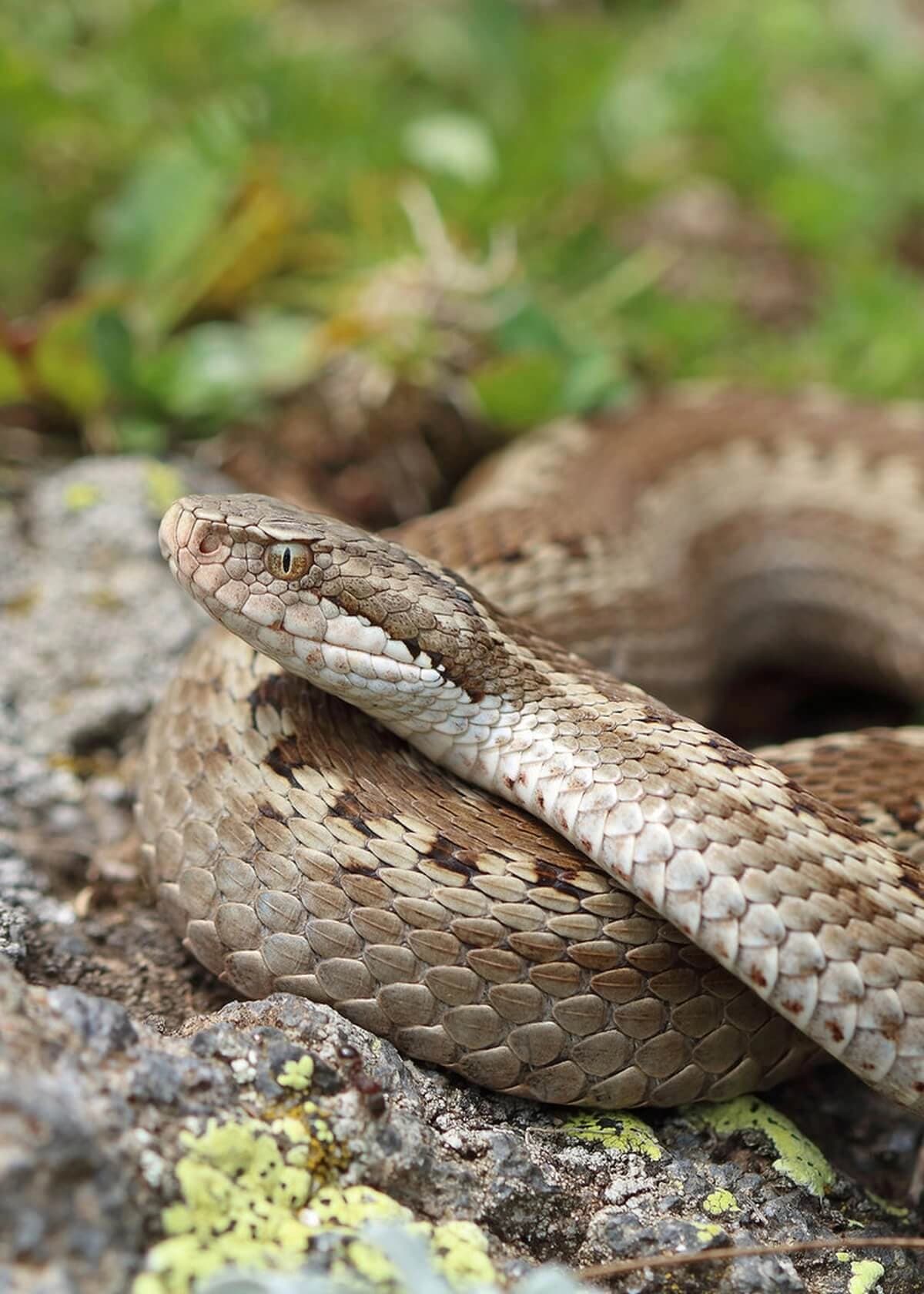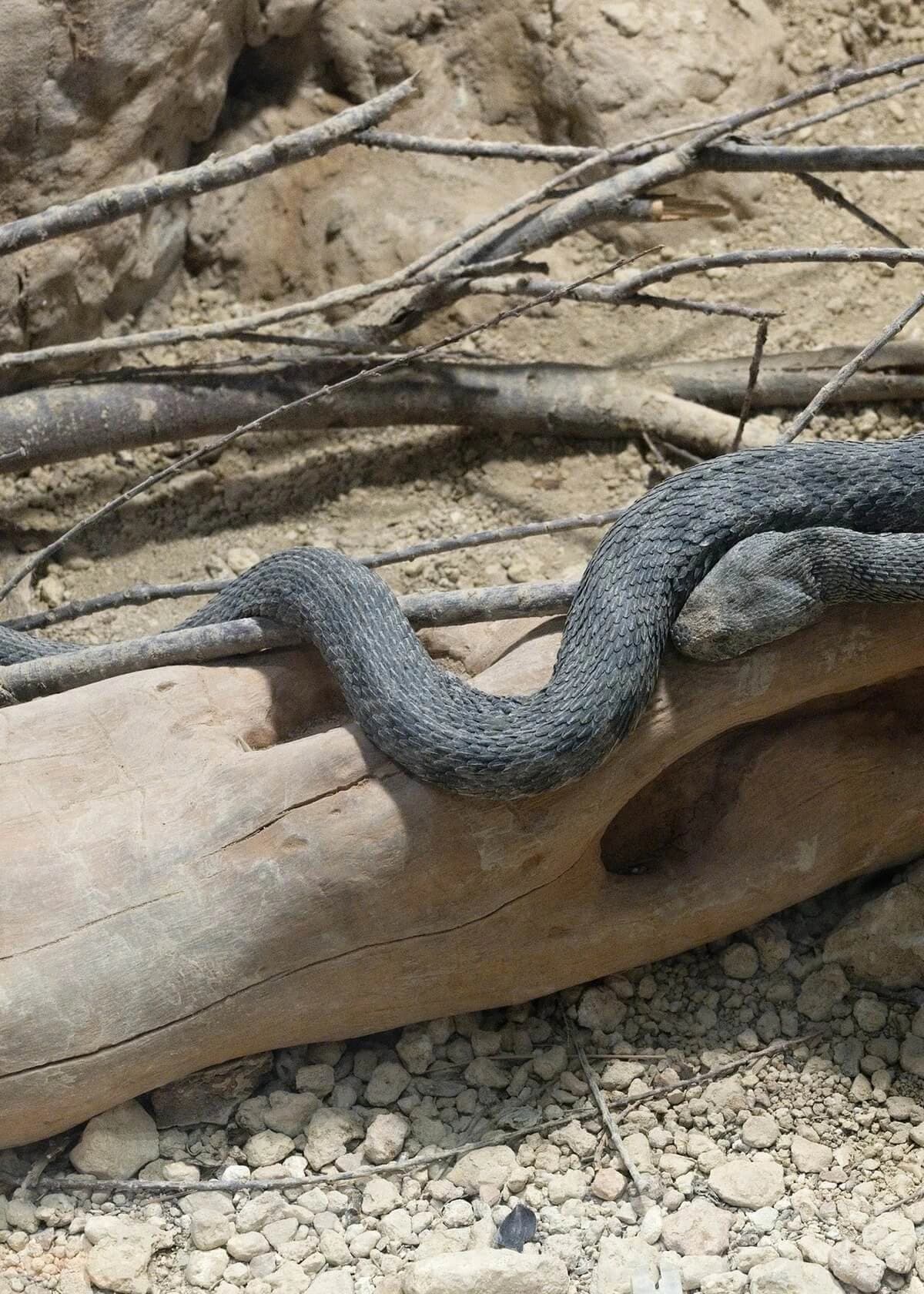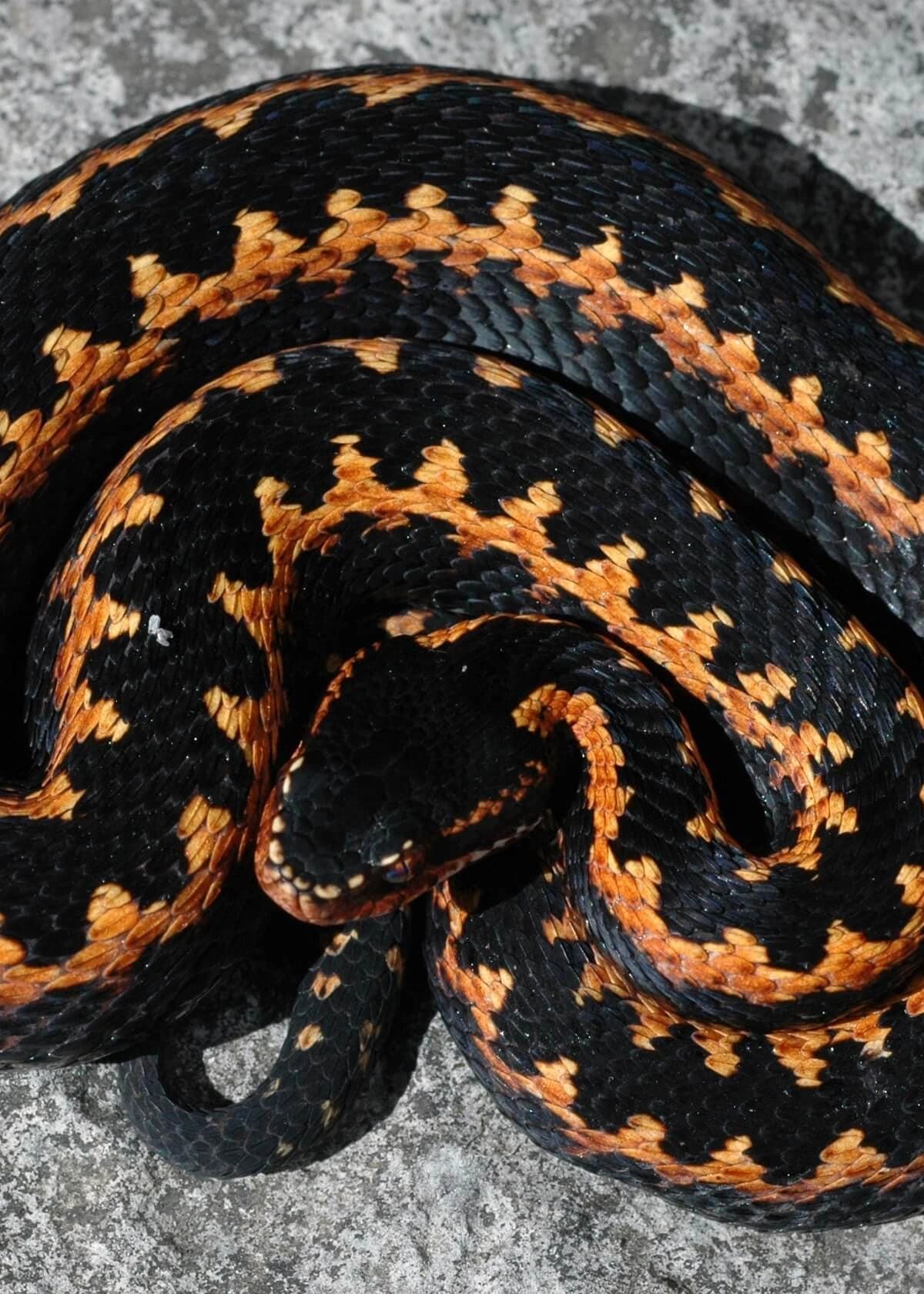
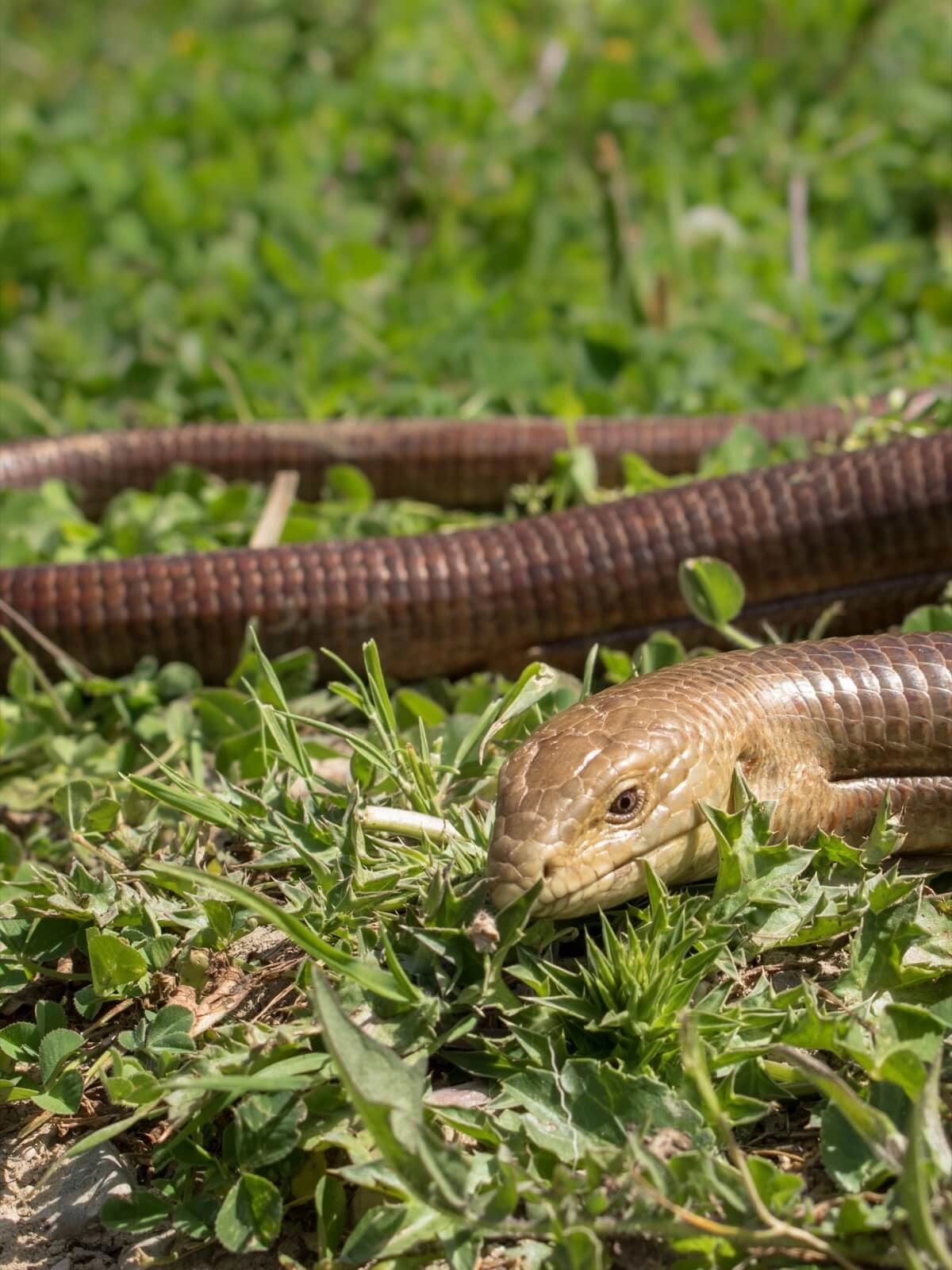
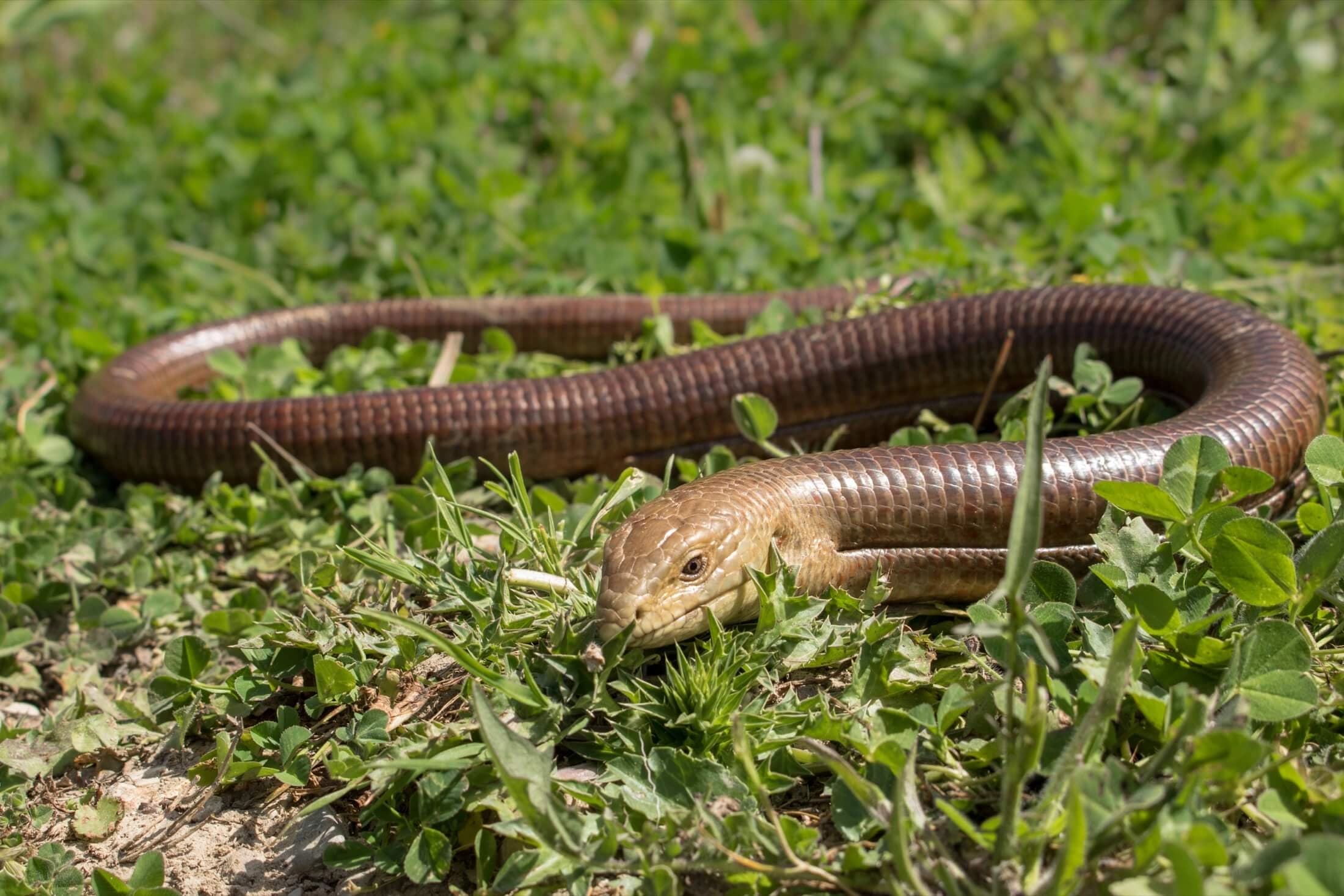
European glass lizard
A legless lizard often mistaken for a snake — with eyelids, ear openings, and a lateral fold; harmless.
At a glance
Key facts in one look
Habitat
Georgia — widespread
Length
approx. 1–1.35 m
Venom
None — harmless
Conservation
Least Concern (LC)
Elevation
0–2,000 m
Family
Anguidae
Gallery
European glass lizard in photos
Interesting facts
What you should know
- 01
It is not a snake — it is a legless lizard: it has eyelids, ear openings, and a lateral skin fold.
- 02
The name Pseudopus apodus comes from Greek and roughly means "false-footed" or "footless"; the English name sheltopusik comes from the Russian for "yellow-belly" (желтопузик).
- 03
It occurs almost everywhere in Georgia and sometimes ranges up to 2,000 m elevation.
- 04
Its favorite food is snails and slugs — so it is seen more often in wet weather.
Biology
Diet, behavior, and conservation
Diet
It feeds on invertebrates — especially snails and slugs, as well as insects and other arthropods; occasionally small lizards, eggs, and small mammals. Its powerful jaws make it easy to crack snail shells. It is more active while hunting in wet weather.
Behavior
It is active by day. It is often mistaken for a snake, though it has movable eyelids, external ear openings, and a deep skin fold along its side (a lateral groove); vestigial hind limbs are sometimes visible near the cloaca. When threatened it hisses, bites, or releases a secretion; tail autotomy is possible but rarer than in other "glass lizards" — hence the name glass lizard. It is egg-laying: it lays roughly 8–10 eggs (in Georgia often in June–July); young hatch in roughly 45–55 days.
Conservation
Classified as Least Concern on the IUCN Red List; the population is assessed as stable. It is not listed in Georgia's Red List. Local threats include habitat conversion and killing due to confusion with snakes. It is beneficial to agriculture — it reduces harmful insects and mollusks.
Questions
Frequently asked questions
Short answers to the most important questions about European glass lizard.
It is a lizard. Unlike a snake, it has movable eyelids, external ear openings, and a deep skin fold along its side; vestigial hind limbs are sometimes visible near the cloaca.
It is harmless — it has no venom. When threatened it may hiss or bite, but it poses no danger to humans. It is beneficial: it reduces harmful insects and mollusks.
Almost everywhere — in fields, open woodland, gardens, and sometimes village yards. Vertically it ranges up to roughly 2,000 meters.
Because of tail autotomy — the tail can break off and shatter into pieces, which fueled an old myth that the animal shatters like glass. The tail regrows slowly, though it often stays shorter and darker.
It is egg-laying. It usually lays roughly 8–10 eggs (in Georgia often in June–July); young hatch in roughly 45–55 days.