Smooth snake
A harmless colubrid snake with copper-toned coloring — secretive, smooth-scaled, and often confused with a viper.
At a glance
Key facts in one look
Habitat
Foothills–alpine zone
Length
approx. 60–80 cm
Venom
None — harmless
Conservation
Least Concern (LC)
Reproduction
Ovoviviparous
Family
Colubridae
Gallery
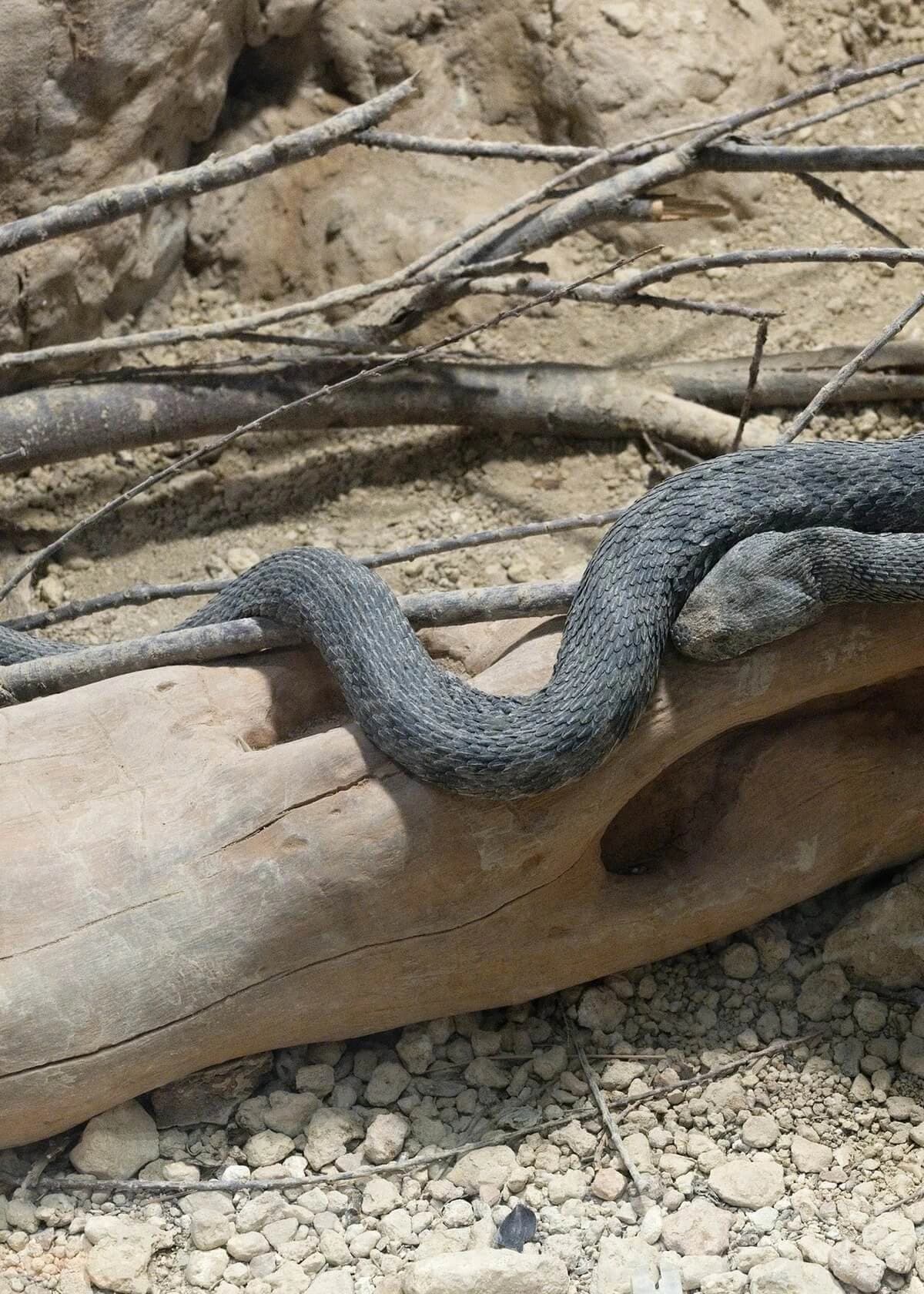
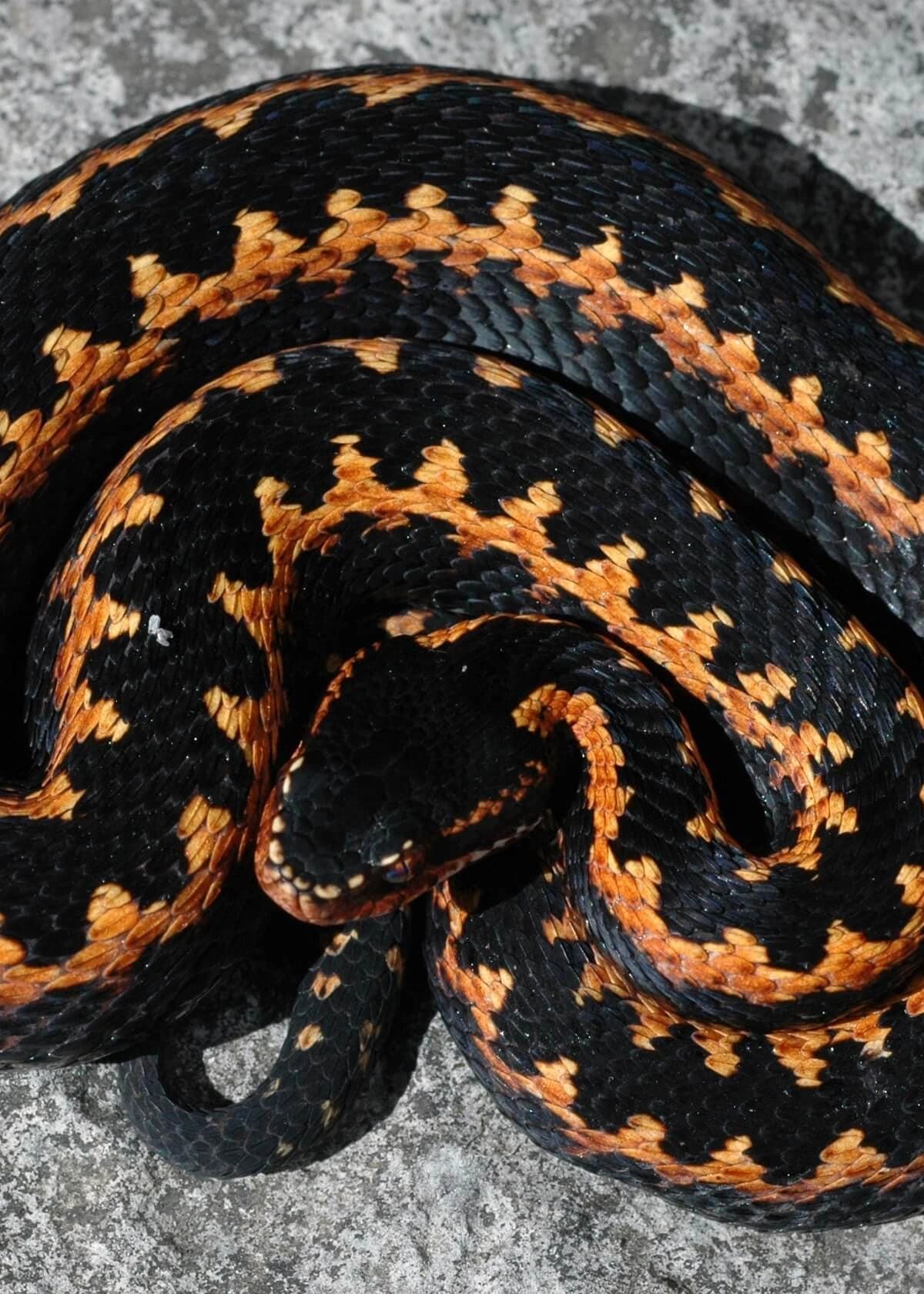
Smooth snake in photos
Interesting facts
What you should know
- 01
The name "smooth snake" refers to its smooth scales; its coppery or reddish coloring gave rise to its Georgian name.
- 02
It is not venomous, though its head pattern and coloring often resemble a viper's — so it is sometimes killed without cause.
- 03
It is ovoviviparous: young are born live, usually 2–15 individuals.
- 04
The genus name Coronella means "little crown" in Latin — a crown-like dark pattern is often visible on its head.
Biology
Diet, behavior, and conservation
Diet
It feeds mainly on lizards; also rodents, insects, lizard eggs, and occasionally other small snakes. It pins and constricts larger prey with coils of its body — not a true constrictor, but constriction is an important part of its hunting.
Behavior
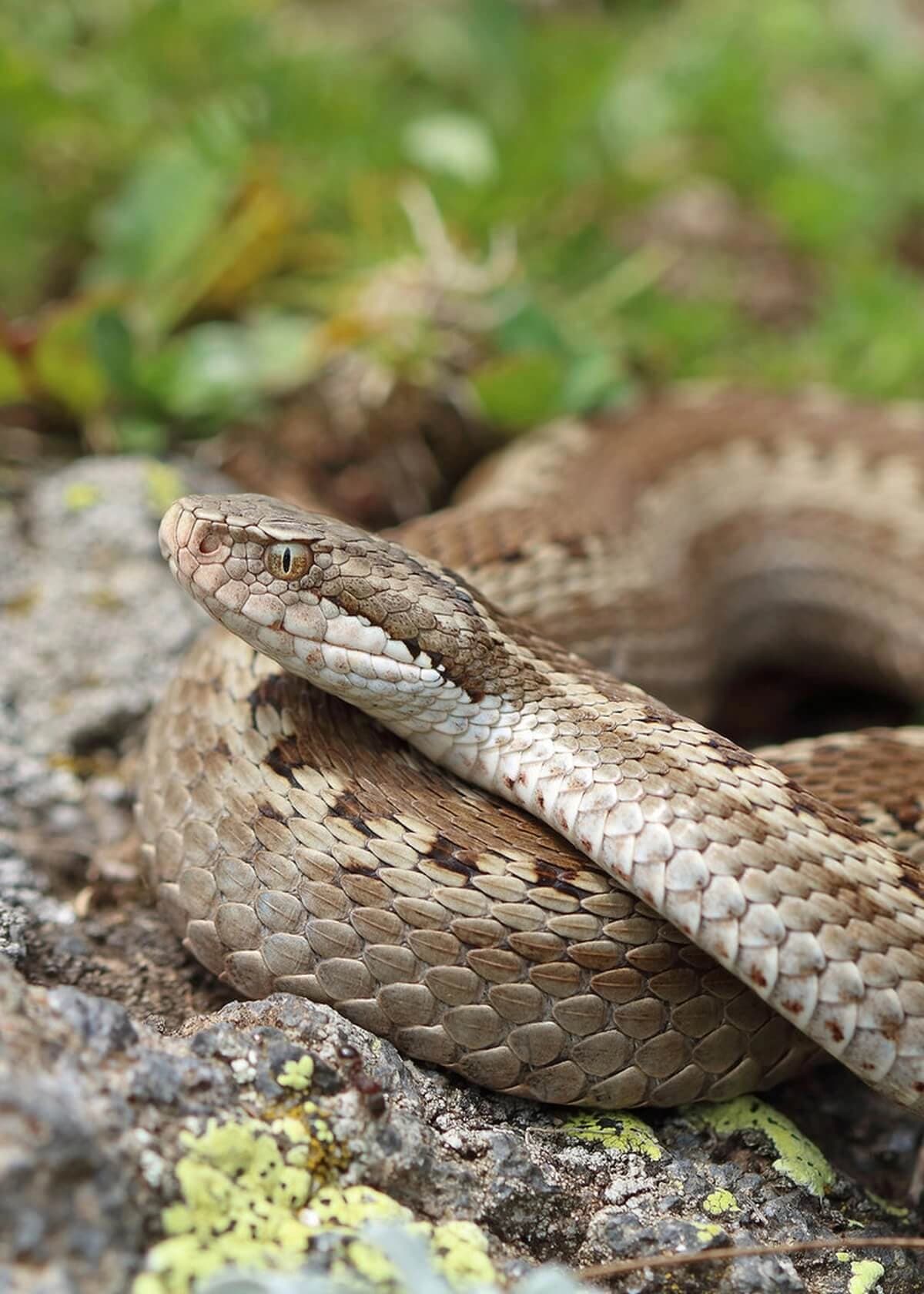
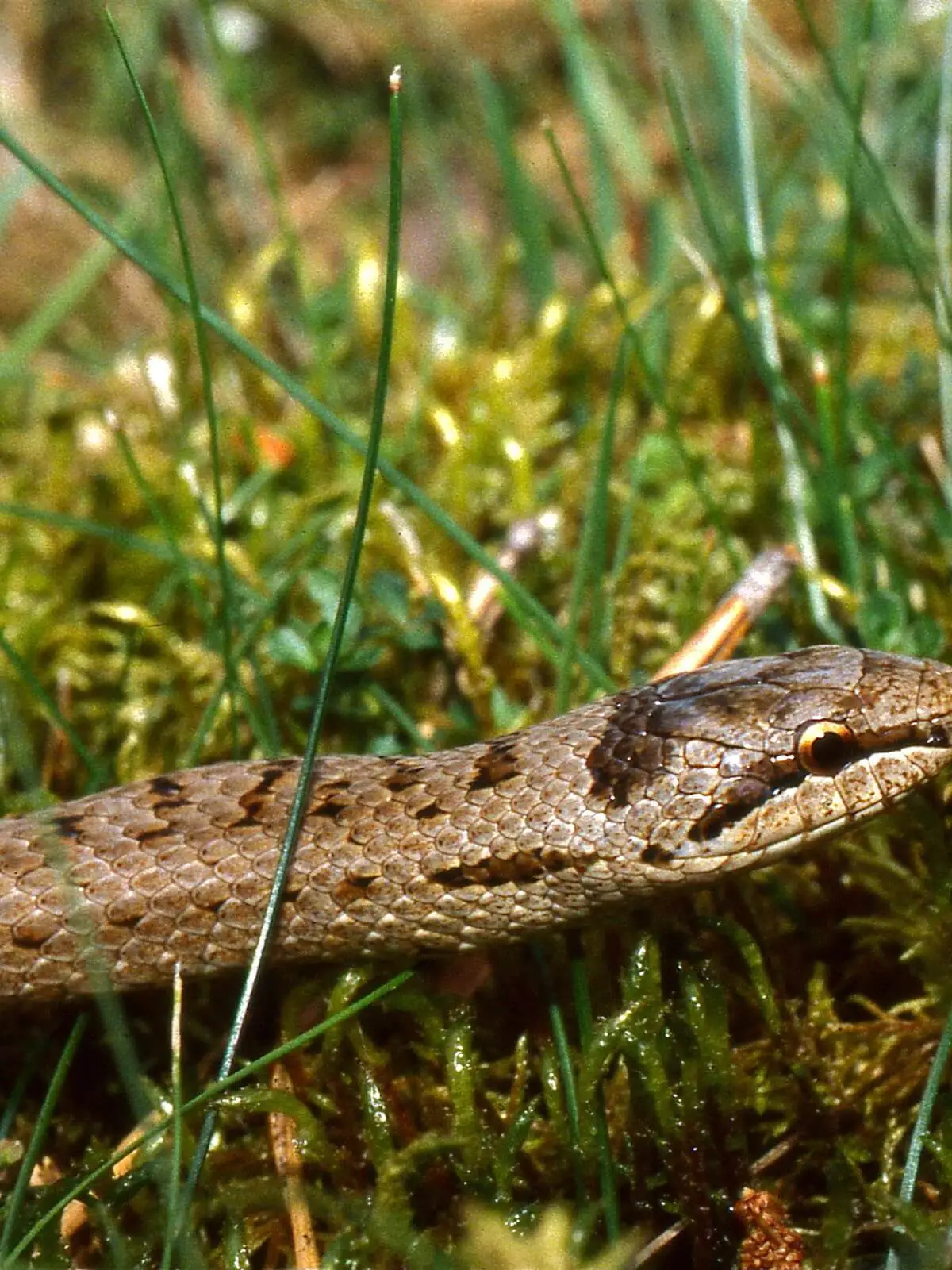
It is a secretive, diurnal snake. Its coloring and head pattern often resemble a viper's, though its scales are smooth (not keeled), its pupil is round, and a crown-like dark pattern is often visible on its head — the source of the genus name Coronella. It is ovoviviparous: young are born live, usually 2–15 individuals. Adult length is roughly 60–80 cm.
Conservation
Classified as Least Concern on the IUCN Red List. In Europe it is protected under the Bern Convention and the Habitats Directive. Local threats include habitat conversion and killing due to confusion with vipers. It benefits the ecosystem by regulating lizard and rodent numbers.
Questions
Frequently asked questions
Short answers to the most important questions about Smooth snake.
It is harmless — it has no venom. It may bite if caught or threatened, but it poses no danger to humans.
The smooth snake has smooth scales, a round pupil, and often a crown-like pattern on its head. A viper has keeled scales, a vertically slit pupil, and often a zigzag stripe along its back.
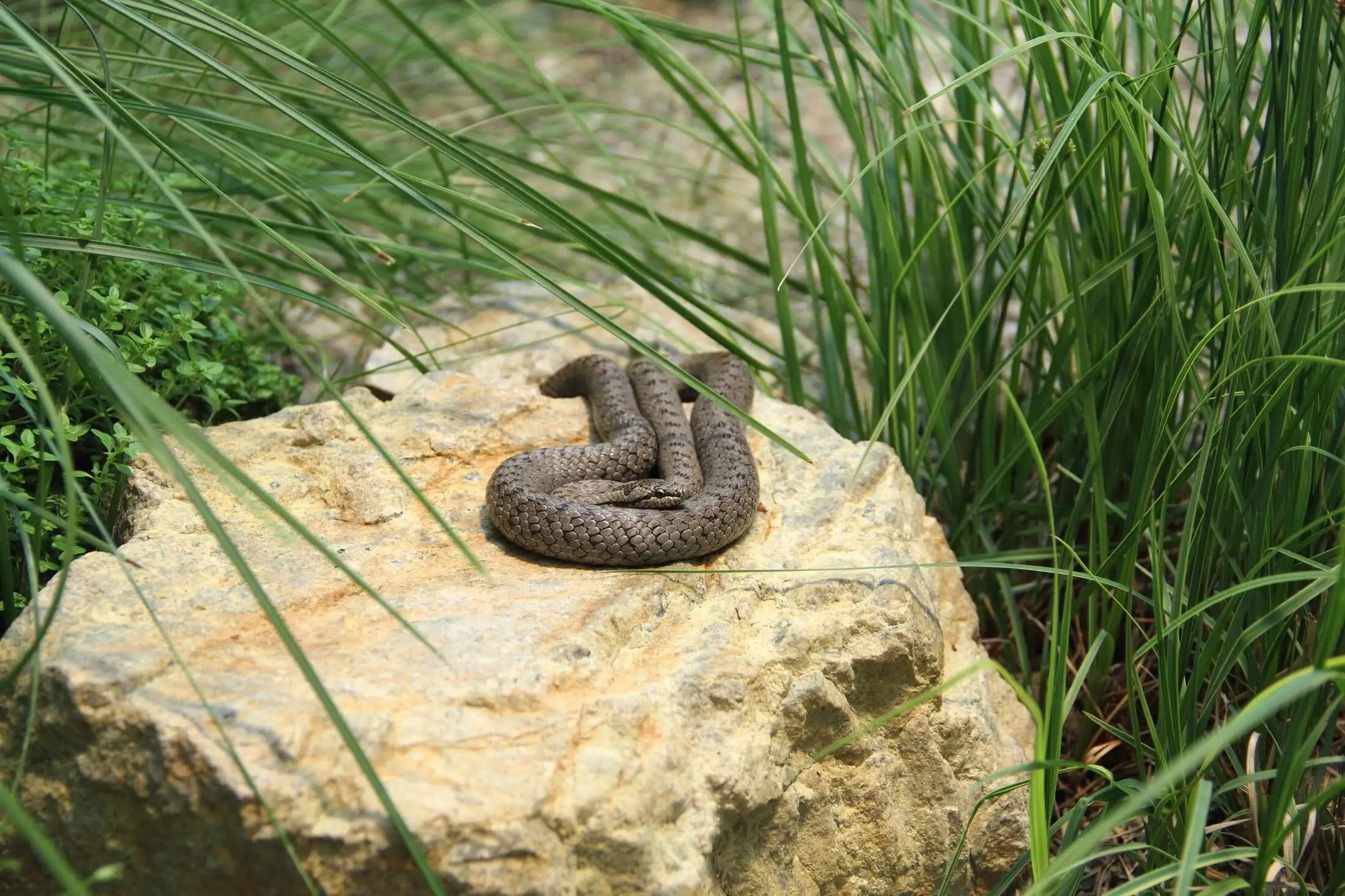
In the foothills, forest, subalpine, and alpine zones — in relatively dry, stony, scrubby terrain. It hides in burrows, under stones and logs.
Mainly lizards; also rodents, insects, and occasionally other small snakes. It pins larger prey with coils of its body.
It is ovoviviparous — young are born live, usually 2–15 individuals.