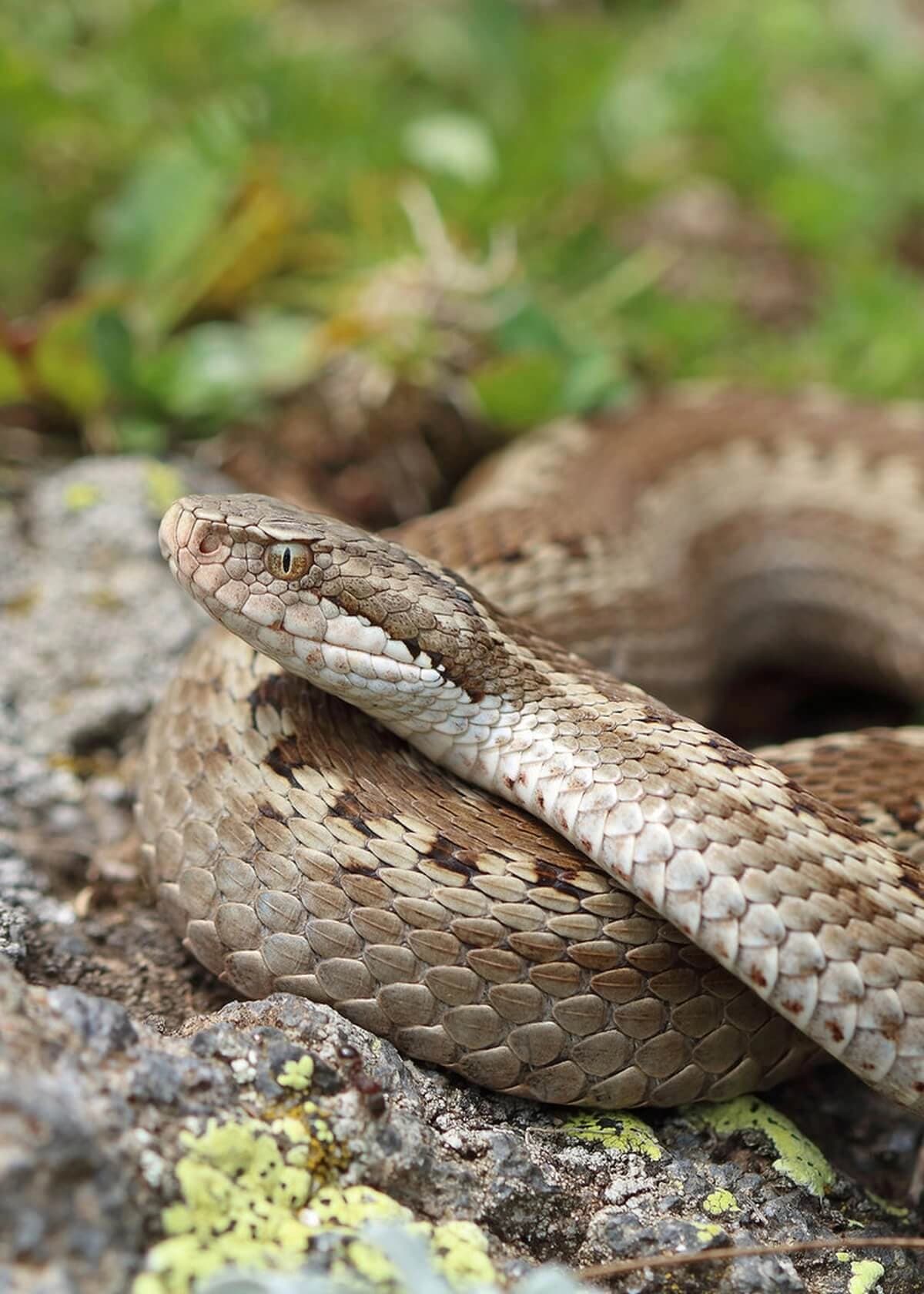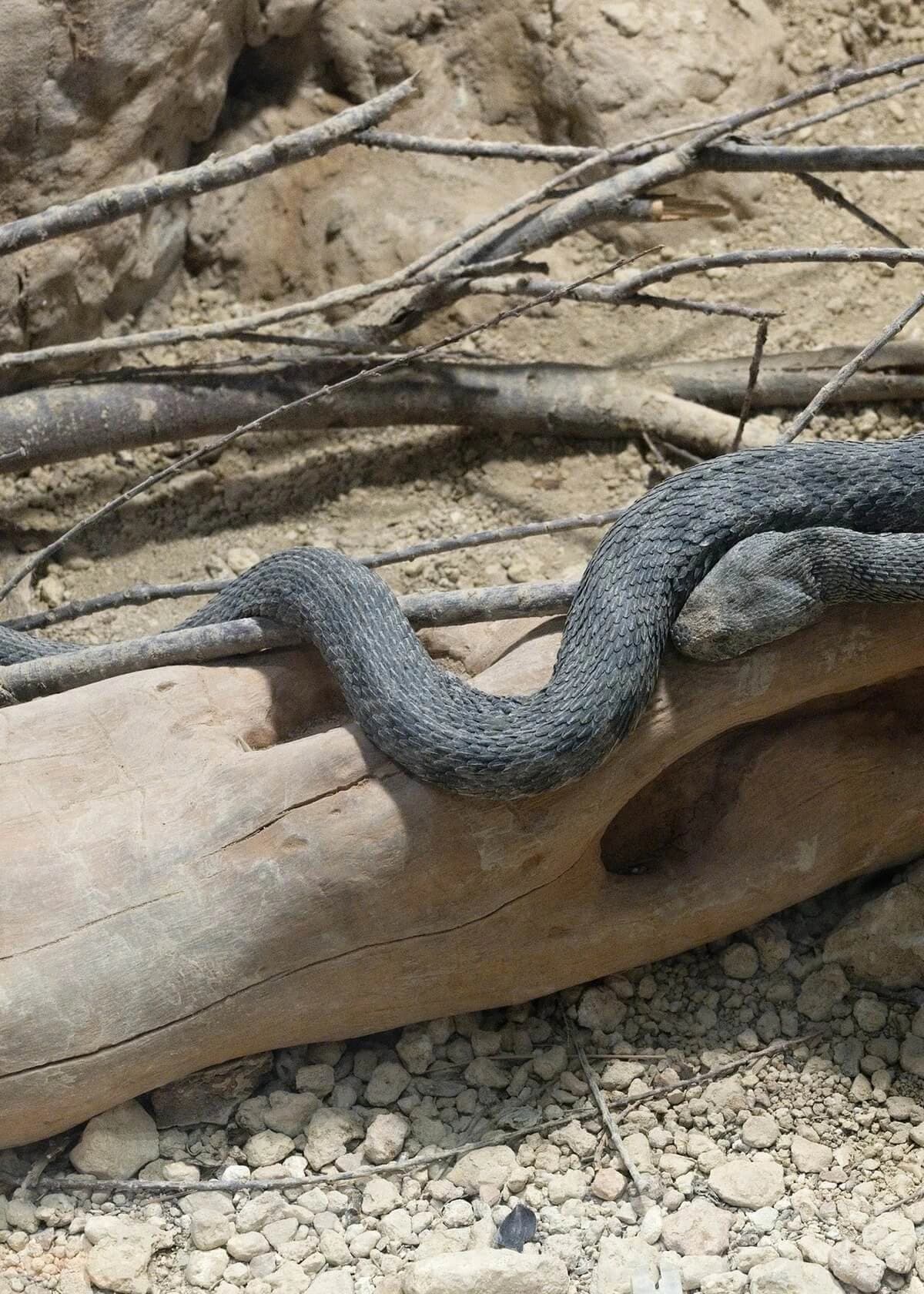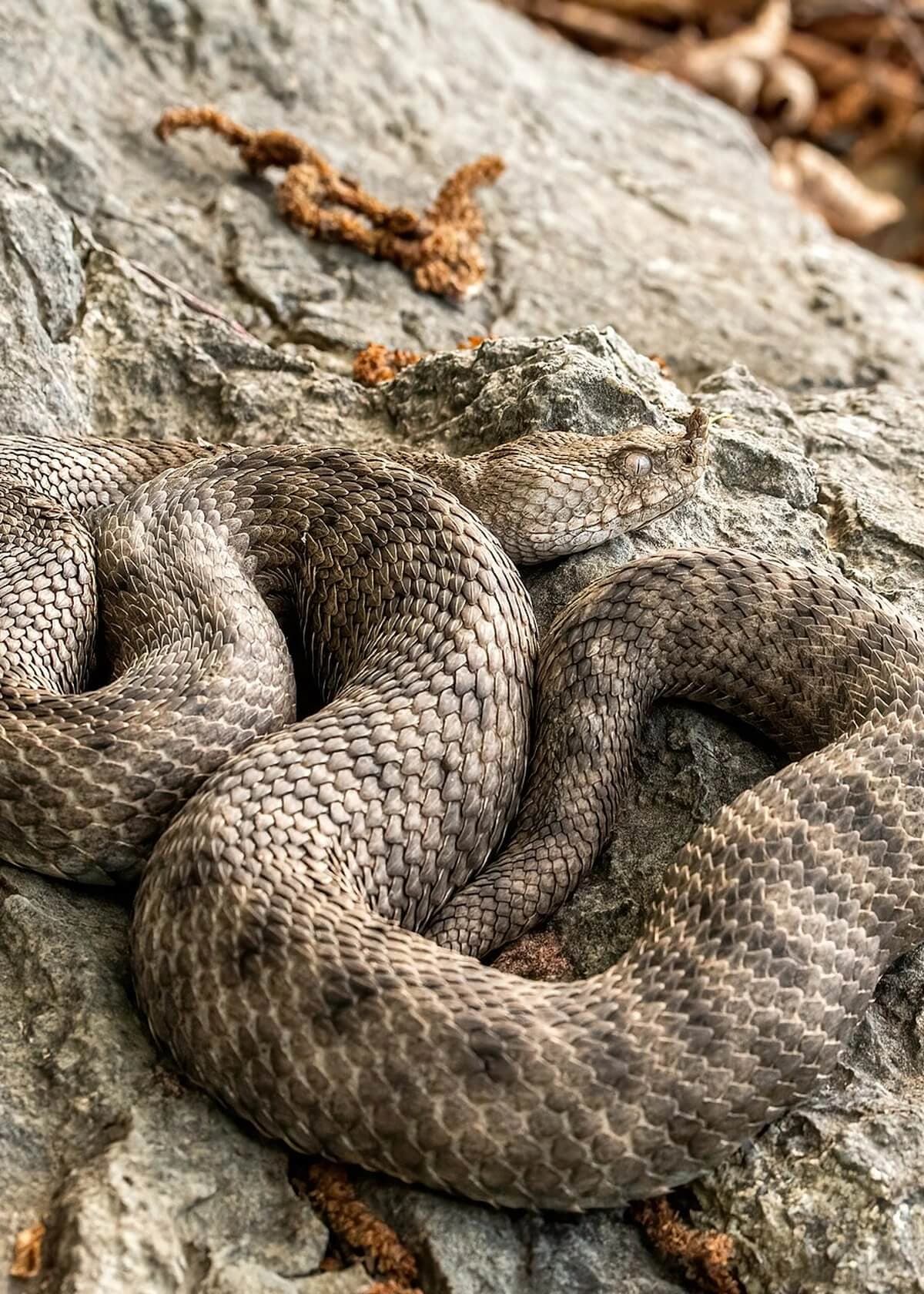
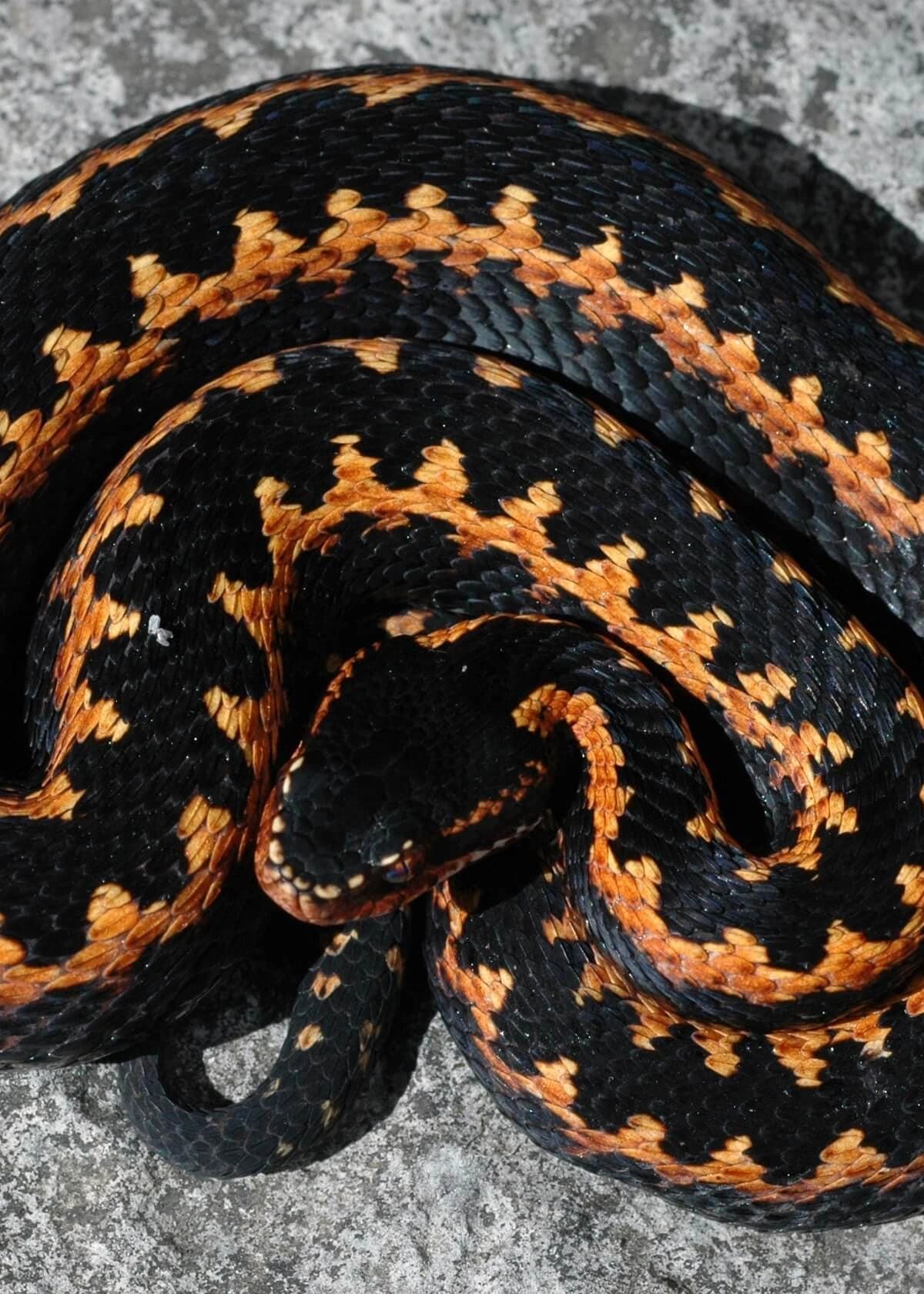
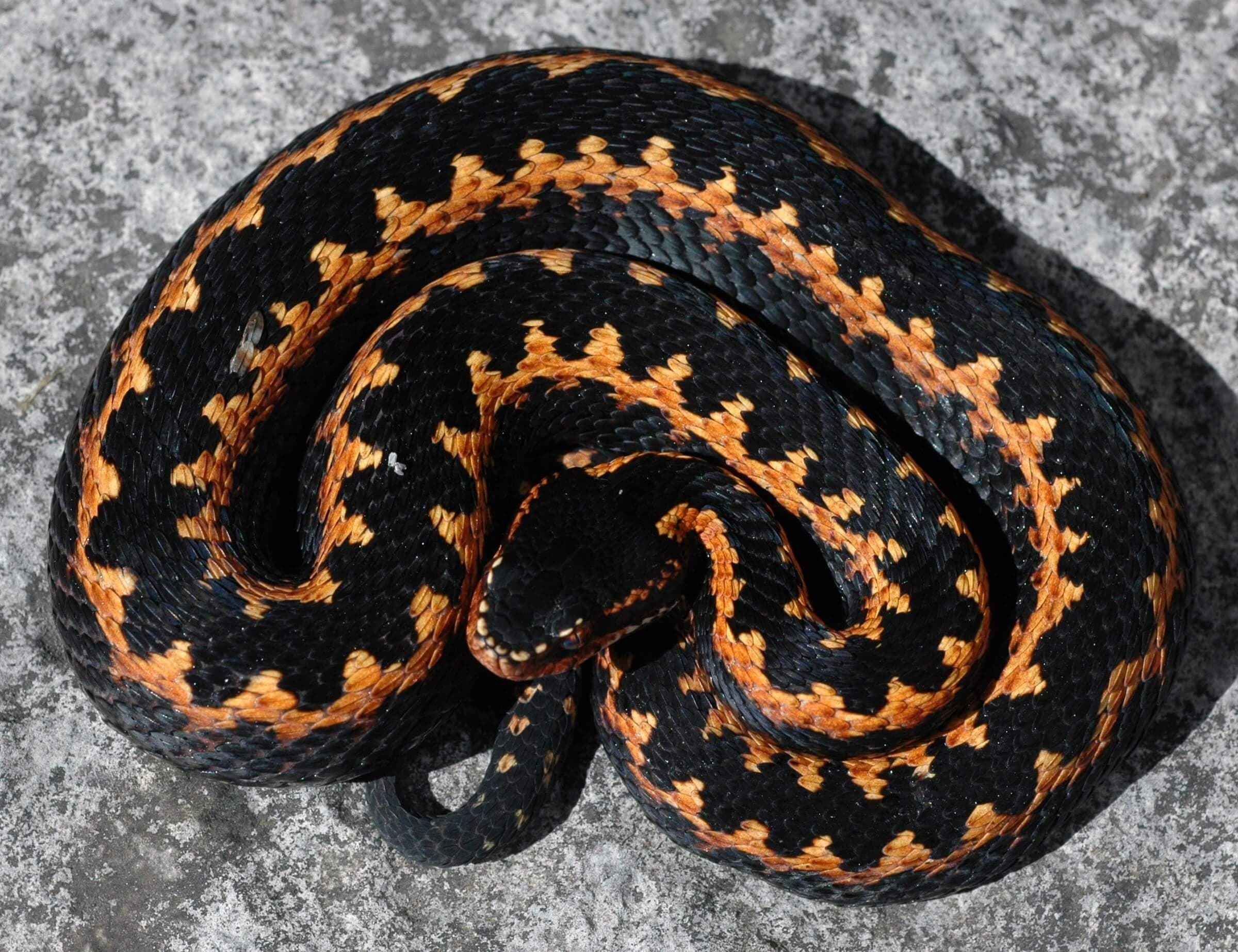
Caucasus viper
A venomous viper endemic to the Caucasus — a rare inhabitant of Colchic forests and the Black Sea coast.
At a glance
Key facts in one look
Habitat
Western Caucasus
Length
approx. 45–65 cm
Venom
Venomous
Conservation
Endangered (EN)
Elevation
0–1,000 m
Family
Viperidae
Gallery
Caucasus viper in photos
Interesting facts
What you should know
- 01
Named in honor of Russian naturalist Alexander Nikolaevich Kaznakov.
- 02
Red and orange dominate its coloration; melanism is common, though a red or yellow tint remains around the mouth.
- 03
It is ovoviviparous — it bears 5–10 young in autumn; the loss of the mother therefore destroys the entire brood.
- 04
IUCN status — Endangered; it is listed in Georgia's Red List.
Biology
Diet, behavior, and conservation
Diet
Adults feed on rodents (wood and field mice, voles), lizards, and small birds. Juveniles feed mainly on small lizards and insects — grasshoppers and crickets. It hunts by ambush and subdues prey with venom.
Behavior
It has a secretive way of life. On the Black Sea coast it emerges from hibernation in March; at 600–800 m elevation — in the second half of April or early May. Mating runs from late March to mid-May (in Georgia often in May–June). It is ovoviviparous: in autumn, in August–September, it bears 5–10 young. It hibernates on the coast from November, and at higher elevation from late September or early October.
Conservation
Classified as Endangered on the IUCN Red List; the population is declining. It is listed in Georgia's Red List and Appendix II of the Bern Convention (strictly protected). Major threats include habitat destruction (tourism, urbanization, agriculture, dams in Turkey), illegal collection for the pet trade, and deliberate or accidental killing by humans. Some coastal populations have already disappeared.
Questions
Frequently asked questions
Short answers to the most important questions about Caucasus viper.
It is venomous, and its danger level is rated moderate. It is secretive and does not attack unless it feels threatened; bites are rare. Immediate medical attention is required in the event of a bite.
In western Georgia — in Abkhazia, Adjara, Guria, and Imereti; also in the Borjomi gorge (Banistskali basin). It inhabits humid Colchic forests, ravines, and meadows.
The Caucasus viper lives at lower elevations (mainly 0–1,000 m), inhabits humid Colchic forest, and is distinguished by its red-orange coloration. Dinnik's viper is a high-mountain species (approx. 1,500–2,800 m) found in the subalpine zone of the Greater Caucasus.
Its range is narrow and the population is declining. Habitat is being destroyed by tourism, urbanization, and agriculture; illegal collection and killing by humans are additional threats. Some coastal populations have already disappeared.
It is ovoviviparous. Mating occurs in spring; in autumn, in August–September, it bears 5–10 young.