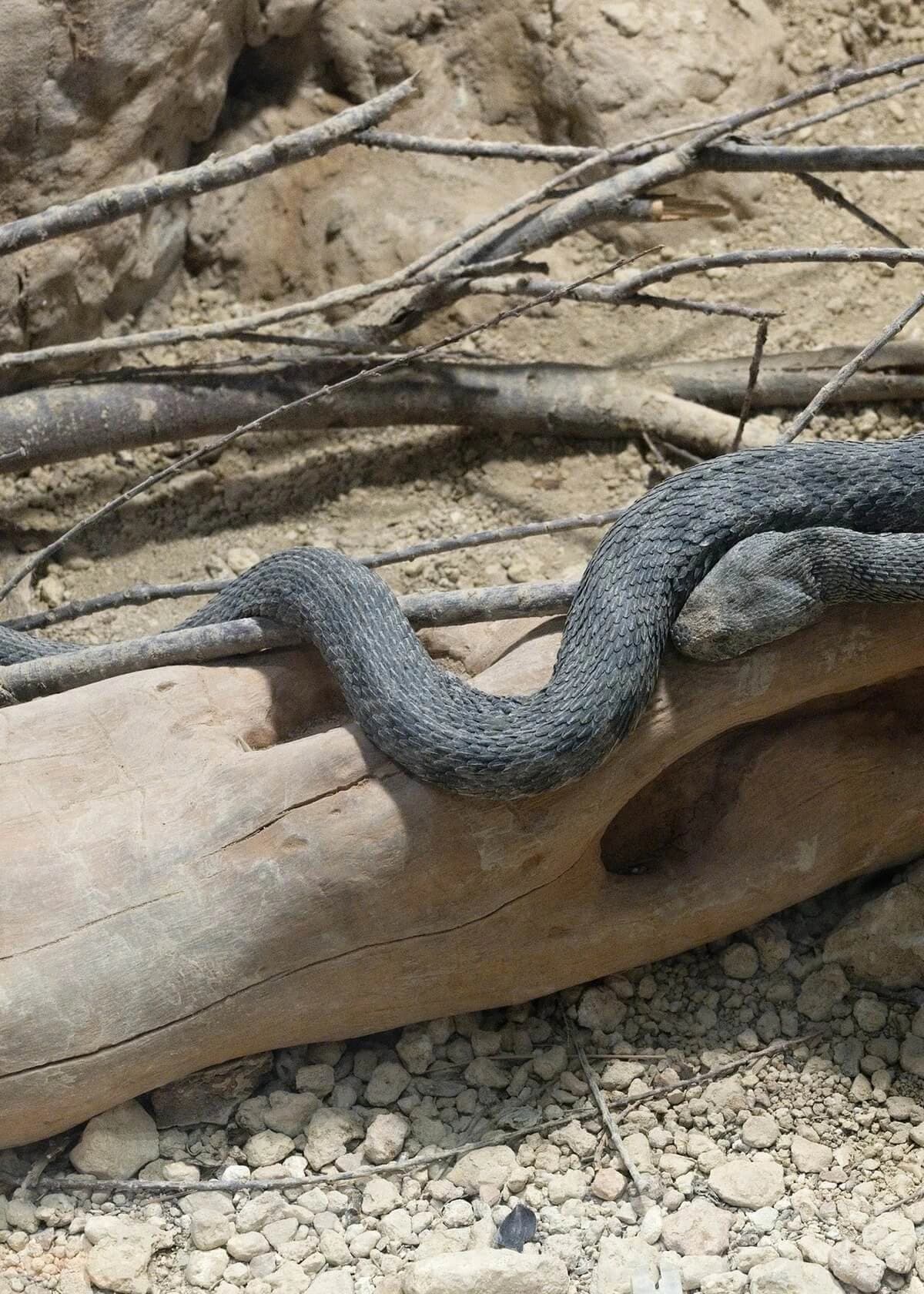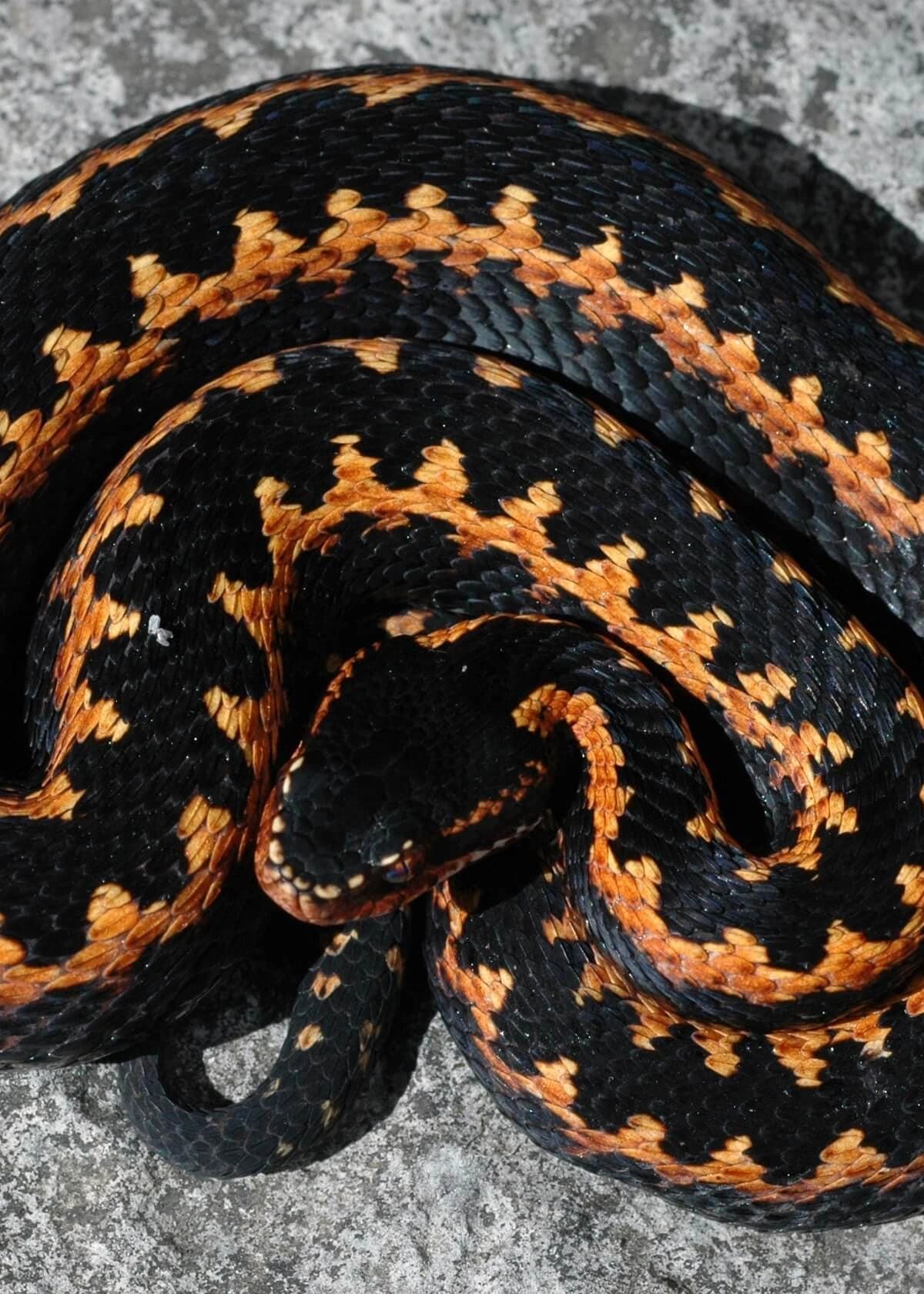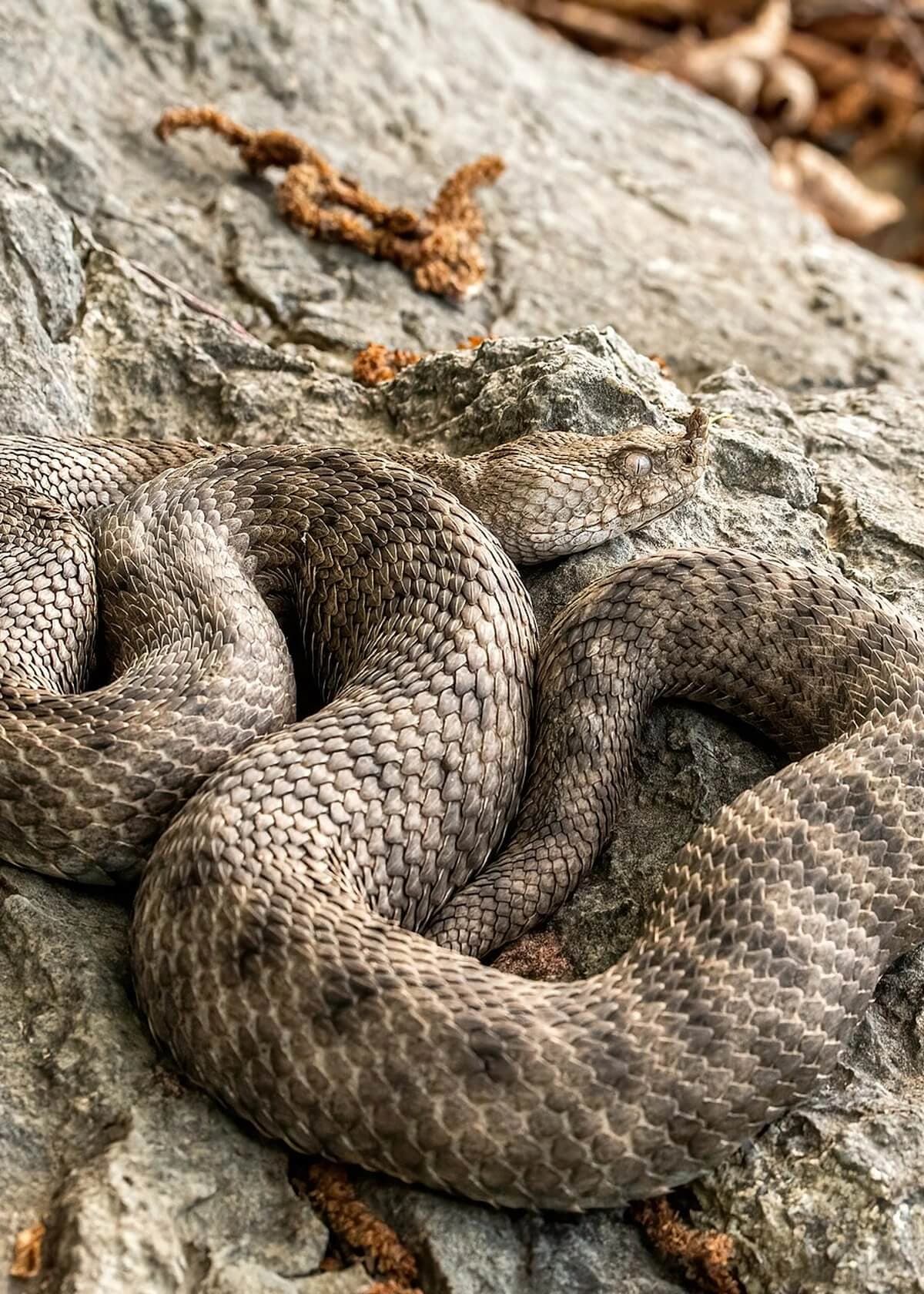
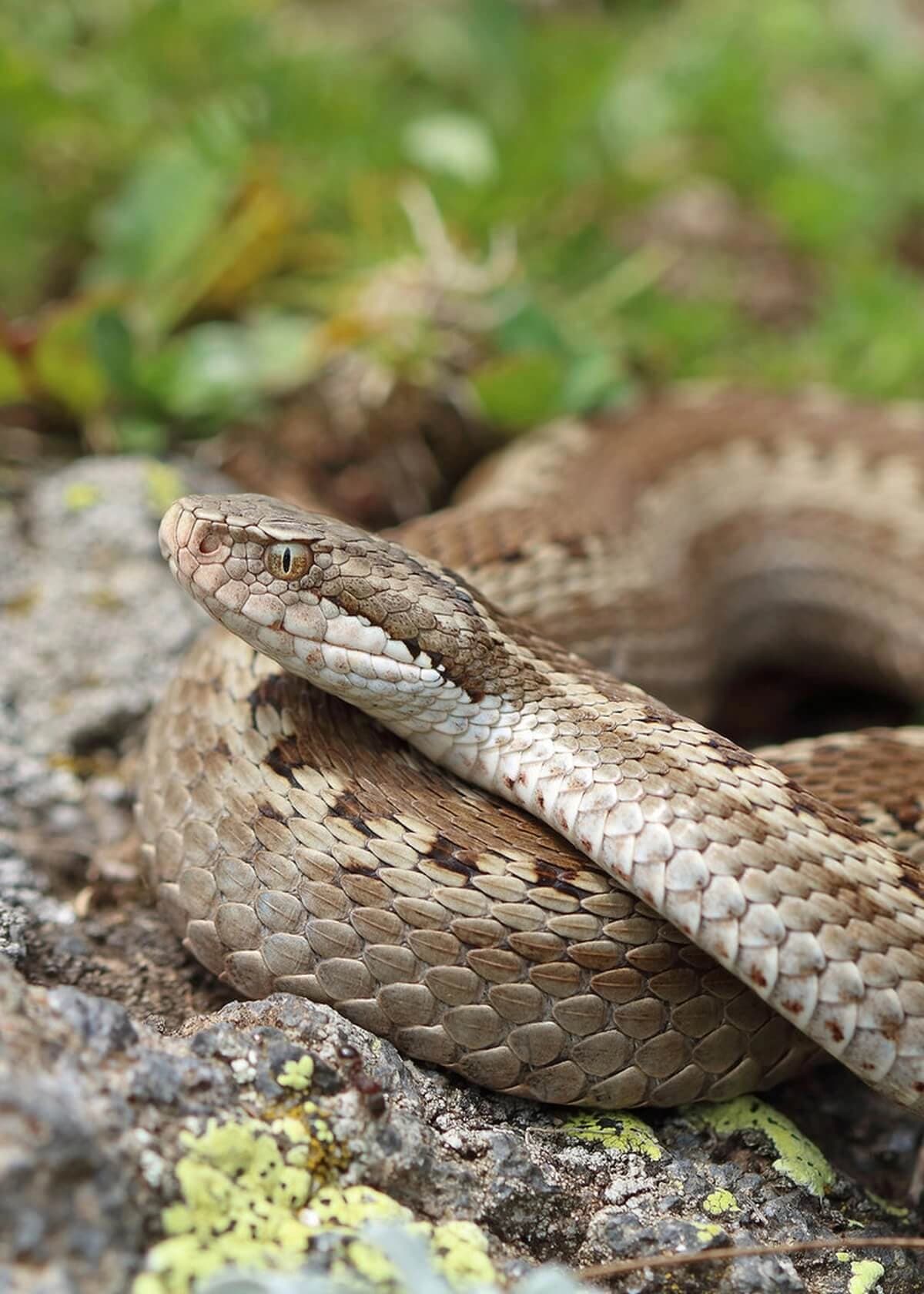
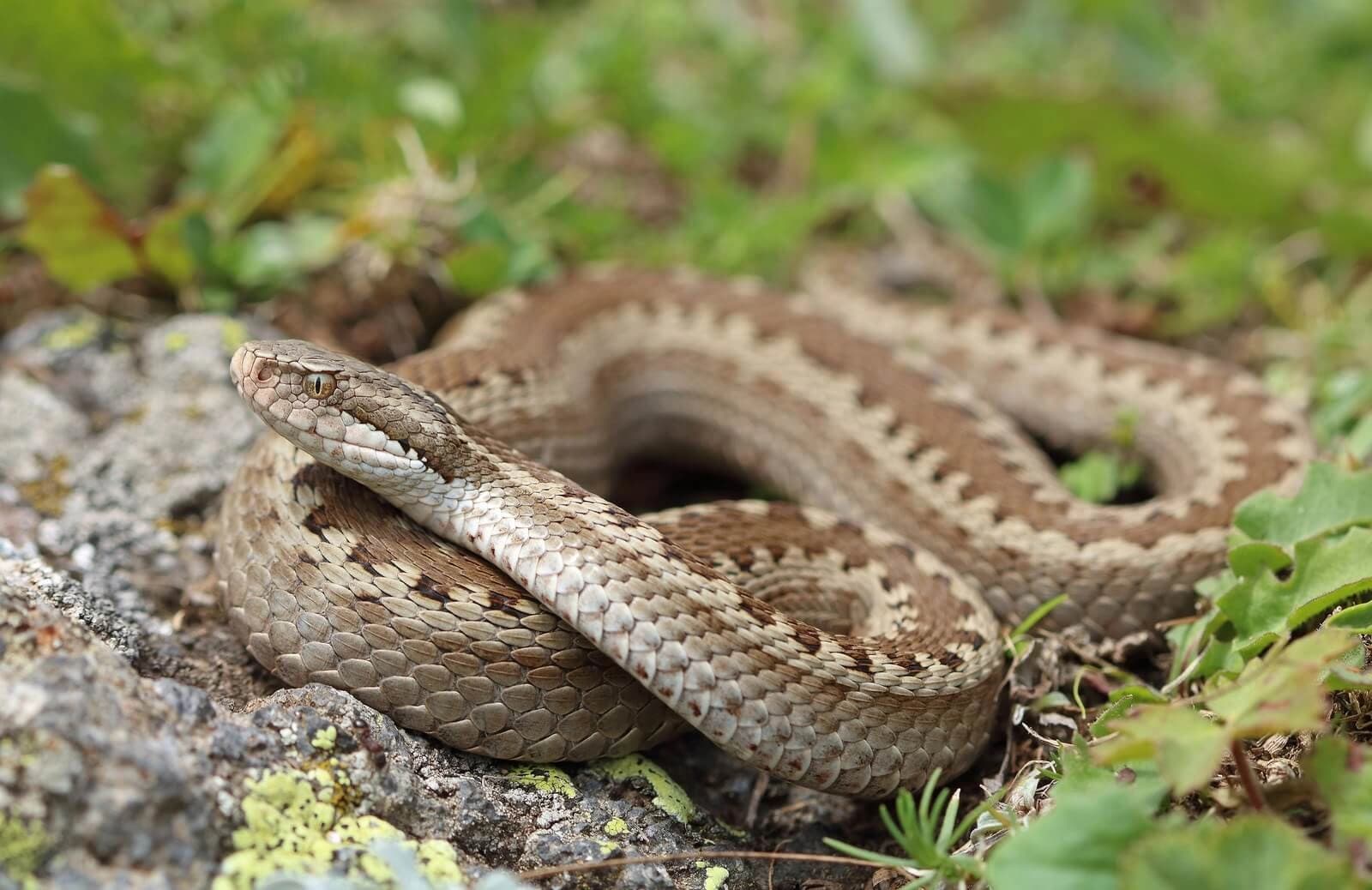
Dinnik's viper
A venomous viper endemic to the Greater Caucasus, found in high-mountain forests and the subalpine zone.
At a glance
Key facts in one look
Habitat
Greater Caucasus
Length
approx. 40–50 cm
Venom
Venomous
Conservation
Vulnerable (VU)
Elevation
1,500–2,800 m
Family
Viperidae
Gallery
Dinnik's viper in photos
Interesting facts
What you should know
- 01
Named in honor of Russian herpetologist Nikolai Yakovlevich Dinnik.
- 02
Ovoviviparous — young are born in August–September, usually 3–7 individuals.
- 03
Its range is severely fragmented; IUCN status — Vulnerable.
- 04
Distributed along the Greater Caucasus range — in Russia, Georgia, and Azerbaijan.
Biology
Diet, behavior, and conservation
Diet
Adults feed mainly on lizards and rodents, occasionally birds. Juveniles feed on small lizards and insects. It hunts by ambush and subdues prey with venom.
Behavior
Active during the warm season; it seeks shade in intense heat. It hibernates from autumn to spring in rock crevices and under stones. It is ovoviviparous: mating occurs in April–May, and young are born in August–September — usually 3–7 individuals.
Conservation
Classified as Vulnerable on the IUCN Red List: its range is less than 20,000 km² and severely fragmented; a decline in habitat and population is projected. Threats include degradation of subalpine pastures and human pressure. It is listed in the Red Data Books of Georgia and Russia.
Questions
Frequently asked questions
Short answers to the most important questions about Dinnik's viper.
It is venomous, though its danger level is rated moderate. Bites are rare — the snake does not attack unless it feels threatened. Still, immediate medical attention is required in the event of a bite.
In the high-mountain zone of the Greater Caucasus — near the upper forest line, in subalpine meadows and rocky terrain, at roughly 1,500–2,800 meters. Populations are fragmented.
Dinnik's viper is smaller (approx. 40–50 cm), ovoviviparous, and a native of high-mountain habitat. The Levantine viper is larger, egg-laying, and found in the dry lowlands of eastern Georgia.
Its range is less than 20,000 km² and severely fragmented. Degradation of subalpine pastures and human pressure are reducing the population; it is listed in the Red Data Books of Georgia and Russia.