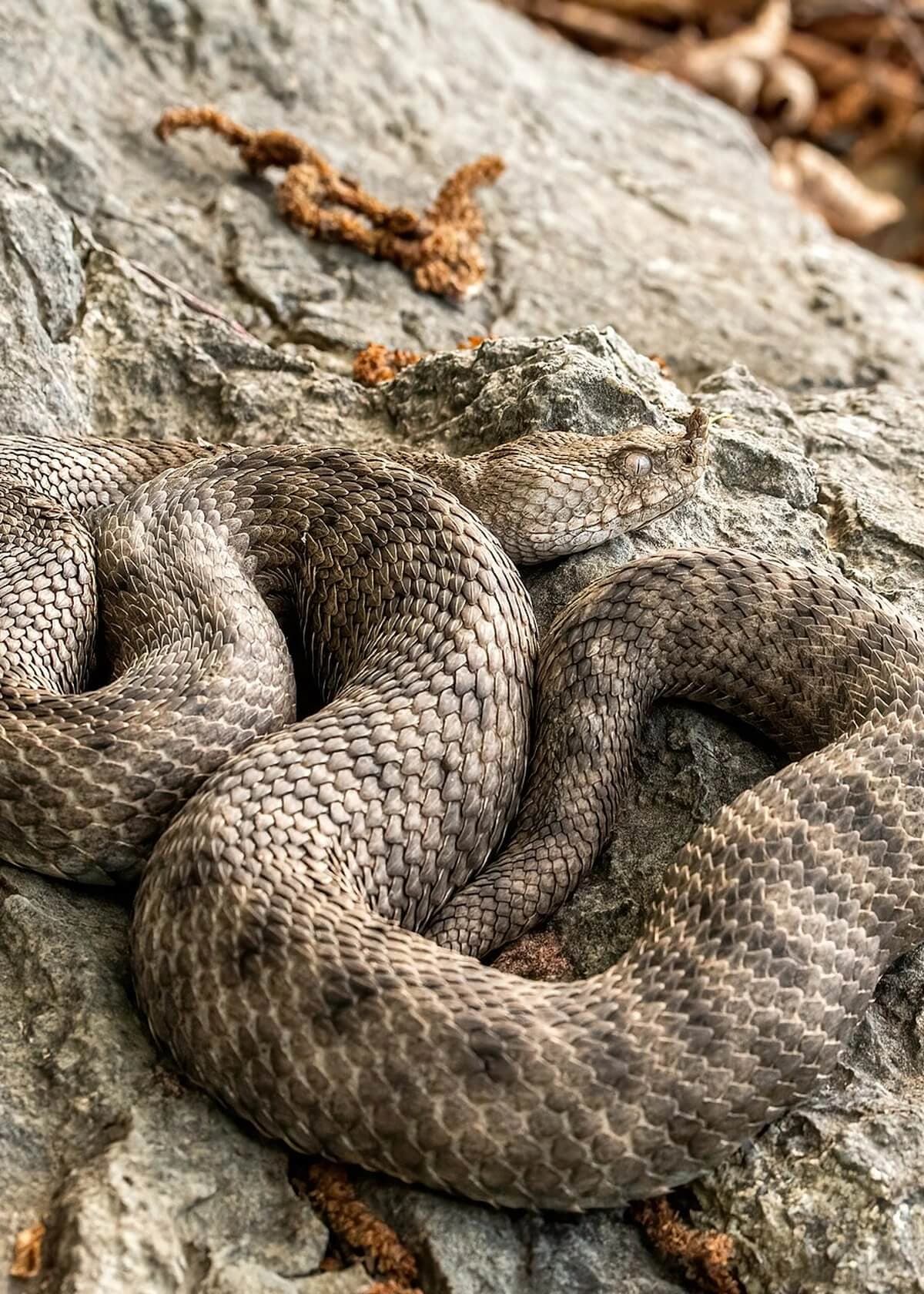
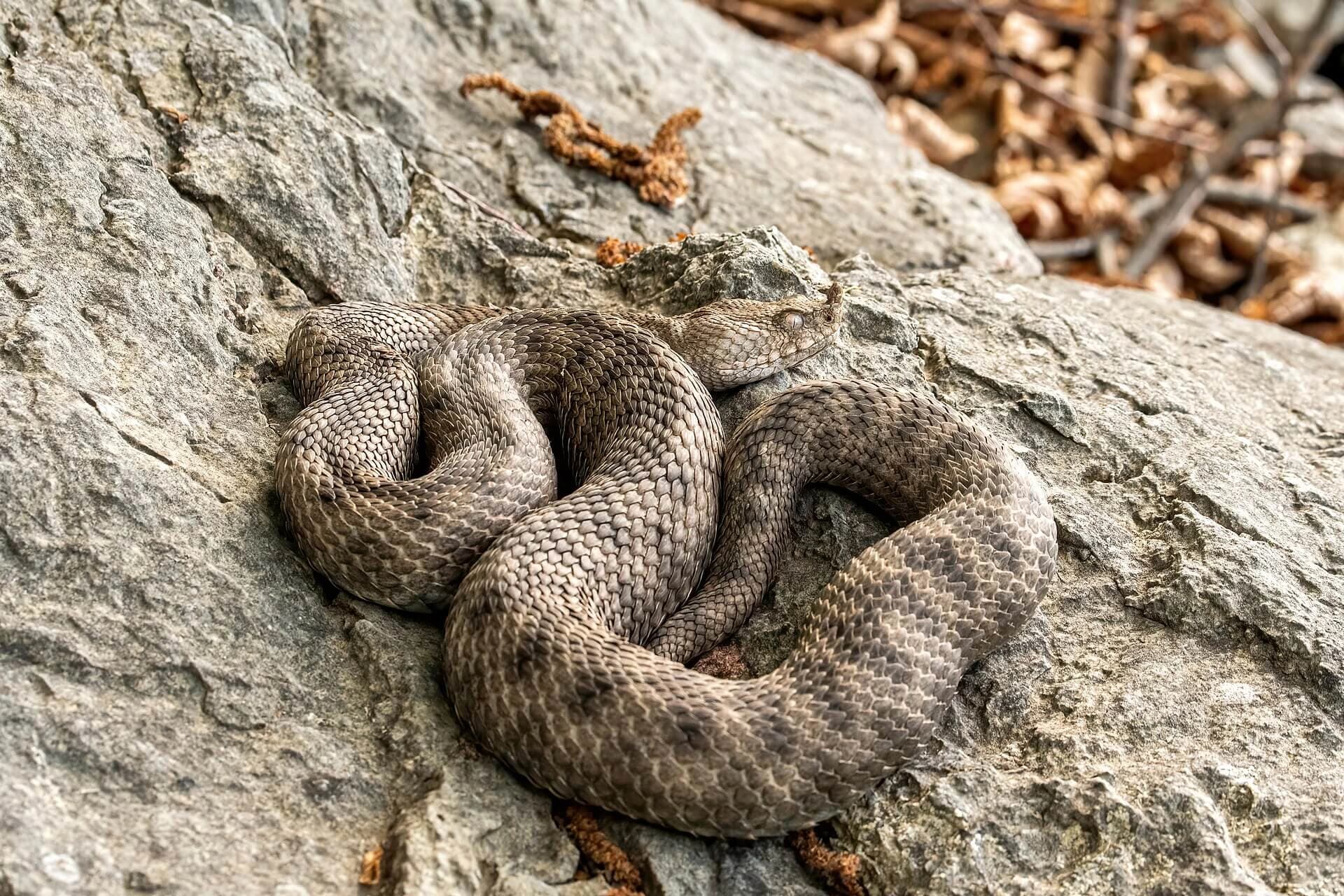
Nose-horned viper
One of Europe's most dangerous vipers, with a horn-like growth on its snout; rare in Georgia.
At a glance
Key facts in one look
Habitat
Lesser Caucasus
Length
approx. 60–85 cm
Venom
Highly dangerous
Conservation
Least Concern (LC)
Elevation
0–1,700 m
Family
Viperidae
Gallery
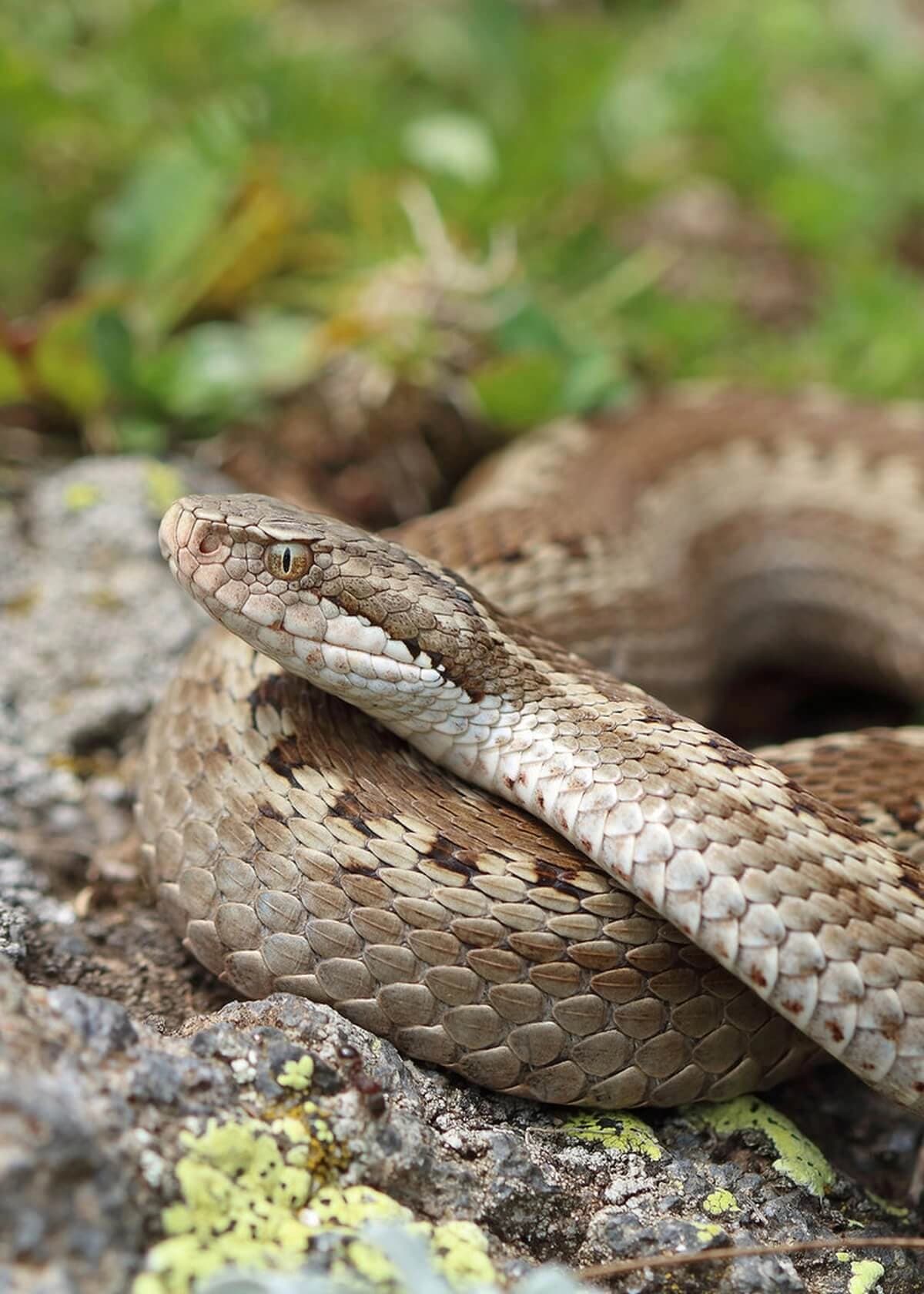
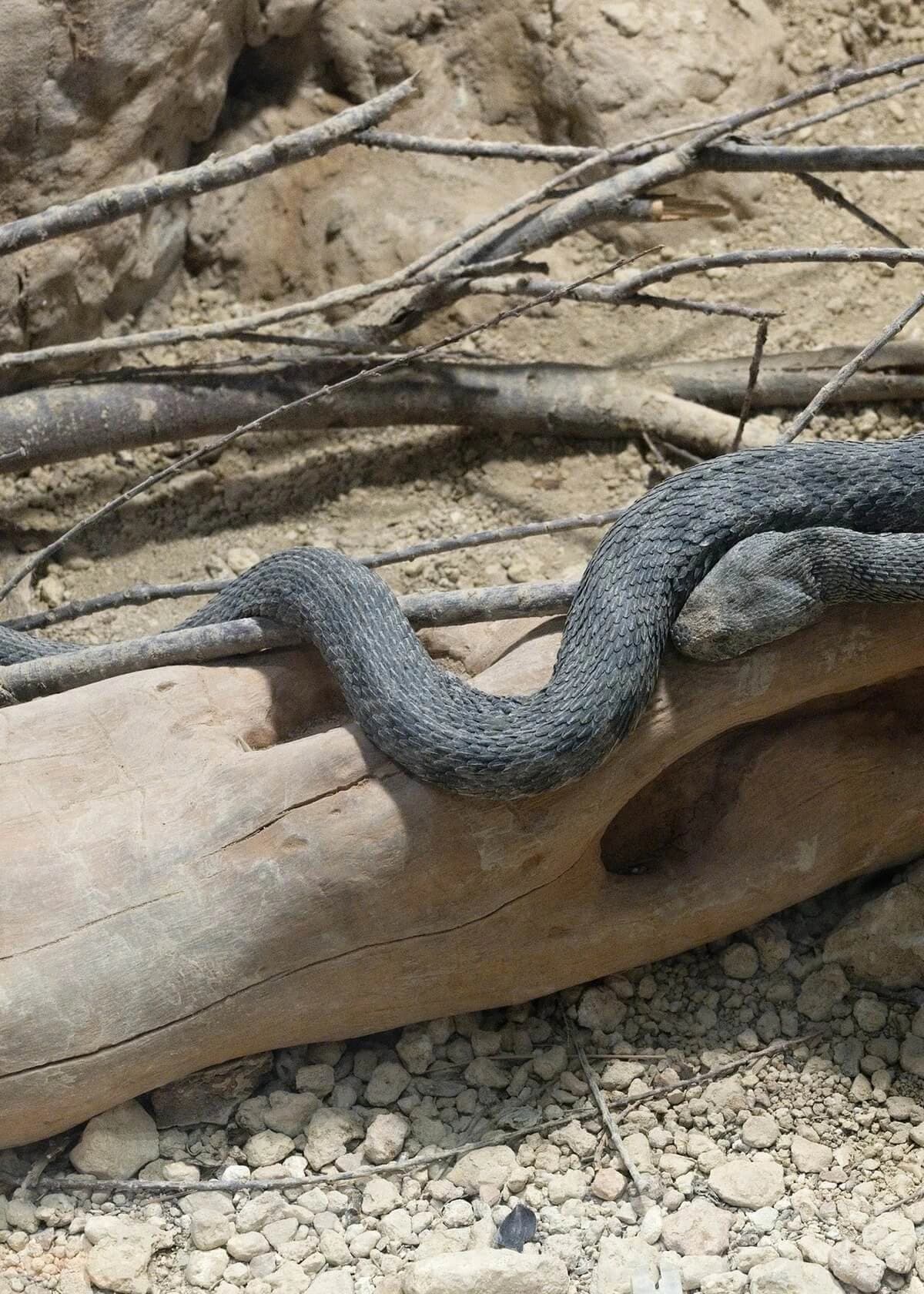
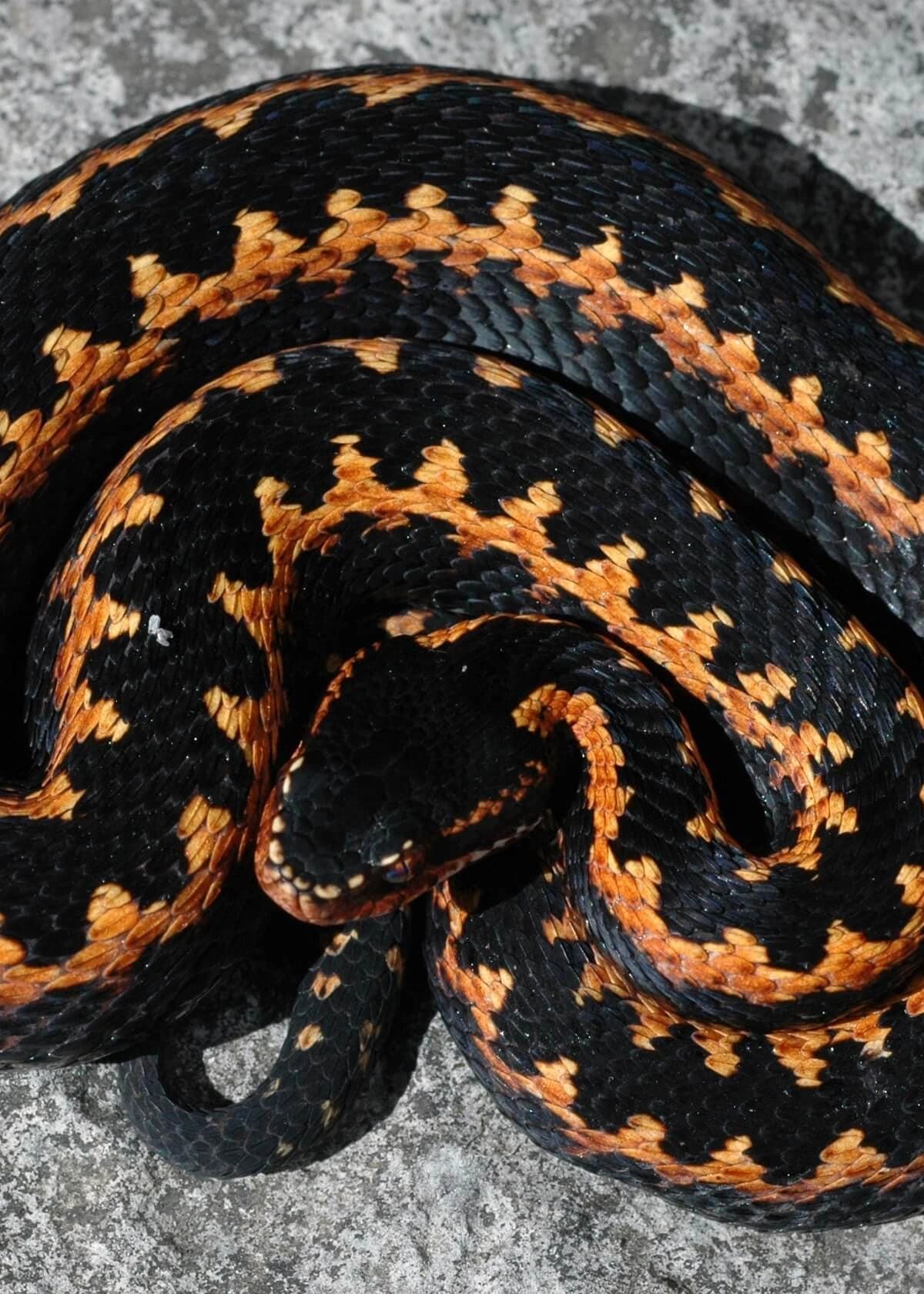
Nose-horned viper in photos
Interesting facts
What you should know
- 01
It has a horn-like growth on its snout made of 9–20 small scales — the source of the name "nose-horned."
- 02
It is considered one of Europe's most dangerous vipers, due to its large size, long fangs, and potent venom.
- 03
Its venom contains hemotoxic components and presynaptic neurotoxins (ammodytoxins).
- 04
It is rare in Georgia and listed in the Red Data Book; found in the Meskheti-Trialeti highlands.
Biology
Diet, behavior, and conservation
Diet
It feeds on rodents, small birds, and lizards. Juveniles hunt mainly small lizards. It hunts by ambush and subdues prey with venom.
Behavior
Active during the warm season. In spring and autumn it is often active by day; in summer heat activity shifts to evening and the first half of the night. It hibernates in rock crevices and under stones. It is ovoviviparous: mating usually occurs in March–April; young are born in late summer or early autumn.
Conservation
Classified as Least Concern on the IUCN Red List. It is a rare species in Georgia and is listed in the Red Data Book; populations are fragmented. Threats include habitat conversion, persecution by humans, and local pressure. It benefits the ecosystem by controlling rodents.
Questions
Frequently asked questions
Short answers to the most important questions about Nose-horned viper.
Very dangerous. The species is considered one of Europe's most dangerous vipers — due to its long fangs and potent venom, which combines hemotoxic and neurotoxic effects. Immediate medical attention is required in the event of a bite.
In the mountains of the Lesser Caucasus — the Meskheti and Trialeti ranges, the upper Mtkvari basin, and the area around Akhalkalaki. Vertically up to roughly 1,700 m. It is a rare species.
The nose-horned viper has a horn-like growth on its snout. Dinnik's viper is smaller and a high-mountain endemic of the Greater Caucasus. The Levantine viper is larger, egg-laying, and found in the dry lowlands of eastern Georgia.
It is ovoviviparous — young are born in late summer or early autumn. Mating usually occurs in March–April.
Its global IUCN status is Least Concern, but it is rare in Georgia, its populations are fragmented, and it is listed in the Red Data Book. Major threats include habitat conversion and human pressure.