Photo: Vojtěch Víta
Transcaucasian long-nosed viper
Vipera transcaucasiana
A venomous long-nosed viper of Georgia and northern Anatolia — not the European Vipera ammodytes, which does not occur in Georgia.
At a glance
Key facts in one look
Habitat
Lesser Caucasus
Length
approx. 60–75 cm
Venom
Highly dangerous
Conservation
Near Threatened (NT)
Elevation
0–1,700 m
Family
Viperidae
Overview
Who is Transcaucasian long-nosed viper
The Transcaucasian long-nosed viper (Vipera transcaucasiana) is a venomous member of the viper family, known for the horn-like growth on its snout. It occurs in Georgia and northern Anatolia in Turkey — not in southern Europe, where the related Vipera ammodytes lives. The type locality is Borjomi. In Georgia it is found in the Meskheti and Trialeti ranges, the upper Mtkvari basin, and around Akhalkalaki, up to roughly 1,700 m. It is classified as Near Threatened by the IUCN; it is rare in Georgia and listed in the Red Data Book.
Last updated
Gallery
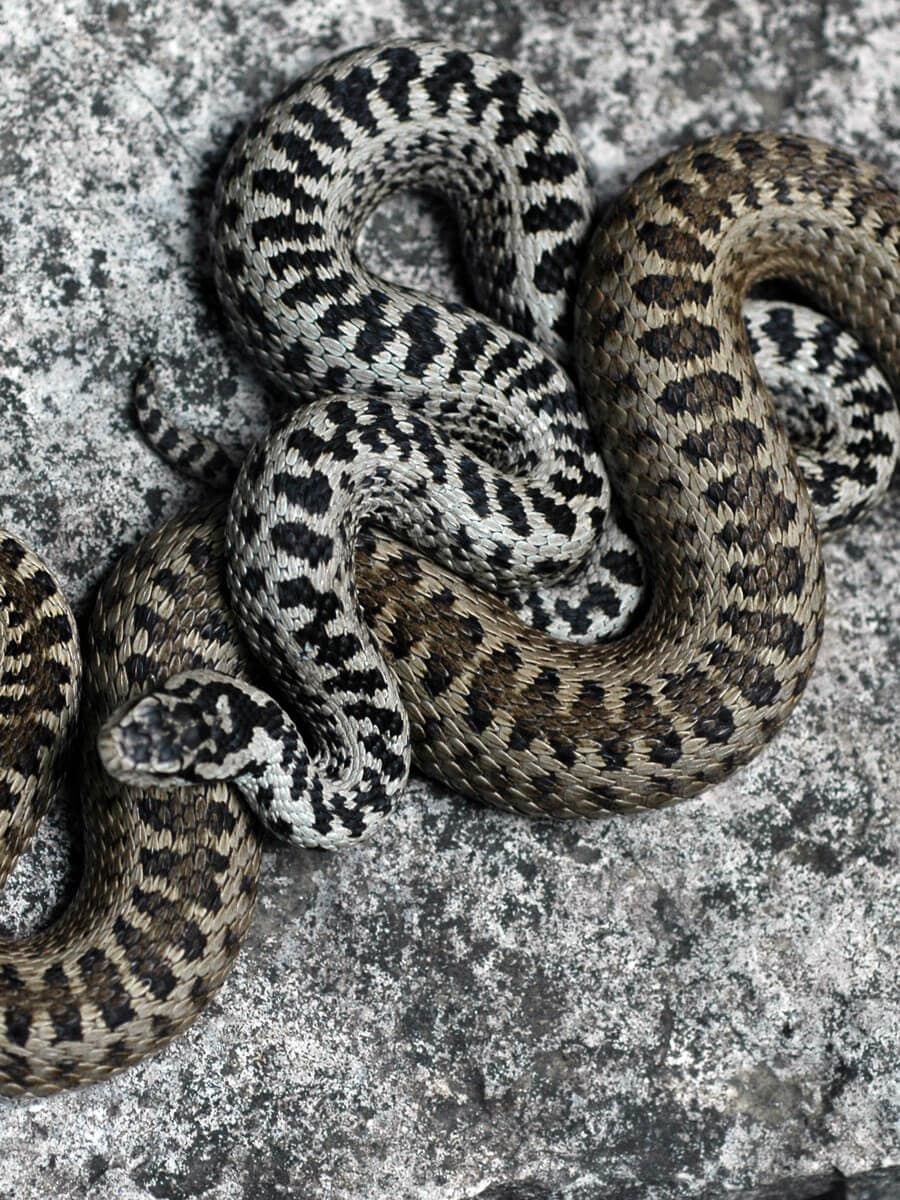
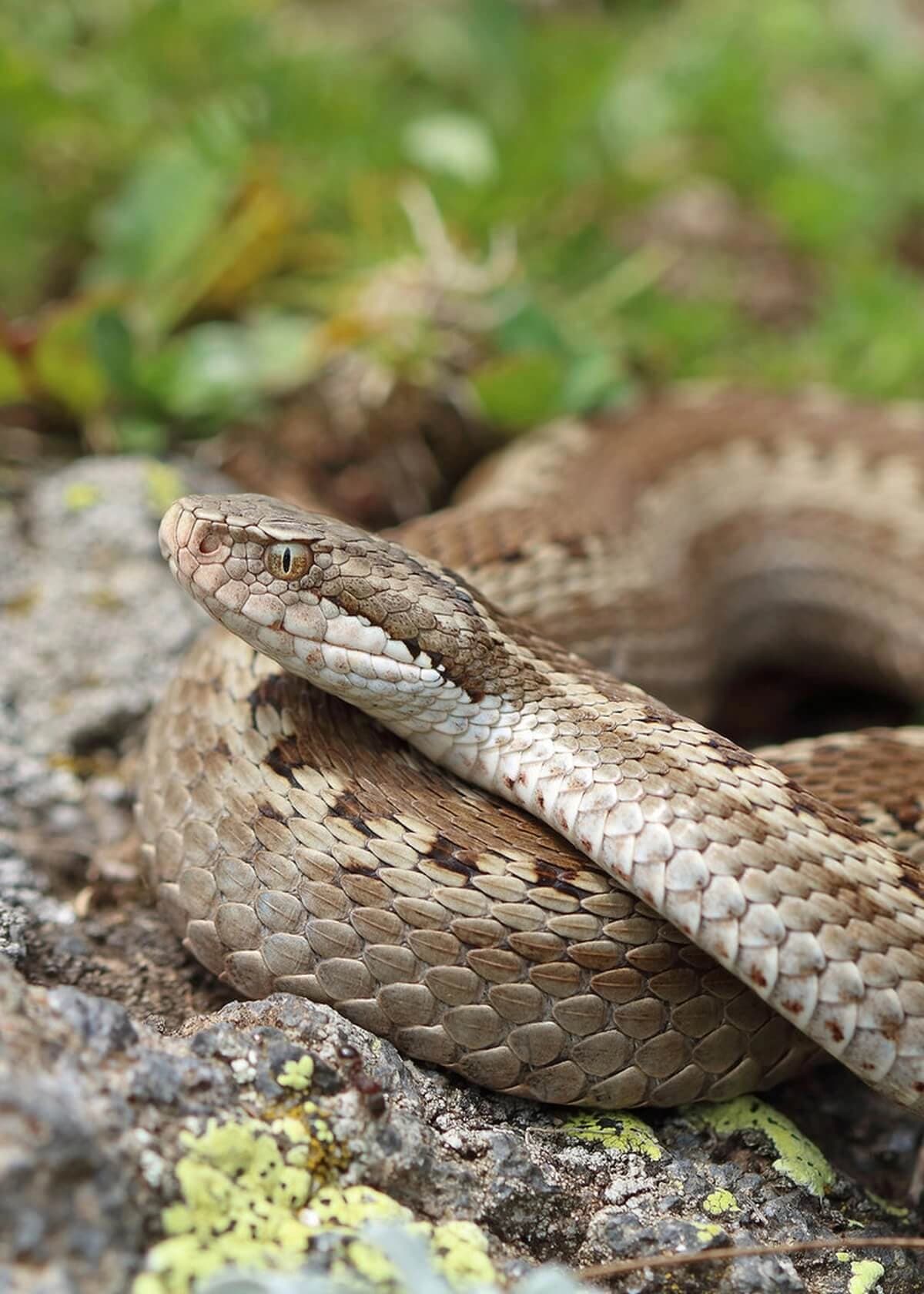
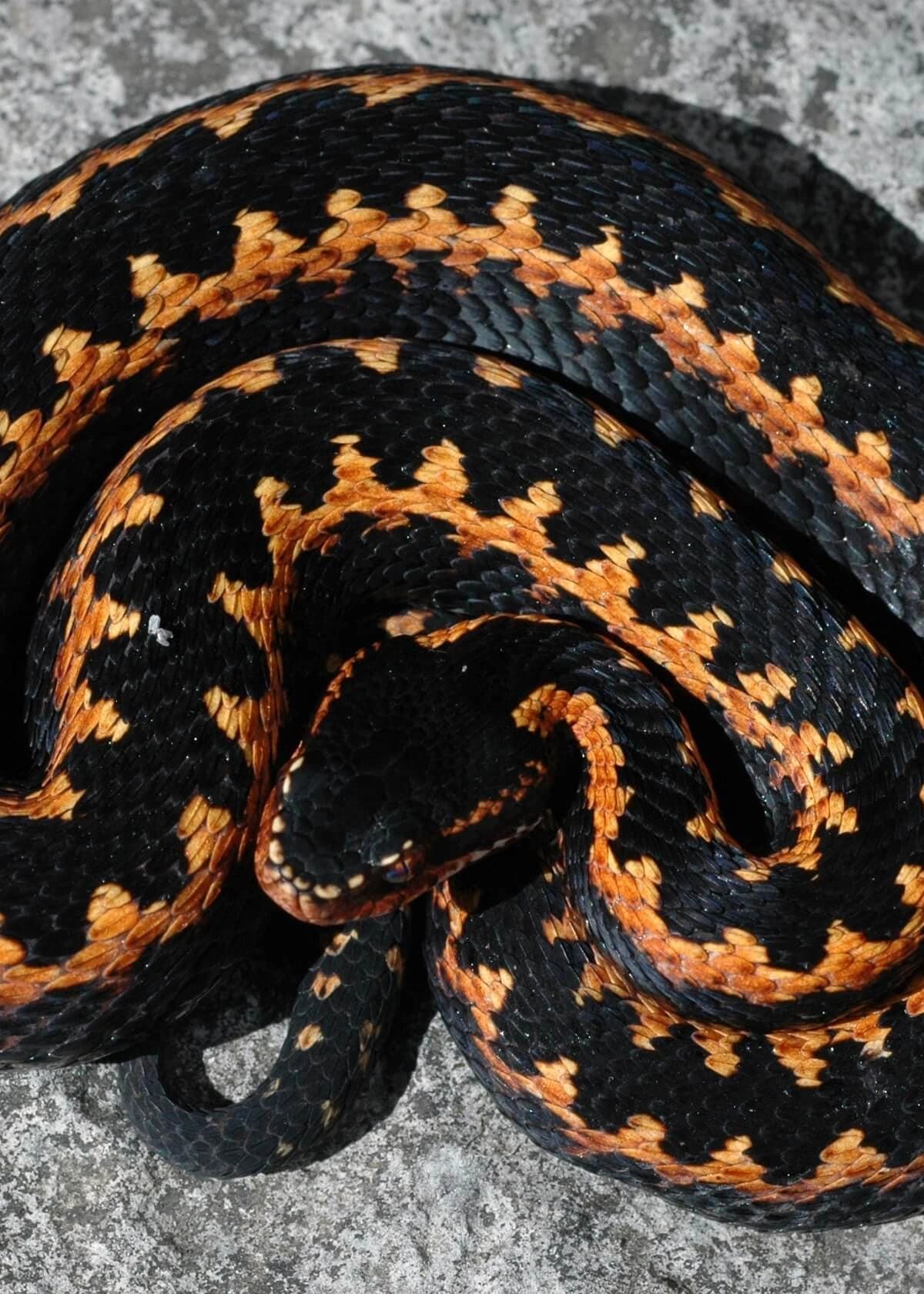
Transcaucasian long-nosed viper in photos
Distribution
Where Transcaucasian long-nosed viper lives in Georgia
Highlighted regions show where this species has been recorded.
Identification
How to identify Transcaucasian long-nosed viper
The Transcaucasian long-nosed viper is venomous and marked by a horn-like snout. It is rare in Georgia; the European V. ammodytes does not occur here.
- 01
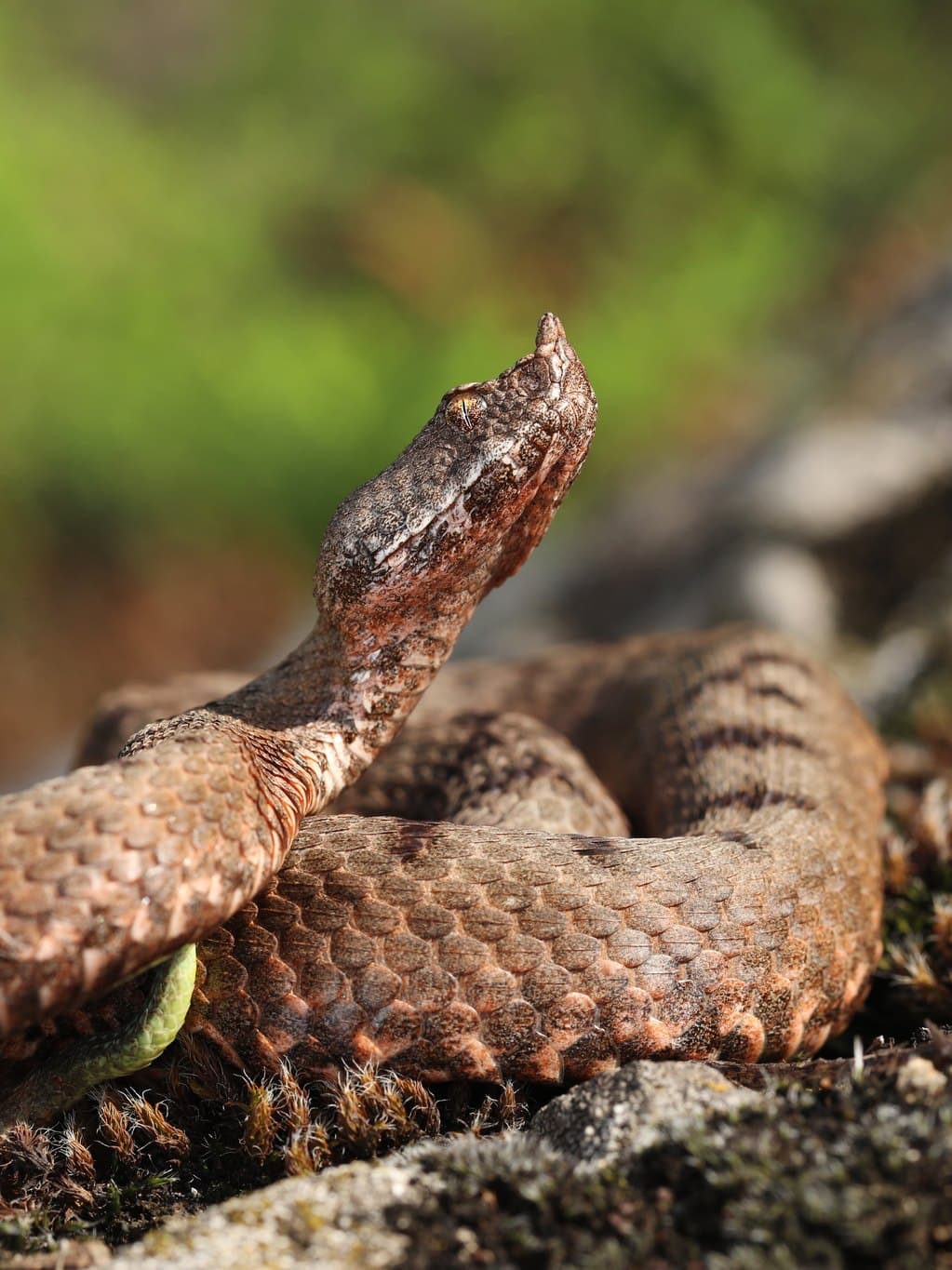
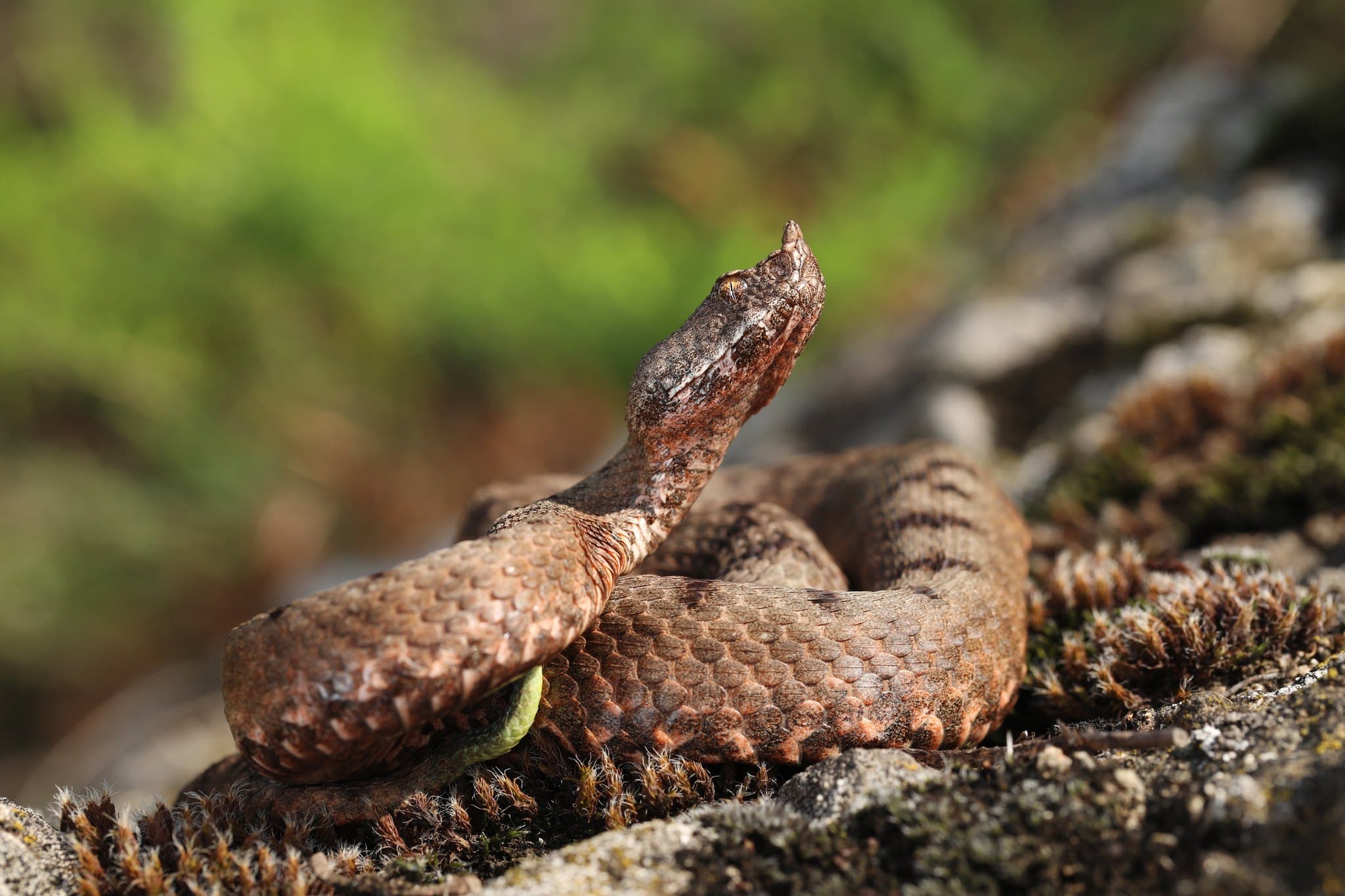
A horn-like snout of 9–17 small scales is the diagnostic trait.
- 02
The pupil is vertical, scales are keeled, and the head is broad.
- 03
The dorsum often shows narrow transverse bars or blotches — unlike the continuous zigzag typical of European V. ammodytes.
- 04
Length is usually up to about 60–75 cm; venom is highly dangerous.
- 05
In Georgia it is linked to the Lesser Caucasus and is rare.
Biology
Diet, behavior, and conservation
Diet
It feeds on rodents, small birds, and lizards. Juveniles hunt mainly small lizards. It hunts by ambush and subdues prey with venom.
Behavior
Active during the warm season. In spring and autumn it is often active by day; in summer heat activity shifts to evening and the first half of the night. It hibernates in rock crevices and under stones. It is ovoviviparous: mating usually occurs in March–April; young are born in late summer or early autumn.
Conservation
Classified as Near Threatened on the IUCN Red List. It is a rare species in Georgia and is listed in the Red Data Book; populations are fragmented. Threats include habitat conversion, persecution by humans, and local pressure. It benefits the ecosystem by controlling rodents.
Questions
Frequently asked questions
Short answers to the most important questions about Transcaucasian long-nosed viper.
Very dangerous. The venom combines hemotoxic and neurotoxic effects, and the long fangs can deliver a deep bite. Immediate medical attention is required in the event of a bite.
In the mountains of the Lesser Caucasus — the Meskheti and Trialeti ranges, the upper Mtkvari basin, and the area around Akhalkalaki. Vertically up to roughly 1,700 m. It is a rare species.
No. Georgia has the Transcaucasian species Vipera transcaucasiana. The European nose-horned viper (Vipera ammodytes) ranges across the Balkans and southern Europe and is not part of Georgia’s fauna.
The long-nosed viper has a horn-like growth on its snout. Dinnik's viper is smaller and a high-mountain endemic of the Greater Caucasus. The Levantine viper is larger, egg-laying, and found in the dry lowlands of eastern Georgia.
It is ovoviviparous — young are born in late summer or early autumn. Mating usually occurs in March–April.
Its global IUCN status is Near Threatened; it is rare in Georgia, its populations are fragmented, and it is listed in the Red Data Book. Major threats include habitat conversion and human pressure.
References
Sources & References
References
Sources & References
- IUCN Red List
- GBIF
- The Reptile Database
- Wikipedia
- Scientific publications
Species profiles are compiled from peer-reviewed literature and established biodiversity databases, and are reviewed as new taxonomic and conservation data become available.