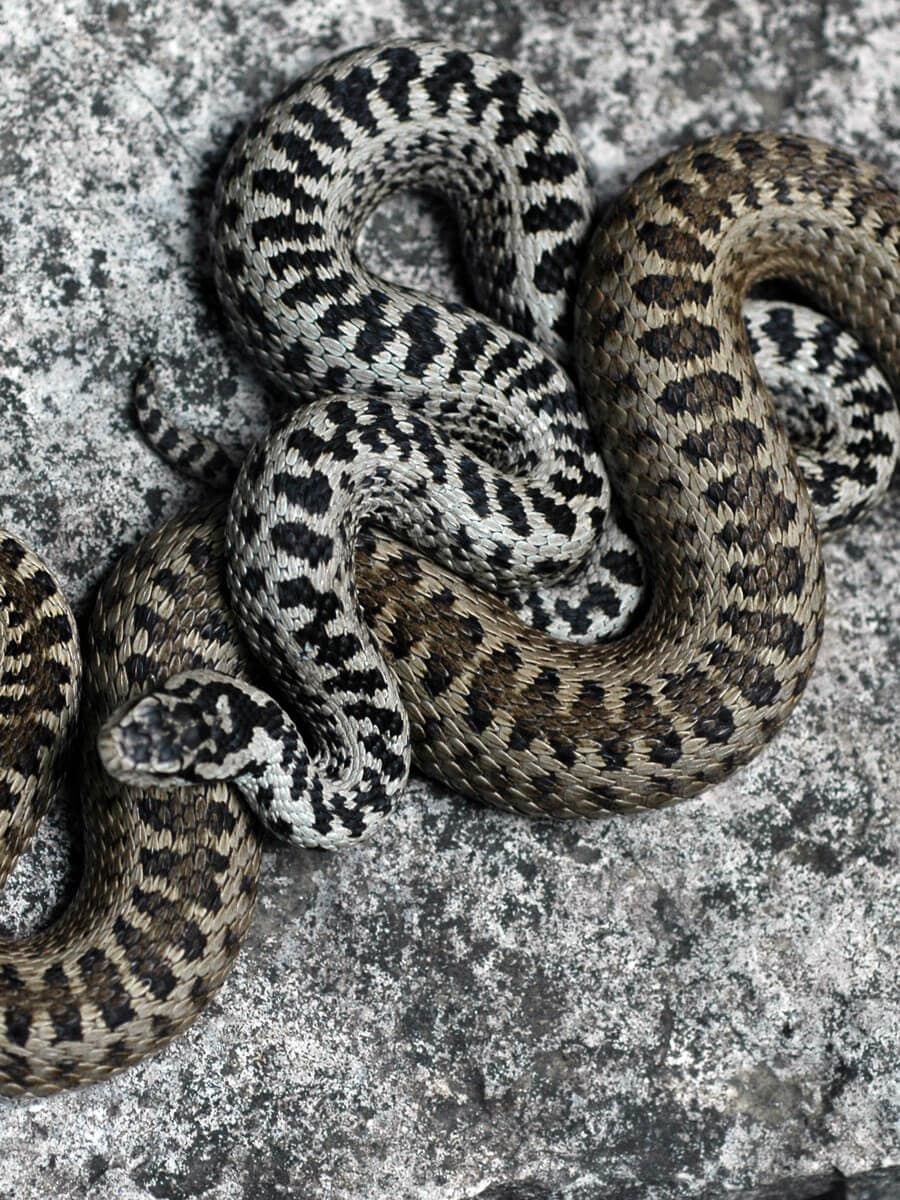
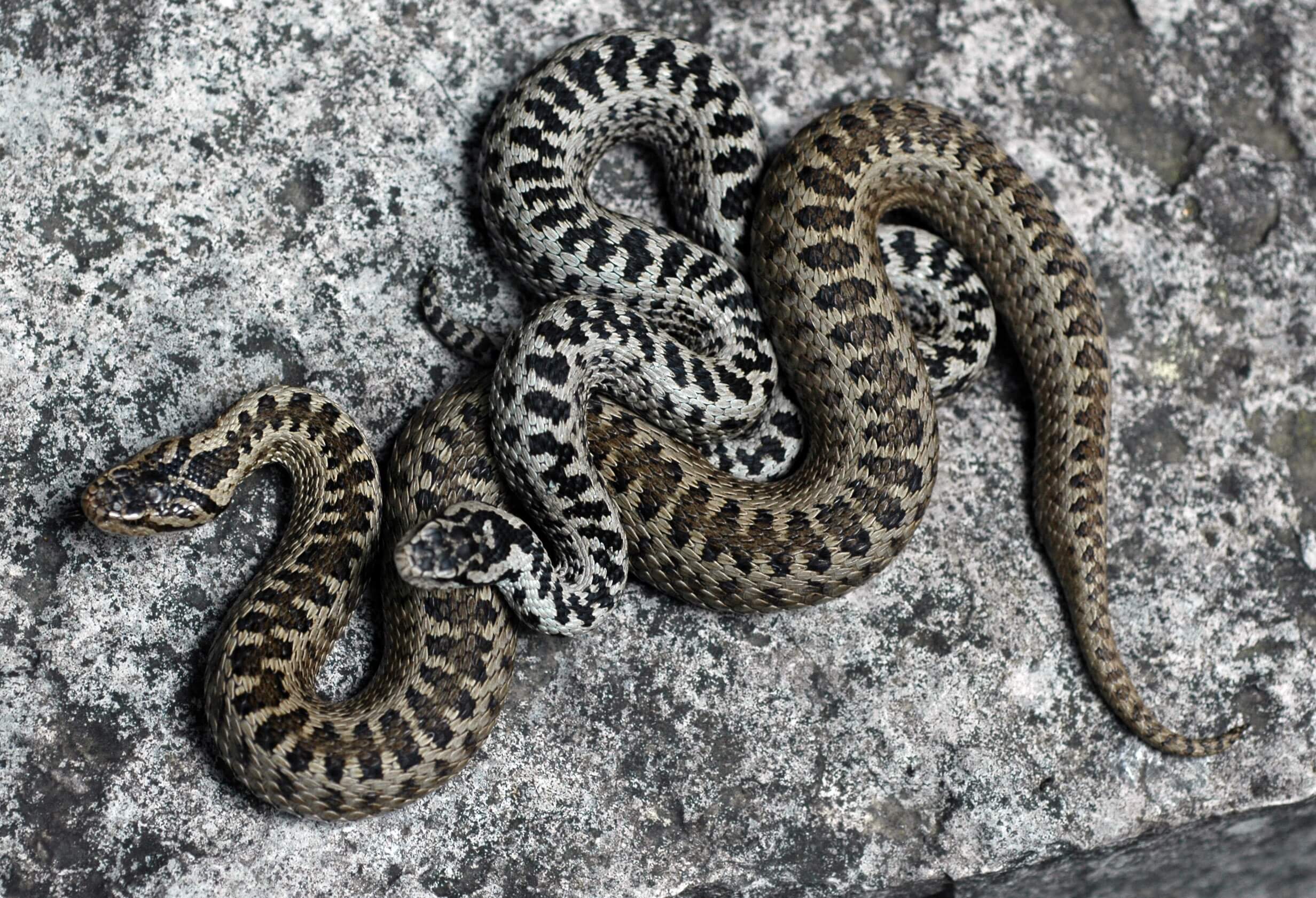
Photo: Boris S. Tuniyev
Darevsky's viper
Vipera darevskii
A critically endangered highland viper endemic to the Javakheti Ridge, Erusheti Mountains, and Akhaltsikhe Highland.
At a glance
Key facts in one look
Habitat
Javakheti · Erusheti
Length
approx. 26–42 cm
Venom
Venomous
Conservation
Critically Endangered (CR)
Elevation
2,300–3,000 m
Family
Viperidae
Overview
Who is Darevsky's viper
Darevsky's viper (Vipera darevskii) is a small venomous montane species of northwestern Armenia, northeastern Turkey, and southern Georgia — on the Javakheti Ridge, near Madatapa, in the Erusheti Mountains, and on the Akhaltsikhe Highland. It lives in subalpine and alpine meadows among rocky scree, mainly at 2,300–3,000 m. It is named after herpetologist Ilya Sergeyevich Darevsky. The IUCN lists it as Critically Endangered: extent of occurrence under 100 km², area of occupancy under 10 km², and a severely fragmented population.
Last updated
Gallery
Darevsky's viper in photos
Distribution
Where Darevsky's viper lives in Georgia
Highlighted regions show where this species has been recorded.
Identification
How to identify Darevsky's viper
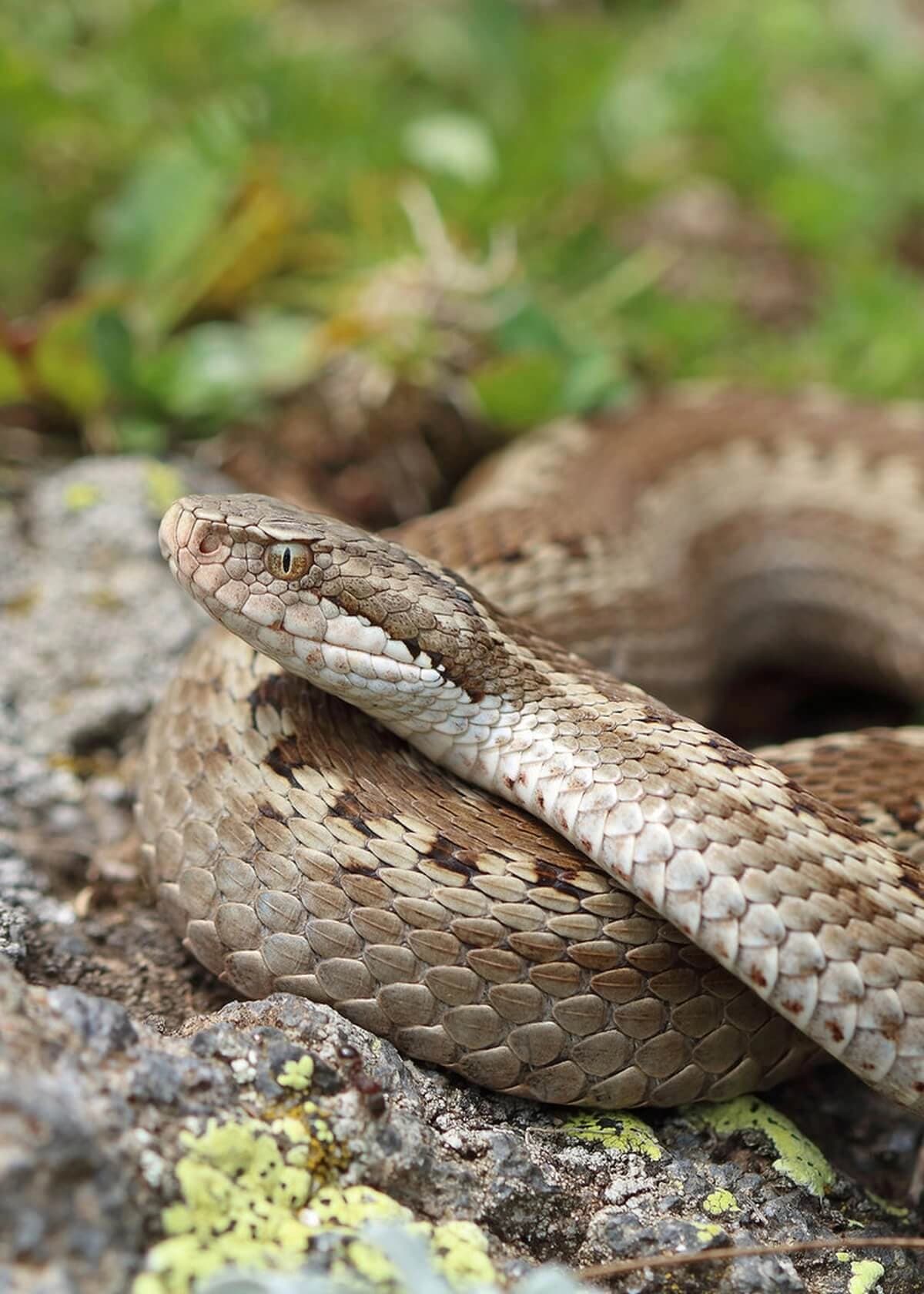
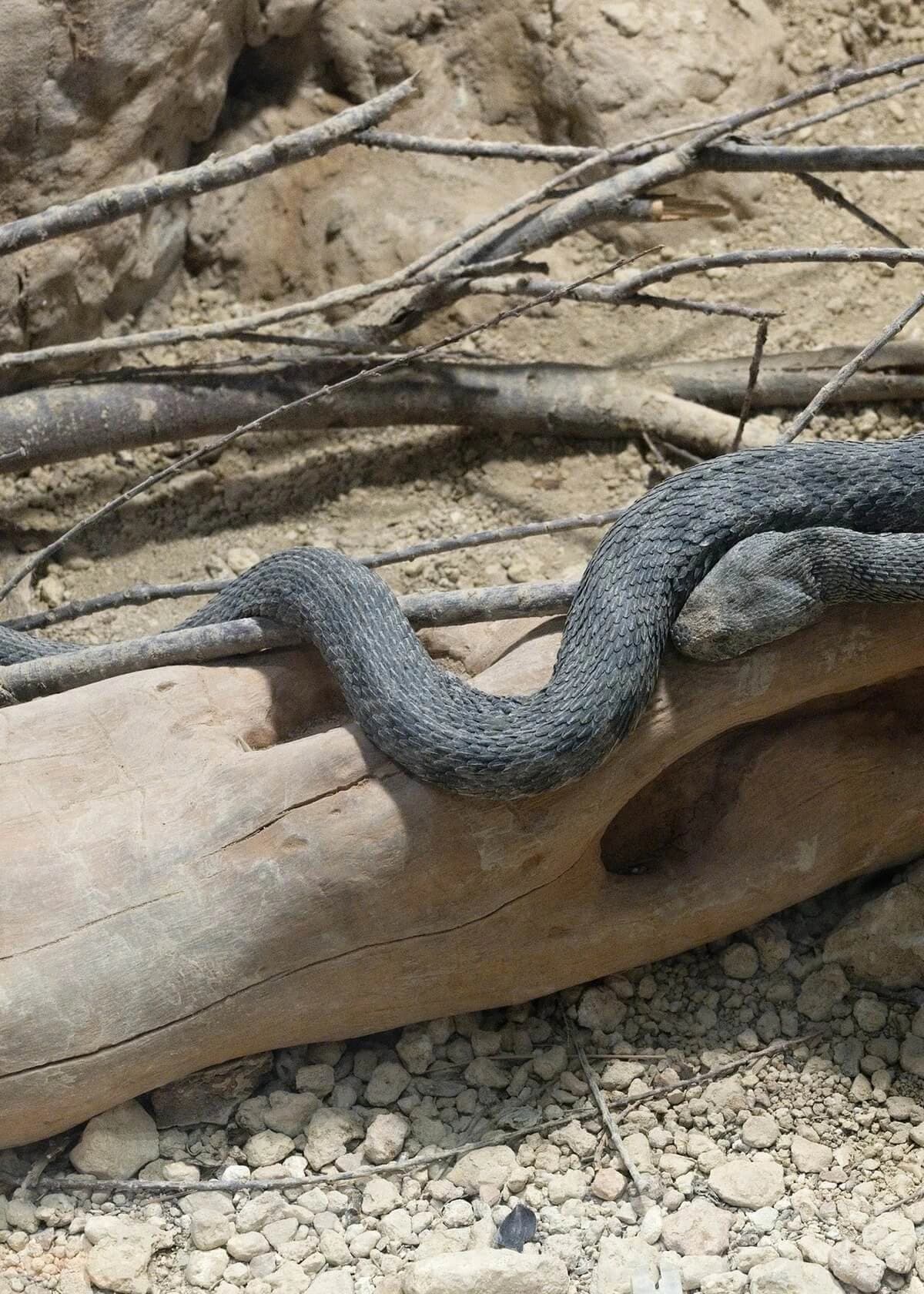
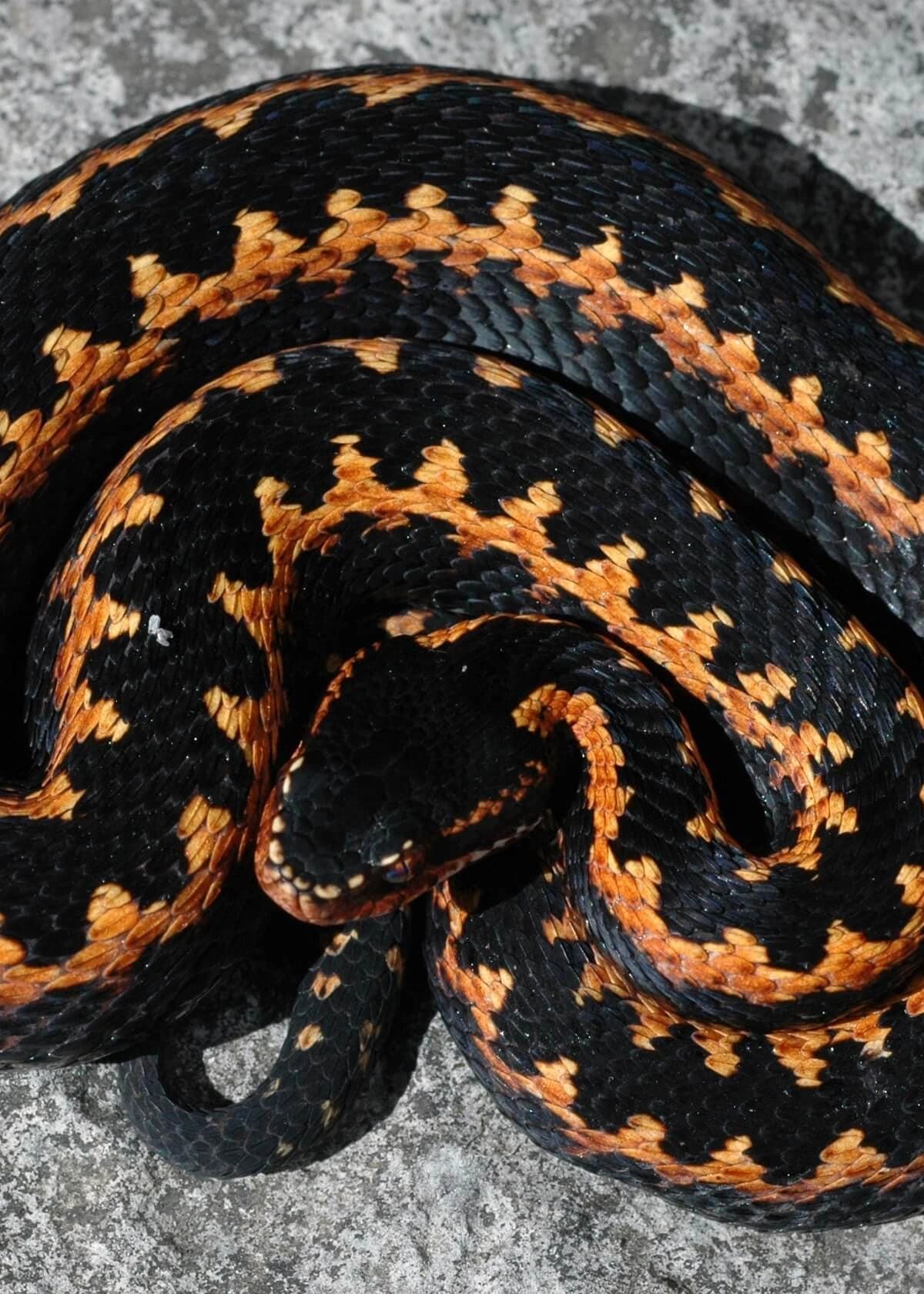
Darevsky’s viper is a tiny highland venomous species. Size, zigzag pattern, and rocky habitat above 2,300 m separate it from the nose-horned and Dinnik’s vipers.
- 01
It is very small — females to about 42 cm, males smaller.
- 02
Light brown to grey dorsum with a dark zigzag; a row of small dark blotches on each flank.
- 03
Strong sexual dimorphism: males are brighter and more contrasting; females are browner.
- 04
Restricted to the Javakheti–Erusheti highlands at about 2,300–3,000 m — not the Greater Caucasus.
- 05
Venomous (moderate risk); a bite is painful and causes swelling — seek medical care.
Biology
Diet, behavior, and conservation
Diet
Feeds on lizards (especially Darevskia valentini), small rodents (Microtus), and orthopterans. Juveniles take newborn rock lizards and small insects. It hunts by ambush and subdues prey with venom.
Behavior
Diurnal; it moves within rocky deposits to keep an optimal body temperature of about 26–28 °C. Ovoviviparous: mating in May after the first spring shed; young are born in September to early October — usually 4–8 individuals, about 15–18 cm long. It hibernates deep in rock piles.
Conservation
Critically Endangered on the IUCN Red List (CR B1ab(ii,iii)+2ab(ii,iii)): extent of occurrence under 100 km², area of occupancy under 10 km²; population fragmented and habitat declining. Main threats are overgrazing and mowing. In Armenia much of the habitat lies within Lake Arpi National Park.
Questions
Frequently asked questions
Short answers to the most important questions about Darevsky's viper.
It is venomous, though danger is rated moderate. A bite is painful and causes local swelling; it is generally not considered life-threatening for adult humans, but immediate medical attention is still required.
In Samtskhe–Javakheti — on the Javakheti Ridge, near Madatapa, in the Erusheti Mountains, and on the Akhaltsikhe Highland, at roughly 2,300–3,000 meters. The range is severely fragmented and very limited.
Darevsky's viper is smaller and occupies the southern highlands of the Lesser Caucasus (Javakheti–Erusheti). Dinnik's viper is a Greater Caucasus species with a wider, though still fragmented, range.
Its extent of occurrence is under 100 km² and area of occupancy under 10 km²; the population is fragmented. Overgrazing and habitat degradation are reducing numbers.
References
Sources & References
References
Sources & References
- IUCN Red List
- GBIF
- The Reptile Database
- Wikipedia
- Scientific publications
Species profiles are compiled from peer-reviewed literature and established biodiversity databases, and are reviewed as new taxonomic and conservation data become available.