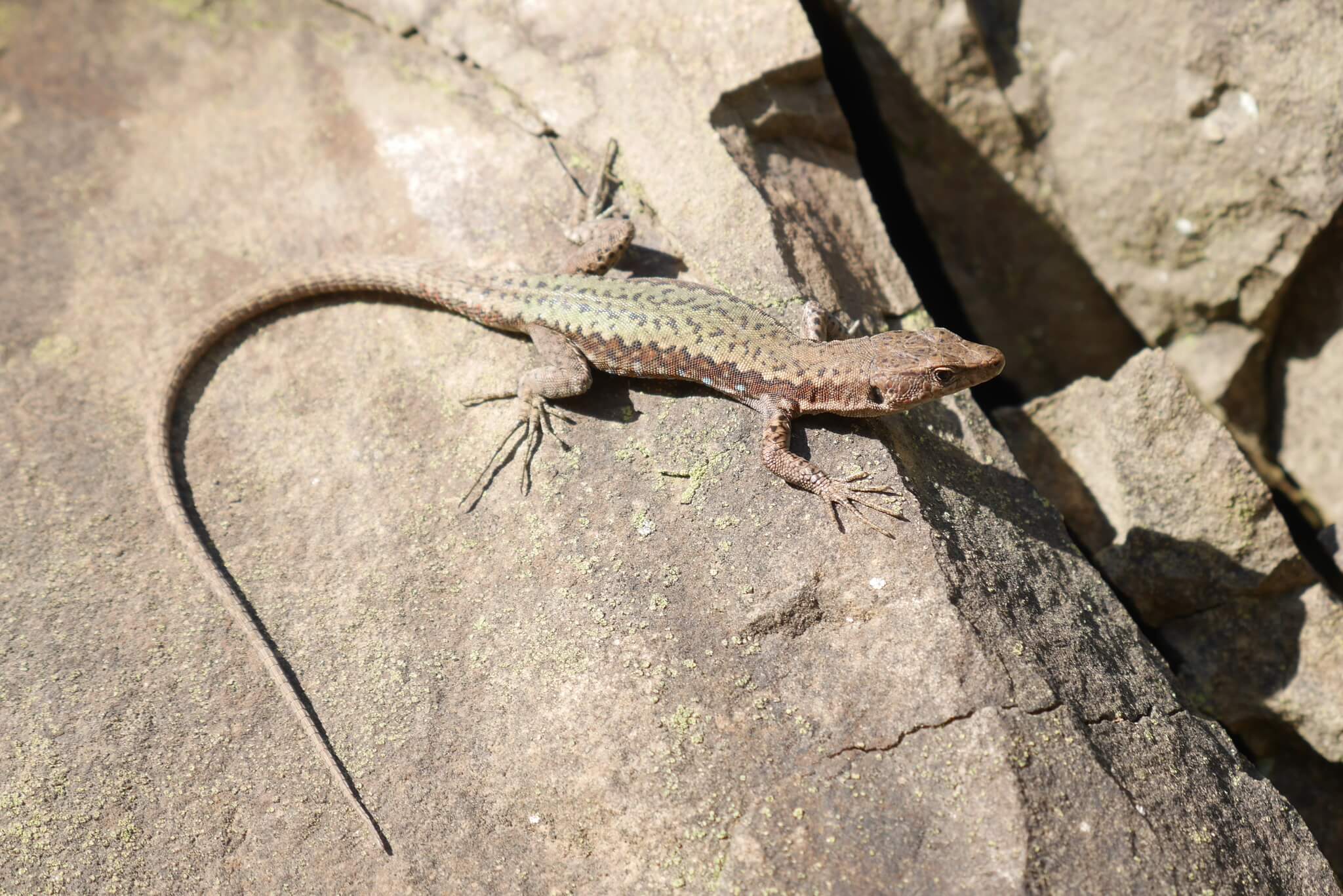


Photo: Dr. Fabio Mao Valletta
Caucasian Green Lizard
Lacerta media
Caucasian Green Lizard — recorded from Georgia. Candidate species.
At a glance
Key facts in one look
Habitat
Rocky / open habitats
Length
Body length varies by species; see field guides
Venom
None
Conservation
See IUCN
Family
Lacertidae
Overview
Who is Caucasian Green Lizard
Caucasian Green Lizard (Lacerta media) is recorded from Georgia. It is treated as a candidate species pending further integrative validation. This page summarises occurrence and general natural history from scientific sources; fine-scale districts are given only when explicitly supported.
Last updated
Gallery
Caucasian Green Lizard in photos
Identification
How to identify Caucasian Green Lizard
How to recognise Caucasian Green Lizard.
- 01
Caucasian Green Lizard is a lacertid lizard; compare head and body pattern with similar regional species.
- 02
Diurnal and typically fast-moving.
- 03
Use regional keys — several lacertids overlap in the Caucasus.
Biology
Diet, behavior, and conservation
Diet
Primarily insects and other small invertebrates; larger lizards may also take small vertebrates.
Behavior
Mostly diurnal; many species bask on rocks or vegetation and retreat to crevices when threatened.
Conservation
Recorded in Georgia. Local threats may include habitat degradation and collection.
Questions
Frequently asked questions
Short answers to the most important questions about Caucasian Green Lizard.
Yes. It is among the 68 amphibians and reptiles formally recorded from Georgia.
Candidate status is used when species rank still needs contact-zone and multi-marker validation.
Site classification: Harmless. Venom: None.
Primarily insects and other small invertebrates; larger lizards may also take small vertebrates.
References
Sources & References
References
Sources & References
- Tarkhnishvili et al. 2026 — Annotated checklist of Georgia's amphibians and reptiles
- Iankoshvili & Tarkhnishvili 2021 — Georgian herpetofauna records cited in Tarkhnishvili et al. 2026
- The Reptile Database
- IUCN Red List
Species profiles are compiled from peer-reviewed literature and established biodiversity databases, and are reviewed as new taxonomic and conservation data become available.