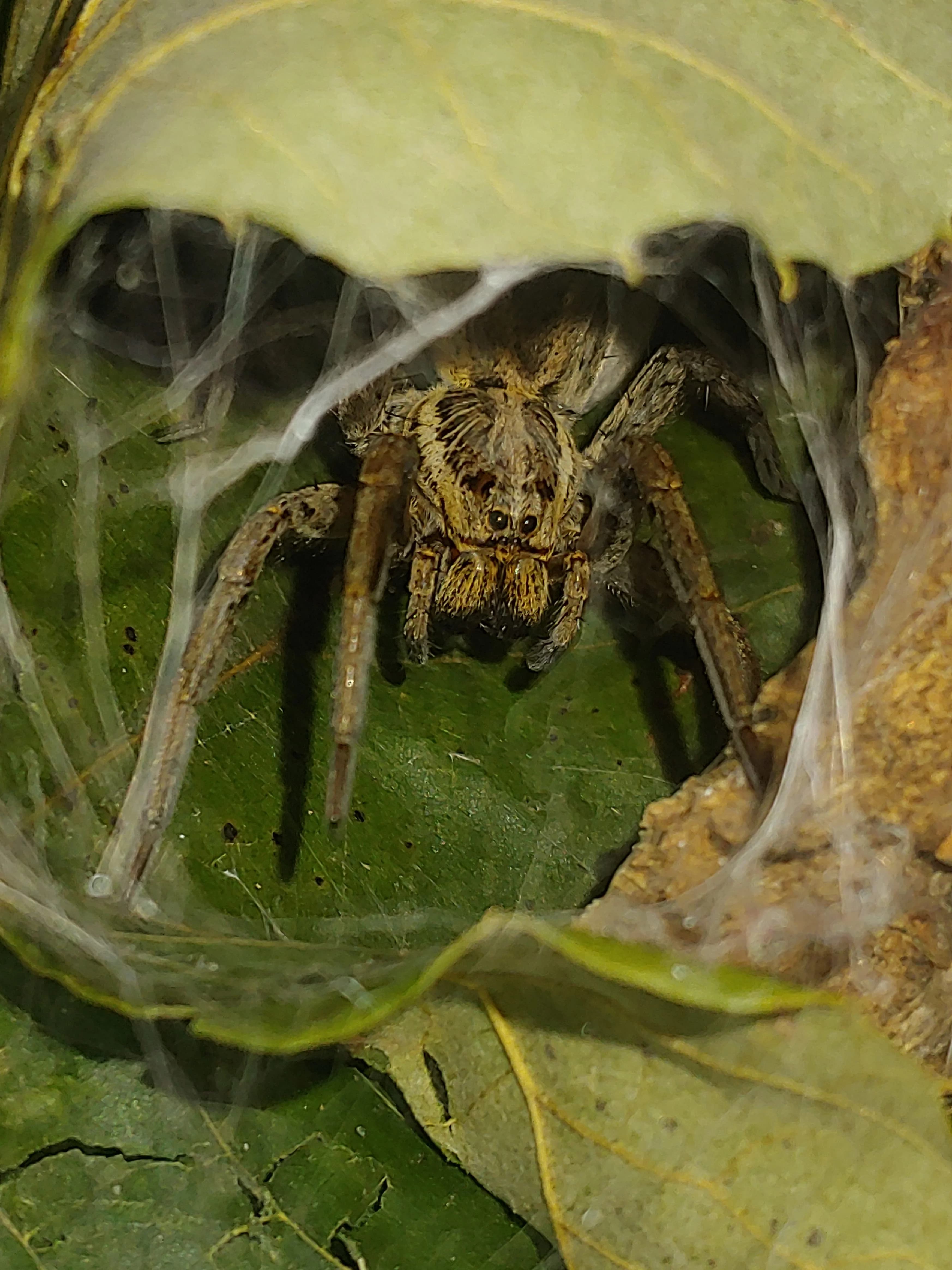
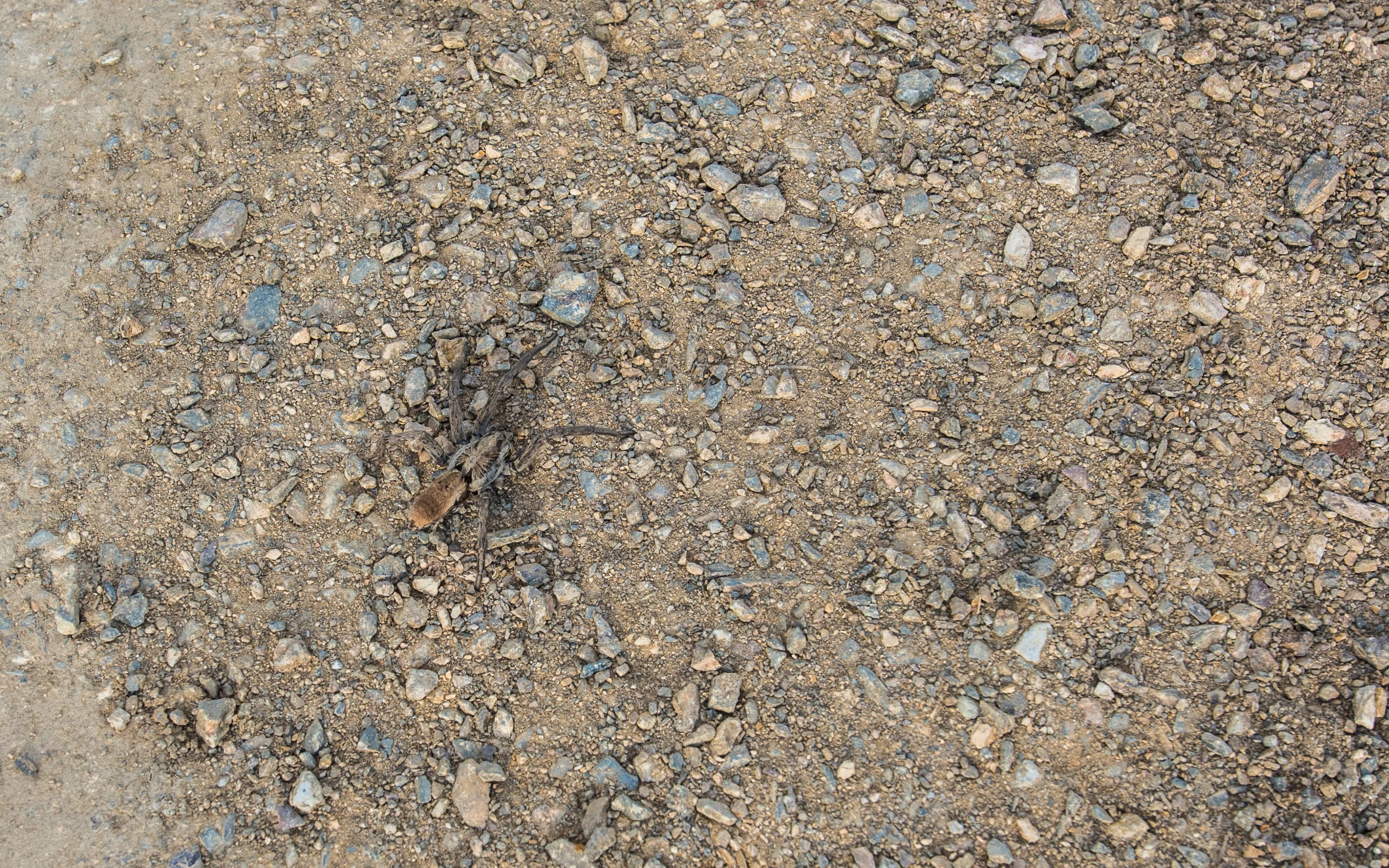
Radiated wolf spider
A large, day-active wolf spider — a hunter of dry grassy and steppe habitats; harmless to humans.
At a glance
Key facts in one look
Habitat
Dry steppe, grass
Length
approx. 9–25 mm
Venom
Mild — harmless
Conservation
Not evaluated
Activity
Diurnal
Family
Lycosidae
Gallery
Radiated wolf spider in photos
Interesting facts
What you should know
- 01
The name radiata refers to the radiating pattern on the carapace — lines extending from a pale median band.
- 02
It is a wolf spider: it does not hunt with a web, actively pursues prey; the mother carries spiderlings on her back.
- 03
Documented in Georgia and the Caucasus — a resident of dry, warm habitats.
- 04
Medically insignificant to humans; bites are rare and usually cause only mild local reaction.
Biology
Diet, behavior, and conservation
Diet
It is an active pursuer: it hunts small insects and other invertebrates, usually prey less than about 20% of its own size. It does not catch with a web — it moves through grass and on the ground and seizes prey by sight and speed.
Behavior
It is diurnal. Mating occurs in autumn; the female then digs a shallow retreat where she constructs an egg case. The young leave the egg case in December, spend the winter with their mother, and disperse in April–May — carrying spiderlings on the back is typical of wolf spiders. It does not build a permanent burrow (unlike some Lycosa); it uses temporary shelter for molting and egg-laying. Taxonomically the Hogna radiata complex needs revision — the name has been applied to distinct populations across a wide range.
Conservation
It is widely distributed globally and common in the Mediterranean and Caucasus; a separate IUCN assessment is not widely applied. Local threats include habitat conversion and needless killing out of fear. It benefits ecosystems as an insect predator.
Questions
Frequently asked questions
Short answers to the most important questions about Radiated wolf spider.
No — it is harmless to humans. It has venom for hunting insects, but it is not medically significant; bites are rare and usually cause only mild discomfort similar to a bee sting.
In dry and semi-arid places — steppes, grasslands, and open landscapes. The species is documented for Georgia and the wider Caucasus in arachnological catalogues.
Because of its size and appearance it is sometimes called false tarantula, but it does not belong to true tarantulas (Theraphosidae) — it is a member of the wolf spider family (Lycosidae).
Small insects and other invertebrates. It does not build a hunting web — it moves by day and catches prey with speed and vision.
Mating is in autumn. The female builds an egg case in a shallow retreat; the young spend winter with the mother (often on her back) and disperse in spring.